Ingredients
Method
Prep the Pork and Kolokasi
- Peel the kolokasi under running water, wearing kitchen gloves if your skin is sensitive since raw taro can cause mild itching. Cut into 4 cm / 1.5-inch chunks and drop into a bowl of cold water with a splash of lemon juice to stop browning.
- Cut the pork shoulder into 4 cm / 1.5-inch cubes and pat dry with paper towels. Drying the pork helps it brown instead of steam in the pot.
- Chop the onion, slice the celery, and mince the garlic. Set everything aside near the stove.
Braise the Stew
- Heat 2 tbsp olive oil in a 26 cm / 10-inch dutch oven over medium-high heat. Brown the pork in two batches, about 4 minutes per batch, until deep golden on most sides. Don't crowd the pot or the pork will steam instead of brown. Set the pork aside on a plate.
- Add the remaining 1 tbsp oil to the pot. Add the onion and celery and cook 5 minutes, stirring, until soft. Add the garlic and cook 30 seconds until fragrant.
- Stir in the tomato paste and cook 1 minute, until it darkens slightly and smells toasty.
- Return the pork to the pot with the bay leaves, salt, pepper, and stock or water. Bring to a boil, then lower the heat, cover, and simmer 45 minutes, until the pork starts to soften.
- Drain the kolokasi and add it to the pot. Simmer uncovered for 30 to 35 minutes, until the pork is fork-tender and the kolokasi pierces easily with a knife, with a creamy center.
- Stir in the lemon juice, taste, and adjust salt if needed. Simmer 5 more minutes.
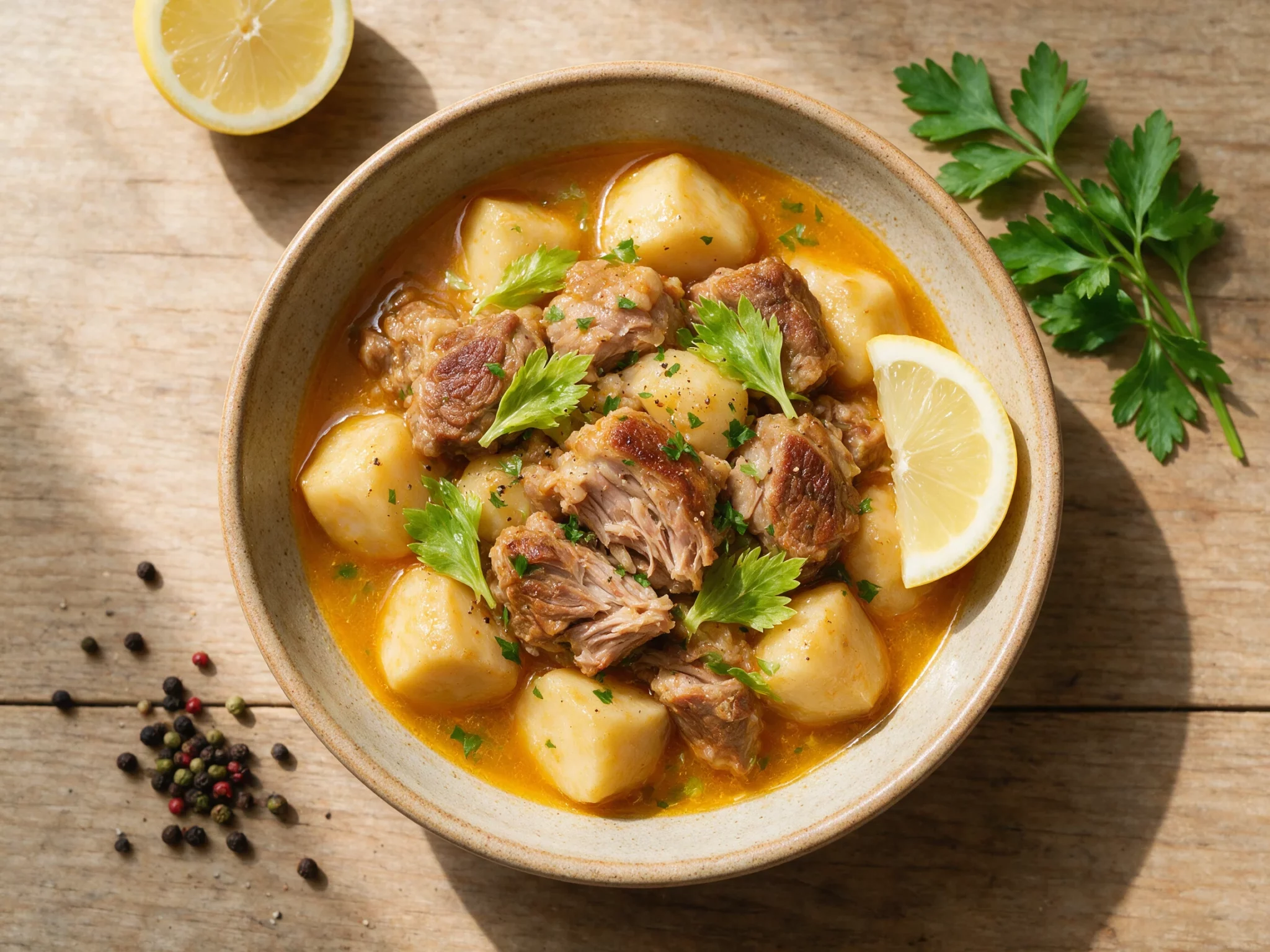
- Remove the bay leaves. Let the stew rest 5 minutes, scatter the reserved celery leaves on top, and serve warm with bread.
Notes
- Kolokasi is the Cypriot name for taro root, sold fresh or frozen.
- Wear gloves when peeling raw kolokasi if your skin is sensitive.
- Pork shoulder gives the best texture after a long simmer.
- Simmer time may vary depending on how large you cut the taro.