Jump to Recipe
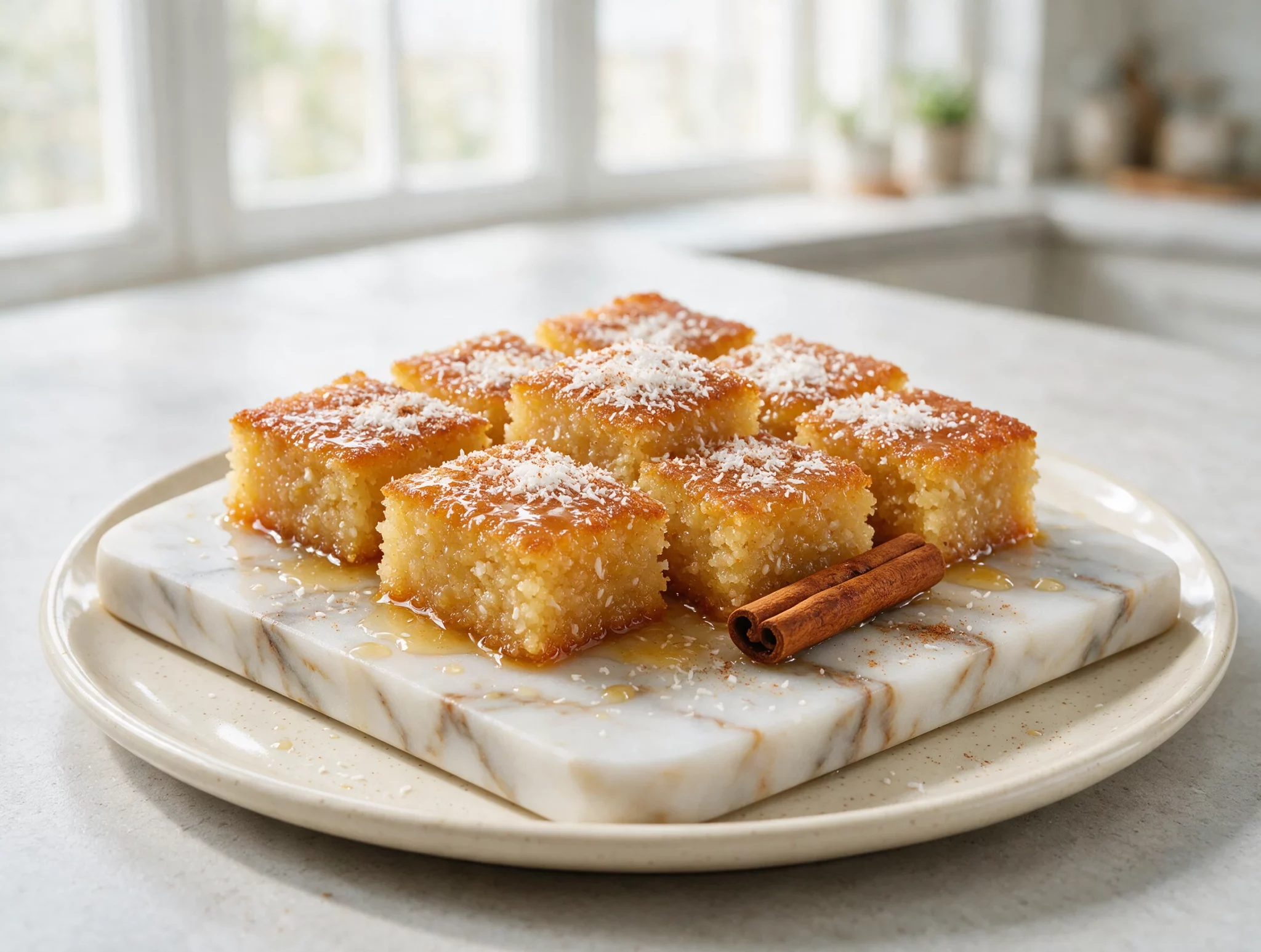
Kalo Prama is a Cypriot semolina cake baked with coconut and cinnamon, then soaked in a warm lemon syrup. The name means good thing in Greek, and you’ll find it in Cypriot bakeries next to trays of traditional Cypriot flaounes and at family tables. It tastes sweet and moist, with a soft, spongy crumb that soaks up syrup without turning mushy.
I bake this in a 9×13-inch pan and pour the syrup over it while the cake is still hot from the oven. That’s what makes the syrup soak in evenly instead of sitting on top in a sticky layer.
This is a simple cake with basic pantry ingredients. You don’t need a mixer or any special tools, just a couple of bowls and a small saucepan for the syrup.
Cut it into small squares before you serve it. It’s sweet and rich, so a little goes a long way.
Why You’ll Love This Recipe
- Made with pantry basics, no special equipment needed
- Syrup soaks in evenly when poured on a hot cake
- Tastes better the next day, so it’s easy to plan ahead
- Keeps well at room temperature for several days
Ingredient Notes
- semolina: Use fine or medium semolina, not coarse. Coarse semolina stays gritty even after the syrup soaks in.
- desiccated coconut: Unsweetened coconut works best here. It gives kalo prama its light coconut flavor without extra sweetness.
- plain yogurt: Full-fat yogurt keeps the crumb moist. Low-fat yogurt works too, but the cake will be a little less rich.
- vegetable oil: Any neutral oil works, like sunflower or canola. Olive oil changes the flavor too much for this cake.
- orange zest: Lemon zest is a fine substitute if you don’t have an orange on hand.
- cinnamon stick: A whole stick gives the syrup a warm flavor without turning it brown the way ground cinnamon would.
Kalo Prama: Cypriot Semolina Cake with Sweet Syrup
Ingredients
Method
- Heat the oven to 180 C / 350 F. Grease a 9x13-inch (33x23 cm) baking dish and line the bottom with parchment paper.
- In a large bowl, whisk together the semolina, flour, coconut, baking powder, cinnamon, and salt.
- In a second bowl, whisk the eggs and sugar for 2 to 3 minutes, until pale and slightly thickened. Whisk in the yogurt, oil, orange zest, and vanilla until smooth.
- Pour the wet mixture into the dry ingredients. Fold gently until no dry streaks remain. The batter should be thick but pourable, like heavy pancake batter.
- Pour the batter into the prepared pan and smooth the top with a spatula. Bake for 35 to 40 minutes, until golden brown and a toothpick from the center comes out clean.
- While the cake bakes, combine the syrup sugar, water, lemon juice, cinnamon stick, and lemon peel in a 2-quart / 2 L saucepan. Bring to a boil, then simmer for 8 to 10 minutes, until it thickens slightly like thin honey. Remove the cinnamon stick and lemon peel.
- As soon as the cake comes out of the oven, cut it into squares while it's still in the pan. Cutting it hot helps the syrup soak in evenly.
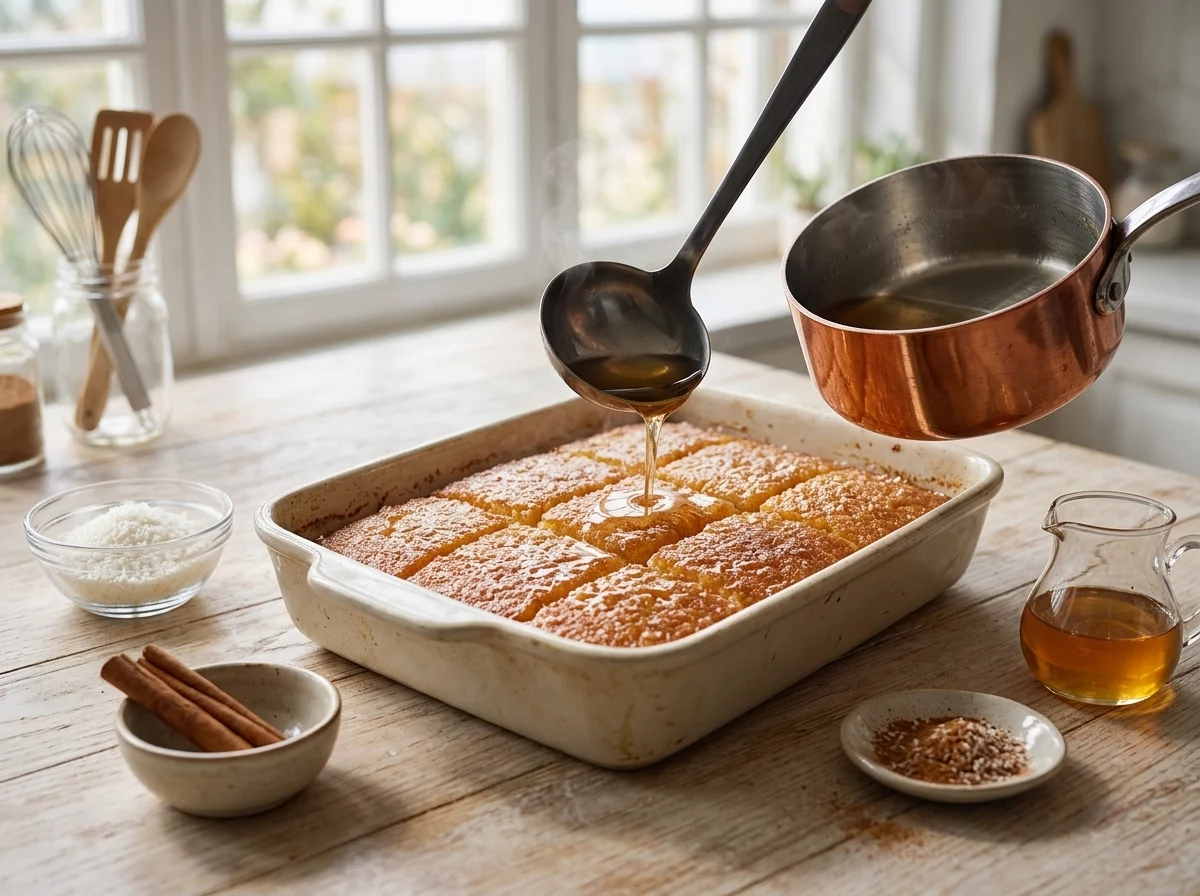
- Slowly ladle the warm syrup over the hot cake, a little at a time, letting each pour absorb before adding more. Pouring cold syrup over a cooled cake is the most common mistake, since it just sits on top instead of soaking in.
- Let the cake sit at room temperature for at least 2 hours, or overnight, so the syrup soaks all the way through. It's ready when the top looks glossy and no syrup pools on the surface.
- Serve at room temperature, on its own or with a spoon of unsweetened whipped cream.
Notes
- Semolina cakes taste better the day after baking, once the syrup settles all the way through
- Don't skip cutting the cake while it's still warm, or it soaks the syrup unevenly
- Simmer the syrup only 8 to 10 minutes, or it turns sticky and won't soak into the cake
- A metal 9x13-inch pan bakes more evenly than glass for this batter
Tips for Success
- Pour the syrup over the cake while both are still warm, since a cold cake won’t absorb it and stays dry on top.
- Cut the cake into squares before you add the syrup, so every piece soaks evenly instead of just the top layer.
- Use fine or medium semolina, not coarse, or the cake stays gritty even after baking and soaking.
- Let the cake rest at least 2 hours after syruping so the center turns fully moist before you slice it.
- Toast a few tablespoons of coconut and sprinkle it over the cooled cake for extra flavor and crunch.
Variations
- Swap the coconut for finely ground almonds for a nuttier, less sweet version of kalo prama.
- Add a splash of rose water or orange blossom water to the syrup for a more floral finish.
- Bake the batter in a round 25 cm cake pan instead of a rectangular dish for a taller, softer cake.
Storage and Reheating
Kalo Prama keeps well at room temperature, covered, for 3 to 4 days. It also keeps in the fridge for up to 5 days, since the sugar syrup helps it stay moist longer than a plain cake.
Serve it at room temperature straight from storage. If you want it slightly warm, microwave one square for 15 to 20 seconds, just enough to take the chill off without drying it out.
You can freeze it too. Wrap squares tightly and freeze for up to 2 months, then thaw at room temperature for a few hours before serving.
Serving Suggestions
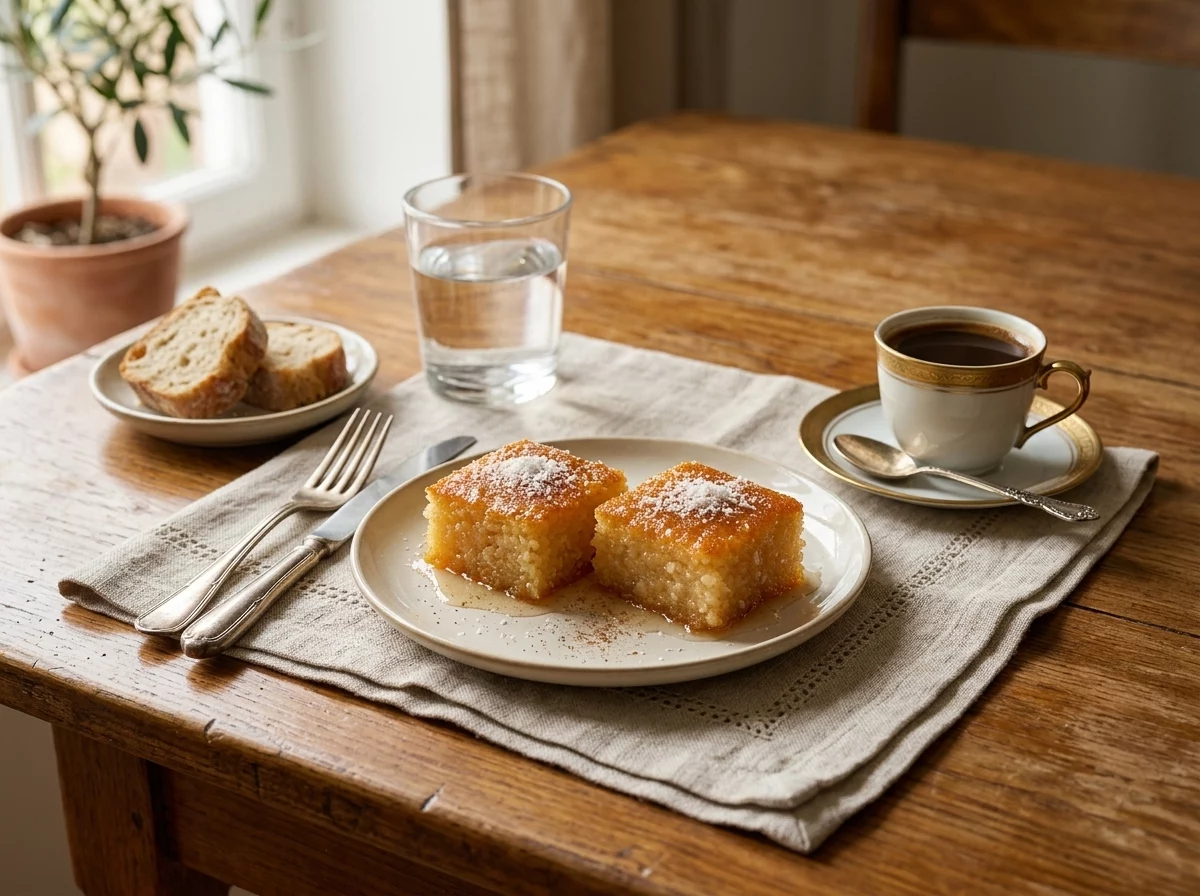
Kalo Prama is usually served with strong Cyprus coffee or Greek coffee, much like Cypriot tahini rolls, since the bitterness balances the sweet syrup. A small scoop of vanilla ice cream or a spoon of unsweetened whipped cream on the side works well, especially in warmer months.
For a simple weeknight dessert, I just cut it into squares and set them out on a plate with a bowl of chopped toasted coconut for anyone who wants extra on top.
FAQ
Why did my kalo prama turn out dry on top instead of moist all the way through?
This usually happens when the syrup goes on after the cake has cooled down. Pour the warm syrup over the cake as soon as it comes out of the oven, cut it into squares first, and let it sit at least 2 hours so the syrup soaks all the way to the center.
Can I use farina instead of semolina for this Cypriot cake?
Farina works as a substitute since it’s a similar fine wheat product, though the texture turns out a touch softer than with traditional semolina. Use the same 200 g amount and avoid coarse semolina, which stays gritty even after baking and soaking in syrup.
Does kalo prama taste better if I make it a day ahead?
Yes, kalo prama actually improves overnight because the syrup needs time to soak all the way through the crumb. Bake it the day before you plan to serve it, cover the pan, and leave it at room temperature so the texture turns fully moist by the next day.
What do Cypriots usually serve with kalo prama?
Kalo prama is usually served with strong Cyprus coffee or Greek coffee, since the bitterness balances the sweet syrup. A small scoop of vanilla ice cream or a spoon of unsweetened whipped cream on the side also works well, especially in summer.
Is kalo prama gluten free?
No, kalo prama is not gluten free because it’s made with semolina and all-purpose flour, both wheat products. I haven’t tested a gluten-free version of this specific recipe, and semolina doesn’t have a reliable one-to-one substitute for this texture.
What’s the difference between kalo prama and Greek ravani?
Kalo prama and ravani are close cousins, both semolina cakes soaked in syrup like my baked Greek honey cake, but kalo prama usually has coconut and cinnamon mixed into the batter, giving it a different flavor and a lightly speckled crumb. Ravani often leans on lemon or orange alone, without coconut.