
Jump to Recipe
Olive oil cake with lemon and rosemary is a simple, moist cake made with olive oil instead of butter, plus fresh lemon zest and chopped rosemary mixed right into the batter. It tastes bright and a little herbal, not sweet in an overwhelming way, and the crumb stays soft for days because of the oil.
I started making this after getting tired of dry, plain pound cakes. The olive oil keeps things moist without any fuss, and the rosemary adds something you don’t expect but end up liking a lot.
You don’t need a mixer or any special equipment. Two bowls, a whisk, and a 23 cm / 9-inch cake pan get the job done.
This is a good cake for coffee in the morning or a simple dessert after dinner. It also travels well if you’re bringing something to someone’s house.
Why You’ll Love This Recipe
- Stays moist for days thanks to the olive oil
- Only needs two bowls and a whisk to make
- Lemon and rosemary give it flavor without extra sweetness
- Good for breakfast, dessert, or an afternoon snack
Ingredient Notes
- Olive oil: Use a good but not super expensive olive oil, since you’ll taste it. Avoid an overly bitter or peppery one, or the cake will taste sharp.
- Lemon zest: Zest the lemons before you juice them. Two lemons should give you enough zest and enough juice for both the batter and the glaze.
- Fresh rosemary: Chop it fine so you don’t get big woody pieces in a slice. Dried rosemary works too, use about a third of the amount.
- Whole milk: Whole milk keeps the crumb soft. You can swap in a plant milk like oat milk if you need this dairy free, the texture stays close.
- Eggs: Use eggs at room temperature so they blend into the batter smoothly instead of clumping the oil.
- Powdered sugar: For the glaze. If you don’t want a glaze, a light dusting of powdered sugar on top works fine too.
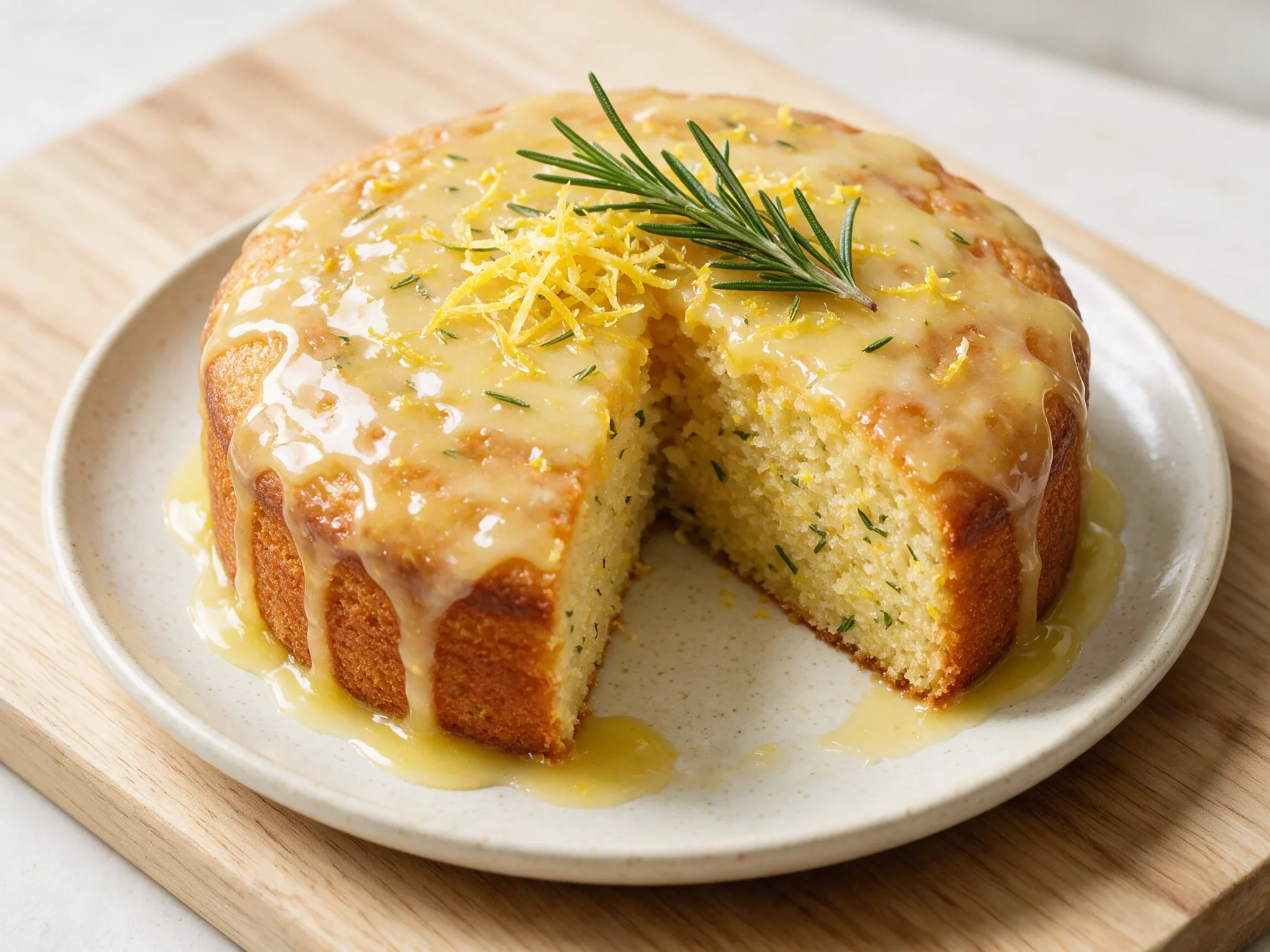
Fragrant Lemon Rosemary Olive Oil Cake with a Glaze
Ingredients
Method
- Heat the oven to 175 C / 350 F. Grease a 23 cm / 9-inch round cake pan and line the bottom with parchment paper.
- In a bowl, whisk together the flour, baking powder, salt, and chopped rosemary. Set aside.
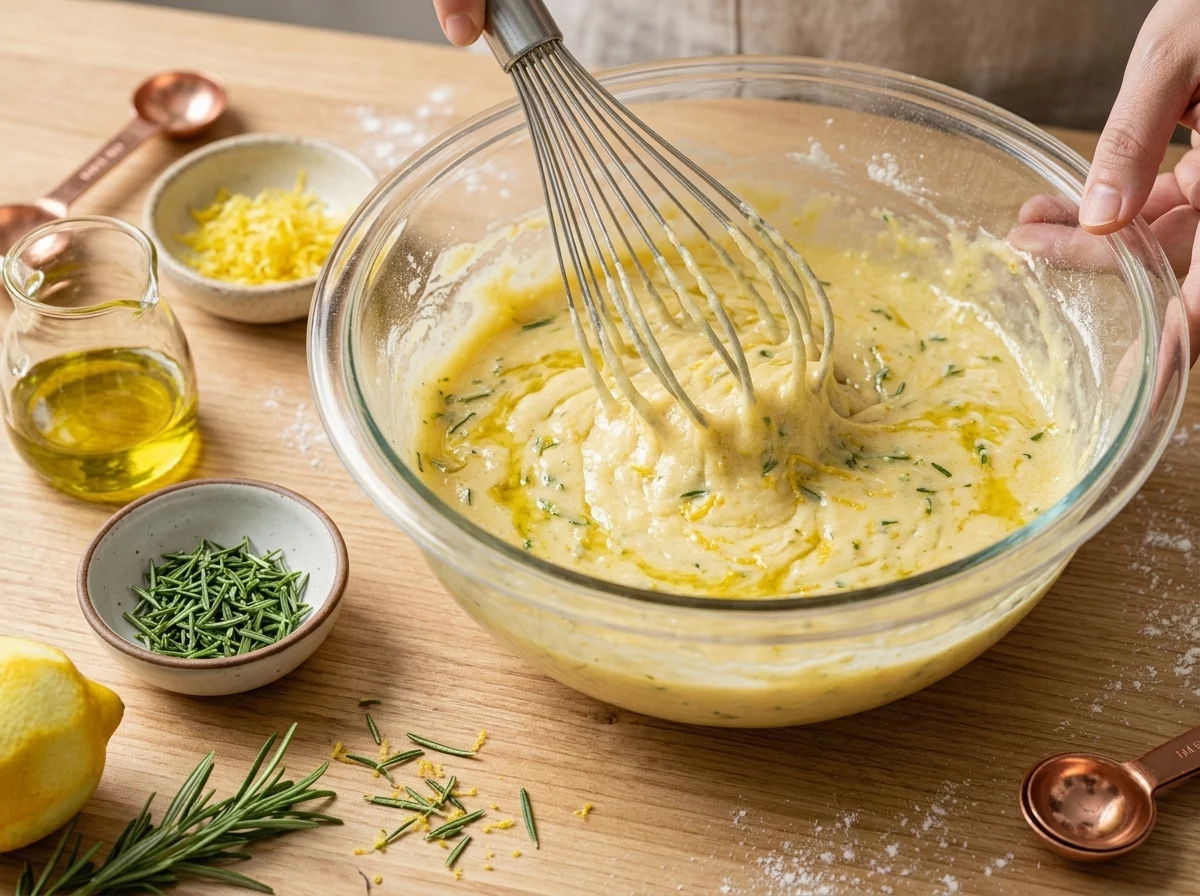
- In a large bowl, whisk the sugar and lemon zest together, rubbing the zest into the sugar with your fingers to release the oils.
- Whisk the eggs into the sugar mixture one at a time until the batter looks pale and slightly thick.
- Slowly whisk in the olive oil in a steady stream, then whisk in the milk, lemon juice, and vanilla until smooth.
- Add the flour mixture in three additions, folding gently each time. Stop as soon as no dry streaks remain, since overmixing here is what makes the cake dense instead of soft.
- Pour the batter into the prepared pan and smooth the top with a spatula.
- Bake for 40 to 45 minutes, until the top is golden and a toothpick inserted in the center comes out clean.
- Cool the cake in the pan for 15 minutes, then turn it out onto a wire rack to cool completely.
- Whisk the powdered sugar and lemon juice together in a small bowl until smooth and pourable.
- Once the cake is fully cool, drizzle the glaze over the top and let it drip down the sides slightly.
- Garnish with a small rosemary sprig or extra lemon zest, then slice and serve.
Notes
- Zest lemons before juicing for easier prep.
- Do not overmix once flour is added, or the crumb turns dense.
- Cool cake fully before glazing, or the glaze slides off.
- Use room temperature eggs for a smoother batter.
- Line the pan bottom with parchment for an easy release.
Tips for Success
- Zest the lemons before juicing them, it’s much easier that way.
- Whisk the eggs and sugar until the mixture looks pale and slightly thick before adding the oil.
- Fold in the flour gently and stop as soon as you don’t see dry streaks, overmixing makes the cake dense.
- Let the cake cool fully in the pan for at least 15 minutes before turning it out, or it can break apart.
- Add the glaze only once the cake is fully cool, or it will slide right off.
Variations
- Swap the rosemary for fresh thyme if you want a milder herb flavor in the crumb.
- Add a handful of poppy seeds to the batter for a lemon poppy seed version.
- Skip the glaze and serve slices with mascarpone and a spoon of honey instead.
Storage and Reheating
Olive oil cake with lemon and rosemary keeps at room temperature, covered, for 3 to 4 days. It also keeps in the fridge in an airtight container for up to 5 days, though the crumb is a bit firmer cold.
To freeze, wrap unglazed cake slices tightly in plastic and freeze for up to 2 months. Thaw at room temperature and glaze after thawing.
If you want a slice slightly warm, microwave it for 10 to 15 seconds on a plate. Don’t microwave longer than that, the glaze will melt and go runny.
Serving Suggestions
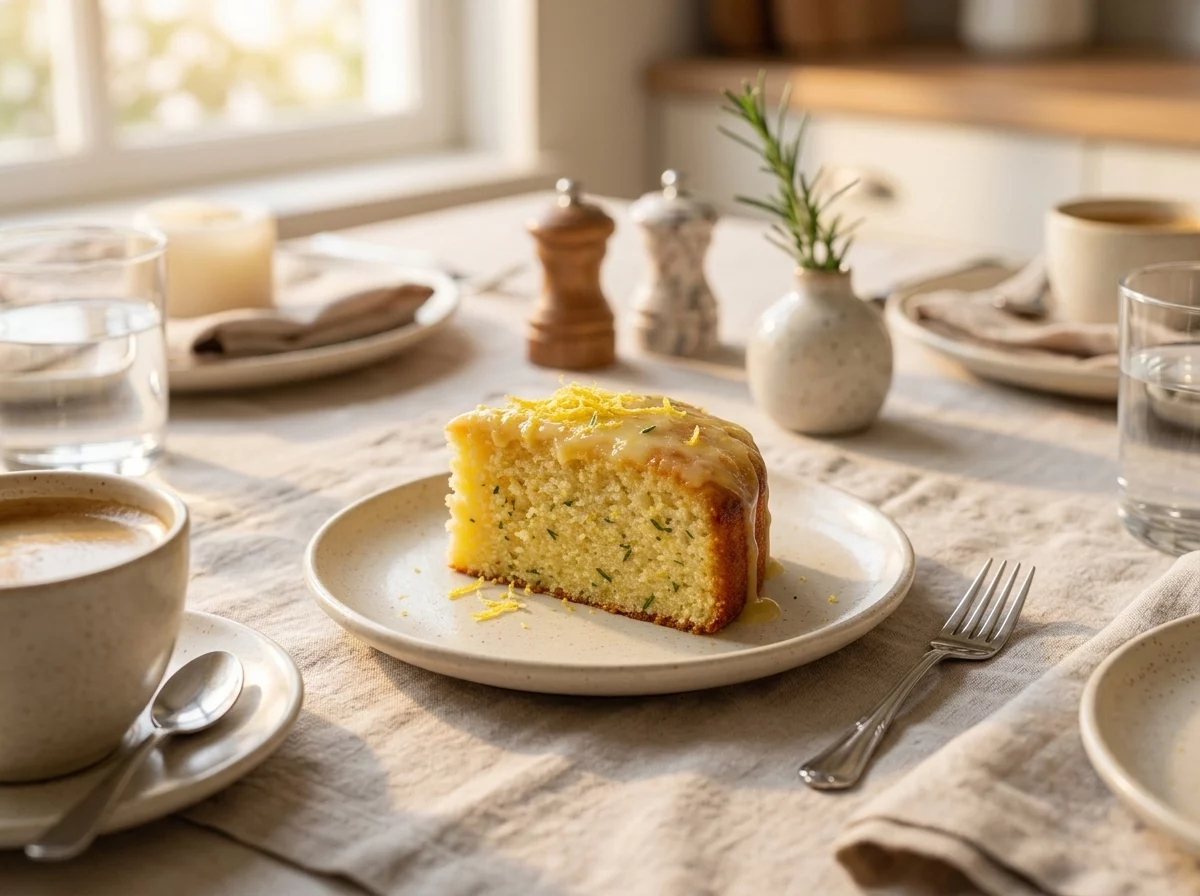
I usually serve this with coffee or tea in the morning, or as a light dessert after a simple dinner. A dollop of whipped cream or mascarpone on the side is good if you want something richer.
Fresh berries or a few extra lemon slices on the plate add a nice pop of color and a bit more tartness against the glaze.
For a gathering, slice it thin and set it out with other small desserts like this baked Greek honey cake with walnuts. It holds up well at room temperature for a few hours.
FAQ
Why is my olive oil cake dense instead of soft?
This usually comes from overmixing the batter once the flour goes in, or from too much flour packed into the measuring cup. Stop folding as soon as you don’t see dry streaks. Spoon the flour into the cup and level it off instead of scooping straight from the bag.
Can I use dried rosemary instead of fresh rosemary in this cake?
Yes, but use about a third of the amount, so roughly 1 teaspoon dried instead of 1 tablespoon fresh. Dried rosemary is more concentrated and can turn bitter if you use too much. Crush it a bit between your fingers before adding it to release more flavor.
How long does lemon rosemary olive oil cake stay fresh?
It stays fresh at room temperature, covered, for 3 to 4 days, or up to 5 days in the fridge in an airtight container. The unglazed cake also freezes well for up to 2 months. Add the glaze only after it’s thawed and fully cool.
What goes well with olive oil cake with lemon and rosemary?
Coffee or tea is my usual pick, since the bitterness balances the lemon glaze. Fresh berries, a spoon of mascarpone, or a light dusting of extra lemon zest on the plate all work well too. It’s also good on its own as a simple afternoon snack.
Is this olive oil cake dairy free?
Not as written, since it uses whole milk in the batter. You can make it dairy free by swapping in the same amount of oat milk or almond milk, the texture stays close to the original. The rest of the ingredients, including the olive oil, are already dairy free.
What is the difference between olive oil cake and a regular butter cake?
Olive oil cake uses oil instead of butter, which keeps the crumb moist longer and gives it a slightly different, less sweet flavor. Butter cakes tend to be richer and a bit denser. Olive oil also lets the lemon and rosemary flavors come through more clearly here.