
Jump to Recipe
Pistachio rosewater cake is a soft, moist cake made with ground pistachios, a little rosewater, and a lemon glaze. It tastes nutty and lightly floral, and the crumb stays tender for days.
I grind 150 g of pistachios and mix them in with the flour. That gives the cake a pale green-gold color and a stronger nut flavor than chopped nuts would. The batter is easy to make with a hand mixer and a food processor for the nuts.
Go easy on the rosewater. Too much and the cake tastes like soap, so I use 1 tablespoon in the batter and 1 teaspoon in the glaze. Brands vary, so smell yours before you measure.
Pistachio and rose show up together in a lot of Middle Eastern sweets. This is a simple version inspired by that pairing, not a traditional recipe. You do not need anything special to make it.
Why You’ll Love This Recipe
- Ground pistachios keep the crumb moist and nutty
- Made with a hand mixer and one springform pan
- Light rose flavor, not heavy or perfumey
- Bake it a day ahead and glaze before serving
Ingredient Notes
- pistachios: Use shelled, unsalted pistachios. If yours are salted, cut the salt in the batter to 1/4 teaspoon. Blanched almonds can replace half of them, though the color will be paler.
- rosewater: Strength varies by brand, so smell it first. I buy it at a Middle Eastern grocery or the baking aisle. Do not swap in rose syrup, which is much sweeter.
- plain whole-milk yogurt: It makes the crumb soft and adds a slight tang. Sour cream works in the same amount.
- dried edible rose petals: These are only for looks and are optional. Skip them if you can’t find them, and add a few extra chopped pistachios instead.
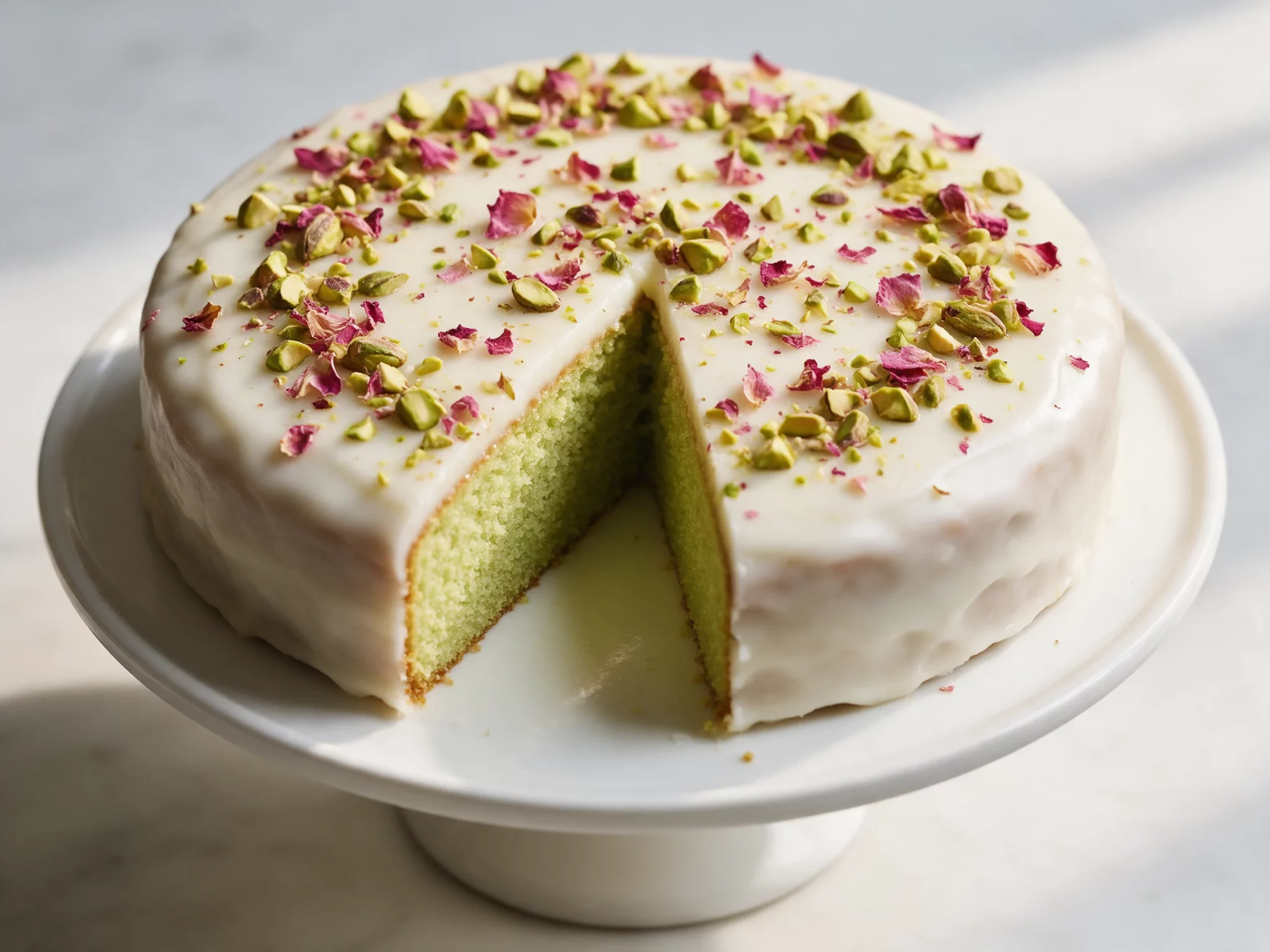
Pistachio Rosewater Cake with Lemon Glaze and Rose Petals
Ingredients
Method
- Heat the oven to 170 C / 340 F. Grease a 23 cm / 9-inch springform pan and line the bottom with parchment. Pulse the 150 g pistachios with 2 tbsp of the flour in a food processor for 20 to 30 seconds, until they look like fine crumbs and not a paste. Whisk this with the rest of the flour, the baking powder, and the salt.
- In a 4-quart / 3.8 L mixing bowl, beat the butter, sugar, and lemon zest with a hand mixer for 3 to 4 minutes, until pale and fluffy. Add the eggs one at a time, beating for 30 seconds after each one. Stir the yogurt, milk, and 1 tbsp rosewater together in a small bowl.
- Add the dry mixture to the butter mixture in three parts, alternating with the yogurt mixture. Start and end with the dry mixture. Stir gently with a spatula just until no flour streaks remain. Scrape the batter into the pan and smooth the top.
- Bake for 38 to 42 minutes, until the top is golden and a skewer in the center comes out with a few moist crumbs. If the top browns too fast, cover it loosely with foil after 30 minutes. Cool the cake in the pan for 15 minutes, then remove the ring and move the cake to a wire rack. Let it cool for another 45 minutes.
- While the cake cools, whisk the powdered sugar, lemon juice, and 1 tsp rosewater until smooth and thick enough to fall off the spoon in a slow ribbon. Spoon the glaze over the fully cooled cake, then scatter on the chopped pistachios and rose petals. Slice into 12 pieces and serve.
Notes
- Line the bottom of the springform pan with parchment so the cake releases cleanly.
- Beat the butter and sugar for the full 3 to 4 minutes for a lighter crumb.
- Stir the flour in just until no dry streaks remain, so the cake stays tender.
- Cool the cake for a full 60 minutes before glazing and slicing.
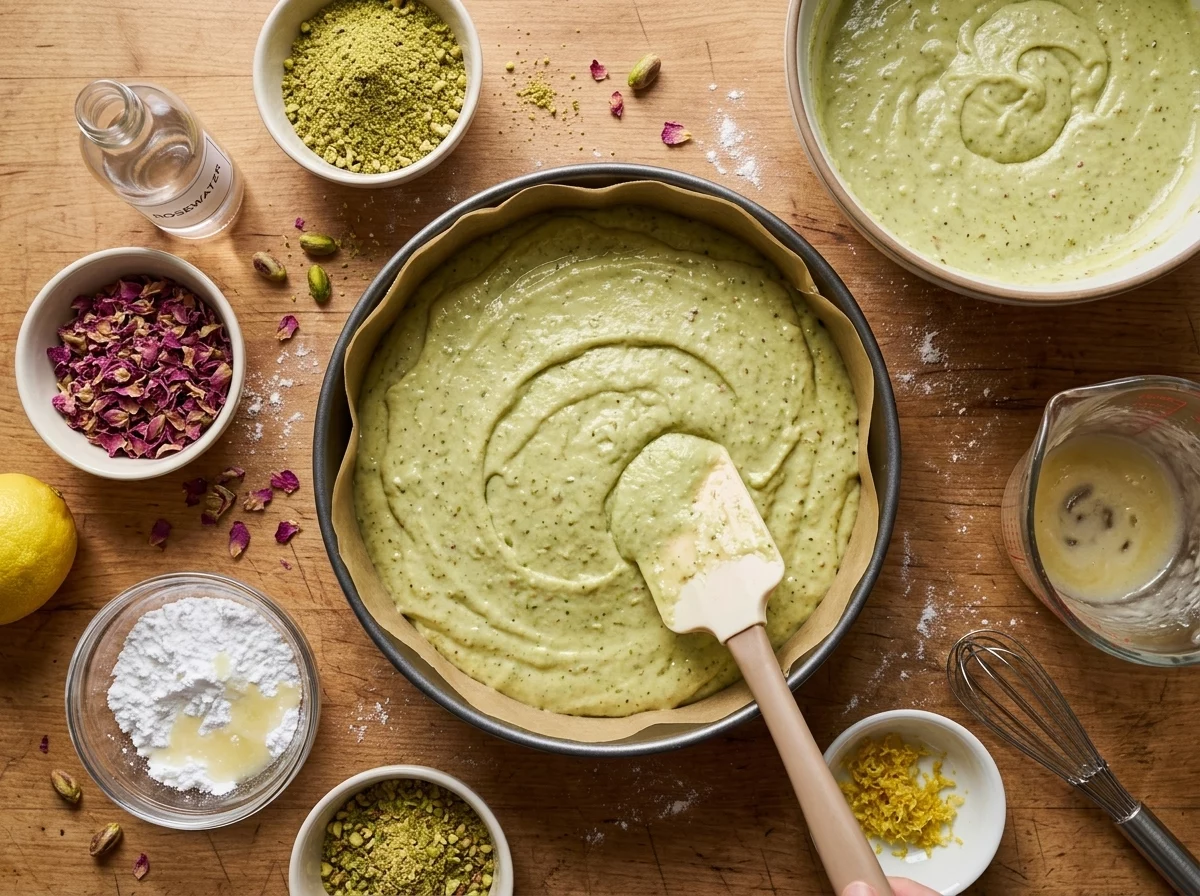
Tips for Success
- Smell your rosewater before measuring, and use 2 teaspoons in the batter if the brand smells sharp or strong.
- Pulse the pistachios with a spoonful of the flour so they turn into fine crumbs instead of an oily paste.
- Use room-temperature eggs, yogurt, and milk so the batter stays smooth and doesn’t look curdled after the eggs go in.
- Cover the pan loosely with foil after 30 minutes if the top is browning faster than the center is setting.
- Wait until the cake is fully cool before pouring on the glaze, or it will run off and soak into the crumb.
Variations
- Add 1/2 teaspoon ground cardamom to the dry ingredients for a warmer, spiced flavor that goes well with rose.
- Use orange zest in the batter and orange juice in the glaze if you prefer a softer citrus note than lemon.
- Bake the batter in a 23 x 13 cm / 9 x 5 inch loaf pan for 50 to 60 minutes, tenting with foil after 35.
Storage and Reheating
Pistachio rosewater cake is best served at room temperature and doesn’t need reheating. Warming a slice would melt the glaze and make the cake greasy. Keep the cake covered at room temperature for up to 2 days, or in the fridge for up to 4 days in total. Let chilled slices sit for 30 minutes before eating.
To get ahead, bake the cake a day before you need it, wrap it well once it has cooled, and add the glaze and toppings just before serving.
For longer storage, freeze the unglazed cake wrapped in plastic wrap and foil for up to 2 months. Thaw it overnight in the fridge, then glaze it.
Serving Suggestions
Cut the cake into 12 slices with a knife you’ve wiped with a damp cloth between cuts. The glaze is sticky, and this keeps the edges clean.
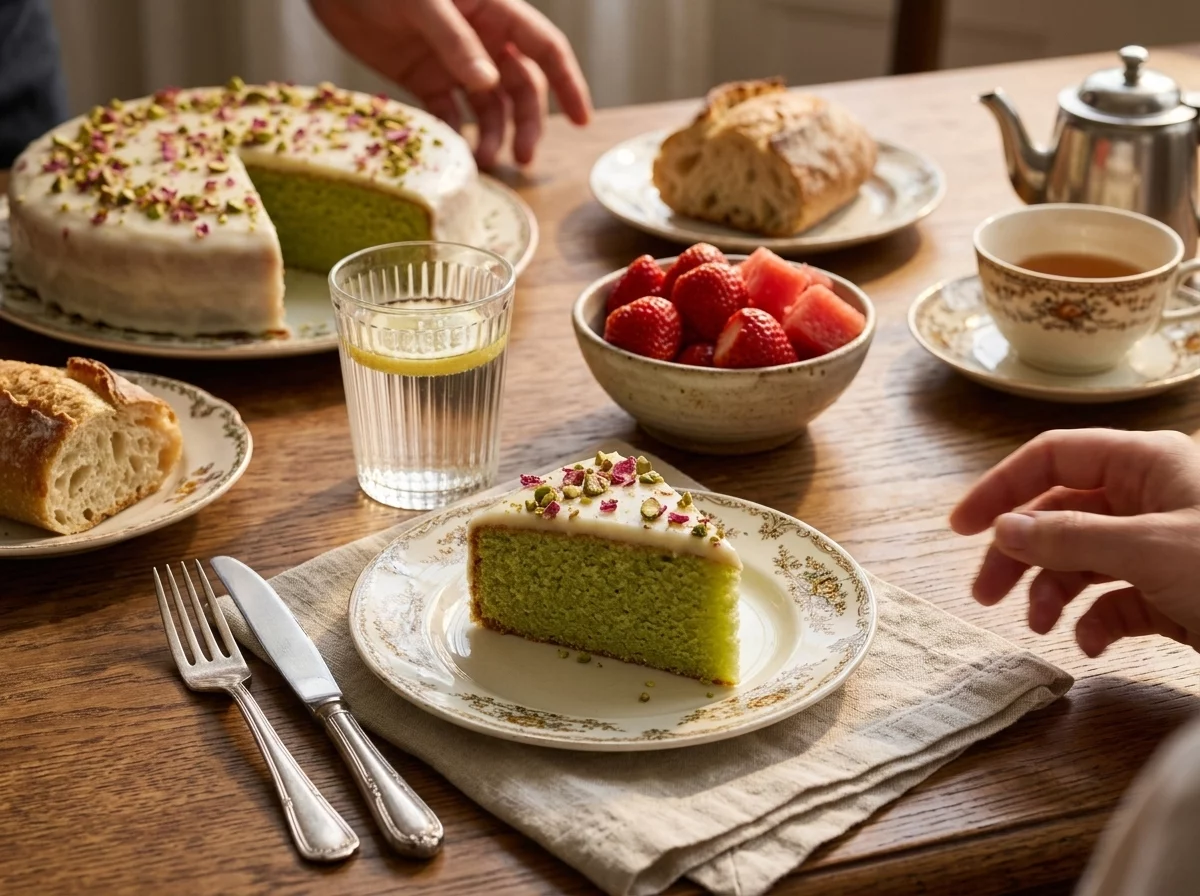
I like it with plain Greek yogurt and a few strawberries or raspberries. The tart fruit balances the sweet glaze and the floral flavor.
It also goes well with black tea, mint tea, or a small cup of strong coffee. You can serve it for afternoon tea or after a family meal.
FAQ
Why does my pistachio rosewater cake taste like soap?
Too much rosewater is the usual cause, and brands vary a lot in strength. I use 1 tablespoon in the batter and 1 teaspoon in the glaze. If yours smells sharp, start with 2 teaspoons in the batter and 1/2 teaspoon in the glaze, because you can’t take it out once it’s mixed.
How do I know when pistachio rosewater cake is done?
The top is golden, the edges pull slightly away from the pan, and a skewer in the center comes out with a few moist crumbs. That usually takes 38 to 42 minutes at 170 C / 340 F. If the skewer has wet batter on it, bake 5 more minutes and check again.
Can I use rose extract instead of rosewater in this cake?
Yes, but use far less. Rose extract is much more concentrated than rosewater, so start with 1/4 teaspoon in the batter and add one extra tablespoon of milk to make up the liquid. Skip it in the glaze, or add only a tiny drop.
Can I freeze pistachio rosewater cake with the glaze on?
It’s better to freeze it unglazed. Wrap the cooled cake in plastic wrap and then foil, and freeze for up to 2 months. Thaw it overnight in the fridge, then glaze it. Lemon glaze turns sticky and weepy once it has been frozen and thawed.
What goes well with pistachio rosewater cake?
Plain Greek yogurt, fresh strawberries or raspberries, and black or mint tea all work well. The tart fruit and yogurt balance the floral flavor and the sweet glaze. I also like a slice with a small cup of strong coffee.
Is pistachio rosewater cake gluten free?
Not as written, since it uses 190 g of all-purpose flour. You can swap in a 1:1 gluten-free baking flour blend that contains xanthan gum. The crumb will be slightly denser, but the ground pistachios help keep it moist.