
Jump to Recipe
Cypriot grape molasses cookies are soft, spiced olive oil cookies sweetened with petimezi, the dark syrup made from boiled grape juice. They taste of cinnamon, orange and a little caramel. There are no eggs or butter in the dough.
The recipe is inspired by moustokouloura, the Cypriot cookies made with grape must. My version is simplified, with baking powder and a bit of sugar, so the dough comes together with a whisk and your hands. It makes about 28 cookies.
Petimezi is the one ingredient to look for. Greek, Cypriot and Middle Eastern shops usually have it, and so do some online stores.
Watch the bake time. The dough is dark, so you can’t judge doneness by color. I pull the pans when the edges feel set, or the cookies turn hard once they cool. They keep for 10 to 14 days.
Why You’ll Love This Recipe
- The dough is made with a whisk and your hands
- No eggs, butter or dairy needed
- Soft inside with a light sesame top
- They keep well for 10 to 14 days
Ingredient Notes
- grape molasses (petimezi): This is the main flavor, so use a good one made only from grape juice. Carob syrup works in the same amount if you can’t find petimezi.
- olive oil: Use a mild extra virgin olive oil. A very peppery one can taste bitter once it’s baked into the cookies.
- orange: You need the zest of one orange and 60 ml of its juice. Zest it first, then squeeze.
- baking powder and baking soda: Grape molasses is slightly acidic, so the baking soda helps the cookies rise and brown. Check that both are fresh.
- walnuts: They add a little crunch and are easy to leave out. For a nut-free batch, skip them and add a little extra flour only if the dough feels sticky.
Cypriot Grape Molasses Cookies with Orange and Cinnamon
Ingredients
Method
- Heat the oven to 180 C / 350 F, or 160 C / 320 F if you use a fan oven. Line two 33 x 46 cm / 13 x 18 inch sheet pans with parchment paper.
- In a 28 cm / 11-inch bowl, whisk the grape molasses, olive oil, orange juice, orange zest and sugar for about 1 minute, until the mixture looks glossy and the sugar has mostly dissolved.
- In a second bowl, whisk the flour, baking powder, baking soda, cinnamon, cloves and salt. Pour the dry mix into the wet bowl in two additions and stir with a spoon until no dry flour shows.
- Add the walnuts and knead the dough with your hands for about 1 minute, until it's soft but not sticky. If it sticks to your fingers, add flour 1 tbsp at a time, up to 3 tbsp. If it feels dry and cracks, add orange juice 1 tsp at a time.
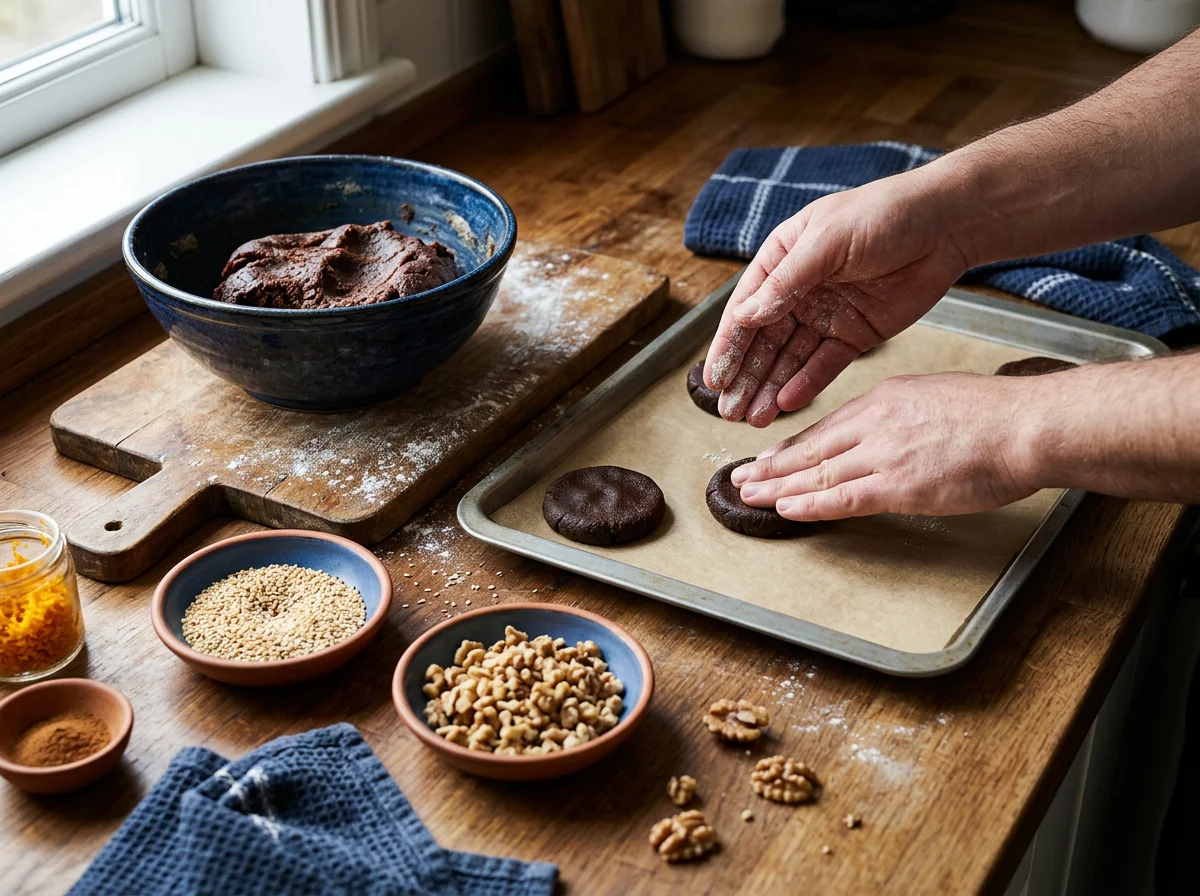
- Pinch off pieces of about 28 g (a heaping tablespoon) and roll them into balls. Place 14 on each pan, 3 cm / 1 inch apart, then press each one into a disc about 5 cm / 2 inches wide and 1.5 cm / 1/2 inch thick. Sprinkle the sesame seeds on top and press them in lightly.
- Bake for 16 to 18 minutes, swapping the pans between racks and turning them around after 8 minutes, until the edges are set and the tops look dry with small cracks. The centers will still feel slightly soft.
- Leave the cookies on the pans for 15 minutes, until they firm up and can be lifted without breaking. Move them to a rack or plate to cool fully.
Notes
- Measure the flour by weight if you can, since too much makes dry cookies.
- Shape the dough into equal 28 g pieces so they bake at the same pace.
- Bake both pans on separate racks and swap them halfway through.
- Let the cookies cool on the pan for 15 minutes before moving them.
Tips for Success
- Oil your measuring spoon or cup before measuring the grape molasses so the thick syrup slides out instead of sticking.
- Knead the dough for only about 1 minute, just until smooth, because longer kneading makes the cookies tougher.
- Weigh or scoop equal pieces of about 28 g so every cookie finishes baking at the same time.
- Pull the pans at 16 to 18 minutes when the edges are set, since the cookies firm up as they cool.
- Leave the cookies on the hot pan for 15 minutes before moving them, because they’re fragile straight from the oven.
Variations
- Swap the walnuts for chopped almonds, or use half walnuts and half almonds for a slightly sweeter crunch.
- Replace 100 g of the all-purpose flour with whole wheat flour for a nuttier, denser cookie.
- After baking, brush the warm cookies with 1 tbsp grape molasses thinned with a splash of water for a shiny top.
Storage and Reheating
Store the cooled cookies in an airtight container at room temperature for 10 to 14 days. Keep them away from the stove or sunny windows, since the olive oil can go stale faster in the heat.
These cookies are meant to be eaten at room temperature, so they don’t need reheating. A fresh batch is soft, and by day 3 or 4 they turn a little firmer and the spices taste stronger.
To freeze, layer the baked cookies in an airtight container with parchment between the layers. They keep for up to 3 months. Thaw them on the counter for about 30 minutes.
Serving Suggestions
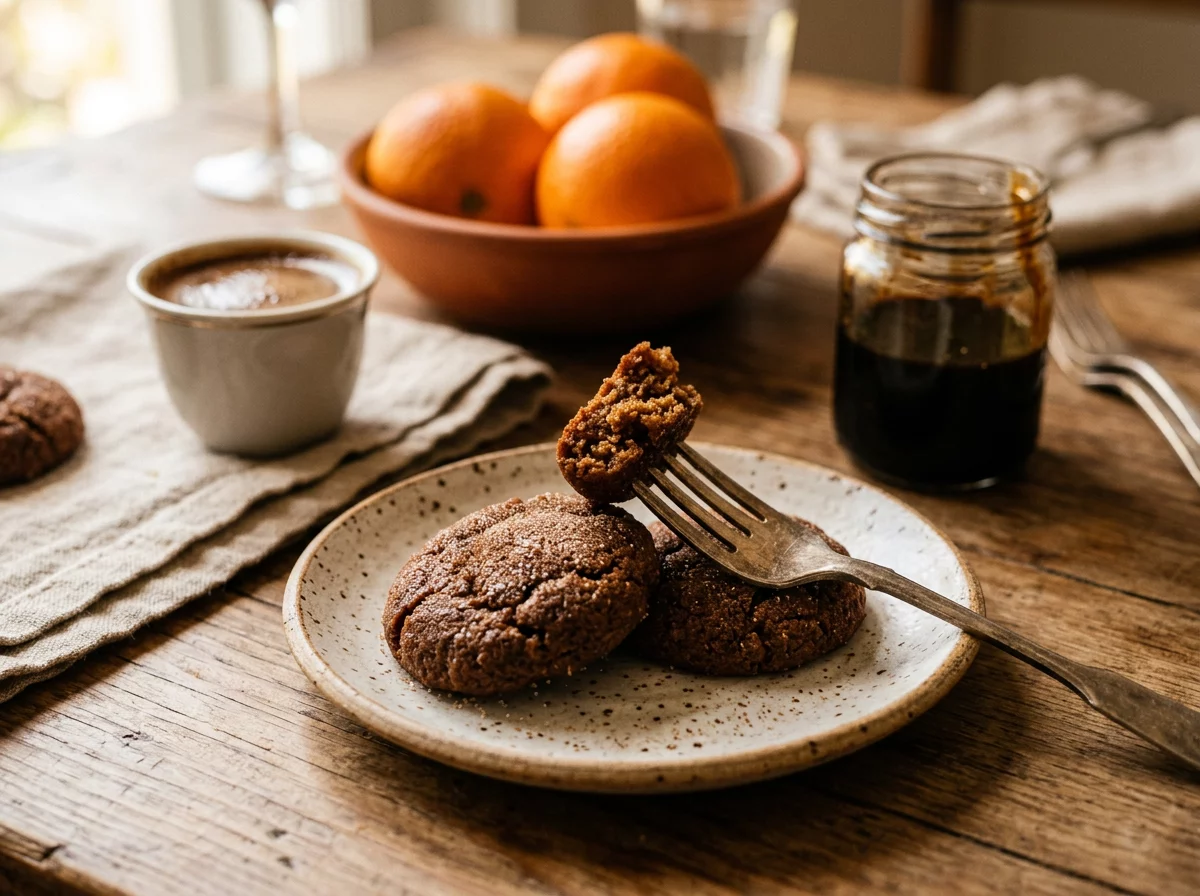
Serve two cookies with a small cup of Greek coffee or a glass of hot black tea. The bitter drink balances the sweet grape syrup well.
For a simple dessert plate, put a spoonful of plain Greek yogurt next to the cookies and add a few orange slices.
They also pack well in a tin for a gift or a picnic, since they don’t melt or crumble easily.
FAQ
Why are my grape molasses cookies hard?
Grape molasses cookies turn hard when they bake too long or the dough has too much flour. The dark dough hides browning, so go by touch instead of color. Pull the pans at 16 to 18 minutes, when the edges are set and the centers still feel slightly soft, and let them firm up on the pan.
Can I use carob syrup or date syrup instead of grape molasses?
Carob syrup swaps in at the same amount and gives a similar dark, slightly bitter flavor. Date syrup works too, but the cookies taste fruitier and a little sweeter. I’d skip honey and maple syrup, since they’re thinner, so the cookies spread more and lose that deep grape flavor.
Can I freeze Cypriot grape molasses cookies?
Yes, the baked cookies freeze well for up to 3 months. Layer them in an airtight container with parchment between the layers, then thaw at room temperature for about 30 minutes. The olive oil keeps them soft, so they don’t dry out the way some butter cookies do.
What do you serve with grape molasses cookies?
A small cup of Greek coffee goes well, and strong black tea works just as well. The cookies are sweet and spiced, so something hot and bitter balances them. For a dessert plate, I put two cookies next to plain Greek yogurt and a few orange slices.
Is this grape molasses cookie dough vegan?
Yes, the dough is vegan as written, with no eggs, milk or butter, since olive oil is the only fat. For a nut-free batch, leave out the walnuts and keep the sesame seeds on top. Check your sugar and baking powder labels if you follow a strict vegan diet.
What is the difference between moustokouloura and these cookies?
Moustokouloura are Cypriot cookies made with grape must and flour, and they’re usually denser and less sweet. My version is softer because it uses olive oil, baking powder and a little sugar. It’s an adapted, simpler recipe inspired by moustokouloura, not a strict copy.