
Jump to Recipe
Tomato-braised octopus with pearl onions is a slow-cooked Mediterranean-style dish where octopus simmers in crushed tomatoes, white wine, and garlic until it’s soft enough to cut with a fork. It takes about 2 hours, but most of that is hands-off oven time.
The sauce tastes of tomato and garlic, with a little brightness from lemon at the end. The octopus is tender and slightly sweet, and the pearl onions turn soft and golden at the edges.
I crush whole canned tomatoes by hand and hold the salt until the end, since octopus is already briny. Keep the heat low. If the sauce boils hard, the octopus tightens and turns rubbery, so you want slow, lazy bubbles.
This is a simplified dish inspired by Greek and Italian octopus stews, not a strict traditional recipe.
Why You’ll Love This Recipe
- Most of the 2 hours is hands-off oven time
- Frozen octopus works, so there’s no pounding or special tricks
- Browning and braising all happen in one Dutch oven
- It tastes even better the next day, so it’s easy to make ahead
Ingredient Notes
- octopus: Ask your fishmonger to clean it and remove the beak. Frozen octopus is fine, since freezing already softens the meat. Thaw it overnight in the fridge.
- pearl onions: Fresh ones need a 1-minute blanch to peel easily. Frozen peeled pearl onions or small halved shallots are realistic swaps.
- whole peeled canned tomatoes: I crush them by hand for a sauce with some texture. Canned crushed tomatoes work too, in the same amount.
- dry white wine: Use something you’d drink, like Pinot Grigio or Sauvignon Blanc. For no alcohol, use vegetable broth and a little extra lemon juice.
- salt: Add it at the end. Octopus and canned tomatoes both carry salt, and the sauce gets saltier as it reduces.
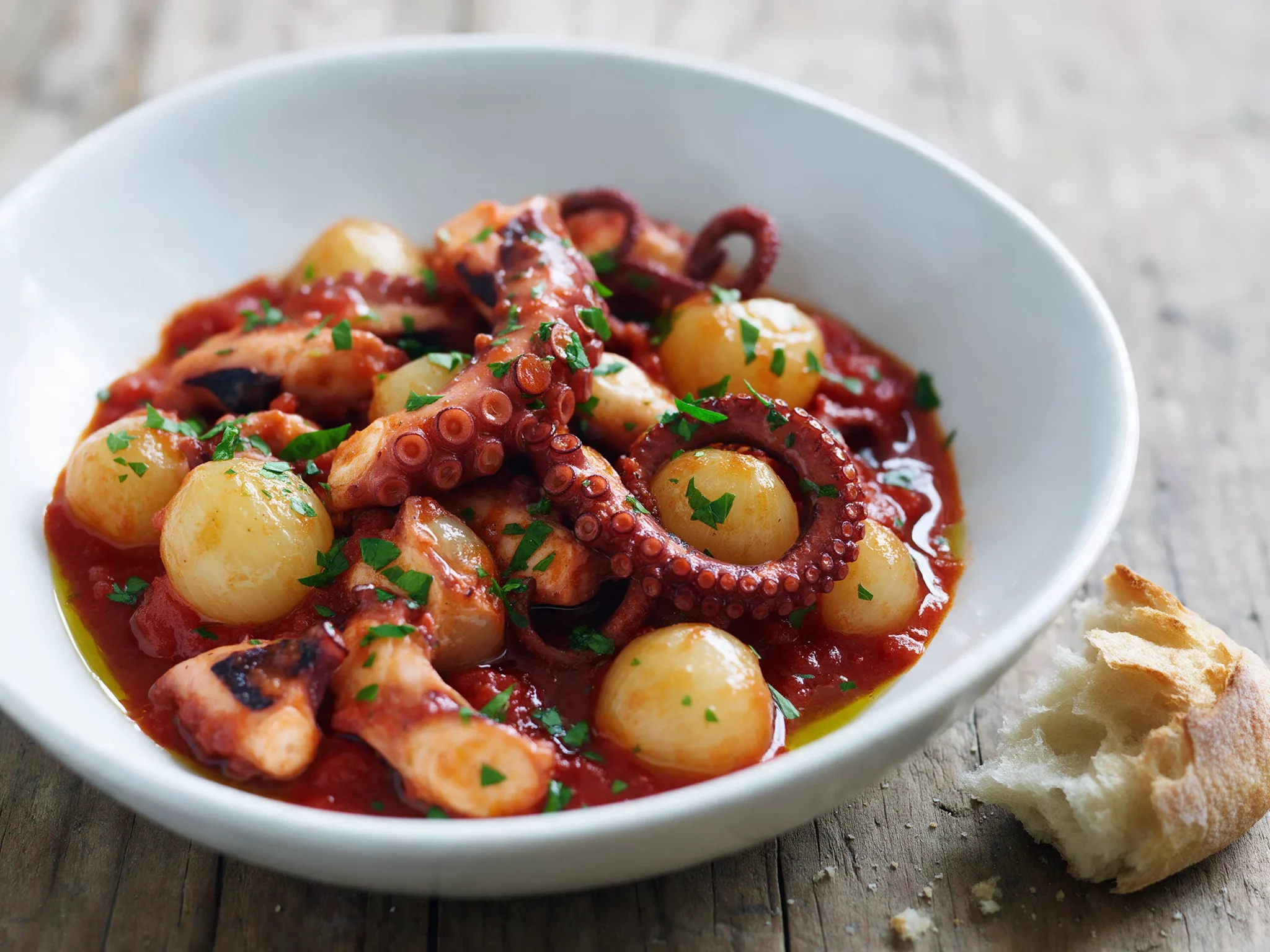
Tender Braised Octopus in Tomato Sauce with Pearl Onions
Ingredients
Method
- Heat the oven to 160 C / 320 F with a rack in the lower third. Boil water in a 2-quart / 1.9 L saucepan, add the pearl onions for 1 minute, then drain and rinse under cold water. Trim just a sliver off each root end and squeeze the onions out of their skins.
- Rinse the octopus under cold water and pat it dry. Check that the beak, a small hard ball where the tentacles meet, is gone, and cut it out if it's still there. Separate the head from the tentacles and cut the head into 4 pieces. Crush the canned tomatoes by hand in a bowl.
- Heat 3 tbsp of the olive oil in a 26 cm / 10-inch Dutch oven over medium heat. Add the onions and cook for 6 minutes, turning now and then, until browned in spots. Move them to a plate.
- Lower the heat to medium-low and add the remaining 1 tbsp oil, the garlic, and the red pepper flakes. Cook for 1 minute until fragrant but not browned. Stir in the tomato paste for 1 minute, then pour in the wine and simmer for 2 minutes, scraping up any browned bits.
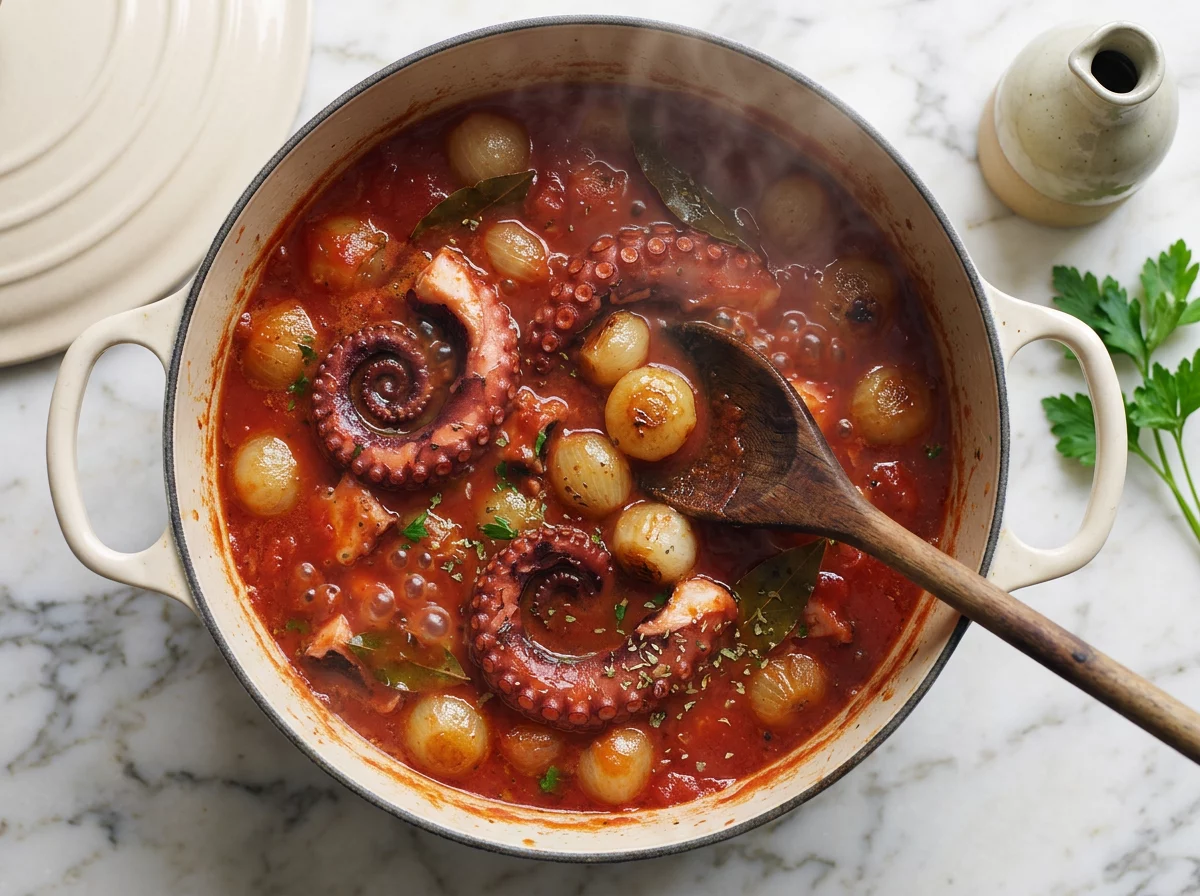
- Add the crushed tomatoes, bay leaves, oregano, black pepper, and octopus, and stir so the octopus sits under the sauce. Bring to a gentle simmer over medium heat, about 4 to 5 minutes. Cover and move to the oven for 45 minutes. The octopus releases liquid, so the sauce will look thin, and that's normal. Don't add salt yet, and if the sauce boils hard, lower the oven to 150 C / 300 F, because hard boiling makes octopus rubbery.
- Stir the browned onions back into the pot and set the lid slightly ajar. Return to the oven for 30 minutes, until the sauce coats the back of a spoon and a paring knife slides into the thickest part of a tentacle with almost no resistance. If it still resists, cook 10 minutes more.
- Remove the pot from the oven and take out the bay leaves. Stir in the lemon juice and 1/4 tsp salt, then taste and add more a pinch at a time if needed. Cover and rest for 10 minutes, then top with the parsley and serve.
Notes
- Keep the sauce at a gentle simmer the whole time, with only small slow bubbles.
- Ask your fishmonger to clean the octopus and remove the beak.
- Taste the reduced sauce before adding salt, since the octopus and tomatoes already carry some.
- Rest the pot covered for 10 minutes so the sauce settles before serving.
- Make it a day ahead if you can, because the flavor deepens overnight.
Tips for Success
- Buy cleaned octopus and check that the beak is gone, because it’s a small hard ball that doesn’t soften in the pot.
- Thaw frozen octopus overnight in the fridge. Freezing already softens the fibers, so you don’t need to pound or salt-rub it.
- Add salt only at the end. Octopus and canned tomatoes both carry salt, so taste first, then add a pinch at a time.
- Test the thickest tentacle with a paring knife. It should slide in with almost no resistance, and if it doesn’t, give it another 10 minutes.
- Peel pearl onions after a 1-minute blanch and leave the root end mostly intact, so the onions hold their shape through 30 minutes of braising.
Variations
- Add 400 g (14 oz) halved baby potatoes when you return the onions. They cook in the same 30 minutes and soak up the sauce.
- Swap the white wine for the same amount of dry red wine for a deeper, slightly sweeter sauce.
- Stir in 100 g (3.5 oz) pitted Kalamata olives and 1 tbsp capers with the onions for a tangier dish, and skip the added salt.
Storage and Reheating
Tomato-braised octopus keeps in the fridge for 3 to 4 days in an airtight container, with the octopus covered by sauce. Refrigerate it within 2 hours of cooking. The flavor is better on day two.
Reheat it in a 3-quart / 2.8 L pot over low heat with 2 tablespoons of water, covered, for 8 to 10 minutes, stirring once, until hot all the way through. You can also microwave it at 50% power in 1-minute bursts. High heat will toughen the octopus.
To freeze, pack portions with plenty of sauce and freeze for up to 2 months. Thaw overnight in the fridge, then reheat the same way.
Serving Suggestions
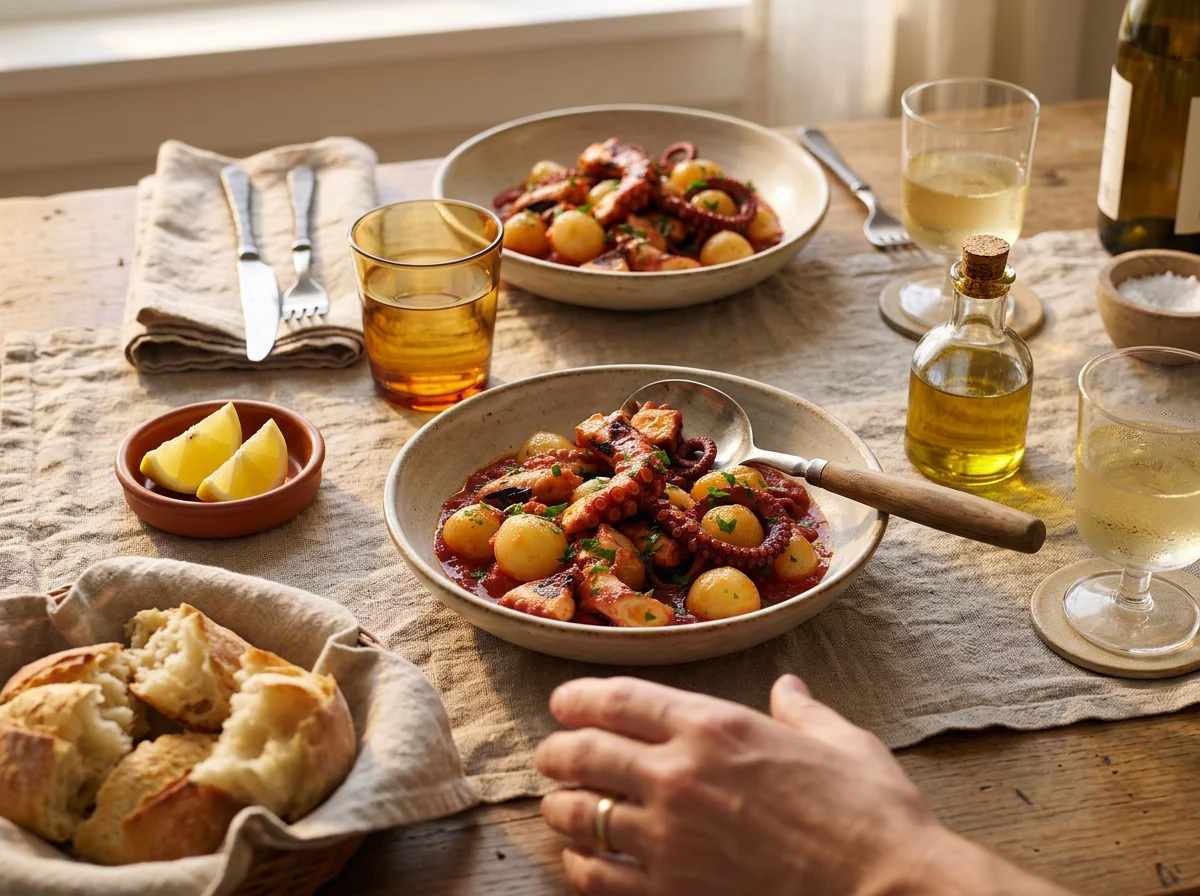
Tomato-braised octopus with pearl onions works best in shallow bowls with plenty of sauce and a piece of crusty bread on the side. Slice the tentacles into 4 cm / 1.5-inch pieces if you want them easier to eat, and spoon the onions over the top.
Soft polenta, boiled baby potatoes, or orzo turn it into a bigger meal. A plain arugula salad with lemon and olive oil is all you need next to it.
A dry white wine such as Vermentino or Assyrtiko goes well with the tomato and garlic. Finish each bowl with chopped parsley and a small drizzle of olive oil.
FAQ
Why is my braised octopus still rubbery after an hour?
Rubbery octopus usually means the sauce boiled too hard or the pot needs more time. Keep the bubbles slow and lazy, then test a tentacle with a paring knife. It should slide in with almost no resistance, and if it doesn’t, cook another 10 minutes and test again.
Can I use frozen pearl onions instead of fresh in tomato-braised octopus?
Yes, use 300 g (10 oz) frozen peeled pearl onions straight from the freezer and skip the blanching step. They release extra water, so brown them for 8 minutes instead of 6, until the surface looks dry and golden in spots. Small shallots, halved, also work.
Can I freeze tomato-braised octopus, and does the texture hold up?
Yes, it freezes well for up to 2 months in an airtight container with the sauce covering the octopus. Thaw it overnight in the fridge. The octopus stays tender, though the pearl onions soften a bit more than when freshly made, so I’d freeze portions rather than the whole batch.
What goes well with tomato-braised octopus and pearl onions?
Crusty bread is the easiest match because the sauce needs something to soak into. Soft polenta, boiled baby potatoes, or orzo also work well. I like a plain arugula salad with lemon on the side, since it cuts through the tomato and olive oil.
Is tomato-braised octopus gluten free, and can I leave out the wine?
Yes, the recipe is gluten free as written, so serve it with potatoes or polenta instead of bread if needed. To skip the wine, use 120 ml (1/2 cup) vegetable broth (check the label) plus 1 tbsp extra lemon juice at the end. The sauce will taste a little less deep but still bright.
What is the difference between braised octopus and boiled octopus?
Boiled octopus cooks in plain water and is usually finished on the grill or sliced into salads. Braised octopus cooks in a flavored sauce, so the meat takes on the tomato and garlic while the sauce picks up the octopus juices. This version spends 75 minutes in the oven at 160 C / 320 F.