
Jump to Recipe
Greek kourabiedes almond cookies are soft, crumbly butter cookies filled with toasted almonds and rolled in a thick coat of powdered sugar. They taste of butter and nuts, and they’re only lightly sweet until you hit the sugar.
Kourabiedes are a Greek Christmas cookie, though you’ll see them at weddings and baptisms too. Many older recipes use clarified butter. I use regular unsalted butter and one tablespoon of brandy, which keeps the recipe simple and still gives a rich flavor.
You’ll need about 35 minutes of hands-on work, plus 30 minutes of chilling. After that, most of the time is baking and cooling. The recipe makes about 28 cookies.
One thing to watch: don’t roll the cookies in sugar while they’re hot. The sugar melts into a sticky glaze instead of staying white and powdery. I dust them twice, once while they’re warm and once when they’re fully cool.
Why You’ll Love This Recipe
- Uses simple pantry ingredients and no special equipment
- The dough chills ahead, so baking is quick
- Keeps well for over a week at room temperature
- Soft, crumbly texture with a clear toasted almond flavor
Ingredient Notes
- unsalted butter: Use butter that’s cool but soft, so a finger leaves a dent without sinking in. If it’s shiny or greasy, the cookies will spread. If you only have salted butter, skip the salt.
- blanched almonds: Blanched almonds give a cleaner color, but skin-on almonds work too. Toasting matters here, because it adds most of the flavor.
- brandy: Greek Metaxa is the usual choice, but any brandy or cognac works. To skip it, use 1 tablespoon of milk or orange juice.
- powdered sugar: Sift it for the final coat, since it clumps in the bag and the lumps leave white patches.
- all-purpose flour: Weigh it if you can. Scooping with a cup can pack in extra flour, and the cookies turn dry and sandy.
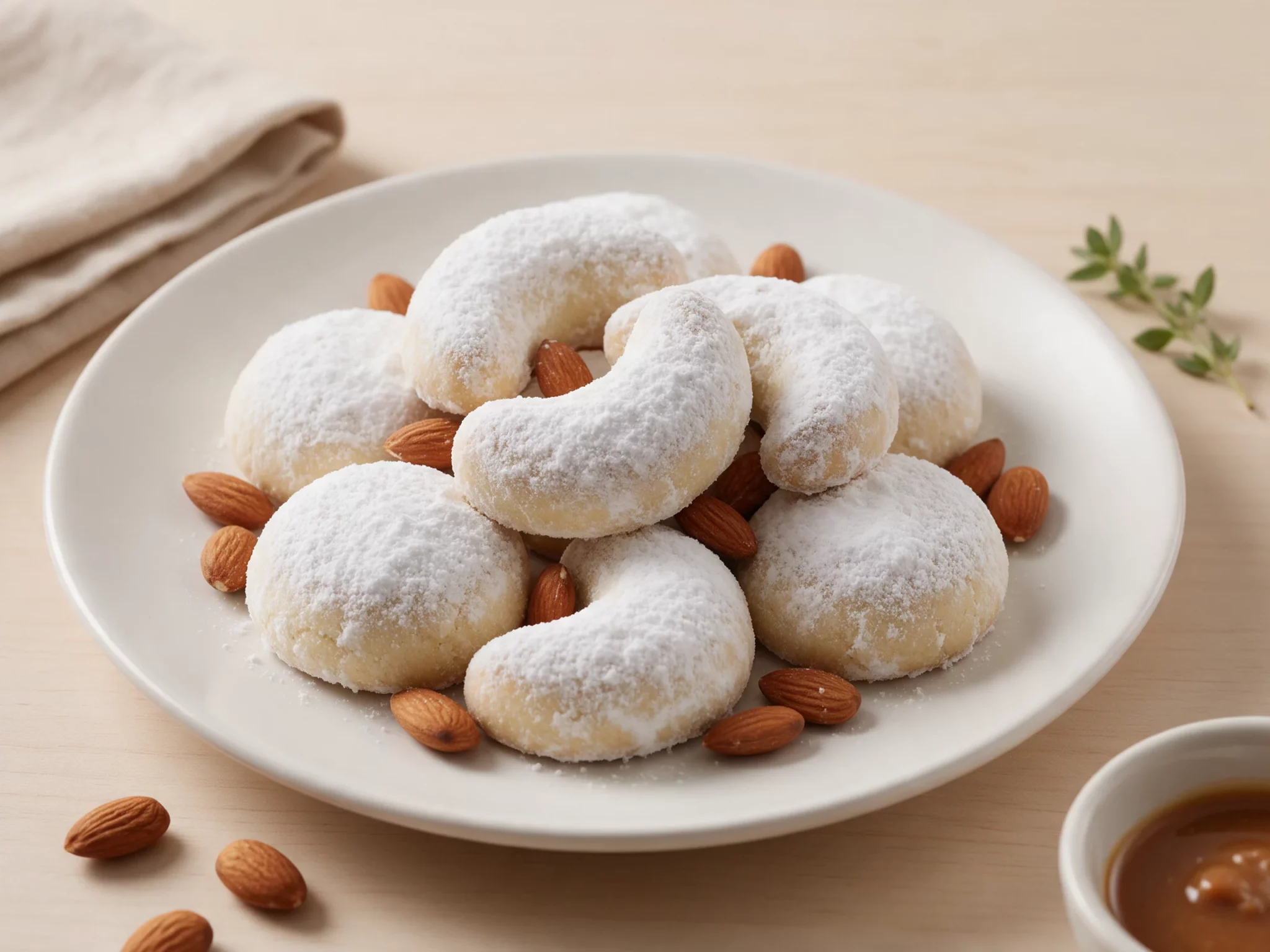
Buttery Greek Kourabiedes Cookies with Toasted Almonds
Ingredients
Method
- Toast the almonds in a dry 20 cm / 8-inch skillet over medium heat for 5 to 6 minutes, stirring often, until they smell nutty and look light gold. Tip them onto a plate to cool for 10 minutes, then chop them fine, about the size of lentils.
- Beat the butter and 100 g powdered sugar with a mixer on medium-high for 5 minutes, until pale and fluffy. Add the egg yolk, brandy, and vanilla and beat for 1 minute more, until smooth.
- Whisk the flour, baking powder, and salt in a large bowl. Add it to the butter mixture in two batches on low speed, then mix in the almonds. Stop when no dry flour is visible. The dough will be soft.
- Cover the bowl and chill for 30 minutes, until the dough is firm enough to roll without sticking to your hands. In the last 15 minutes, heat the oven to 175 C / 350 F with racks in the upper and lower thirds, and line two 33 x 46 cm / 13 x 18 inch sheet pans with parchment.
- Scoop about 1 heaped tablespoon of dough (27 g) and roll it into a ball. Shape it into a crescent if you like. Place 14 cookies on each pan, about 4 cm / 1.5 inches apart. If the dough feels crumbly, press it together with warm hands for a minute first.
- Bake for 18 to 20 minutes, swapping the pans between racks and turning them front to back at the 10-minute mark. The cookies are done when the bottoms and edges are pale gold and the tops are still pale. Don't wait for the tops to brown.
- Cool the cookies on the pans for 10 minutes. Put 50 g powdered sugar in a shallow dish and roll the warm cookies in it gently, a few at a time. Move them to a wire rack and cool completely, about 20 minutes.
- Sift the remaining 100 g powdered sugar over the cooled cookies and turn them to coat all sides. Press the sugar on lightly with your fingers. Serve at room temperature.
Notes
- Chill the dough for 30 minutes so the cookies hold their shape in the oven.
- Keep the tops pale when baking. Browned tops mean dry cookies.
- Use butter soft enough to dent with a finger, but not shiny or greasy.
- Portion about 27 g of dough per cookie to get 28 cookies.
- Sift the second coat of sugar to avoid lumps and white patches.
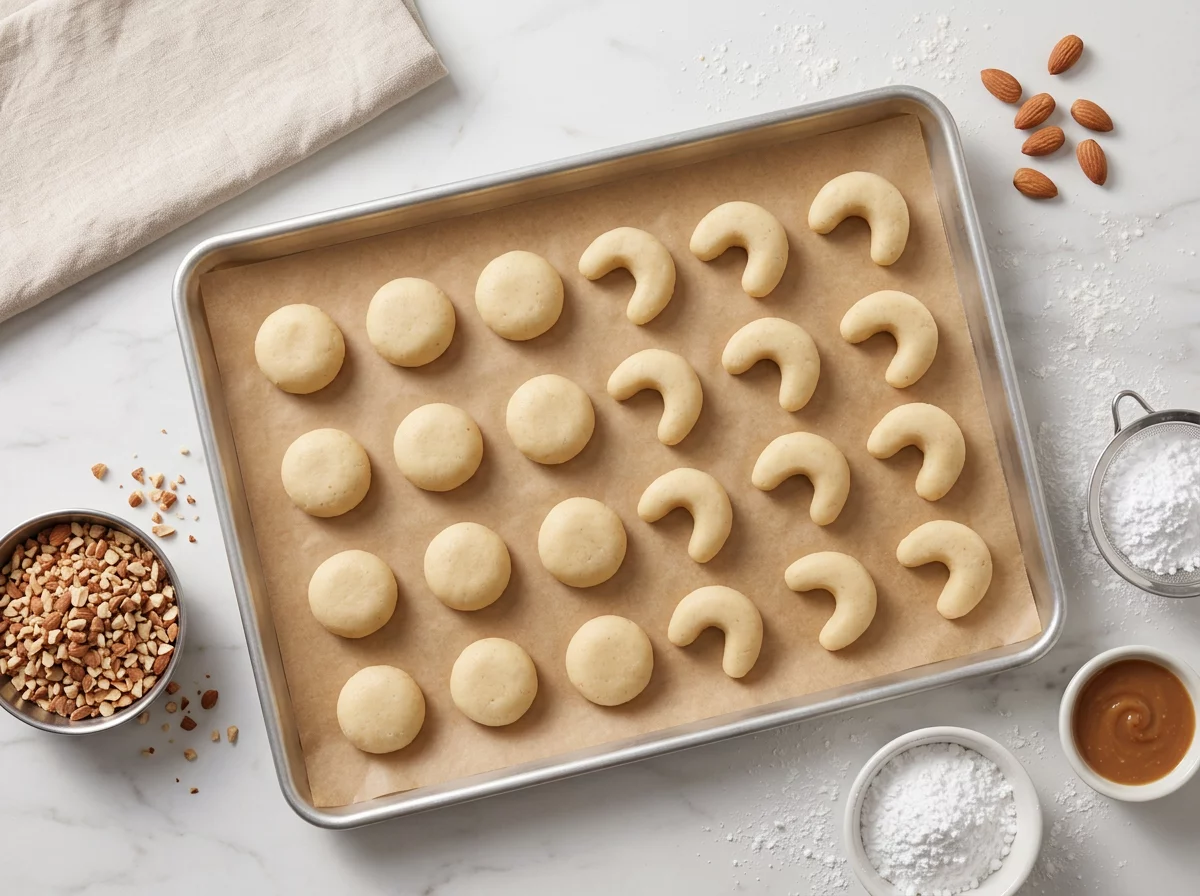
Tips for Success
- Beat the butter and sugar for a full 5 minutes until pale and fluffy, since this air gives the cookies their light, crumbly texture.
- Toast the almonds in a dry skillet over medium heat for 5 to 6 minutes, stirring often, and let them cool before chopping.
- Chop the almonds fine, about the size of lentils, so the dough holds together and the cookies don’t crack when you shape them.
- Weigh the flour. Too much makes dry, sandy cookies, and 300 g is the right amount for this much butter.
- Wait 10 minutes after baking for the first dusting, then sift on the second layer only when the cookies are fully cool.
Variations
- Swap the almonds for toasted walnuts or pecans, chopped to the same size, for a softer and rounder nut flavor.
- Press one whole clove into the top of each ball before baking for a Christmas-style version. Tell guests to remove it before eating.
- Add 1 tsp rose water to the dough, or sprinkle a little over the warm cookies before the first dusting, for a light floral note.
Storage and Reheating
Store kourabiedes in an airtight container at room temperature for 7 to 10 days. Layer them with parchment paper so the sugar coating stays intact. If the sugar looks thin after a few days, sift a little more over the top before serving.
To freeze, pack the baked cookies in a single layer before the final dusting, or with only the first light coat. They keep for up to 2 months. Thaw on the counter for 30 minutes, then sift on the final coat of sugar.
They don’t need reheating, and they taste best at room temperature. Skip the fridge, since the butter firms up and the sugar can turn damp.
Serving Suggestions
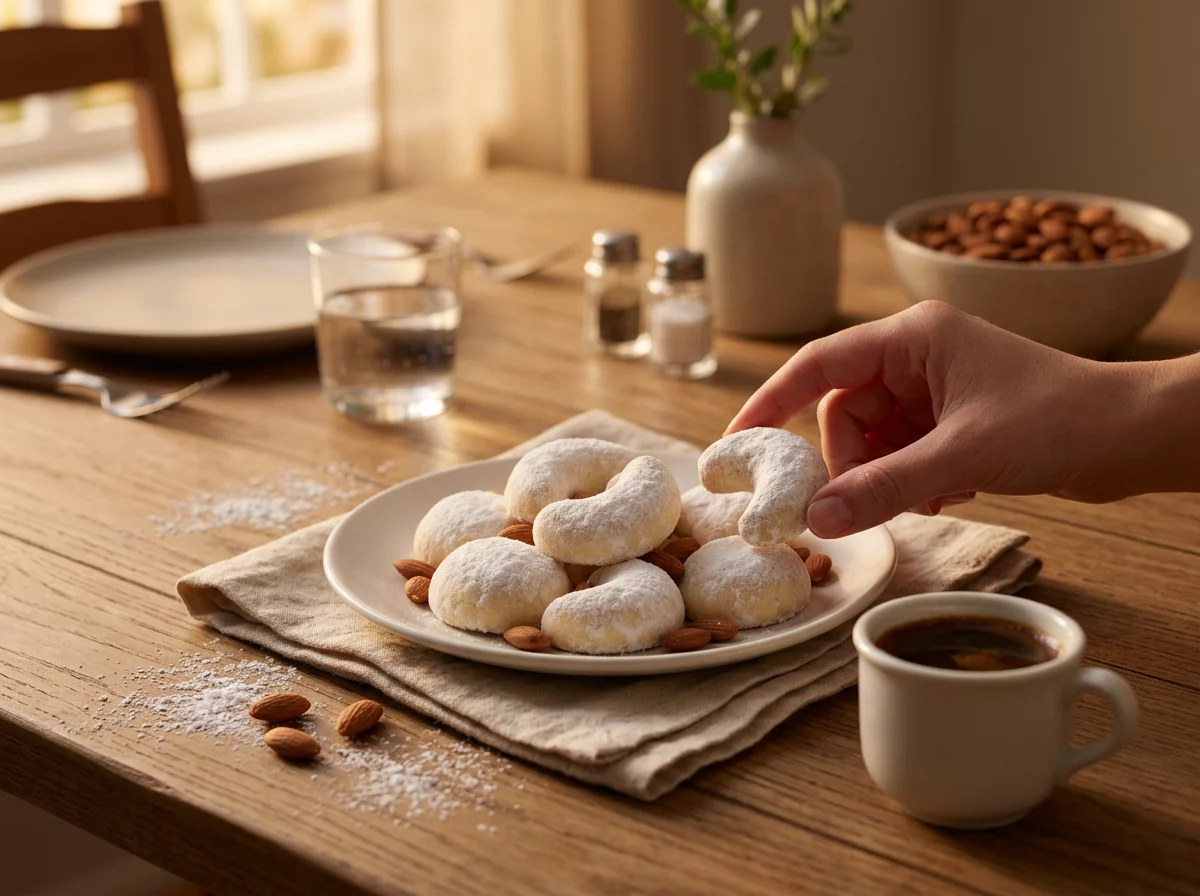
Serve kourabiedes at room temperature with Greek coffee or black tea. The bitter drink balances the sweet sugar coating well. A cold glass of milk also works.
For a holiday plate, pile them in a shallow dish or set each one in a small paper liner. The liners catch the loose sugar.
Powdered sugar goes everywhere, so hold the cookie over a plate when you take a bite. They also pack well in a tin as a gift, layered with parchment.
FAQ
Why did my kourabiedes sugar melt and turn sticky?
The cookies were too warm when you coated them. Hot butter cookies melt powdered sugar into a glaze. Roll them gently after 10 minutes of cooling for a thin first layer, then let them cool completely on a rack, about 20 minutes, before sifting on the thick second coat.
Can I leave the brandy out of kourabiedes?
Yes. Replace the 1 tablespoon of brandy with 1 tablespoon of milk or orange juice, and keep the vanilla. The cookies will taste a little less warm and rounded, but the texture stays the same. Orange juice adds a faint citrus note, which I like with the almonds.
Can I freeze kourabiedes, and should I dust them first?
Freeze them baked but undusted, or with only the first light coat. Layer them in an airtight container with parchment for up to 2 months. Thaw at room temperature for 30 minutes, then sift on the final coat of powdered sugar. Condensation while thawing can make a finished coat damp.
What do you drink with kourabiedes?
Greek coffee is the usual match, since its bitterness balances the sugar coating. Black tea or a small glass of sweet dessert wine works too. Cold milk is good for a simple option. Avoid sweet drinks like soda, because the cookies are sweet enough on their own.
Are kourabiedes gluten free?
No, kourabiedes are made with all-purpose flour, so they contain gluten. A cup-for-cup gluten-free flour blend should replace the flour by weight, though the dough will be more fragile. Chill it for 45 minutes instead of 30 and handle the shaped balls gently.
What is the difference between kourabiedes and Mexican wedding cookies?
Kourabiedes are Greek and usually use almonds, butter, and a little brandy, with a thick powdered sugar coat. Mexican wedding cookies, also called polvorones, usually use pecans and skip the brandy. The doughs are alike, but almonds and brandy give kourabiedes their own flavor.