
Jump to Recipe
Koupepia are Cyprus’s version of stuffed grape leaves, filled with rice, ground pork and beef, and simmered slowly in a lemon and olive oil broth until soft.
The filling stays juicy because the rice cooks right inside the leaf, soaking up the meat juices and lemon as it simmers. The outside of the leaf turns soft and a little tangy from the brine, and the inside tastes rich from the two meats and fresh mint.
I use jarred grape leaves for this recipe since they’re easier to find and don’t need blanching, just a rinse in hot water to cut the salt. Cypriot cooks often make a big batch, since koupepia keep well and taste just as good the next day.
This one takes patience while you roll, but the cooking part is mostly hands-off. Once the pot is going, you can leave it on low heat and get on with something else.
Why You’ll Love This Recipe
- Filling stays juicy from rice, meat and lemon cooking together
- Jarred grape leaves make this simple, no blanching needed
- Keeps well for days, so it’s good for meal prep
- One pot handles the whole cook, just watch the heat
Ingredient Notes
- grape leaves: Jarred leaves in brine are easiest, just rinse off the salt before rolling. Fresh leaves work too if you blanch them for 20 to 30 seconds first.
- ground pork and beef: The mix of two meats gives a rounder flavor than either alone. You can use all beef if that’s what you have on hand.
- short-grain rice: Short-grain rice holds its shape better inside the leaf than long-grain. Regular round rice used for dolma works fine here.
- fresh mint and parsley: Use fresh herbs, not dried, since they give the filling its brightness. Dried herbs turn flat once the rolls simmer.
- ground cinnamon: Just a pinch adds warmth to the meat filling without making it taste sweet. This is a common touch in Cypriot meat dishes.
- lemon juice: Fresh squeezed lemon works best in the broth and filling. Keep extra wedges at the table since people like to add more.
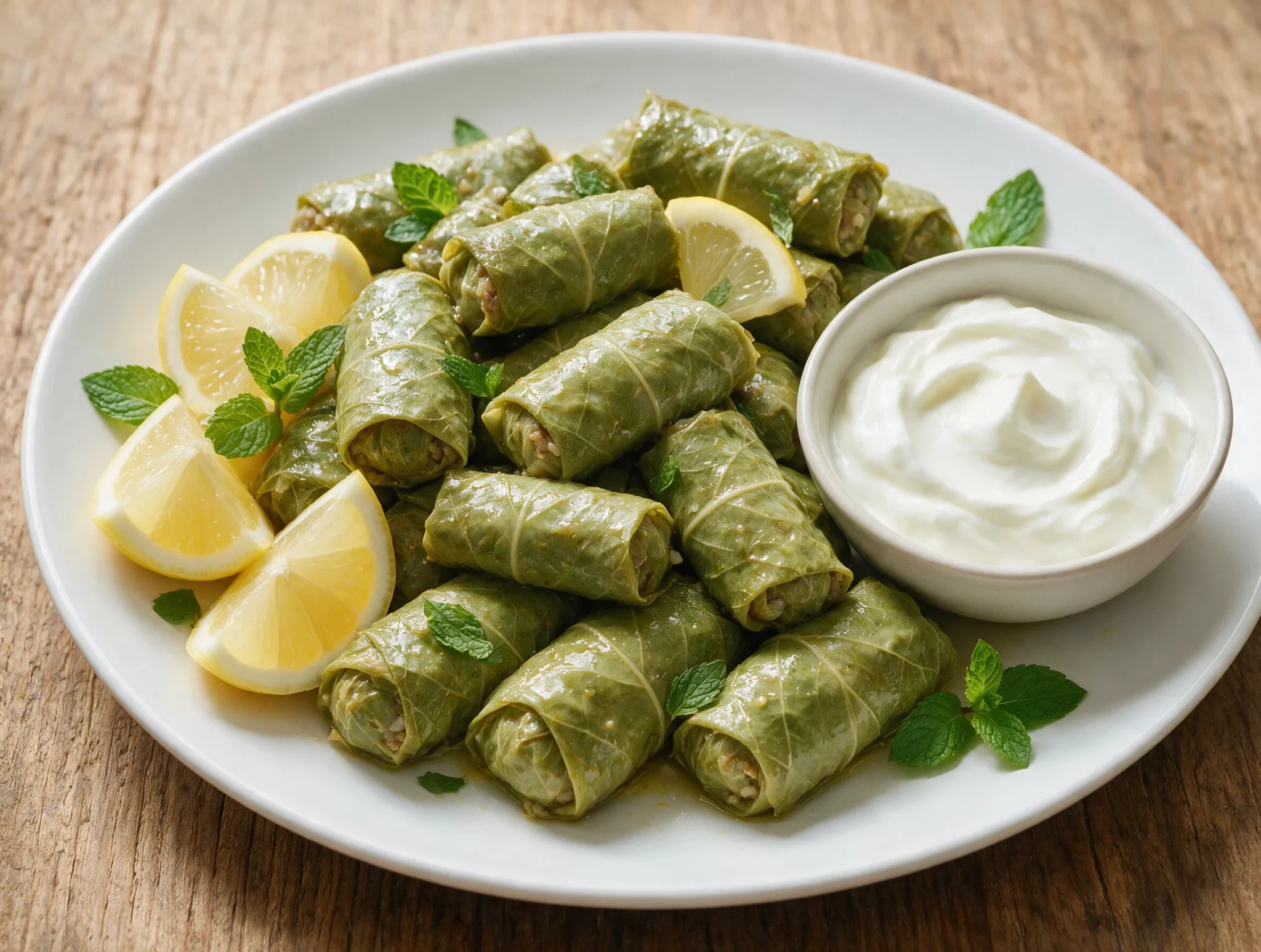
Soft Simmered Koupepia Stuffed Grape Leaves
Ingredients
Method
- If using jarred grape leaves, separate them gently and rinse under hot water 2 to 3 times to wash off the brine. Trim any tough stems with scissors and set aside a few torn or small leaves to line the pot.
- In a large mixing bowl, combine the rinsed rice, ground pork, ground beef, grated onion, grated tomato, tomato paste, mint, parsley, 3 tbsp of the olive oil, 2 tbsp of the lemon juice, cinnamon, salt and pepper. Mix with your hands until well combined.
- Lay a grape leaf shiny side down on a cutting board, stem end toward you. Place 1 heaping tablespoon of filling near the stem end.
- Fold the stem end and both sides over the filling, then roll away from you into a snug cylinder, like a small cigar. Don't roll too tight, since the rice will expand as it cooks. Repeat with the remaining leaves and filling, making about 40 rolls.
- Line the bottom of a 28 cm / 11-inch heavy pot with the reserved torn leaves and a few lemon slices, to stop the rolls from sticking and scorching.
- Arrange the koupepia seam side down in tight rows in the pot, stacking a second layer on top if needed.
- Pour the remaining olive oil and lemon juice over the rolls, then add the water or stock until the liquid just covers the top layer.
- Place a small heatproof plate directly on top of the rolls to keep them from unrolling as they cook.
- Cover the pot and bring to a gentle simmer over medium heat, then lower the heat and simmer for 45 minutes, until the rice is tender and a roll cut in half shows no raw meat.
- Turn off the heat and let the koupepia rest in the pot, still covered, for 10 minutes before lifting out.
- Serve warm or at room temperature, with lemon wedges and a spoon of yogurt on the side.
Notes
- Rinse brined leaves well or the dish turns too salty.
- Don't skip the weight plate, it keeps rolls from unrolling.
- Use a mix of pork and beef for the best flavor balance.
- Simmer gently, a hard boil can tear the leaves apart.
- Let rolls rest 10 minutes off heat before serving.
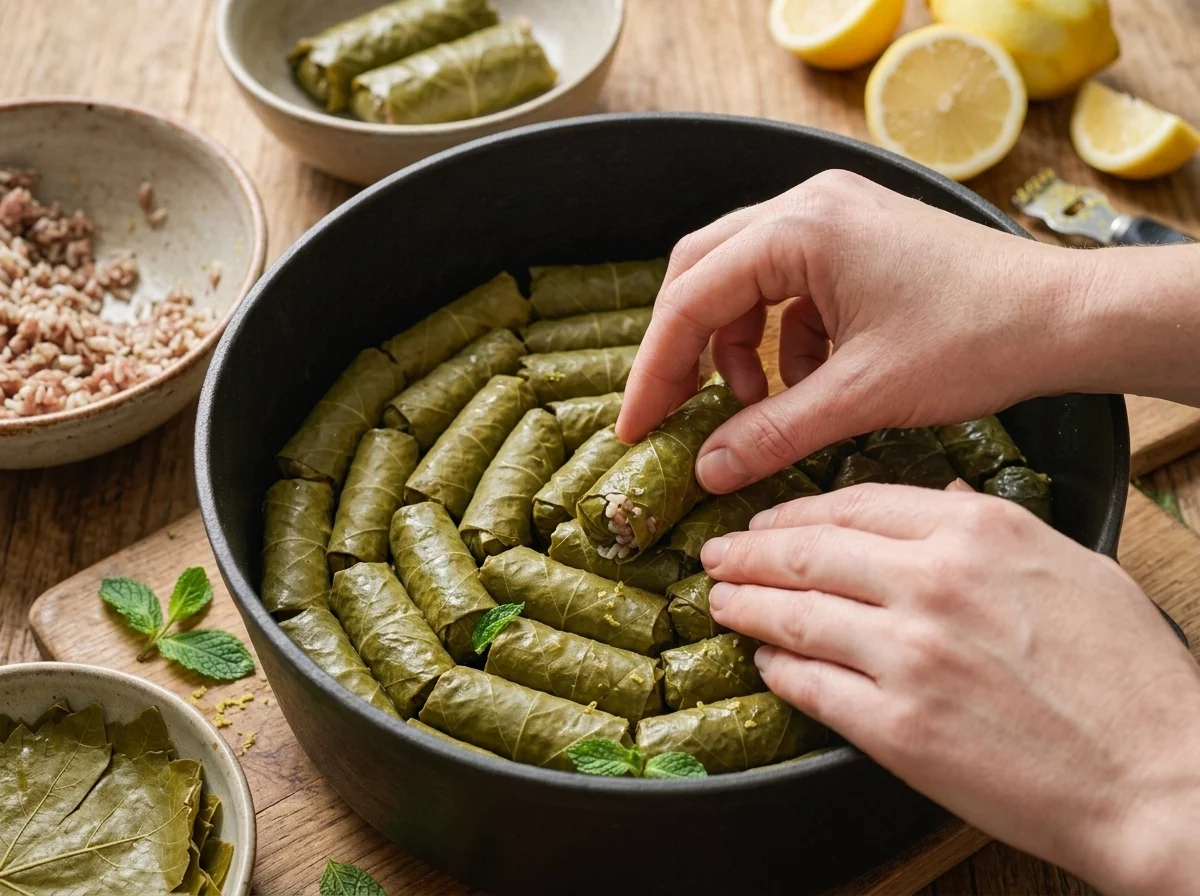
Tips for Success
- Rinse jarred grape leaves under hot water two or three times to wash off the salty brine before rolling.
- Roll the koupepia snugly but not tight, since the rice swells as it cooks and can burst tight leaves.
- Weight the rolls with a small plate so they hold their shape and don’t float apart while simmering.
- Keep the heat low once the pot reaches a simmer, since a hard boil can tear the leaves.
- Cut one roll in half before serving to check the rice is tender and the meat is no longer pink.
Variations
- Skip the meat and use extra rice, pine nuts, currants and herbs for a vegetarian version of koupepia.
- Swap the pork for all ground beef if you prefer a single-meat filling with a firmer bite.
- Add a handful of chopped dill along with the mint and parsley for a slightly different herb profile.
Storage and Reheating
Koupepia keep well in the fridge for 3 to 4 days in an airtight container. Store them with a little of the cooking liquid so they don’t dry out.
To reheat, put the rolls in a 26 cm / 10-inch skillet with a splash of water or stock, cover, and warm over low heat for 6 to 8 minutes. You can also microwave them covered for 1 to 2 minutes.
Cooked koupepia freeze well for up to 2 months. Freeze them flat in a container with a bit of their liquid, then thaw overnight in the fridge before reheating.
Serving Suggestions
Koupepia are good with a spoon of thick yogurt on the side, since the cool, tangy dairy balances the rich filling.
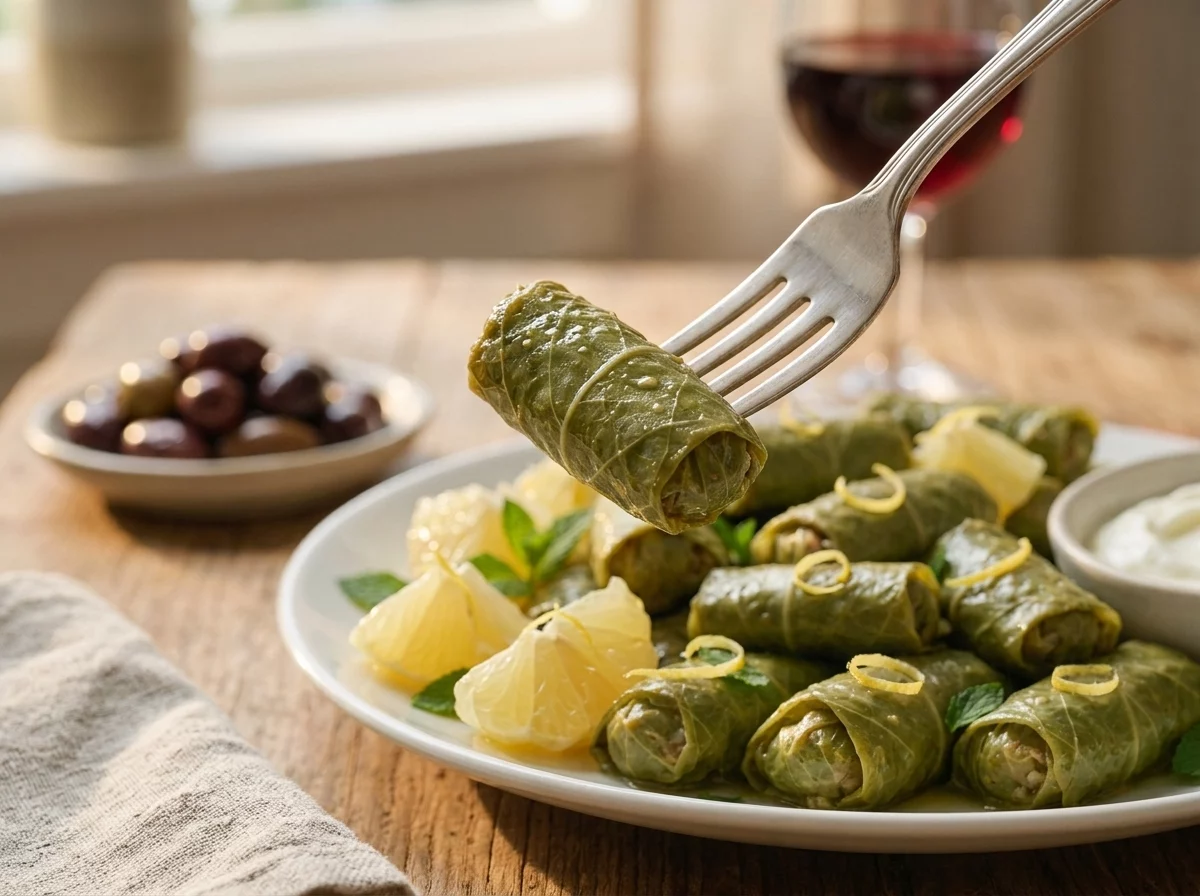
I like to serve them as part of a bigger spread with crispy halloumi fries, olives and warm pita, the way they’re served at a meze table.
For a simple dinner, a plate of koupepia with a wedge of lemon and a Cypriot village salad is enough on its own.
FAQ
Why do my koupepia fall apart when I unroll them?
This usually happens when the rolls weren’t packed tightly enough in the pot or the plate on top wasn’t heavy enough to hold them down. Roll the leaves snugly, pack the koupepia close together in tight rows, and always weigh them down with a small heatproof plate while they simmer.
Can I use fresh grape leaves instead of jarred ones for koupepia?
Yes, fresh grape leaves work well if you blanch them first. Drop the leaves in boiling water for 20 to 30 seconds until they turn soft and dark green, then drain and cool before rolling. Jarred leaves in brine are easier since they’re already soft, just rinse off the extra salt.
Can I make koupepia ahead of time or freeze them?
Yes, koupepia are a good make-ahead dish. Cook them fully, cool, and store in the fridge for 3 to 4 days, or freeze the cooked rolls flat with a little cooking liquid for up to 2 months. Thaw overnight in the fridge, then reheat gently over low heat.
What do you serve with koupepia?
Koupepia go well with plain thick yogurt, since the tang cuts through the rich rice and meat filling. I also serve them with halloumi, olives and warm pita as part of a meze spread, or just with a lemon wedge and a simple salad for a light dinner.
Is koupepia gluten free?
Yes, this koupepia recipe is gluten free, since it’s made with rice, grape leaves, meat and herbs with no wheat or flour. Just double check your stock or tomato paste doesn’t have added gluten-based thickeners, which is rare but worth a quick label check.
What’s the difference between koupepia and Greek dolmades?
Koupepia is the Cypriot version of stuffed grape leaves and usually includes ground pork and beef along with rice, plus a touch of cinnamon and mint, much like the pork used in Cypriot afelia. Greek dolmades are often meat-free, filled with just rice and herbs, and served cold with a squeeze of lemon instead of warm from the pot.