
Jump to Recipe
Roasted grape and feta tart is a puff pastry tart topped with soft red grapes, salty feta, and a thin layer of lemony ricotta. It tastes sweet and salty at the same time, and the pastry stays flaky and crisp at the edges.
I roast the grapes in their own pan first, just as I do for golden halloumi and roasted grape crostini. They split and turn jammy, and the extra juice stays behind in the pan. If you put raw grapes straight onto the pastry, the juice soaks in and the bottom turns pale and wet.
You do not need anything special for this one. Store-bought all-butter puff pastry works well, and the whole tart takes about 50 minutes.
I like to serve it warm or at room temperature, as a starter, a light lunch, or part of a cheese board.
Why You’ll Love This Recipe
- Sweet grapes and salty feta balance each other well
- Store-bought puff pastry keeps the work light
- Roasting the grapes separately keeps the base crisp
- Good warm or at room temperature for easy hosting
Ingredient Notes
- puff pastry: I use all-butter puff pastry because it puffs higher and tastes better. Keep it cold until it goes on the pan, and thaw it in the fridge overnight.
- red seedless grapes: Red grapes turn sweet and jammy when roasted. Green seedless grapes work too, but the tart will taste a bit sharper.
- feta: Buy a block packed in brine and crumble it yourself. Pre-crumbled feta is drier and doesn’t soften as well in the oven.
- ricotta: The ricotta makes a thin creamy layer under the grapes. Cream cheese at room temperature is a fair swap, though it’s a little tangier.
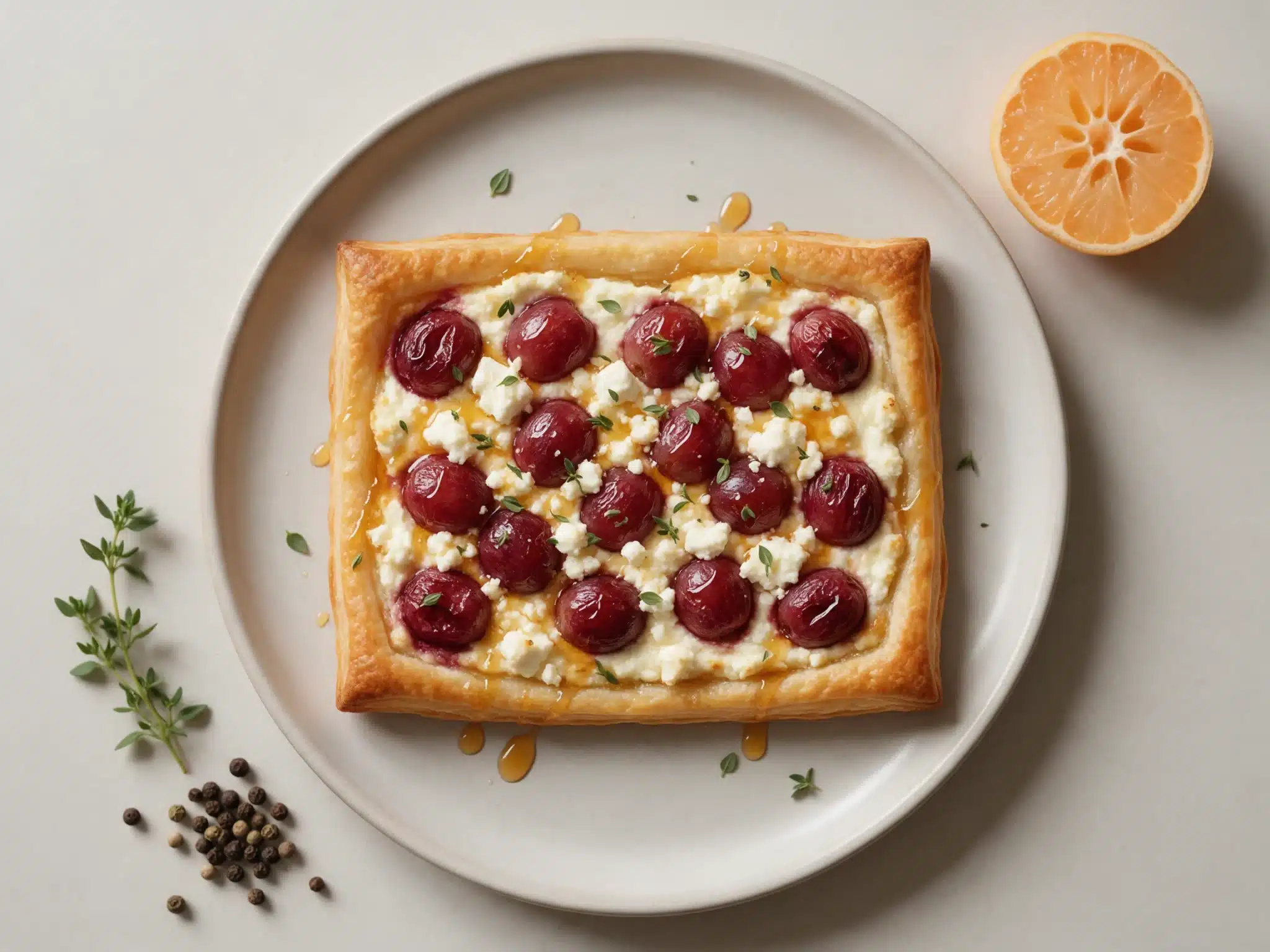
Roasted Grape and Feta Tart with Honey and Fresh Thyme
Ingredients
Method
- Heat the oven to 200 C / 400 F with one rack in the middle and one in the lower third. Toss the grapes with the olive oil, salt, and half of the thyme in a 23 x 33 cm / 9 x 13 inch baking pan.
- Line a 33 x 46 cm / 13 x 18 inch sheet pan with parchment and unfold the puff pastry onto it. Use a knife to score a border 2 cm / 3/4 inch from the edge, without cutting through. Prick the center all over with a fork and brush the border with the beaten egg.
- Put the pastry on the middle rack and the grapes on the lower rack. Bake the pastry for 10 minutes, until the border is puffed and light golden. Leave the grapes in for 15 minutes total, until most skins have split and the juices bubble.
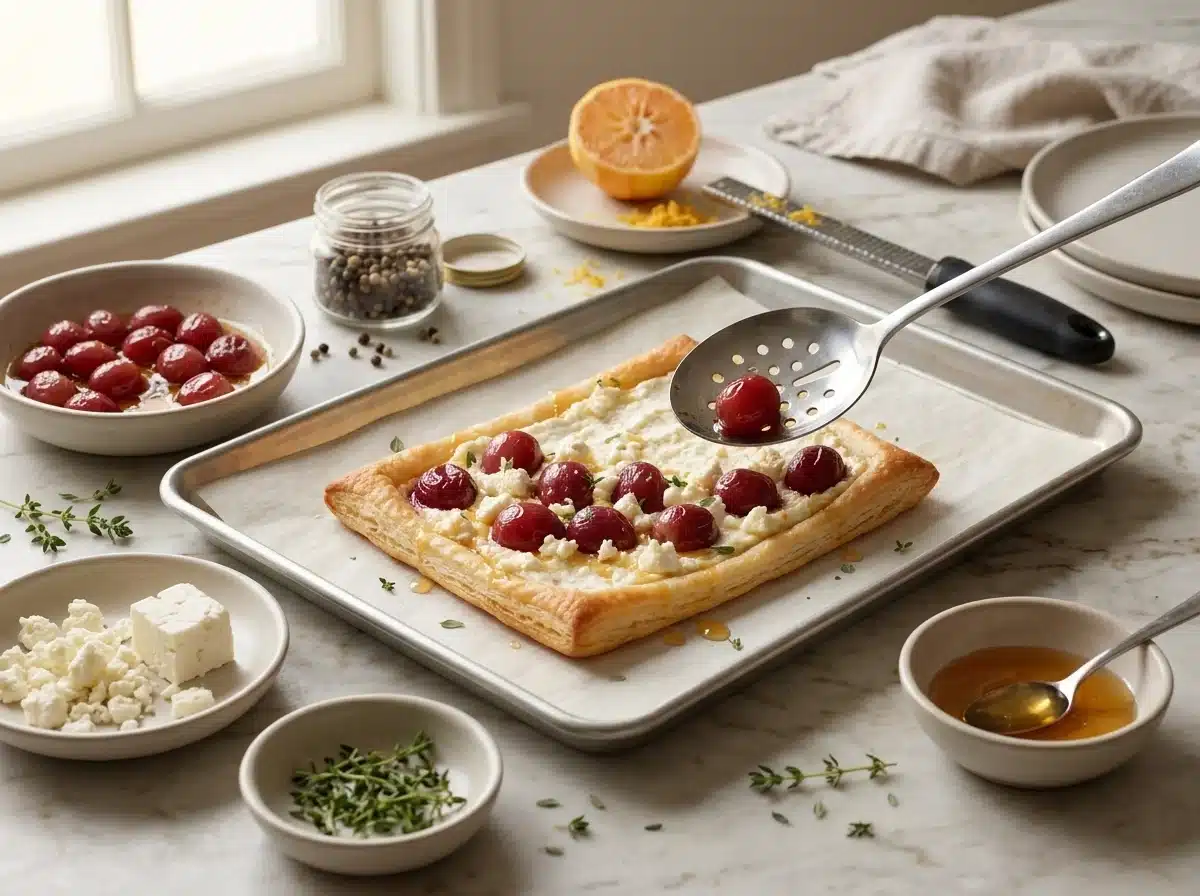
- Press the puffed center of the pastry down gently with the back of a spoon. Stir the ricotta with the lemon zest and pepper, then spread it inside the border. Lift the grapes out with a slotted spoon and scatter them over the ricotta, leaving the juices in the pan so the pastry stays crisp. Crumble the feta on top.
- Bake the tart for 15 minutes, until the border is deep golden and the feta edges start to brown. Let it rest on the pan for 5 minutes. Drizzle with the honey and 1 tablespoon of the pan juices, scatter with the remaining thyme, and cut into 6 pieces.
Notes
- Thaw the puff pastry in the fridge overnight, or it will crack when you unfold it.
- Taste the feta first. Brined blocks are salty, so you may not need extra salt.
- Leave the roasting juices in the pan and spoon just 1 tablespoon over the finished tart.
- Let the tart rest 5 minutes after baking so the ricotta sets and slices cleanly.
Tips for Success
- Dry the grapes well after washing so they roast and blister instead of steaming in their own water.
- Prick the center of the pastry all over with a fork, but leave the scored border alone so it puffs up.
- Press the puffed center down gently with the back of a spoon before adding the ricotta, so the toppings sit level.
- Lift the grapes out with a slotted spoon and leave the juices in the pan to keep the pastry crisp.
- Cut the tart with a sharp knife in a sawing motion, so the flaky edges don’t crush.
Variations
- Swap the feta for 150 g of soft goat cheese, dotted in small pieces over the ricotta before the final bake.
- Toss the grapes with 1 tablespoon of balsamic vinegar before roasting for a deeper, tangier flavor.
- Use fresh rosemary instead of thyme, and scatter 40 g of chopped toasted walnuts over the tart after baking.
- Skip the ricotta and brush the pastry with a thin layer of whole-grain mustard for a sharper, more savory base.
Storage and Reheating
Roasted grape and feta tart keeps in the fridge for 2 to 3 days. Let it cool fully, then store it in an airtight container with a sheet of parchment between the layers.
To reheat, put slices on a sheet pan in a 180 C / 350 F oven for 8 to 10 minutes, until the edges are crisp again and the feta is warm. I skip the microwave because it makes the pastry soft.
I don’t freeze the baked tart because the grapes release liquid as they thaw. If you want to get ahead, roast the grapes up to 2 days before and keep them in the fridge with their juices.
Serving Suggestions
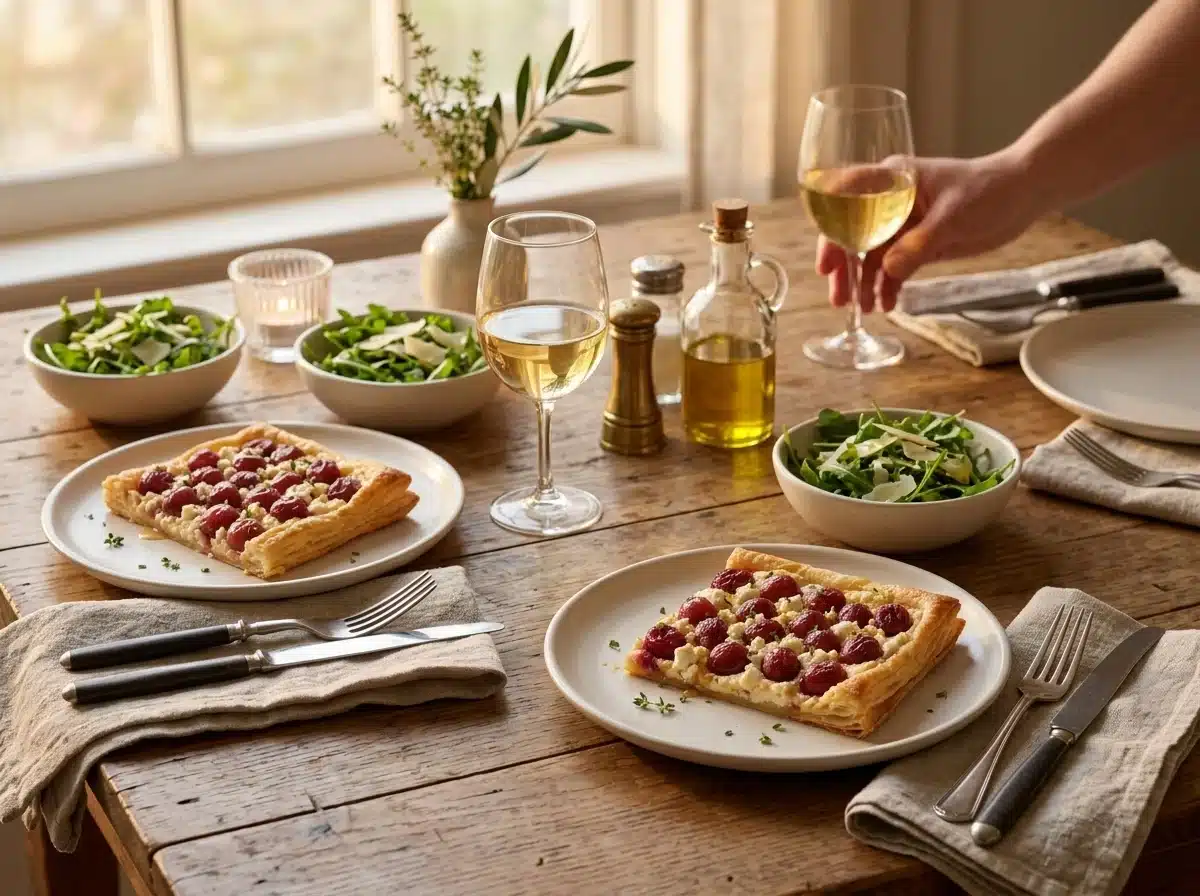
Serve roasted grape and feta tart warm or at room temperature, within 1 hour of baking while the pastry is at its crispest. Cut it into 6 rectangles for lunch, or into about 12 small squares for a party.
A simple arugula salad with lemon and olive oil goes well on the side. The peppery leaves cut through the honey and the salty feta.
It also works on a cheese board next to sliced pears, walnuts, and a few olives.
FAQ
How do I know when the grapes for my roasted grape and feta tart are done?
The grapes are done when most skins have split and the juices around them bubble and look syrupy, usually after 15 minutes at 200 C / 400 F. They should still hold their shape. A few intact grapes among the split ones are fine.
Can I use goat cheese instead of feta in a roasted grape tart?
Yes, goat cheese works and gives a creamier, milder result. Use 150 g, dotted in small pieces over the ricotta, and bake the same 15 minutes. Feta stays in crumbly chunks and tastes saltier, so if you switch, you may want a tiny pinch more salt on the grapes.
Can I roast the grapes ahead for the grape and feta tart?
Yes. Roast the grapes up to 2 days ahead and keep them, with their juices, in a covered container in the fridge. Par-bake the pastry fresh and assemble when you’re ready. Cold grapes may need 2 to 3 extra minutes in the final bake.
What wine or sides go with a roasted grape and feta tart?
A dry white like Sauvignon Blanc or a crisp rosé works well, since the acidity cuts through the salty feta and sweet grapes. For a light lunch, add a salad of arugula dressed with lemon and olive oil. The peppery leaves balance the honey on top.
Is roasted grape and feta tart vegetarian, and can I make it gluten free?
It’s vegetarian, since it uses no meat or gelatin, but check that your feta and ricotta use vegetarian rennet if that matters to you. It isn’t gluten free because of the puff pastry. A gluten-free puff pastry sheet works at the same temperature, though it can bake a few minutes longer.
What’s the difference between a grape and feta tart and a galette?
A galette is a free-form round of dough with its edges folded over the filling, usually made with pie-style crust. This tart uses a rectangle of puff pastry with a scored border that puffs up around the toppings. The result is lighter and flakier than a galette.