
Jump to Recipe
Greek peas in tomato sauce, or arakas latheros, is a stovetop dish of peas, potatoes and carrots simmered in olive oil and crushed tomatoes. It takes about 50 minutes and uses one pan.
The peas turn soft and sweet, the potatoes soak up the sauce, and fresh dill at the end keeps it bright. It tastes like tomato and olive oil first, with a little sweetness from the carrots.
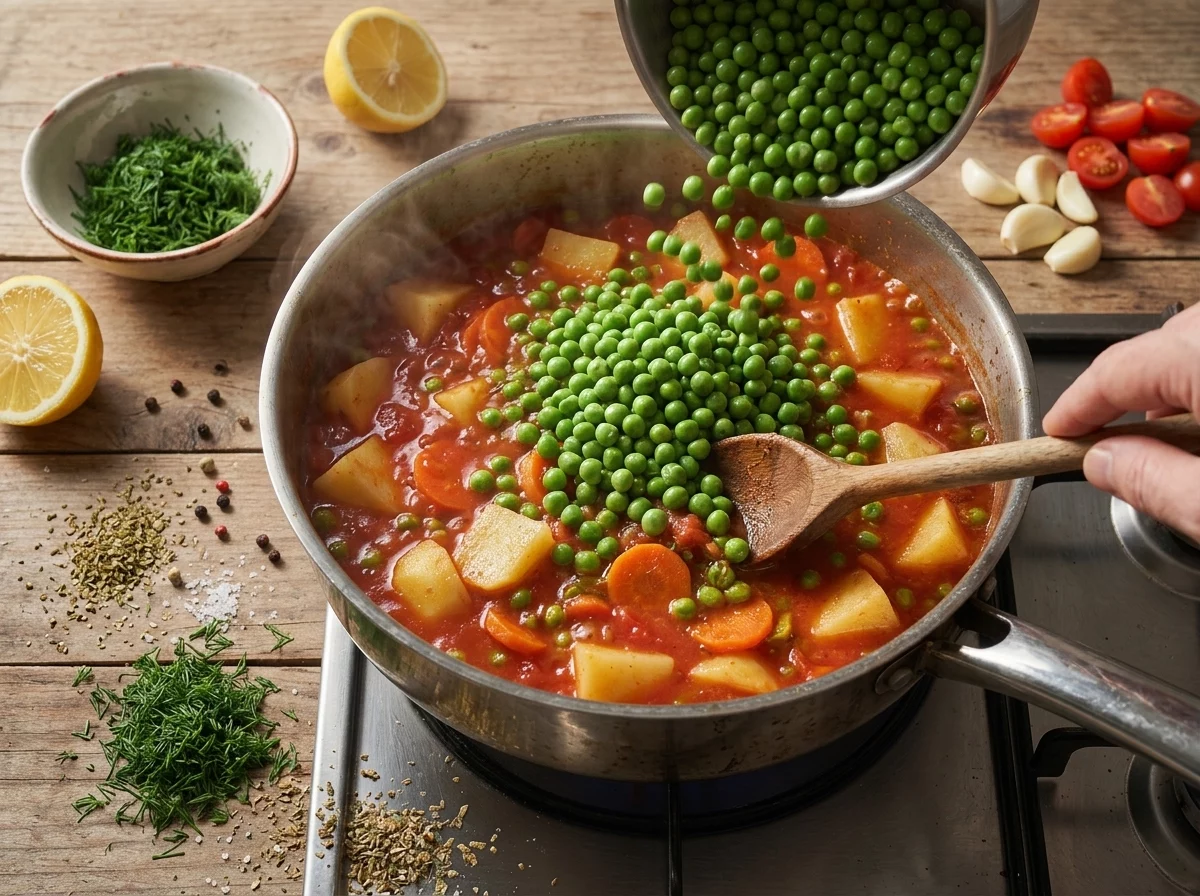
I use frozen peas because they’re easy to find all year. Add them after the potatoes have had a head start. If everything goes in at once, the peas turn gray and mushy before the potatoes are tender.
This is a simplified home version, and you do not need anything special for it. Serve it warm or at room temperature with bread and feta.
Why You’ll Love This Recipe
- Made in one pan with pantry and freezer ingredients
- Vegan and dairy-free without any special shopping
- Tastes good warm, at room temperature, or the next day
- Works as a side dish or a main with bread
Ingredient Notes
- extra virgin olive oil: Greek ladera dishes use a generous amount, and it makes the sauce silky. You can drop to 60 ml if you want it lighter, but the sauce will be less rich.
- frozen peas: Use them straight from the freezer, no thawing needed. Fresh shelled peas also work, see the FAQ for timing.
- potatoes: Yukon Gold or any all-purpose potato holds its shape well. Russets work too, but the edges will break down and thicken the sauce.
- crushed tomatoes: One 400 g can is enough. You can also grate 4 ripe tomatoes and use the pulp, discarding the skins.
- fresh dill: Dill is what makes this taste Greek to me. If you can’t find it, use flat-leaf parsley and a little mint.
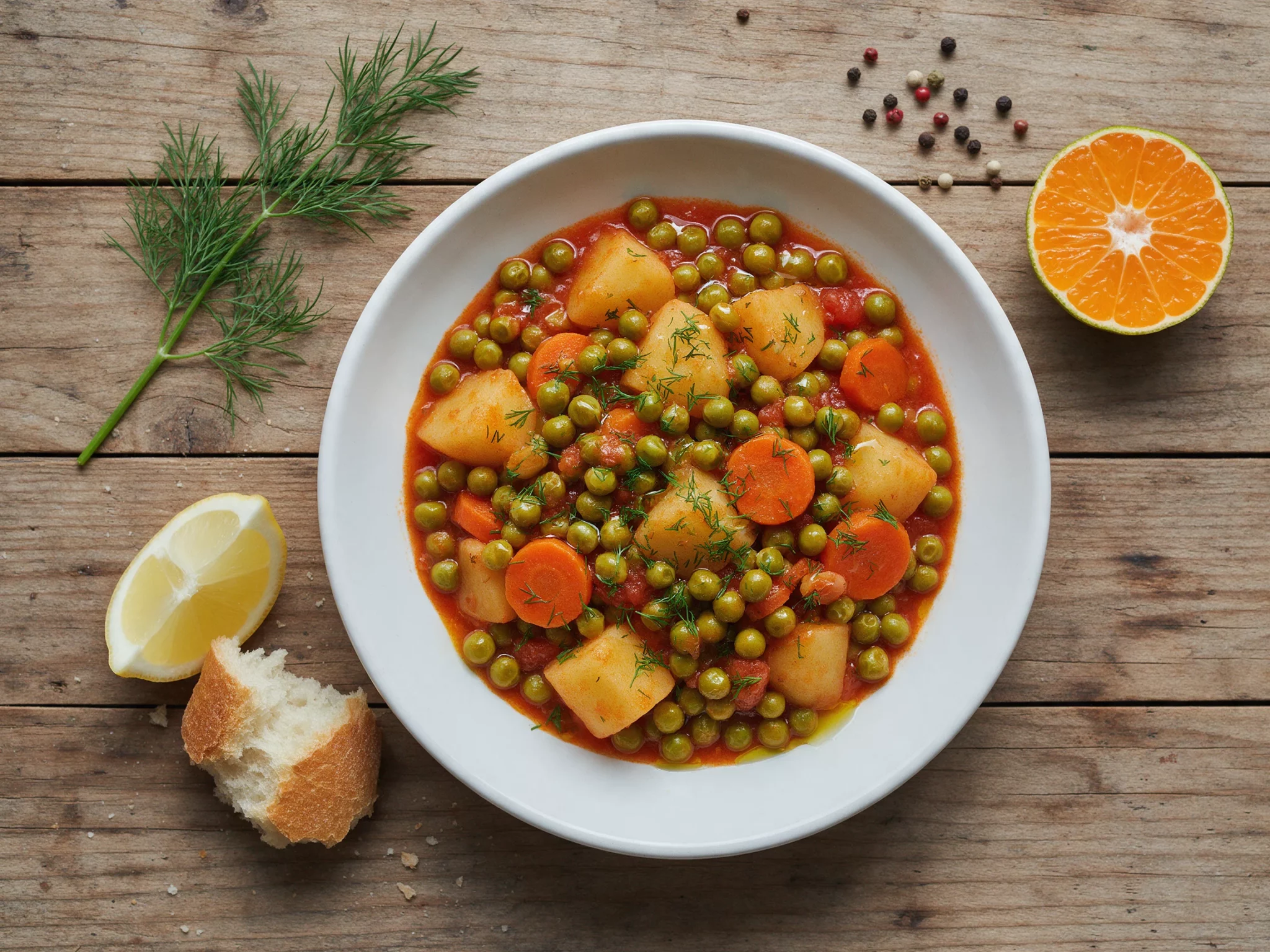
Arakas Latheros: Greek Peas Simmered in Tomato Sauce
Ingredients
Method
- Heat the olive oil in a 28 cm / 11-inch deep sauté pan over medium heat. Add the onion and cook for 5 to 6 minutes, stirring now and then, until soft and just starting to turn golden. Add the garlic and stir for 30 seconds until fragrant.
- Stir in the tomato paste and cook for 1 minute until it darkens slightly. Add the carrots and potatoes and stir for 2 minutes so they're coated in the oil.
- Pour in the crushed tomatoes and water, then add the sugar, salt and pepper. Bring to a boil, which takes about 3 minutes. Cover, turn the heat to medium-low and simmer for 10 minutes.
- Add the frozen peas straight from the freezer and stir. Cover and simmer for 12 to 15 minutes, until a fork slides easily into a potato and the peas are soft. Adding the peas now, not at the start, keeps them from turning gray and mushy. If the sauce looks thin, uncover the pan for the last 3 to 5 minutes.
- Turn off the heat. Stir in the dill and lemon juice, then taste and add salt a pinch at a time if needed. Serve warm or at room temperature with a drizzle of olive oil.
Notes
- Add the frozen peas straight from the freezer, no need to thaw.
- Use a wide pan with a lid so the vegetables cook evenly.
- Add the dill off the heat so it stays green.
- Taste before adding more salt, since canned tomatoes can be salty.
Tips for Success
- Cut the potatoes into 2.5 cm chunks and slice the carrots 1 cm thick so both finish cooking at the same time.
- Keep the lid on for the first 10 minutes of simmering so the vegetables cook in steam and the sauce doesn’t reduce too fast.
- Stir in the dill and lemon juice off the heat so the dill stays green and tastes fresh.
- Taste the sauce before the last 5 minutes and add salt a pinch at a time, since canned tomatoes vary in saltiness.
- Press one or two potato chunks against the side of the pan with a spoon to thicken the sauce slightly.
Variations
- Add 1 tablespoon of chopped fresh mint with the dill for a cooler, more herby flavor.
- Swap the potatoes for 200 g of frozen artichoke hearts and add them with the peas for a version closer to arakas me anginares.
- Top each bowl with 40 g of crumbled feta and a drizzle of olive oil for a saltier, creamier finish.
Storage and Reheating
Arakas latheros keeps in an airtight container in the fridge for 3 to 4 days. Let it cool for about 30 minutes before covering. The flavor settles overnight, and I often like it better the next day.
Reheat it in a saucepan over medium-low heat with 2 tablespoons of water for 5 to 8 minutes, stirring gently, until it’s steaming hot. The microwave works too. Cover the bowl and heat in 1-minute bursts, stirring in between.
You can freeze it for up to 2 months. The potatoes soften a little after thawing. Thaw overnight in the fridge before reheating.
Serving Suggestions
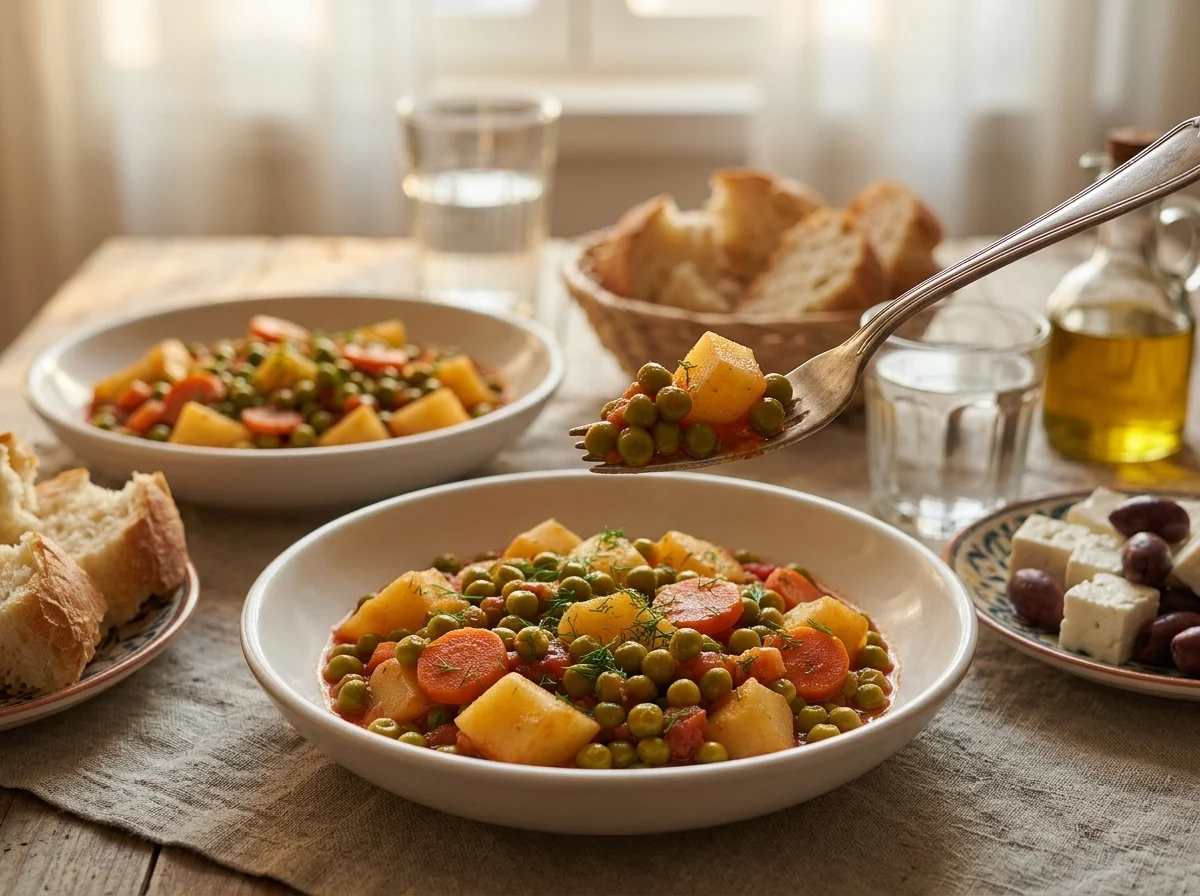
Serve arakas latheros warm or at room temperature in shallow bowls, with a drizzle of olive oil on top. Crusty bread is a must for the sauce, and a slice of feta on the side adds salt.
For a bigger meal, put it next to grilled chicken, baked fish or lamb chops. A few olives and sliced tomato on the plate round it out.
It also works as part of a spread with other Greek vegetable dishes, since it holds up well at room temperature.
FAQ
How do I know when arakas latheros is done?
It’s done when a fork slides into a potato chunk with no resistance and the peas are soft but still hold their shape. The sauce should coat the back of a spoon, with a thin layer of olive oil shining on top. If it looks watery, simmer uncovered for 3 to 5 more minutes.
Can I use fresh peas instead of frozen in Greek peas in tomato sauce?
Yes, use 500 g of shelled fresh peas, which is about 1 kg of pods. Add them with the tomatoes and water, and simmer for about 25 minutes in total until the peas and potatoes are tender. Frozen peas go in later because they’re already blanched and soften faster.
Can I freeze Greek peas in tomato sauce with the potatoes in it?
Yes, freeze it in airtight containers for up to 2 months. The potatoes soften a little and can turn slightly grainy after thawing, so leave them out if you plan to freeze most of the batch. Thaw overnight in the fridge and reheat in a pan over medium-low heat.
What goes well with arakas latheros?
Crusty bread and feta are the usual partners, since the bread mops up the sauce and the feta adds salt. It also goes well with grilled chicken, baked fish or lamb chops if you want a bigger meal. Add a few olives and sliced tomato on the side.
Is Greek peas in tomato sauce vegan and gluten free?
Yes, the recipe as written is vegan and gluten free. It uses only vegetables, olive oil, herbs and a little sugar. Check the labels on your canned tomatoes and tomato paste for added ingredients, and serve it with gluten-free bread or rice if you avoid gluten.
What does latheros mean in arakas latheros?
Latheros means cooked in olive oil. It comes from the Greek word for oil, ladi, and refers to the group of Greek vegetable dishes called ladera. These are cooked with plenty of olive oil and usually tomato, and they’re often eaten warm or at room temperature.