Jump to Recipe
Eliopita is a Cypriot olive bread made with chopped olives, red onion, and fresh mint baked right into a simple yeasted dough. It comes out of the oven with a crackly crust and a soft, salty center from all those olives.
I first made this after wanting a bread that didn’t need butter or cheese to taste good on its own. The olives do most of the work here, so a good quality kalamata or Cypriot green olive makes a real difference.
This isn’t a fussy bread. You mix the dough, let it rise once, fold in the olives and onion, then bake it in one round pan until the top turns deep gold. Cut it into wedges while it’s still warm and the kitchen smells like an olive grove.
It’s a good bread for a weeknight side, though it’s sturdy enough to pack for lunch the next day too.
Why You’ll Love This Recipe
- Uses simple pantry ingredients, no eggs or dairy needed
- One rise, one pan, no fancy shaping required
- Salty olives mean you barely need extra salt
- Tastes just as good the next day, sliced cold
Ingredient Notes
- bread flour: I use bread flour for a chewier crumb, but all-purpose flour works fine too.
- active dry yeast: The yeast needs warm water to wake up. Check it’s foamy on top after 5 to 10 minutes.
- kalamata olives: A Cypriot green olive works too, just make sure whatever you use is pitted and drained well.
- red onion: Red onion adds a mild bite. Yellow onion works fine if that’s what you have on hand.
- fresh mint: Fresh mint gives eliopita its familiar flavor. Dried mint works too, use about a third of the amount.
- ground cumin: A small amount of cumin adds a warm background note common in Cypriot olive breads.
- olive oil: Use an olive oil you’d actually taste on its own, since it flavors both the dough and the crust.
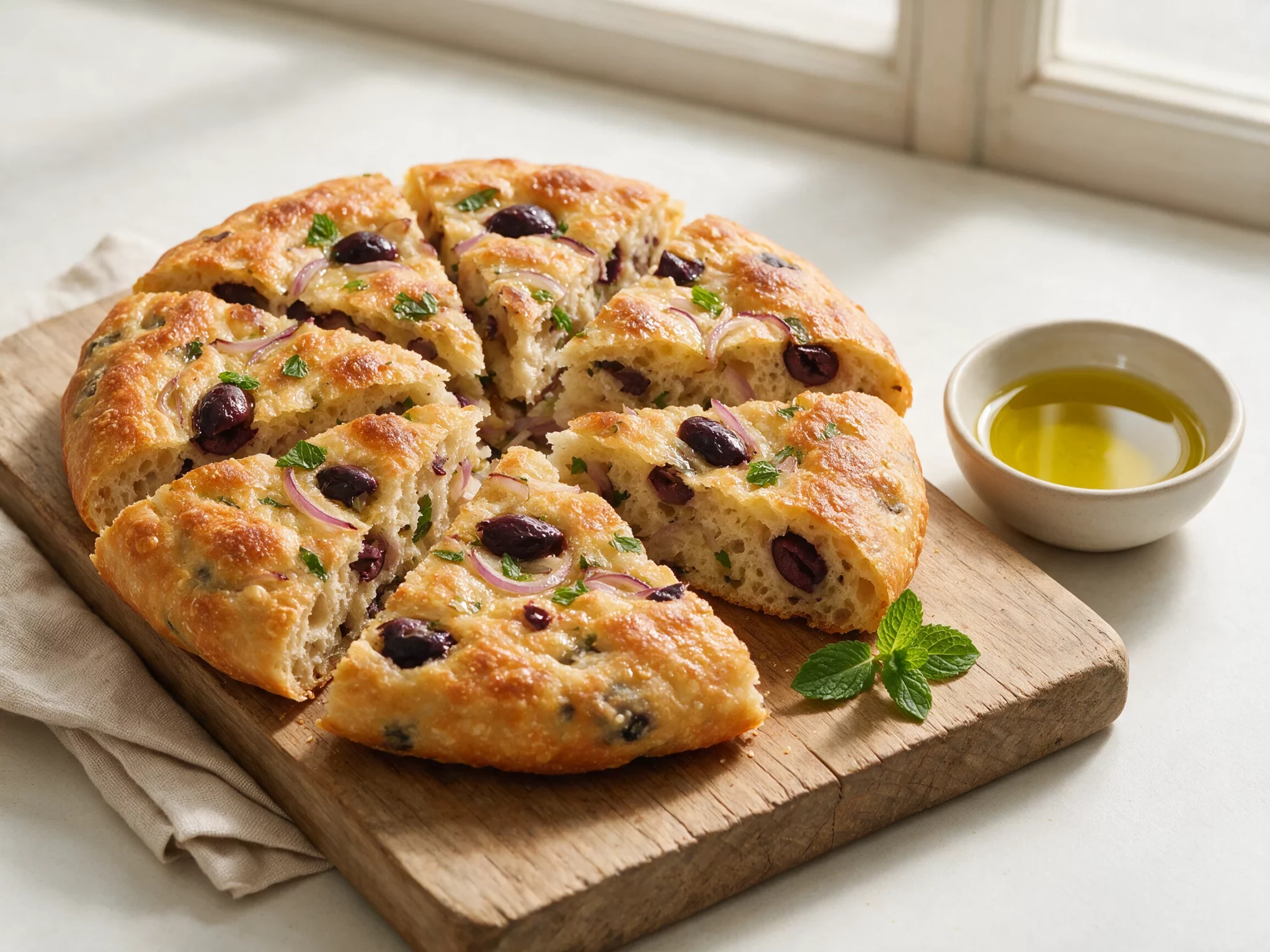
Oven-Baked Cypriot Olive Bread Eliopita with Mint
Ingredients
Method
- Stir the warm water, sugar, and yeast together in a small bowl. Let it sit for 5 to 10 minutes until it looks foamy on top.
- Whisk the flour and salt together in a large mixing bowl. Pour in the yeast mixture and 60 ml olive oil, then stir until you get a shaggy dough.
- Turn the dough onto a floured surface and knead for 8 to 10 minutes until smooth and elastic. It should spring back slowly when you poke it.
- Place the dough in an oiled bowl, cover with a kitchen towel, and let it rise in a warm spot for 60 minutes, until doubled in size.
- While the dough rises, drain the olives well and pat them dry with paper towels, then chop roughly. Finely chop the red onion and mint.
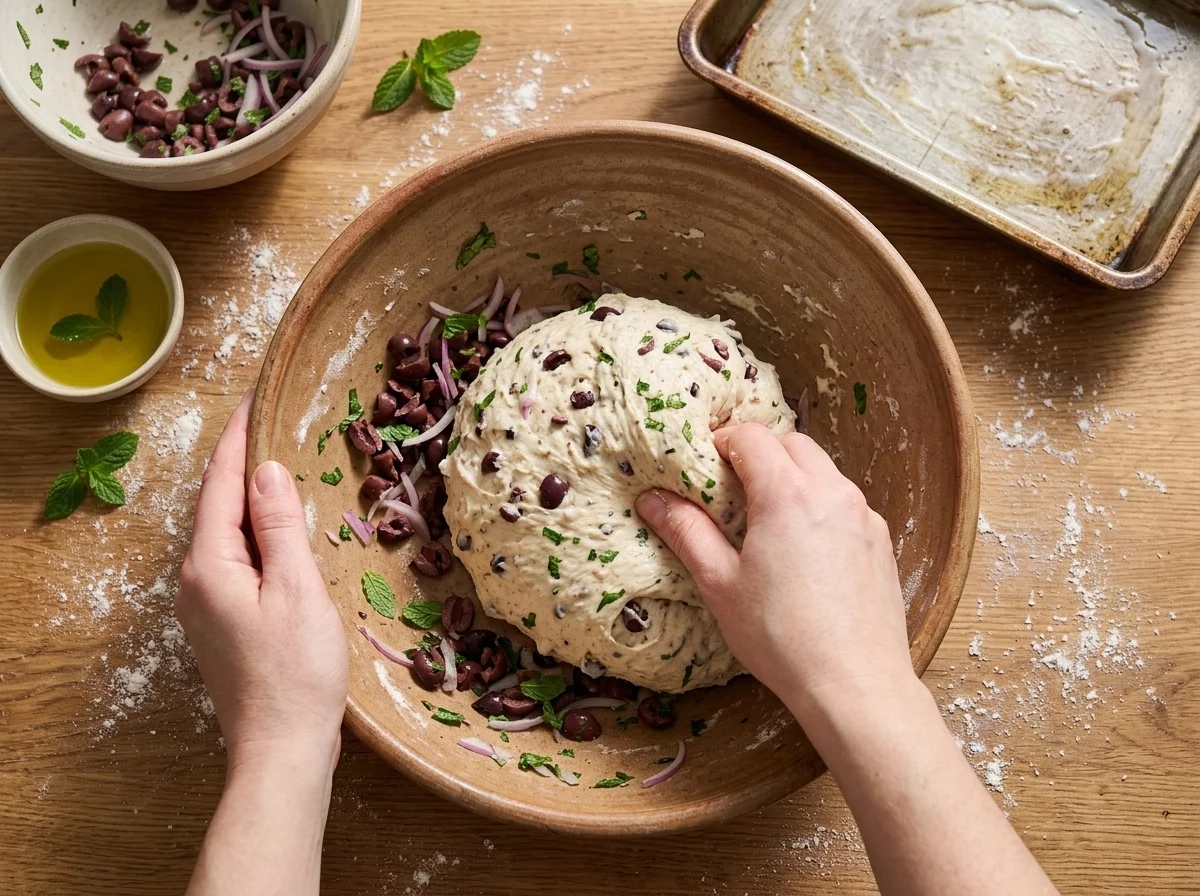
- Punch down the risen dough and turn it onto a floured surface. Flatten it into a rough disk, then scatter the olives, onion, mint, and cumin over the top.
- Fold and knead gently for 2 to 3 minutes until the filling is worked evenly through the dough. If it feels wet from olive liquid, work in 1 to 2 tablespoons extra flour.
- Shape the dough into a round loaf and place it in a greased 25 cm / 10-inch round cake pan. Cover loosely and let rest for 10 minutes.
- Heat the oven to 190 C / 375 F. Brush the top of the loaf with the remaining 1 tablespoon olive oil.
- Bake for 28 to 32 minutes, until the crust is deep golden and the loaf sounds hollow when you tap the bottom. The center should read close to 200 F / 93 C on an instant-read thermometer.
- Cool in the pan for 10 minutes, then transfer to a rack. Cut into wedges and serve warm or at room temperature.
Notes
- Drain olives well before chopping, extra liquid makes the dough too wet.
- Rise time depends on room temperature, warmer kitchens need less time.
- Cumin is optional but common in Cypriot versions, don't skip the mint.
- Use a 25 cm round cake pan for an evenly risen, level loaf.
Tips for Success
- Drain the olives well and pat them dry, or the dough turns wet and hard to shape.
- Let the dough rise until it’s doubled, about 60 minutes in a warm spot, not by the clock alone.
- Chop the olives roughly, not too fine, so you still get whole bites of olive in each slice.
- Brush the top with olive oil before baking for a shinier, darker crust.
- Let the loaf cool for at least 10 minutes before cutting, or the crumb tears instead of slicing clean.
Variations
- Add 50 g crumbled feta or halloumi to the dough for a saltier, richer version of eliopita.
- Swap the fresh mint for chopped fresh coriander if you prefer a different herb note.
- Stir a pinch of chili flakes in with the olives for a bit of heat in every bite.
Storage and Reheating
Eliopita keeps at room temperature for 2 days wrapped in a kitchen towel or paper bag. Don’t seal it in plastic right away, or the crust turns soft.
For longer storage, keep wedges in an airtight container in the fridge for up to 4 days. Wrap individual wedges tightly and freeze for up to 2 months.
To warm it up, wrap a wedge in foil and heat in a 160 C / 320 F oven for 8 to 10 minutes. A few seconds in the microwave works in a pinch, though the crust won’t be as crisp.
Serving Suggestions
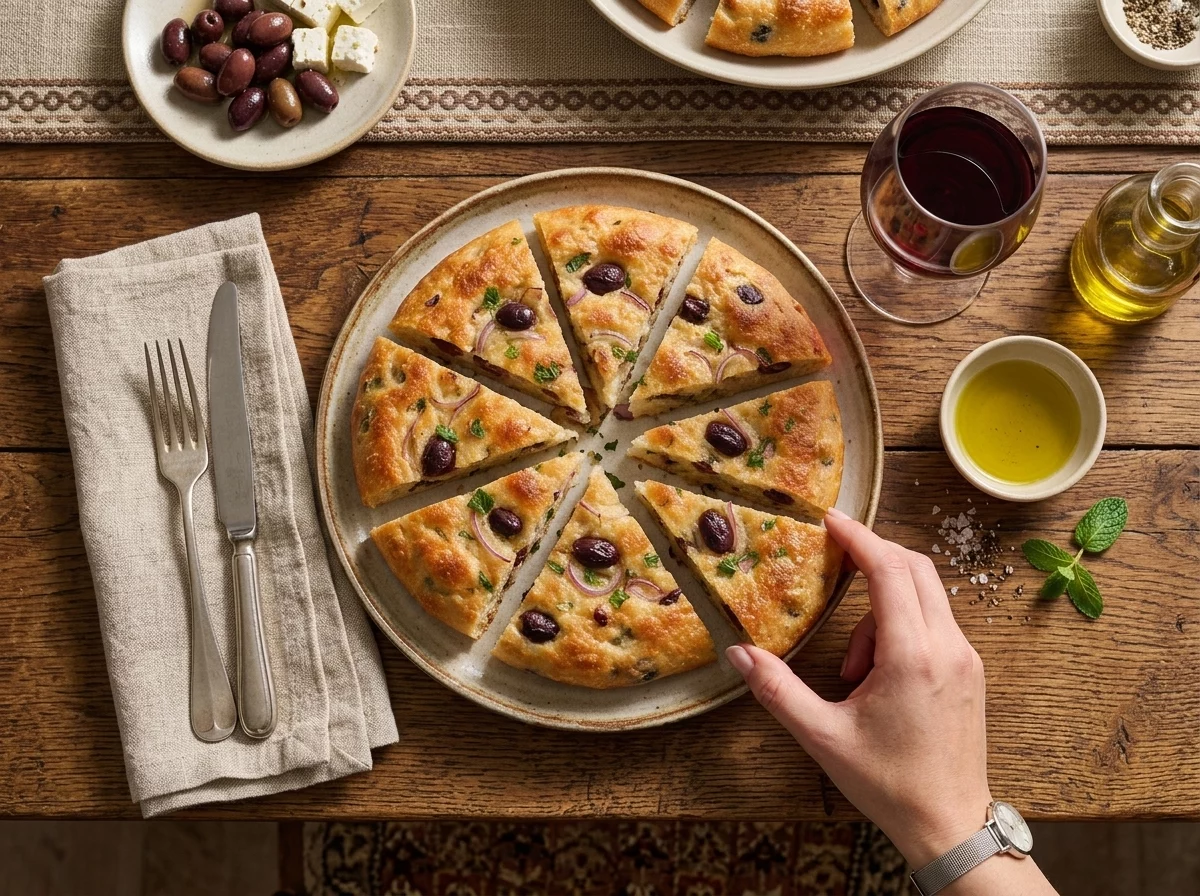
Eliopita is good on its own, still warm, with nothing else needed. I also like a small bowl of tzatziki on the side to cool down the olive saltiness.
Serve it alongside a tomato and cucumber salad for a light lunch, or set it out with hummus and other dips for a spread.
Leftover wedges are good packed cold for lunch boxes, or split and toasted with a bit of olive oil for breakfast.
FAQ
How do I know when my eliopita is done baking?
Eliopita is done when the crust turns deep golden brown and the loaf sounds hollow when you tap the bottom, usually 28 to 32 minutes at 190 C / 375 F. The center should read close to 200 F / 93 C on an instant-read thermometer. If the top browns too fast, tent it loosely with foil for the last 10 minutes.
Can I use green olives instead of kalamata for eliopita?
Yes, green olives work fine and are actually closer to what’s traditionally used in Cyprus. Kalamata olives give a darker color and a softer bite, while green olives add more crunch and a sharper flavor. Drain and pat either one dry before folding them into the dough.
Can I freeze Cypriot eliopita after it’s baked?
Yes, eliopita freezes well for up to 2 months once fully cooled. Wrap individual wedges tightly in plastic, then foil, and thaw at room temperature before reheating in a 160 C / 320 F oven for 8 to 10 minutes. Whole loaves freeze fine too, though wedges thaw faster.
What can I serve with Cypriot olive bread besides tzatziki?
Hummus, a tomato and cucumber salad, or a bowl of lentil soup all work well next to eliopita. I like it with soft cheese and sliced tomato for a light lunch. A drizzle of extra olive oil over a warm wedge is good enough on its own too.
Is Cypriot eliopita vegan and dairy-free?
Yes, this eliopita recipe is vegan and dairy-free as written, since the dough only uses flour, yeast, water, olive oil, olives, onion, and mint. Just check your olives haven’t been packed in a brine with added dairy, which some store versions do use.
What is the difference between eliopita and regular olive bread?
Eliopita is the Cypriot version of olive bread, usually flavored with fresh mint and a little cumin, which sets it apart from Greek olive breads that lean on oregano or rosemary instead. Cypriot dough also tends to be plainer and less oily, so the olives stand out more.