
Jump to Recipe
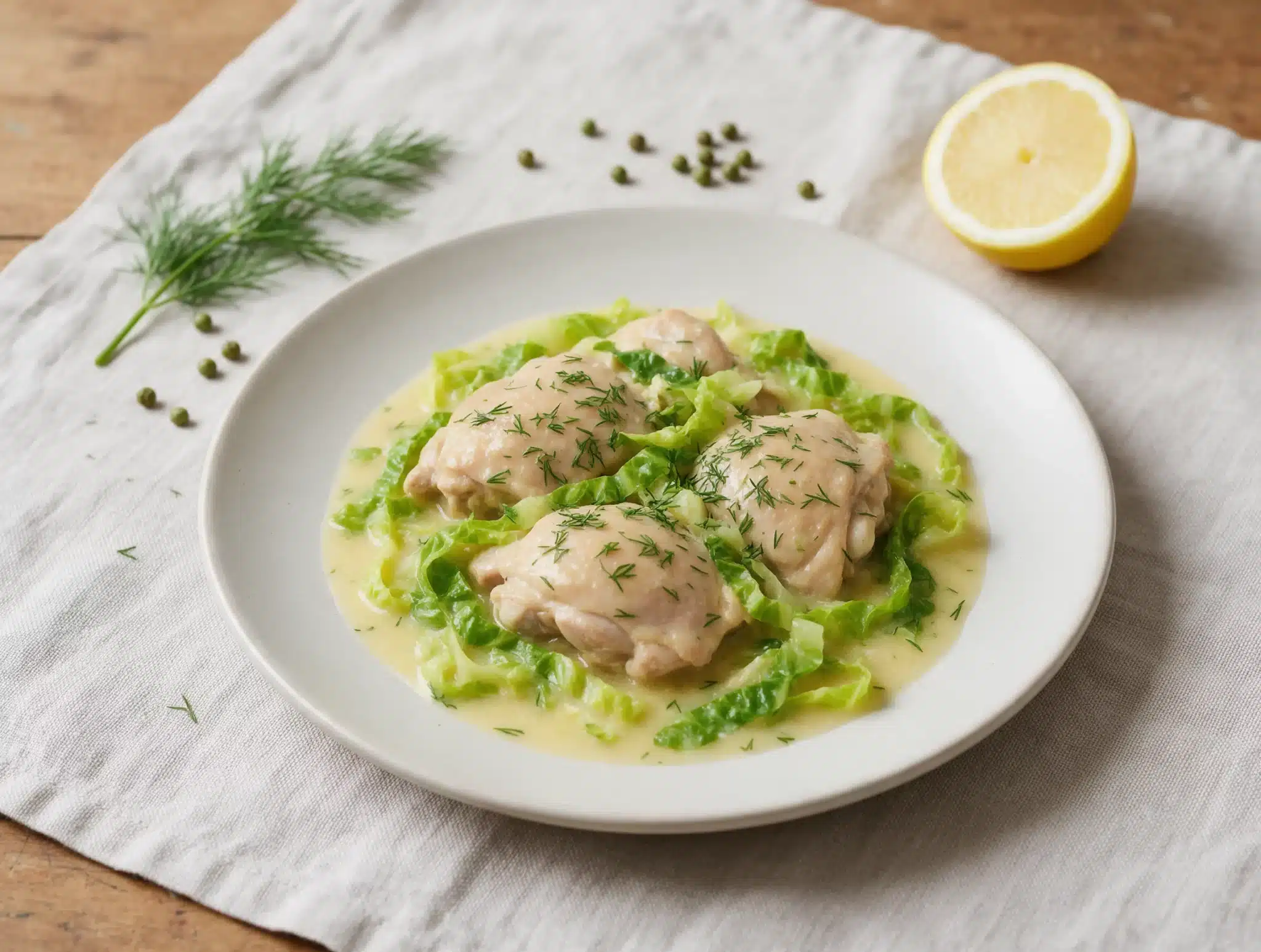
Greek chicken fricassee with avgolemono is a stovetop stew of skinless bone-in chicken thighs, romaine, spring onions, and dill, finished with a sauce of eggs and lemon. It takes about 85 minutes and serves 4.
The chicken simmers until it falls off the bone. The lettuce melts into the broth and turns mild and silky. The lemon keeps the dish fresh, and the eggs make the sauce creamy without cream.
This is a simple home version. Greek fricassee is often made with lamb, and chicken works the same way with the same lettuce and dill base.
The only step that needs care is the sauce. Add the eggs slowly and keep the heat low, or they can curdle. Don’t worry, I walk you through it below.
Why You’ll Love This Recipe
- One pot, with only about 20 minutes of prep
- Creamy sauce made with eggs and lemon, no cream
- Chicken thighs stay juicy and fall off the bone
- Gluten-free and dairy-free without any special swaps
Ingredient Notes
- Chicken thighs: I use bone-in, skinless thighs because the bone adds flavor to the broth. Boneless thighs also work, but they need less time in the pot.
- Romaine hearts: Romaine holds its shape a little better than other lettuces. Iceberg or baby spinach can replace it if that’s what you have.
- Fresh dill: Dill is the main herb here, so dried dill won’t give the same result. Use 1 tbsp dried only if you can’t find fresh, and add it with the broth.
- Lemons: Squeeze the juice fresh. Bottled juice tastes flat and makes the sauce less bright.
- Dry white wine: The wine adds a little acidity to the base. If you skip it, use another 100 ml of broth instead.
Greek Chicken Fricassee: Lemony Avgolemono and Fresh Dill
Ingredients
Method
- Pat the chicken thighs dry and season them with 1 tsp of the salt and the pepper. Heat 2 tbsp of the oil in a 28 cm / 11-inch Dutch oven (5-quart / 4.7 L) over medium-high heat. Brown the thighs in two batches of four, about 3 minutes per side, until lightly golden. Move them to a plate.
- Lower the heat to medium and add the remaining 1 tbsp oil. Cook the onion for 4 minutes, until soft and translucent, then add the spring onions and cook for 1 minute. Pour in the wine, scrape up the browned bits from the bottom, and simmer for 2 minutes.
- Return the chicken and any juices to the pot. Add the hot broth and the remaining 1/2 tsp salt. The liquid should come about halfway up the thighs. Bring to a boil, then reduce the heat to low, partly cover, and simmer for 30 minutes, until the meat pulls easily from the bone and reads 175 F / 80 C on a thermometer.
- Stir in the romaine and half of the dill. Simmer uncovered for 10 minutes, until the lettuce is soft and dull green. Taste the broth and add salt if needed.
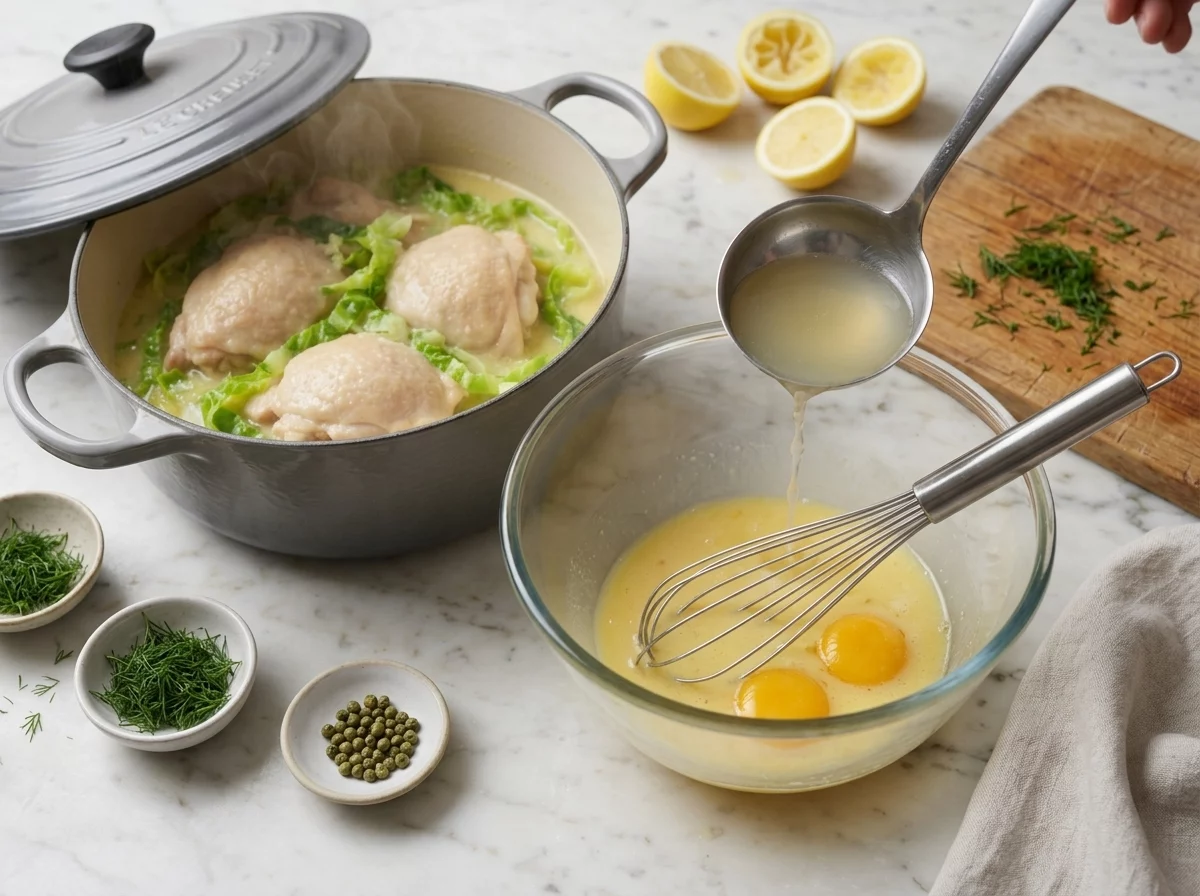
- In a 2-quart / 2 L bowl, whisk the eggs for 1 minute until pale and frothy, then whisk in the lemon juice. Ladle in about 120 ml of hot broth slowly, whisking the whole time. Repeat with a second 120 ml ladle, so the mixture feels warm.
- Turn the heat off under the pot. Pour the egg mixture in a thin stream while gently stirring. Put the pot back on the lowest heat for 2 to 3 minutes, stirring gently, until the sauce looks creamy and lightly coats the back of a spoon. Don't let it bubble, or it can curdle.
- Stir in the remaining dill, then taste and add more salt or lemon juice if you like. Serve right away in shallow bowls with the sauce spooned over the chicken.
Notes
- Brown the thighs in two batches so the pot doesn't get crowded.
- Chicken is done at 175 F / 80 C, when the meat pulls easily from the bone.
- Take the pot off the heat before adding the egg and lemon mixture.
- Taste before adding more salt, since store-bought broth varies a lot.
- Keep leftovers below a bubble when reheating, so the sauce stays smooth.
Tips for Success
- Set the eggs out 20 minutes before you start, so they’re closer to room temperature and blend into the broth more smoothly.
- Brown the thighs in two batches of four, so each piece gets color instead of steaming in a crowded pot.
- Ladle hot broth into the eggs a little at a time while whisking, so the eggs warm up gradually instead of scrambling.
- Turn the heat off before pouring in the egg mixture, then return the pot to the lowest heat and stir gently without letting it bubble.
- Squeeze 60 ml of lemon juice for the sauce, then stir in extra at the table if you like it tangier.
Variations
- Swap the romaine for 300 g baby spinach and stir it in for the last 5 minutes of simmering.
- Add 150 g frozen peas along with the lettuce for a sweeter, greener pot.
- Use 1 kg boneless, skinless thighs and shorten the simmer to 20 minutes, until they reach 175 F / 80 C.
Storage and Reheating
Greek chicken fricassee keeps in the fridge for 3 days in a sealed container. Let it cool for no more than 2 hours at room temperature first, then store the chicken and sauce together.
To reheat, warm it in a pot over low heat for 10 to 12 minutes, stirring gently and adding a splash of water if the sauce looks thick. Don’t let it bubble, or the egg sauce can turn grainy. A microwave works at 50 percent power in 1-minute bursts, with a stir between each.
To make it ahead, cook through the lettuce step up to 1 day early and chill it. Bring the pot to a gentle simmer, then make the avgolemono fresh. I don’t freeze the finished dish because the sauce splits when it thaws.
Serving Suggestions
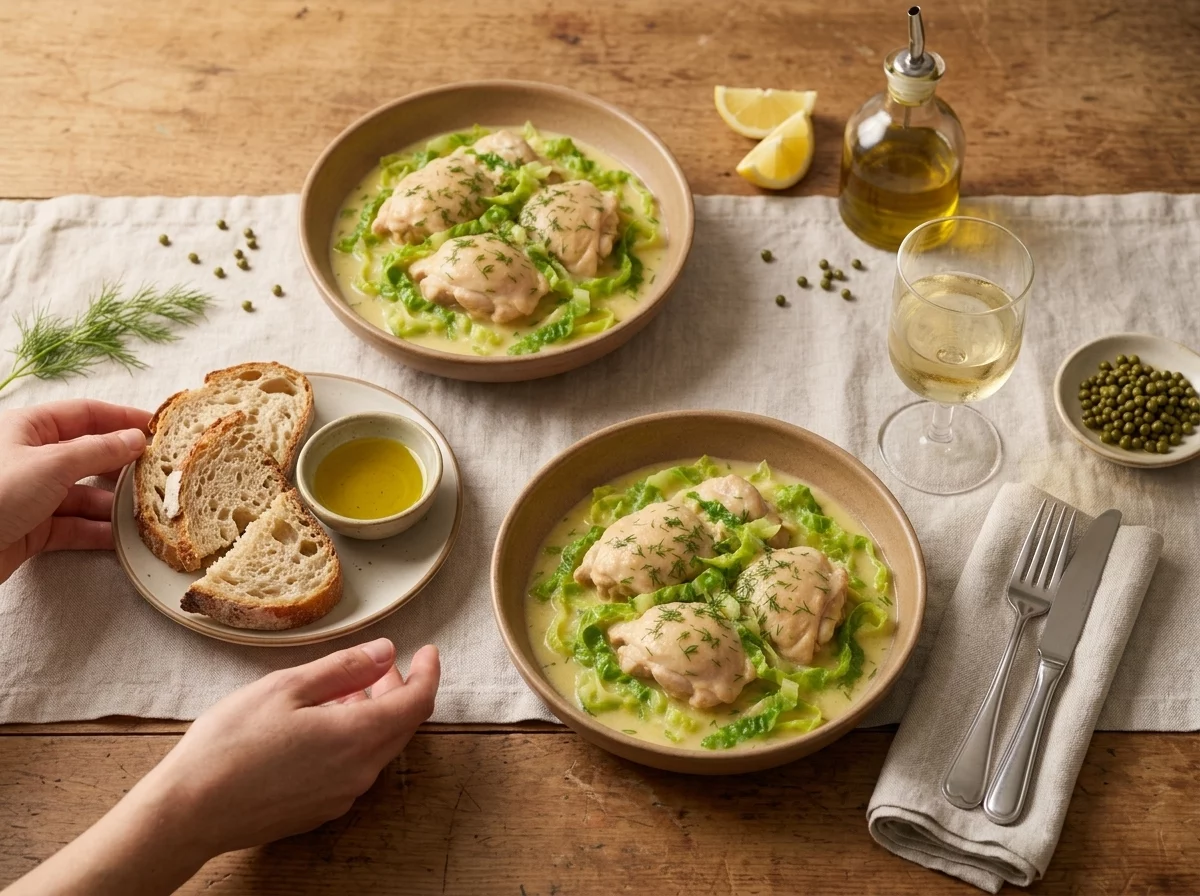
Greek chicken fricassee is best served hot in shallow bowls, with plenty of the lemony broth spooned over the chicken. Crusty bread is my first choice for soaking up the sauce.
Plain rice or boiled potatoes also work well. A tomato and cucumber salad with olive oil and a pinch of salt adds something cool and fresh on the side.
Put extra lemon wedges and chopped dill on the table. Some people like more tang, and a few more herbs on top look nice.
FAQ
Why is my avgolemono grainy or scrambled?
Avgolemono turns grainy when the eggs get too hot, either from going in cold and fast or from the pot bubbling afterward. Warm the eggs with two ladles of hot broth first, then stir them in off the heat. If it’s only slightly grainy, whisk hard and keep going, since the flavor is still fine.
Can I use iceberg lettuce instead of romaine in chicken fricassee?
Yes, iceberg works. It tastes milder and gives off more water, so the sauce ends up a little thinner. Cook it for the same 10 minutes. Baby spinach also works if you stir it in for the last 3 minutes. Chop either one into 2.5 cm ribbons so it softens evenly.
Can I freeze Greek chicken fricassee with avgolemono sauce?
I don’t recommend freezing the finished dish, because the egg-lemon sauce splits when it thaws. Instead, freeze the chicken, lettuce, and broth before the sauce step for up to 2 months. Thaw it overnight in the fridge, bring it to a gentle simmer, then make the avgolemono fresh.
What goes with Greek chicken fricassee, rice, potatoes, or bread?
Crusty bread is my first pick, because it soaks up the lemony broth. Plain rice or boiled potatoes work too. For something fresh, add a tomato and cucumber salad with olive oil and a pinch of salt. A small bowl of olives on the side also suits the dish.
Is Greek chicken fricassee gluten free and dairy free?
Yes to both, as long as your broth is gluten-free. The recipe has no flour, butter, or cream, because the eggs thicken the sauce. Check the label on store-bought broth, since some brands add wheat-based flavorings or dairy. Homemade stock avoids the question.
What is the difference between Greek chicken fricassee and French chicken fricassée?
Greek fricassee is a stew finished with egg and lemon, while French fricassée usually ends with cream. The Greek version also leans on lettuce, spring onions, and dill for its flavor. The French style often cooks the chicken without browning it, so the sauce stays pale.