Jump to Recipe
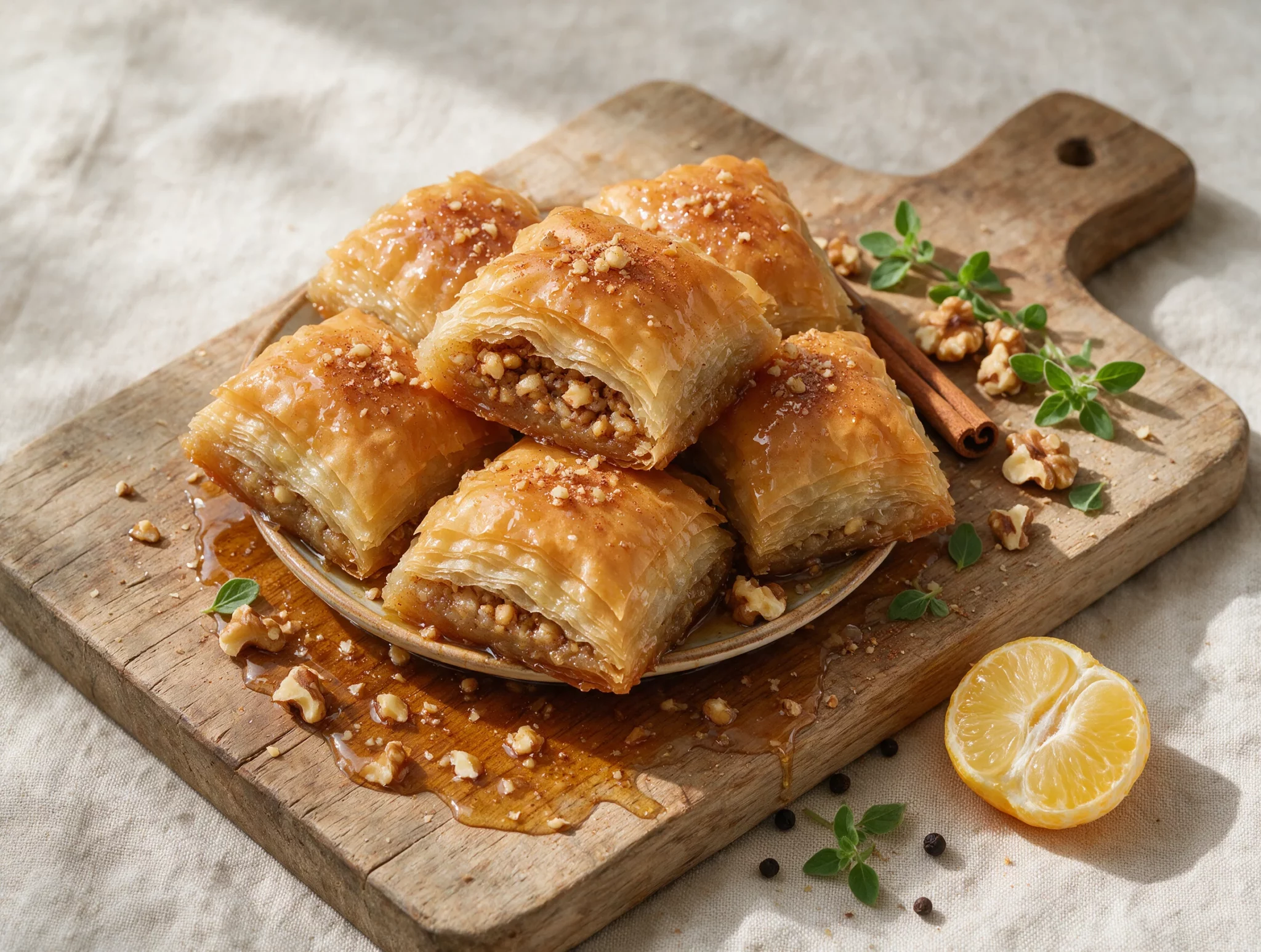
Cypriot Daktyla Pastries are small filo fingers stuffed with chopped walnuts and cinnamon, baked until golden, then soaked in a honey-lemon syrup while they’re still hot. The name comes from the Greek word for fingers, daktyla, because each pastry is rolled into a short plump log instead of layered like baklava.
The outside turns crisp and flaky. Inside, the walnut filling stays soft and the syrup soaks into the layers without turning them mushy, as long as you don’t drown them.
I make these around the holidays, when I want something sweet that isn’t as rich as a full tray of baklava, more like these soft Cypriot tahini rolls. They also travel well, so they’re good for taking to a friend’s house.
This version keeps the filling simple, just walnuts, cinnamon, and a little orange zest, with a syrup that leans more on honey than plain sugar.
Why You’ll Love This Recipe
- Crisp filo outside, soft walnut filling inside
- Syrup soaks in without making pastries mushy
- Simple filling, no complicated spice mix needed
- Freezes well before baking for later
Ingredient Notes
- filo pastry: Thaw filo in the fridge overnight, then keep it covered with a damp towel while you work, or it dries out and cracks.
- walnuts: Chop walnuts finely by hand or with a few pulses in a food processor, not into powder, so the filling has some texture.
- honey: I use a light, mild honey so it doesn’t overpower the walnuts. You can use more sugar syrup instead for a less floral taste.
- orange zest: Adds a little brightness to the filling. Leave it out if you don’t have an orange on hand, the pastries still taste good.
- cinnamon stick: A whole stick gives the syrup a gentler flavor than ground cinnamon. Swap in 1/2 tsp ground cinnamon if that’s what you have.
Cypriot Daktyla Pastries with Walnuts and Syrup
Ingredients
Method
- Combine the sugar, water, cinnamon stick, and cloves in a 2-quart / 1.9 L saucepan. Bring to a simmer over medium heat, stirring until the sugar dissolves, about 3 minutes.
- Simmer for 5 to 6 minutes more, until the syrup looks slightly thicker, then remove from heat. Stir in the honey and lemon juice. Set aside to cool while you make the pastries.
- In a mixing bowl, stir together the walnuts, sugar, cinnamon, and orange zest until evenly combined.
- Heat the oven to 180 C / 350 F and line a sheet pan 33 x 46 cm / 13 x 18 inch with parchment paper.
- Lay one sheet of filo on a work surface and keep the rest covered with a damp towel so they don't dry out. Brush the sheet lightly with melted butter, then cut it in half lengthwise into two long strips.
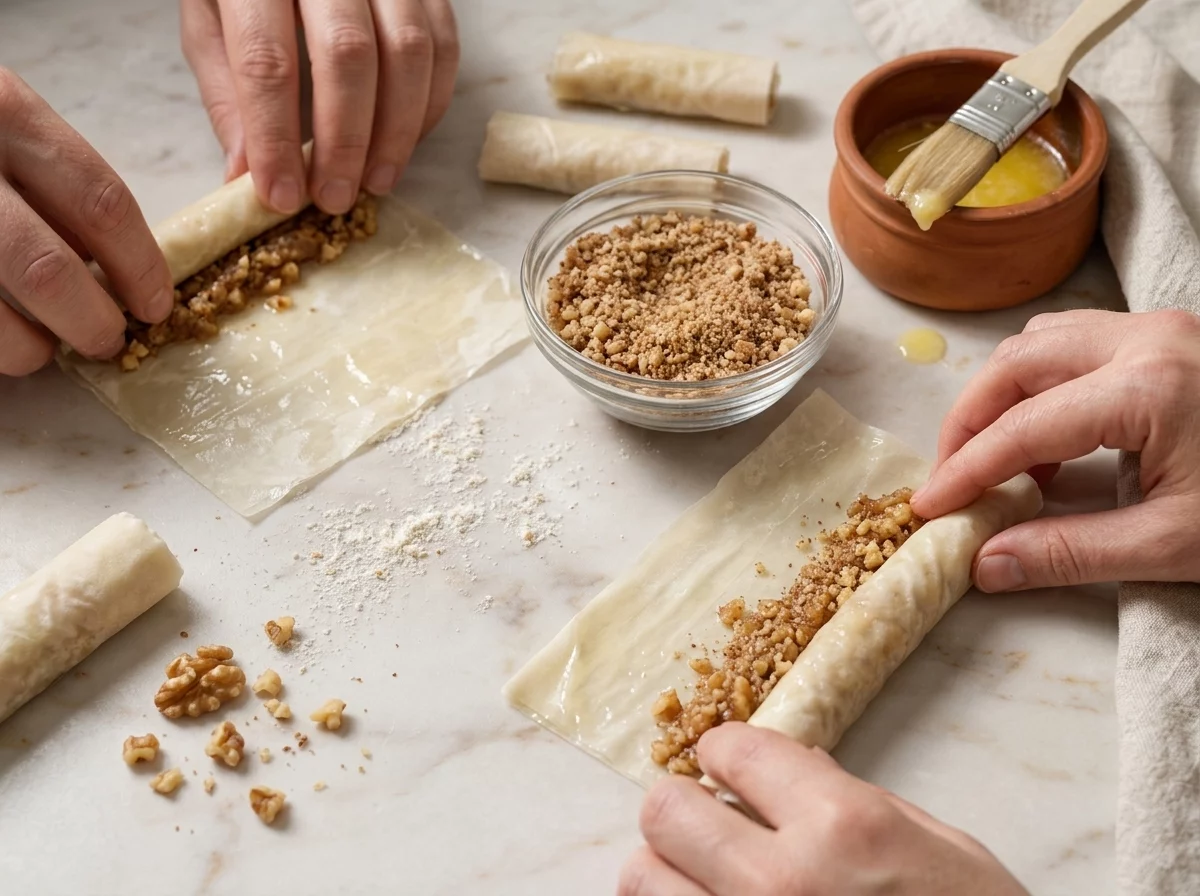
- Place about 1 tablespoon of the walnut filling near one short end of a strip. Roll it up into a short, plump log, tucking the ends under as you go, and place it seam-side down on the sheet pan.
- Repeat with the remaining filo sheets and filling, brushing each strip with butter before rolling, until you have about 20 pastries.
- Brush the tops of the rolled pastries with the last of the melted butter.
- Bake for 22 to 25 minutes, until the daktyla are deep golden brown and firm to the touch, not just pale gold.
- Remove from the oven and, while they're still hot, spoon the cooled syrup evenly over the top, moving in a thin stream so it doesn't pool in one spot.
- Let the pastries rest for 15 minutes so the syrup soaks in fully before serving.
Notes
- Keep filo covered with a damp towel to stop cracking.
- Pour syrup over pastries right out of the oven for best soak.
- Chop walnuts by hand for a coarser, more even filling texture.
- Freeze unbaked daktyla on a tray before transferring to a bag.
Tips for Success
- Keep unused filo sheets covered with a damp towel so they don’t dry out and crack while you roll.
- Brush each filo sheet with melted butter before rolling, or the layers won’t crisp evenly in the oven.
- Pour the syrup over the pastries right when they come out of the oven, while both are still warm.
- Let the daktyla rest for 15 minutes after the syrup goes on, so it has time to soak in fully.
- Roll the filling into a tight cylinder and tuck the ends under, or the filling will leak out during baking.
Variations
- Swap walnuts for almonds or pistachios for a different filling, keeping the same amount and cinnamon.
- Add a pinch of ground cloves or nutmeg to the filling for a warmer, more spiced flavor.
- Use rose water instead of lemon juice in the syrup for a floral Cypriot-style finish.
Storage and Reheating
Cypriot Daktyla Pastries keep well once they’ve cooled completely. Store them in an airtight container at room temperature for 4 to 5 days, the syrup keeps them moist so they don’t dry out fast.
I don’t recommend reheating them, since warming the syrup in the oven or microwave can make the filo turn soft. They’re meant to be eaten at room temperature, and the texture is best within the first few days.
If you want to make them ahead, roll and freeze the unbaked pastries on a sheet pan, then transfer to a bag once solid. Bake straight from frozen, adding 5 to 7 minutes to the bake time, and make the syrup fresh the day you serve them.
Serving Suggestions
Cypriot Daktyla Pastries work well on a dessert table next to other syrup pastries like a Greek honey cake with walnuts, since they share the same honey-syrup base.
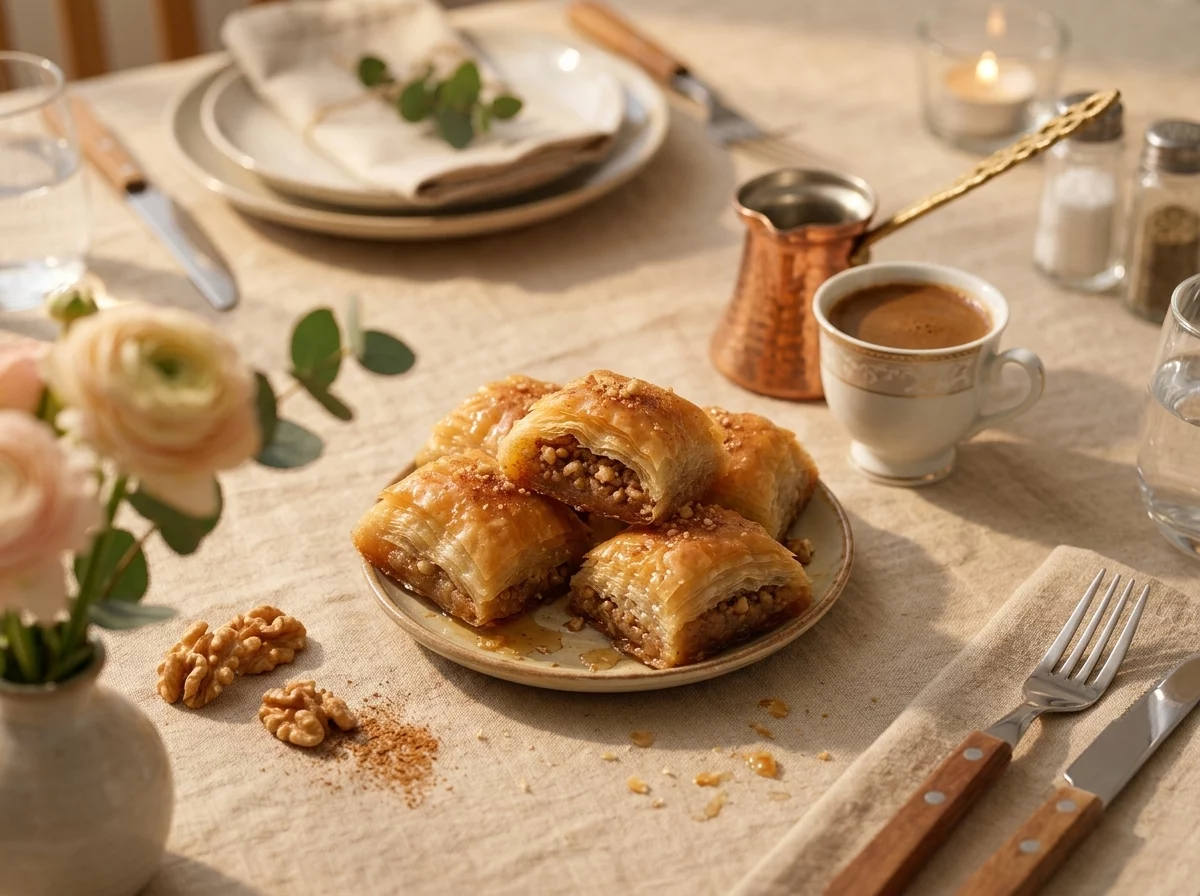
I like serving them with a small cup of strong coffee or tea, since the sweetness stands up well against a bitter drink.
For a simple finish, dust them lightly with crushed pistachios or a little extra orange zest right before serving.
FAQ
Why did my daktyla turn out soggy instead of crisp?
Soggy daktyla usually means too much syrup was poured on, or the pastries weren’t fully golden before the syrup went on. Bake until the filo is a deep golden brown, not just pale gold, and pour the syrup in a thin stream instead of dumping it in one spot. Let them rest 15 minutes so the syrup soaks in evenly.
Can I use almonds instead of walnuts in this recipe?
Yes, almonds work fine in daktyla, chopped to the same fine texture as the walnuts. Pistachios are another good option if you want a greener filling and a slightly sweeter flavor. Keep the same 250 g amount so the filling holds together the same way.
Can I freeze daktyla pastries before baking?
Yes, roll the pastries and freeze them unbaked on a sheet pan, then move them to a freezer bag once firm. Bake straight from frozen, adding 5 to 7 minutes to the bake time. Make the syrup fresh on the day you plan to serve them, since it doesn’t freeze well once absorbed.
What goes well with Cypriot daktyla pastries?
Strong coffee or tea pairs well with daktyla, since the bitterness balances the honey syrup. They also sit nicely on a dessert table next to baklava or other syrup-soaked pastries. A few crushed pistachios on top add color if you’re serving them for a gathering.
Are Cypriot daktyla pastries dairy free?
Not as written, since the filo gets brushed with melted butter between layers. Swap the butter for a mild olive oil or a dairy-free spread and the pastries still bake up crisp. The filling itself, walnuts, sugar, and cinnamon, is already dairy free.
What’s the difference between daktyla and baklava?
Daktyla are rolled into short finger shapes from a few sheets of filo, while baklava is layered flat in a pan and cut into squares or diamonds after baking. Daktyla have less filo per piece, so they taste lighter and less rich. Both get soaked in a similar honey or sugar syrup.