
Jump to Recipe
Portokalopita is a Greek orange phyllo cake made by tearing phyllo sheets into small pieces, mixing them into an orange custard batter, and baking the whole thing until golden. Once it comes out of the oven, you pour warm orange syrup over the top so it soaks all the way through. The texture is soft and moist with a few crisp edges from the phyllo, and the orange comes through in every bite.
I first made this because I had half a package of phyllo drying out in the fridge and didn’t want to waste it. Turns out that’s the trick: the phyllo needs to sit out and dry a bit before you tear it up, so it soaks up the batter instead of turning to mush.
This isn’t a fussy dessert. You mix everything in one bowl, pour it into a dish, bake it, then soak it in syrup. It keeps well for days and tastes better the next day, once the syrup has settled in.
Why You’ll Love This Recipe
- Uses simple pantry ingredients, no fancy tools needed
- Stays moist for days thanks to the syrup soak
- Torn phyllo gives soft and crisp texture in one bite
- Tastes better the next day, easy to make ahead
Ingredient Notes
- phyllo sheets: Let torn pieces dry out uncovered for a few hours before mixing. Fresh, moist phyllo makes the center gummy instead of soft.
- Greek yogurt: Use full-fat plain yogurt for a richer crumb. Sour cream works as a substitute in a pinch, though the flavor is slightly less tangy.
- orange zest and juice: Zest the oranges before juicing them, since a whole orange is much easier to zest than a squeezed half.
- vegetable oil: Any neutral oil works here. Melted butter can replace half the oil for a slightly heavier crumb.
- cinnamon stick: This flavors the syrup only and gets removed before pouring. Ground cinnamon can replace it, but strain the syrup through a sieve first.
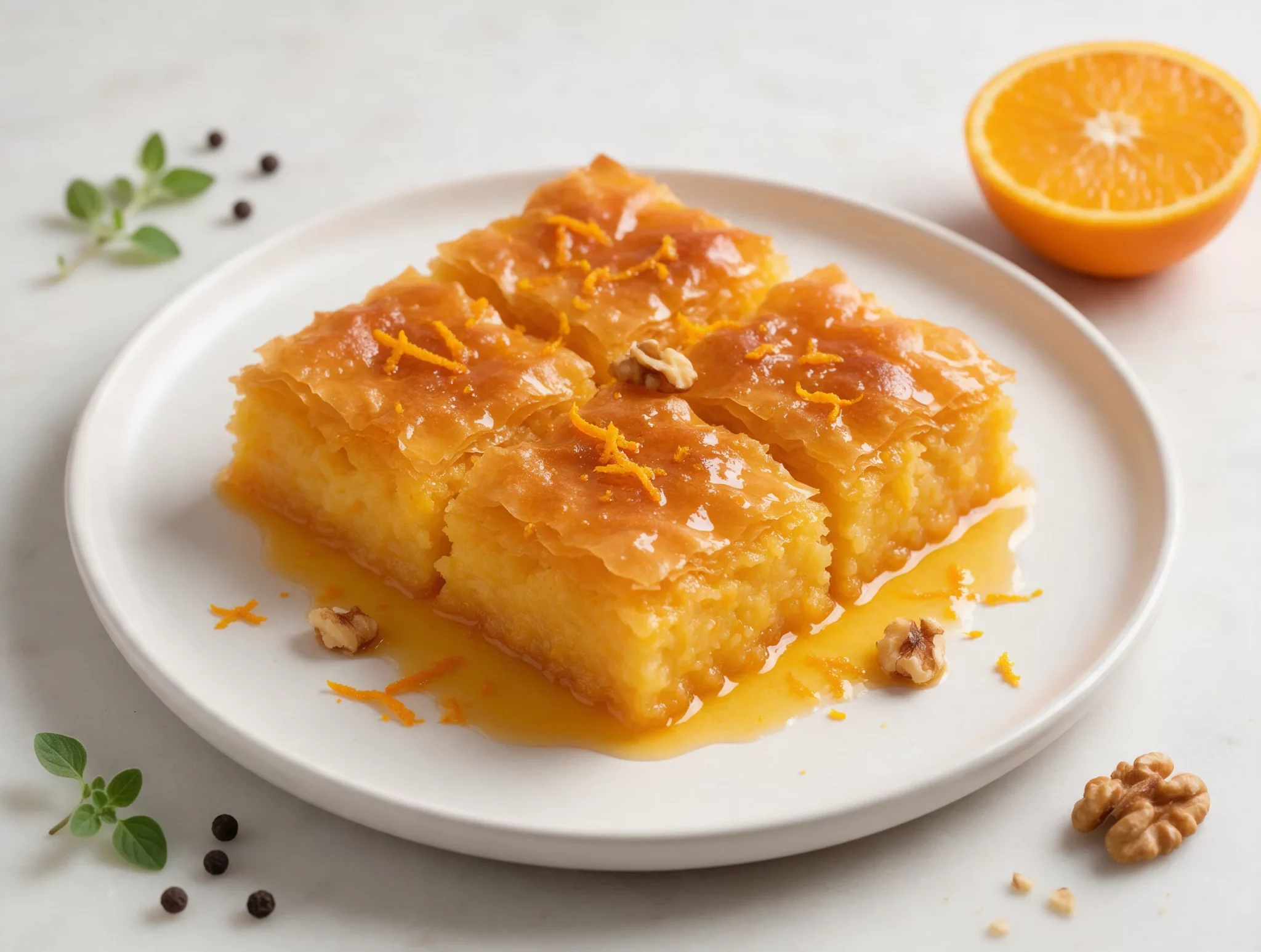
Portokalopita: Greek Orange Phyllo Cake, Soaked in Syrup
Ingredients
Method
- Tear the phyllo sheets into small, irregular pieces, about 2 to 3 cm each, and spread them on a tray. Leave uncovered at room temperature for at least 3 hours, or overnight, so they dry out and turn brittle.
- Heat the oven to 180 C / 350 F. Grease a 23 x 33 cm / 9 x 13-inch baking dish with oil or butter.
- Whisk the eggs and sugar together in a large bowl until pale and slightly thick, about 2 minutes.
- Add the yogurt, oil, orange zest, orange juice, vanilla, baking powder, salt, and cinnamon if using. Whisk until smooth.
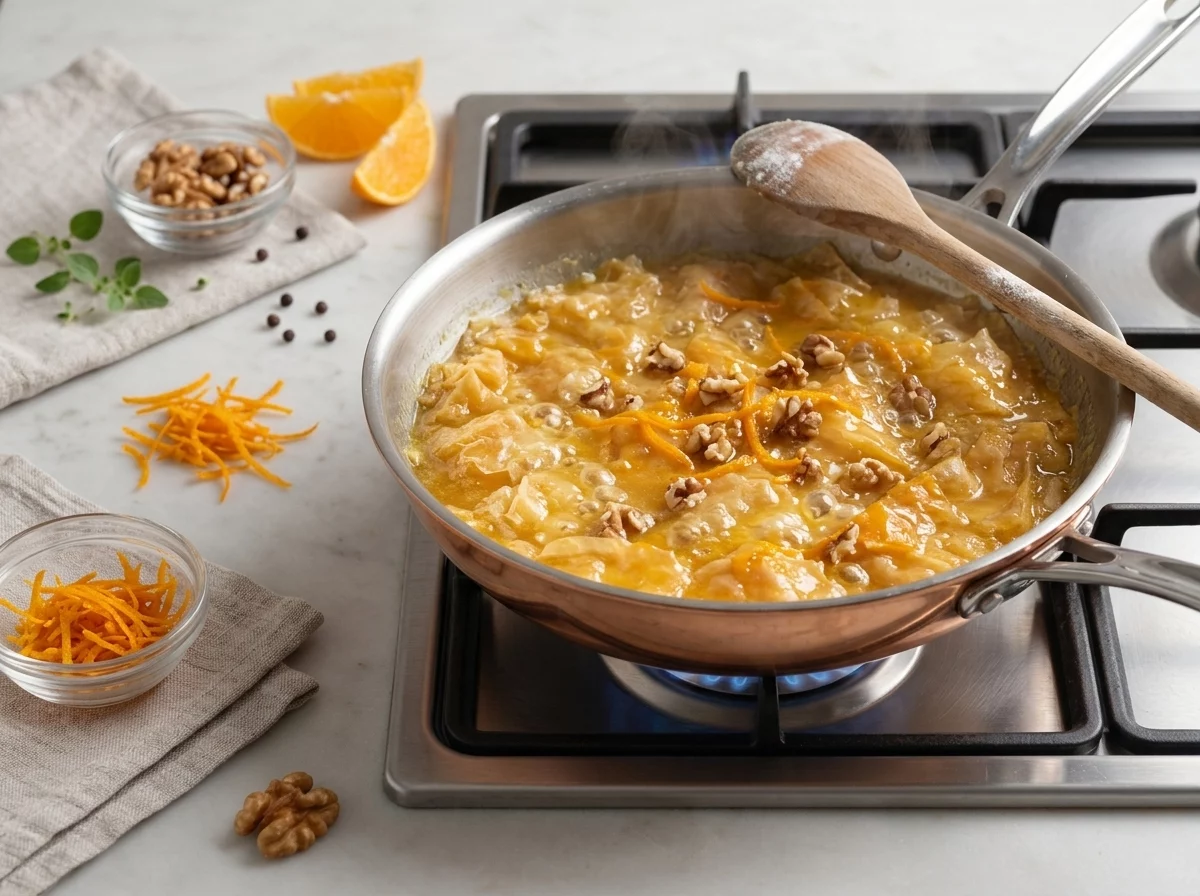
- Add the dried phyllo pieces to the batter and fold gently with a spatula until every piece is coated. Let it sit for 10 minutes so the phyllo starts soaking up the batter.
- Pour the mixture into the prepared dish, spread it evenly, and press down lightly with the back of the spatula.
- Bake for 40 to 45 minutes, until deep golden brown on top and a skewer inserted in the center comes out clean.
- While the cake bakes, combine the syrup sugar, water, orange juice, cinnamon stick, and orange peel in the saucepan. Bring to a boil, then reduce heat and simmer for 8 to 10 minutes, until slightly thickened like thin honey.
- Remove the cinnamon stick and orange peel from the syrup and discard them.
- As soon as the cake comes out of the oven, ladle the warm syrup over it slowly and evenly, letting it soak in rather than pool on top.
- Let the cake rest at room temperature for 30 minutes so it fully absorbs the syrup before you cut into it.
- Cut into 12 squares and serve warm or at room temperature.
Notes
- Dry the torn phyllo for at least 3 hours before mixing, longer if the sheets feel damp.
- Bake until a skewer comes out clean, not just until the top looks golden.
- Pour the syrup while it's still warm and the cake is fresh from the oven.
- Let the cake soak for a full 30 minutes before slicing so it holds together.
Tips for Success
- Dry the torn phyllo pieces on a tray for at least 3 hours before mixing, or the cake turns gummy in the middle.
- Pour the warm syrup over the cake as soon as it comes out of the oven so it soaks in evenly.
- Use full-fat Greek yogurt for a richer crumb, since low-fat versions make the cake slightly drier.
- Zest the oranges before juicing them so you don’t waste time trying to zest a squeezed half.
- Let the cake rest a full 30 minutes after the syrup soak before cutting, or the slices will fall apart.
Variations
- Swap half the orange juice for lemon juice for a sharper citrus edge that cuts through the sweet syrup.
- Add 60 g chopped walnuts to the batter for extra crunch and a slightly nutty flavor in every bite.
- Use honey instead of half the sugar in the syrup for a deeper, floral sweetness.
Storage and Reheating
Portokalopita keeps well for 4 to 5 days when stored covered in the fridge, since the syrup keeps it moist instead of drying it out. Let it sit at room temp for an hour before serving so the syrup loosens up again.
You can also freeze individual slices for up to 2 months. Wrap each slice tightly in plastic and thaw at room temperature for a few hours before serving.
If you want it warm, microwave a slice for 15 to 20 seconds on high. It won’t turn crisp again, but the syrup warms through and the middle turns soft.
Serving Suggestions
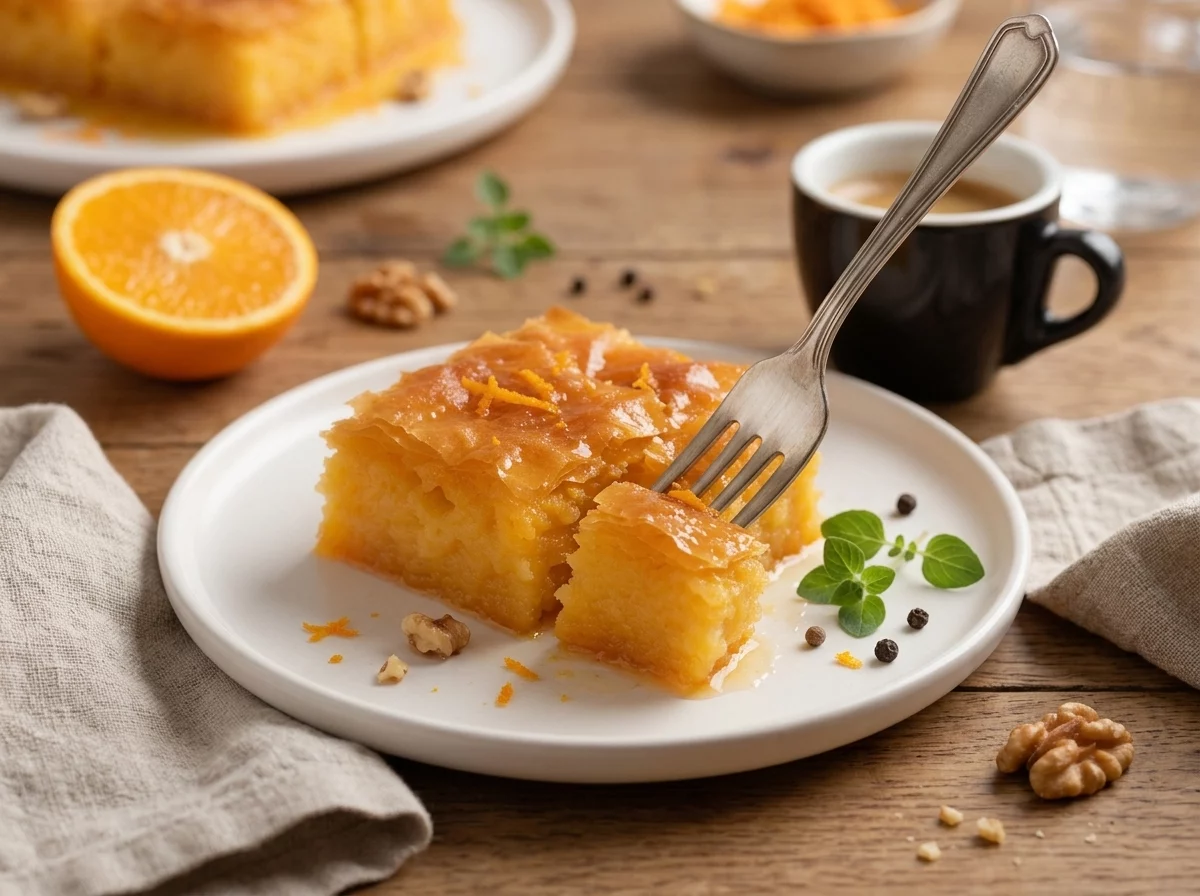
Portokalopita is good on its own with coffee, but a spoonful of Greek yogurt on the side adds a nice tang against the sweet syrup.
I also like serving it slightly warm with a scoop of vanilla ice cream, since the cold and warm together work well.
For a simple dessert table, cut it into small squares and scatter fresh orange segments or toasted walnuts on top.
FAQ
Why is my portokalopita soggy in the middle instead of soft?
This usually means the phyllo pieces weren’t dried out enough before you tore them, or the cake came out of the oven before it fully set. Bake until a skewer in the center comes out clean and the top is deep golden. If the phyllo felt soft going in, let the next batch dry longer, up to overnight.
Can I use sour cream instead of Greek yogurt in portokalopita?
Yes, sour cream works as a substitute for the Greek yogurt in this cake. The texture stays similar, though the flavor is slightly less tangy and a touch richer. Stick to a full-fat version so the batter doesn’t turn thin.
Can I freeze portokalopita after baking and soaking it in syrup?
Yes, portokalopita freezes well for up to 2 months once it has cooled and soaked up the syrup. Wrap individual slices tightly in plastic wrap and thaw them at room temperature for a few hours before serving. Don’t refreeze after thawing.
What goes well with Greek orange phyllo cake?
Strong coffee is the classic pairing, since it balances the sweetness of the syrup. A spoonful of plain Greek yogurt on the side adds a tangy contrast, and vanilla ice cream works well if you’re serving the cake slightly warm.
Is portokalopita dairy-free?
No, this recipe is not dairy-free because it uses Greek yogurt in the batter. You can try swapping in a plain dairy-free yogurt, though the texture and tang will be a little different from the original.
What’s the difference between portokalopita and baklava?
Portokalopita uses torn phyllo mixed directly into a custard batter and baked as one cake, while baklava layers whole phyllo sheets with nuts and butter before soaking in syrup. Portokalopita has a softer, more cake-like texture, while baklava stays crisp and flaky in distinct layers.