
Jump to Recipe
Saganaki is a Greek fried cheese dish, made by coating a thick slice of salty cheese in flour and pan-frying it in olive oil until the outside turns golden and crisp. The name actually comes from the small frying pan it’s cooked in, not the cheese itself.
I make this with kefalotyri, a hard, salty sheep’s milk cheese that holds its shape in the pan instead of melting into a puddle. Graviera works too if that’s what your store carries.
The double flour coating is the trick here. Dip the cheese in water between two layers of flour and you get a crust that seals in the cheese, so it stays soft in the middle instead of leaking out into the oil.
This takes about 25 minutes start to finish, and most of that is just heating the pan. Squeeze lemon over it the second it comes off the heat and it’s ready.
Why You’ll Love This Recipe
- Ready in about 25 minutes with 6 ingredients
- Crisp golden crust with a soft, salty center
- Works as an easy appetizer or light lunch
- No fancy equipment, just a skillet and a spatula
Ingredient Notes
- kefalotyri or graviera cheese: A hard, salty Greek cheese that holds its shape when fried. Halloumi works as a substitute, though the flavor is milder and less salty.
- flour: Plain all-purpose flour forms the crust. Some cooks mix in a little semolina for extra crunch.
- water: A quick dip between the two flour layers helps the second coating stick and seal the cheese in.
- olive oil: Use a regular olive oil rather than extra virgin, since high heat can turn a good extra virgin oil bitter.
- lemon: Fresh lemon juice added right after frying cuts through the richness of the cheese.
- dried oregano: Dried Greek oregano is traditional here. Fresh oregano works too, just use a bit more since it’s milder.
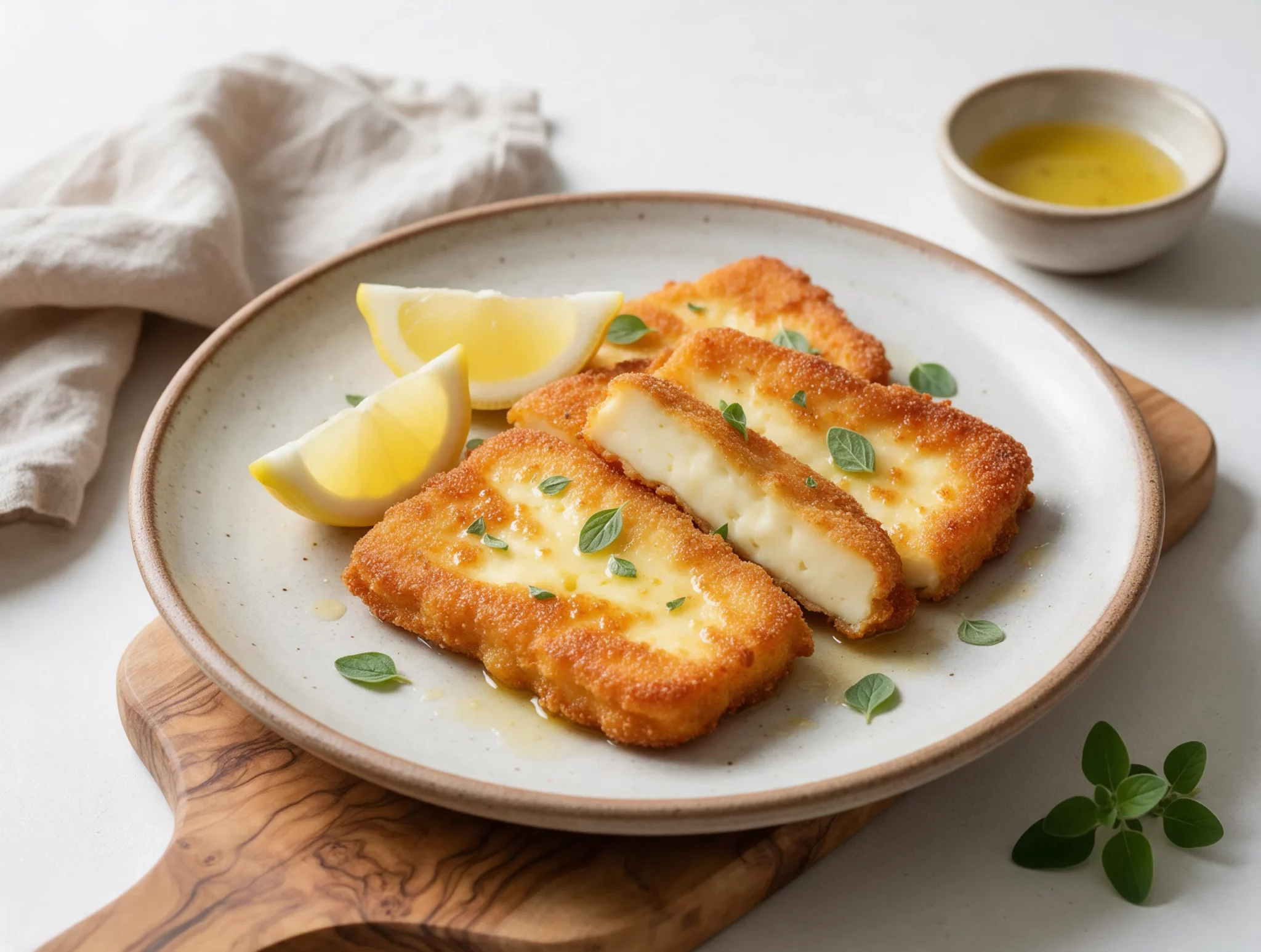
Greek Saganaki: Crispy Pan-Fried Cheese with Lemon
Ingredients
Method
- Cut the kefalotyri or graviera cheese into 4 slices, each about 1.5 cm / 0.6 inch thick. Pat both sides dry with a paper towel.
- Set up two shallow dishes with the flour and a small bowl with the water. Dredge each cheese slice in flour, dip quickly into the water without soaking it, then dredge in flour again, pressing gently so the coating sticks. Shake off the extra flour.
- Heat 2 tbsp of the olive oil in a 10-inch (25 cm) nonstick skillet over medium heat for about 2 minutes, until it shimmers and looks wavy.
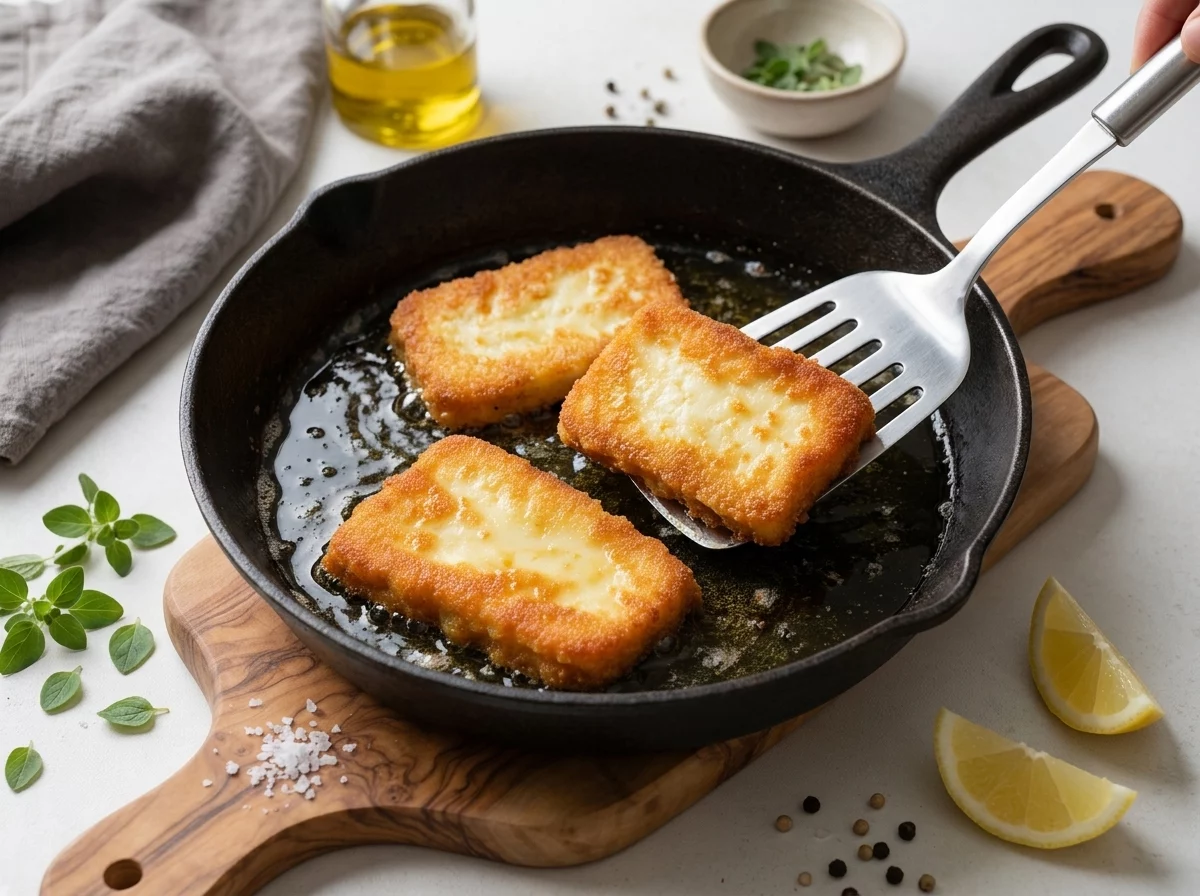
- Add 2 cheese slices to the skillet, leaving space between them. Fry for 1.5 to 2 minutes per side, until the crust is deep golden brown and the cheese is soft in the middle but still holding its shape.
- Lift the cheese out with a fish spatula and set it on a plate. Wipe out any loose bits of burnt flour from the pan, add the remaining 2 tbsp olive oil, and fry the second batch the same way.
- Squeeze fresh lemon juice over the hot cheese as soon as it comes out of the pan.
- Sprinkle with dried oregano and a pinch of black pepper. Serve right away, with the rest of the lemon cut into wedges on the side.
Notes
- Cut cheese at least 1.5 cm thick so it won't melt through the crust.
- Double-dip in flour and water for a crust that fully seals.
- Fry only 2 slices at a time to keep the oil hot.
- Serve within minutes of frying, saganaki doesn't hold well once it cools.
Tips for Success
- Pat the cheese completely dry before dredging or the flour coating won’t stick evenly.
- Fry only 2 slices at a time in the skillet so the oil stays hot and the crust turns golden, not soggy.
- Wait until the oil shimmers and looks wavy before adding the cheese, or the crust won’t crisp fast enough.
- Squeeze the lemon over the cheese the second it comes out of the pan, while it’s still sizzling.
- Use a fish spatula to flip the cheese gently so the crust stays whole instead of breaking apart.
Variations
- Flambe style: warm 1 tbsp brandy or ouzo in a small pan, pour over the fried cheese, and light it carefully for a classic tableside version.
- Swap kefalotyri for halloumi if that’s easier to find, though the flavor will be milder and less salty.
- Add a pinch of chili flakes to the flour for a warm kick that plays well against the salty cheese.
Storage and Reheating
Saganaki tastes best right out of the pan while the crust is crisp and the cheese inside is warm and soft. Once it sits and cools, the coating turns chewy and the cheese firms up, so this isn’t a good dish to reheat.
If you want to prep ahead, slice the cheese and coat it in flour and water up to 4 hours before you plan to eat. Keep the coated slices covered in the fridge, then fry them fresh right before serving.
Leftover fried saganaki keeps in an airtight container in the fridge for 1-2 days, but I’d eat it cold on a salad or chopped into a wrap rather than trying to reheat it. The crust doesn’t come back.
Serving Suggestions
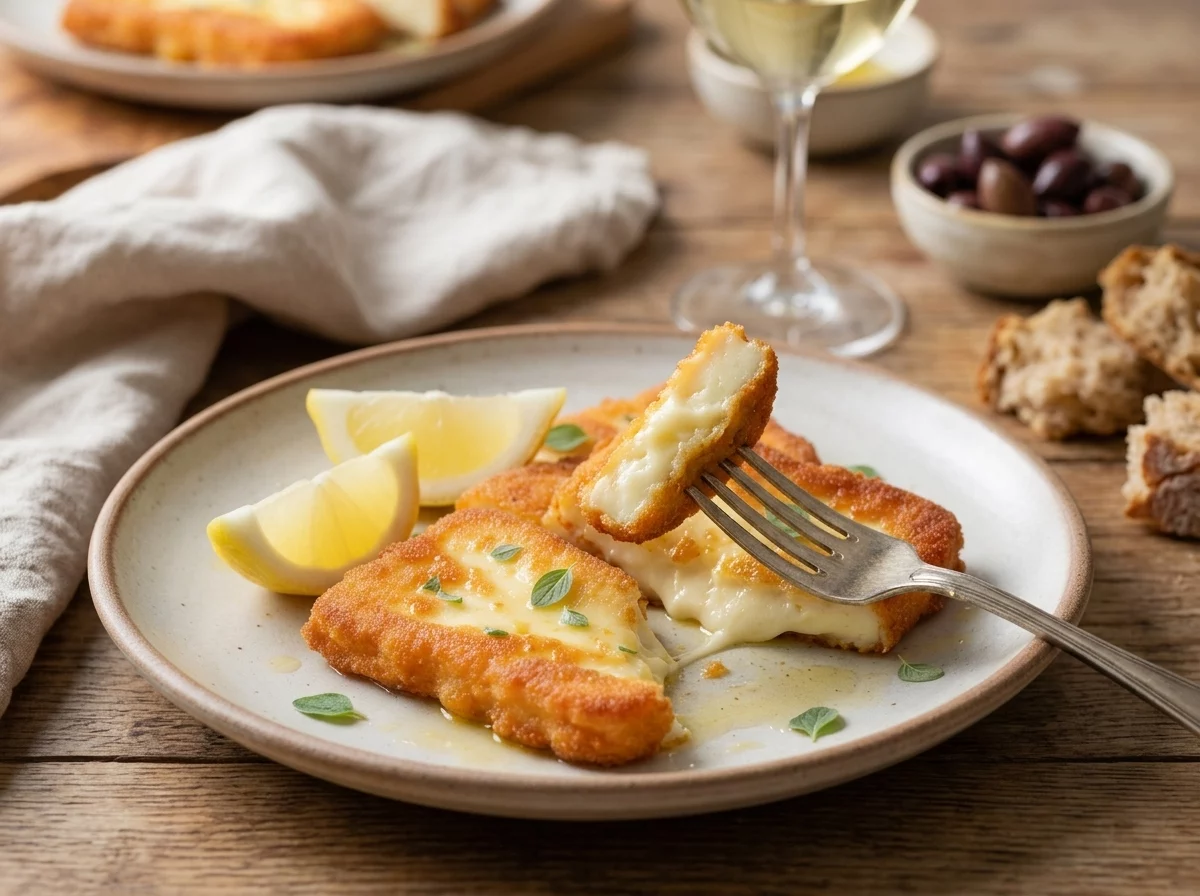
I like to serve saganaki straight from the pan with extra lemon wedges on the side and warm pita or crusty bread for scooping up the soft cheese in the middle.
It works well as part of a Greek mezze spread, next to olives, tzatziki, and warm honey-roasted feta with grapes.
For a light lunch, I’ll add a wedge of saganaki on top of a green salad with a drizzle of olive oil. The salty cheese does a lot of the seasoning work on its own.
FAQ
Why did my saganaki cheese ooze out of its crust while frying?
This usually happens when the oil isn’t hot enough before the cheese goes in, so the crust takes too long to set and the cheese melts through it. Slices cut too thin can do the same thing. Heat the olive oil until it shimmers, and cut the cheese at least 1.5 cm / 0.6 inch thick.
Can I use halloumi instead of kefalotyri for saganaki?
Yes, halloumi works as a substitute and holds its shape well in the pan too. The flavor is milder and less salty than kefalotyri, so add a little extra oregano or a pinch of salt after frying. The texture stays close to the same, soft in the middle with a crisp crust.
Can I make saganaki cheese ahead and reheat it later?
Saganaki is best fried right before serving, since the crust turns chewy once it sits and reheating won’t bring back the crisp texture. You can coat the cheese slices in flour up to 4 hours ahead and keep them covered in the fridge, then fry them fresh when you’re ready to eat.
What goes well with Greek saganaki besides a lemon wedge?
Warm pita or crusty bread is good for scooping up the soft cheese in the middle, and a simple cucumber and tomato salad balances the salty crust. Saganaki also fits well on a mezze plate next to olives, tzatziki, and crispy baked feta rolls with honey.
Is saganaki cheese gluten free?
No, this recipe isn’t gluten free because the cheese is dredged in regular flour twice before frying. You can swap in rice flour or a gluten-free flour blend for both layers and get a similar crisp crust, just watch it closely since it can brown faster.
What’s the difference between saganaki and the flaming cheese served at Greek restaurants?
Saganaki just refers to cheese fried in a small pan, this version included, while the flaming version is the same fried cheese with warm brandy or ouzo poured over and lit at the table. Both start with the same pan-fried cheese, the flambe step is a restaurant flourish added on top.