Jump to Recipe
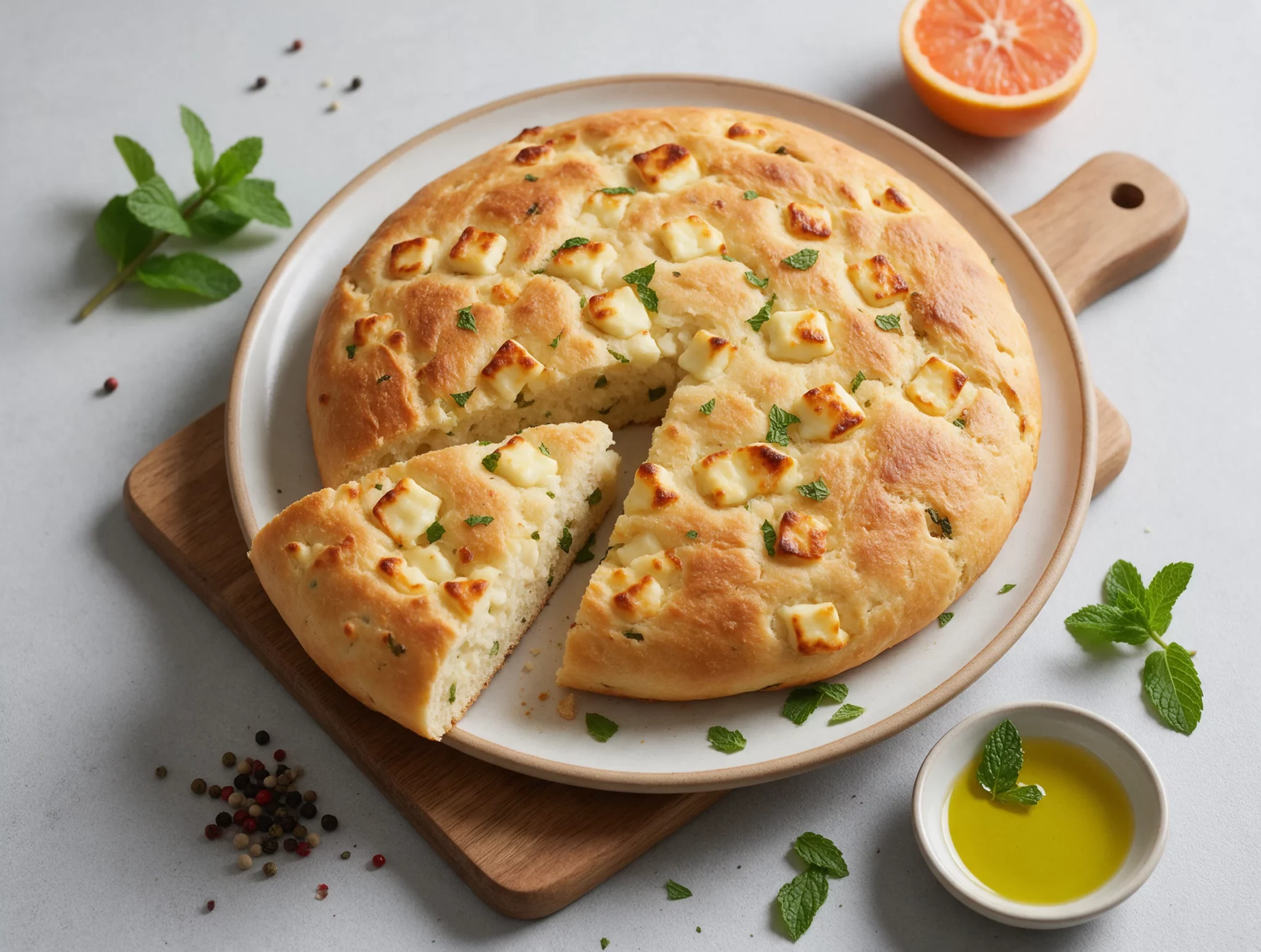
Cypriot mint and halloumi bread is a soft, yeasted flatbread studded with cubes of salty halloumi and chopped fresh mint. It comes from Cyprus, where bakers mix cheese right into the dough instead of just melting it on top. The mint keeps the bread from feeling heavy, the same way it lifts the rich cheese in this seared halloumi and peach salad, even with all that cheese inside.
The halloumi doesn’t melt away completely in the oven. It softens and turns slightly golden in spots, so you get little chewy, salty pockets through the crumb. The crust turns a deep golden brown while the inside stays soft and a bit pillowy.
I like to serve this bread warm, right out of the oven, with nothing on it. The cheese is salty enough on its own. It’s a good one to make on a weekend afternoon when you have time for the dough to rise twice.
Why You’ll Love This Recipe
- Salty halloumi pockets in every slice
- Fresh mint keeps the bread tasting light
- No filling to add later, it’s baked right in
- Good served warm or at room temperature
Ingredient Notes
- bread flour: Bread flour gives the dough more structure than all-purpose. All-purpose flour works too, but the crumb will be a touch softer.
- instant yeast: Instant yeast goes straight into the flour, no need to dissolve it first. Active dry yeast works too, just proof it in the warm water for 5 minutes first.
- halloumi: Cut the halloumi into small cubes, about 1 cm. It’s salty, so go easy on the added salt in the dough.
- fresh mint: Fresh mint gives the best flavor here. Dried mint works in a pinch, use one tablespoon instead of four.
- olive oil: Olive oil goes into the dough and also brushes the top for a shiny, golden crust.
- warm water: Water should feel warm on your wrist, not hot. Water over 120 F / 49 C can kill the yeast.
- sesame seeds: Sesame seeds add a bit of crunch on top and are optional. Nigella seeds are a good swap if you have them.
Easy Homemade Cypriot Halloumi Bread with Fresh Mint
Ingredients
Method
- In a large mixing bowl, stir together the bread flour, instant yeast, sugar, and salt.
- Add the warm water and 3 tablespoons of olive oil. Mix with a wooden spoon, then knead by hand on a floured counter for about 8 minutes, until the dough is smooth and springs back when poked.
- Cover the bowl with a kitchen towel and let the dough rise in a warm spot for 60 minutes, or until it has doubled in size.
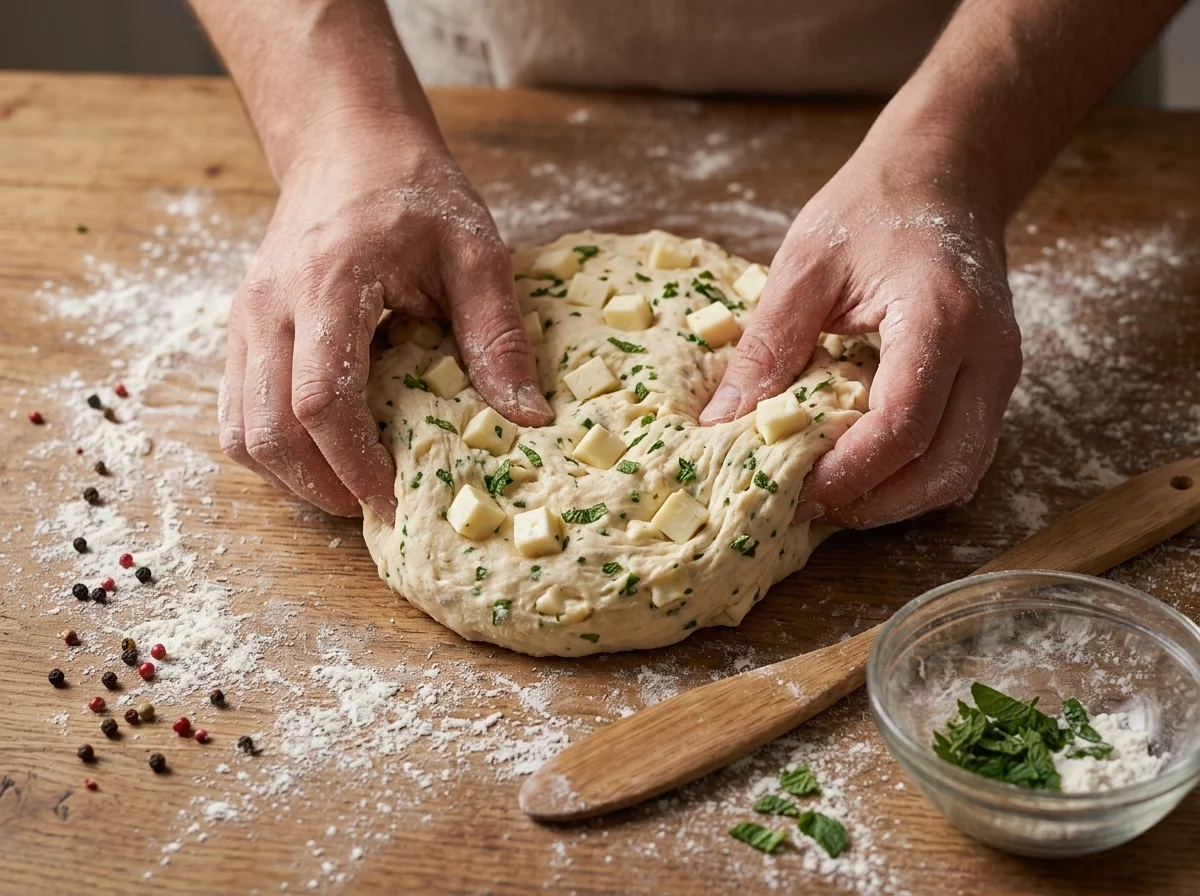
- Punch down the dough and turn it onto a lightly floured surface. Scatter the halloumi cubes and chopped mint over the top, then fold and knead gently for 1 to 2 minutes, until they're spread through evenly.
- Shape the dough into a round loaf, about 20 cm / 8 inches across, and place it on a parchment-lined sheet pan (33 x 46 cm / 13 x 18 inch).
- Cover loosely and let the loaf rise again for 15 to 20 minutes, until slightly puffed.
- Heat the oven to 200 C / 390 F while the dough finishes its second rise.
- Brush the top of the loaf with the remaining 1 tablespoon of olive oil and sprinkle with sesame seeds, if using.
- Bake for 28 to 32 minutes, until the crust is deep golden brown and the loaf sounds hollow when tapped on the bottom. An instant-read thermometer inserted into the center should read 200 F / 93 C.
- Let the bread cool on the pan for 10 minutes before slicing into 8 wedges. Serve warm.
Notes
- Cube halloumi small so it doesn't sink to the bottom of the loaf.
- Warm water over 120 F / 49 C will kill the yeast, keep it lukewarm.
- Dough should double in size before shaping, usually 60 minutes.
- Tent with foil if the crust browns too fast before the center finishes.
Tips for Success
- Cut the halloumi small, about 1 cm cubes, the same size I use for these halloumi and courgette fritters, so it spreads evenly through the dough instead of sinking to the bottom.
- Taste the halloumi before adding extra salt to the dough, since some blocks are much saltier than others.
- Let the dough rise until it’s doubled and holds a dent when poked, usually about 60 minutes in a warm spot.
- Brush the loaf with olive oil right before baking so the crust turns deep golden and shiny.
- Check the loaf at 25 minutes and tent it with foil if the top browns too fast before the center is done.
Variations
- Swap half the mint for chopped fresh dill for a grassier, slightly different flavor that still pairs well with halloumi.
- Add a handful of chopped kalamata olives to the dough for a saltier, more savory loaf.
- Shape the dough into 8 small rolls instead of one loaf and bake for 18 to 20 minutes for individual portions.
Storage and Reheating
This bread is best eaten the day it’s baked, while the crust is still crisp and the halloumi is soft. Once it cools, store leftovers in an airtight container or bag at room temperature for up to 2 days.
To keep it longer, wrap the loaf tightly and freeze for up to 2 months. Thaw at room temperature, then warm slices in a 180 C / 350 F oven for 8 to 10 minutes to bring back some of the crisp crust.
A few seconds in the microwave will soften a slice but the crust won’t crisp back up, so I only do that when I’m in a hurry.
Serving Suggestions
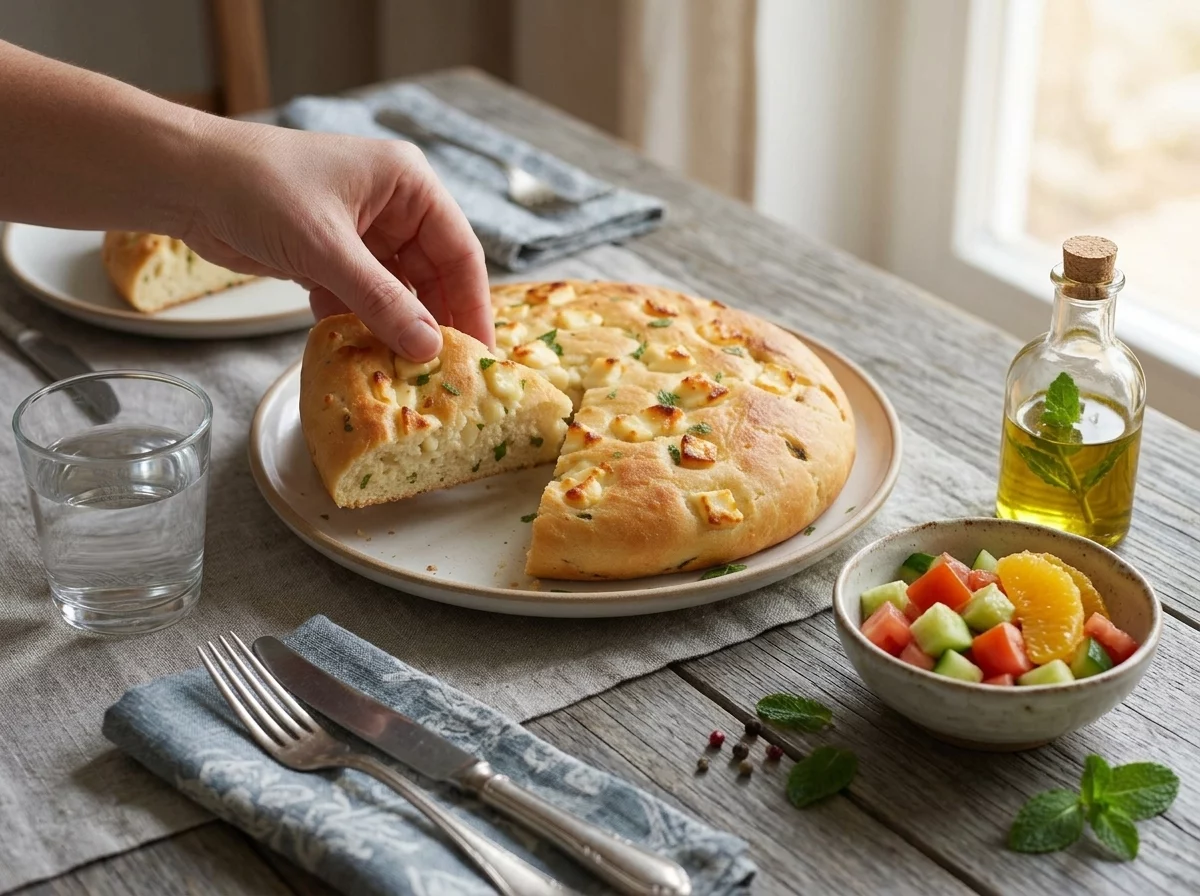
Cypriot mint and halloumi bread is good on its own, still warm from the oven. The salty cheese pockets mean you don’t need butter or dips.
For a light lunch, serve it next to a simple tomato and cucumber salad with olive oil and lemon. It also works well alongside a bowl of lentil or vegetable soup on a cold day.
Leftover slices are good toasted and topped with a fried egg for breakfast.
FAQ
Why is my Cypriot halloumi bread dense instead of soft?
Dense bread usually means the dough didn’t rise long enough, or the water was too hot and killed some of the yeast. Give the first rise a full 60 minutes in a warm spot, and check your water feels warm, not hot, before mixing it in. Old yeast can also cause this.
Can I use feta instead of halloumi in this bread?
You can, but the texture changes since feta is softer and crumbles instead of holding its shape. Halloumi keeps its cube shape and gets slightly chewy in the oven, much like in these halloumi-stuffed Mediterranean peppers, while feta melts into the dough and adds more moisture. If you swap it, cut back the added salt since feta is salty too.
Can I make the dough for this halloumi bread ahead of time?
Yes, you can make the dough the night before. Mix and knead it, then cover the bowl and refrigerate overnight instead of doing the first rise on the counter. Let it sit at room temperature for 30 minutes the next day before adding the halloumi and mint and shaping the loaf.
What goes well with Cypriot mint and halloumi bread?
A simple tomato and cucumber salad with olive oil and lemon pairs well, since the acidity balances the salty cheese. It’s also good next to a bowl of lentil or vegetable soup, or toasted with a fried egg on top for breakfast.
Is Cypriot halloumi and mint bread vegetarian?
Yes, this bread is vegetarian since it’s just flour, yeast, halloumi, mint, and olive oil. Most halloumi sold today is made with vegetarian rennet, but check the label if that matters to you, since a few brands still use animal rennet.
What’s the difference between this bread and traditional Cypriot halloumopsomo?
This version leans on fresh mint instead of dried, which some Cypriot households use and gives a lighter, brighter flavor. Traditional halloumopsomo sometimes includes dried mint or a bit of black onion seed on top, and recipes vary from village to village.