
Jump to Recipe
Corfu chicken pastitsada is chicken braised in a spiced red sauce and served over thick pasta. It’s based on pastitsada from the island of Corfu, which is traditionally made with rooster or beef, so this chicken thigh version is a simplified take.
The sauce tastes warm and a little sweet from cinnamon, cloves, and allspice. Paprika adds some heat, and a spoonful of red wine vinegar keeps it from tasting flat. The chicken turns soft enough to pull off the bone.
Most of the time is hands-off. I like to brown the chicken first, then let the pot simmer while I get the pasta ready.
You do not need anything special for this one, just a Dutch oven, a pot for the pasta, and about 100 minutes.
Why You’ll Love This Recipe
- Warm spices give the tomato sauce a different flavor
- Most of the cooking time is hands-off simmering
- One Dutch oven for the chicken, one pot for pasta
- The sauce tastes even better the next day
Ingredient Notes
- bone-in, skin-on chicken thighs: The bones and skin give the sauce body. Bone-in drumsticks work too, but breast meat dries out during the long simmer.
- bucatini: Corfu pastitsada is served with thick, hollow pasta. Ziti or penne rigate are good swaps if you can’t find bucatini.
- whole cloves and cinnamon stick: Use whole spices so you can remove them at the end. Ground cloves are hard to control and can make the sauce bitter.
- hot paprika: This adds a gentle heat. Use 1/2 tsp chili flakes instead, or skip it for a milder sauce.
- kefalotyri: It’s a hard, salty Greek cheese. Pecorino or Parmesan are close substitutes, and all of them are salty, so taste the sauce before adding extra salt.
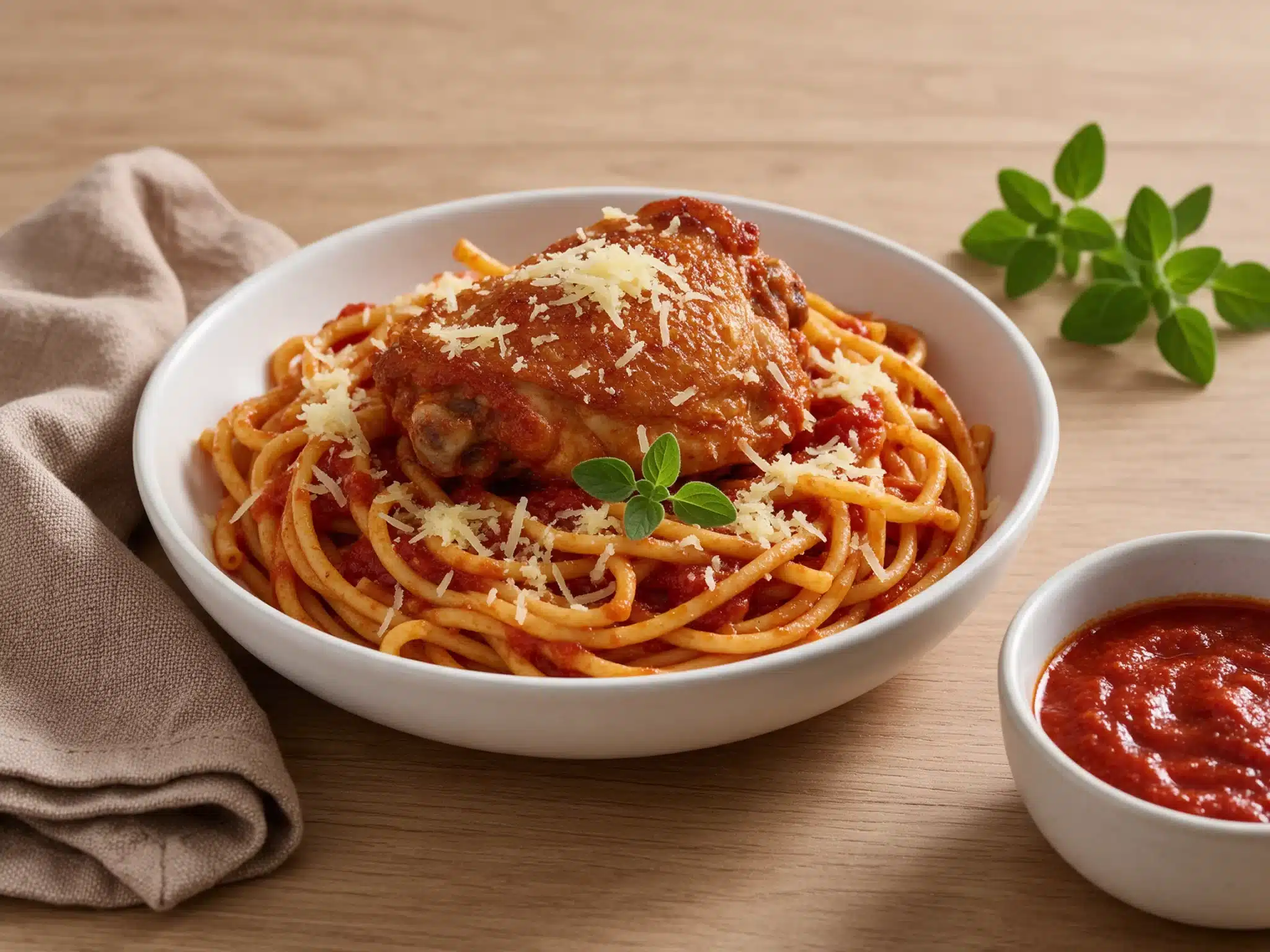
Braised Chicken Pastitsada from Corfu with Spiced Sauce
Ingredients
Method
- Pat the chicken thighs dry and season them with 1 tsp of the salt and the black pepper. Heat the olive oil in a 28 cm / 11-inch Dutch oven over medium-high heat until it shimmers. Brown 3 thighs skin side down for 5 to 6 minutes until deep golden, then flip and cook 2 minutes more. Move them to a plate and repeat with the other 3 thighs.
- Pour off the fat until about 3 tbsp are left in the pot. Lower the heat to medium, add the onions, and cook for 8 minutes, stirring often, until soft and lightly golden. Add the garlic and cook for 1 minute.
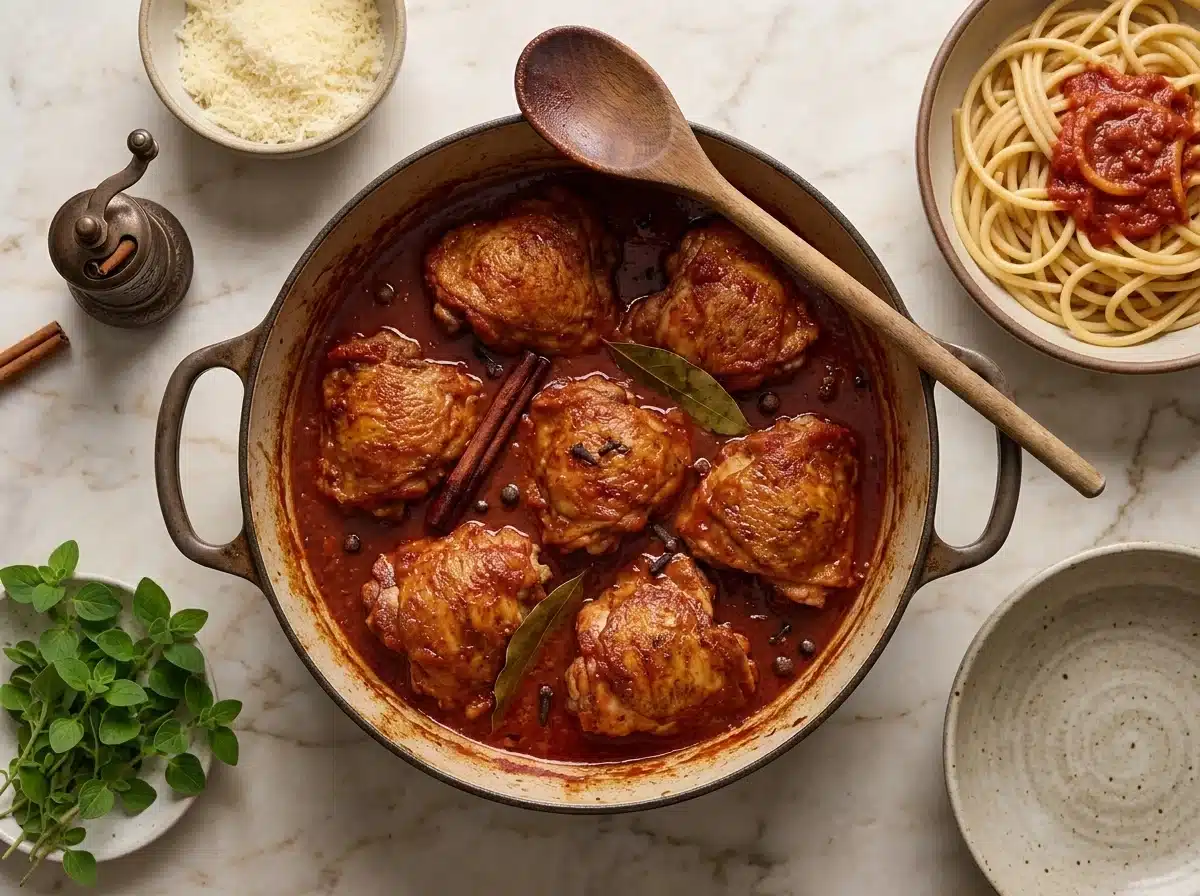
- Stir in the tomato paste, sweet paprika, hot paprika, and allspice. Cook for 1 minute until the paste darkens and smells fragrant. Add the cinnamon stick, cloves, and bay leaf, then pour in the wine and vinegar. Scrape up the browned bits and simmer for 2 minutes until the sharp smell of alcohol fades.
- Add the crushed tomatoes, water, and the remaining 1/2 tsp salt. Return the chicken to the pot skin side up, along with any juices from the plate. Bring to a gentle bubble, then set the lid slightly ajar and cook over low heat for 50 minutes, turning the thighs once halfway. The thighs are done at 195 F / 90 C, when the meat pulls from the bone and the sauce coats the back of a spoon.
- About 25 minutes before the sauce is done, bring 4 liters / 4 quarts of water to a boil in a 6-quart / 5.7 L pot. Add the coarse salt and the bucatini, then cook for 11 to 12 minutes, 1 minute less than the package says, until al dente. Scoop out 120 ml / 1/2 cup of the pasta water, then drain. When the chicken is done, fish out the cinnamon stick, cloves, and bay leaf with tongs. Cloves left in the sauce turn it bitter.
- Toss the drained pasta with about 2 cups / 480 ml of sauce for 1 to 2 minutes, adding pasta water a splash at a time, until the sauce clings to the noodles. Taste and add salt if needed. Serve each bowl with one thigh and extra sauce, topped with the grated kefalotyri.
Notes
- Use a 28 cm Dutch oven or any lidded pot of similar size, so the chicken sits in the sauce.
- Cook the pasta 1 minute short of the package time, because it finishes in the sauce.
- Taste the sauce before adding the cheese and adjust the salt if needed, since kefalotyri is salty.
- Keep the lid slightly open while simmering so the sauce thickens as the chicken cooks.
Tips for Success
- Pat the chicken thighs dry with paper towels before browning, so the skin turns golden instead of steaming in the pan.
- Brown the thighs in two batches of three, because crowding the 28 cm Dutch oven drops the heat and leaves the skin pale.
- Remove the cinnamon stick, cloves, and bay leaf with tongs before serving, since whole spices keep adding bitter flavor to hot sauce.
- Start boiling the pasta water about 25 minutes before the sauce is done, so the noodles and chicken are ready together.
- Save 120 ml of pasta water before draining and add it a splash at a time to loosen the sauce on the noodles.
Variations
- Use 1 kg of beef chuck cut into 5 cm cubes instead of chicken, and simmer for 1 1/2 to 2 hours until fork-tender.
- Swap the bucatini for ziti or penne rigate if you can’t find thick hollow pasta. Cook it 1 minute short of the package time.
- Skip the hot paprika for a milder sauce, or add 1/2 tsp chili flakes with the garlic if you like more heat.
Storage and Reheating
Chicken pastitsada keeps in the fridge for 3 to 4 days. Store the chicken and sauce together in an airtight container, and keep any leftover pasta separate so it doesn’t soak up all the sauce.
To reheat, put the chicken and sauce in a pot over low heat with 2 to 3 tbsp of water. Cover and warm for 10 to 12 minutes, until the sauce bubbles at the edges and the chicken is hot all the way through. Boil fresh pasta, or warm leftover pasta in the sauce for 2 minutes.
The chicken and sauce freeze well for up to 3 months. Thaw them overnight in the fridge. I don’t freeze the pasta, because it turns soft once it’s reheated.
Serving Suggestions
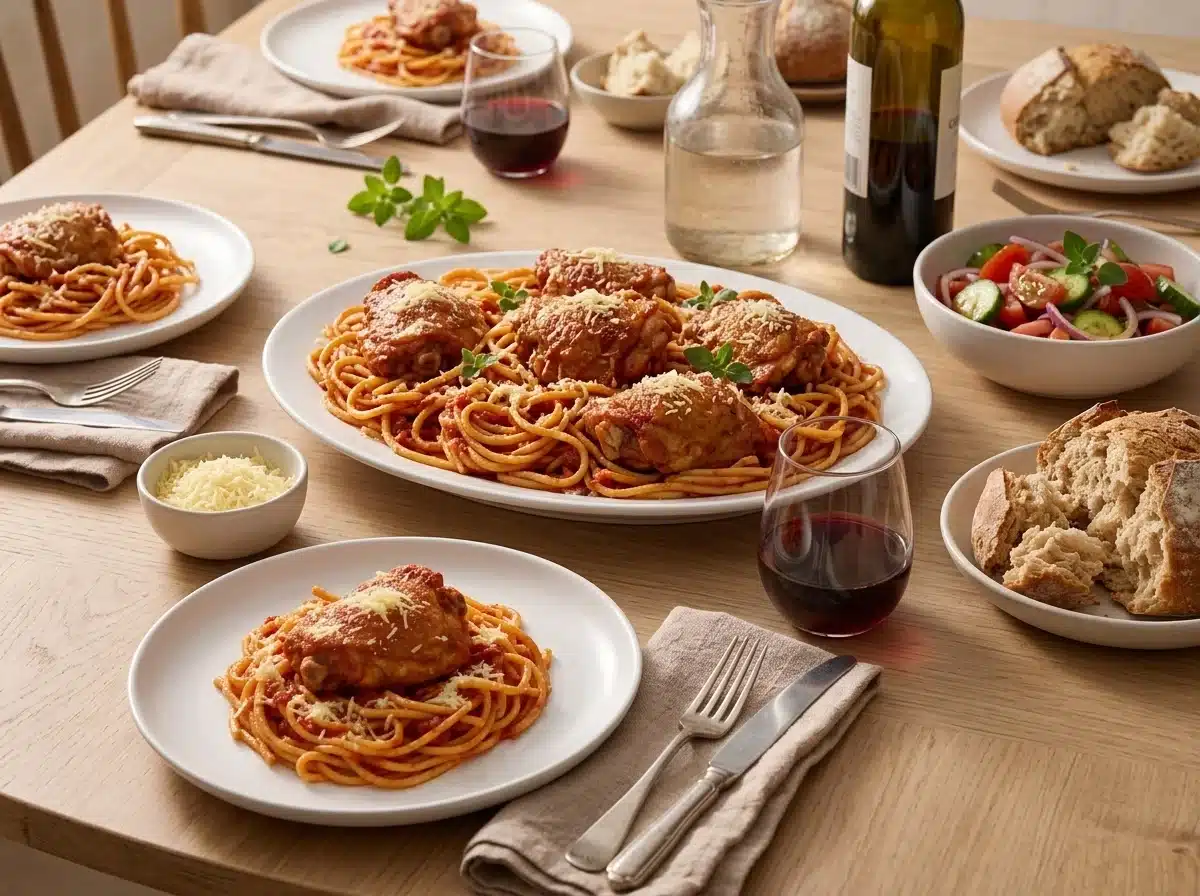
Serve one chicken thigh per bowl on a mound of sauced bucatini, with extra sauce spooned over the top. Add a generous handful of grated kefalotyri at the table. Warm Greek yogurt flatbreads are handy for the last of the sauce.
A simple salad of tomato, cucumber, and red onion with olive oil and oregano goes well with it. Boiled greens with lemon juice also work. Both cut through the spiced sauce.
For a drink, I’d pour a dry red wine or a light Italian red. Cold water with lemon is fine too, since the sauce has some heat from the paprika.
FAQ
What is the difference between Corfu pastitsada and Greek pastitsio?
Pastitsada is a stovetop dish of meat simmered in a spiced red sauce and served over thick pasta. Pastitsio is a baked casserole with layers of pasta, meat sauce, and béchamel. Both use pasta and tomato sauce, but pastitsada is looser, spicier, and has no creamy topping.
Why does my pastitsada taste bitter or too much like cloves?
Cloves left in the sauce keep releasing their strong flavor, which turns the sauce bitter. Fish out the whole cloves, cinnamon stick, and bay leaf with tongs when the chicken is done. Stick to 4 cloves for this amount, and don’t swap in ground cloves, which are hard to control.
Can I use boneless chicken breast instead of bone-in thighs for pastitsada?
Boneless skinless thighs work, but breast does not hold up. It turns dry and stringy in a long simmer. For boneless thighs, brown them 3 minutes per side and simmer for 30 minutes instead of 50. The sauce will have a little less body, since the bones add it.
Can I freeze Corfu chicken pastitsada with the pasta in it?
Freeze the chicken and sauce, but not the pasta. Cool everything completely, then freeze in airtight containers for up to 3 months. Thaw overnight in the fridge, reheat gently, and cook fresh bucatini, because pasta turns mushy after freezing and reheating in sauce.
What goes well with chicken pastitsada besides bread?
A salad of tomato, cucumber, and red onion with olive oil and oregano cuts through the spiced sauce. Boiled bitter greens with lemon juice also work well. For a drink, a dry red such as Agiorgitiko or a light Italian red suits the cinnamon and clove flavors.
How do I know when the pastitsada sauce and chicken are done?
The thighs should reach 195 F / 90 C, and the meat should pull easily from the bone. The sauce should look deep red, coat the back of a spoon, and show a little oil on the surface. If it’s still thin, simmer uncovered for 5 to 10 minutes.