Jump to Recipe
Fasolakia is a Greek dish of green beans and potatoes braised in olive oil and tomato sauce until the beans turn soft, not crunchy. It’s a lathera dish, similar in style to a Mediterranean butter bean stew, meaning food cooked slowly in a generous amount of olive oil, and it’s one of the easiest ways to turn a bag of green beans into a full meal.
The green beans go soft and the sauce turns thick, slightly sweet from the tomatoes and a pinch of sugar. Potatoes soak up the sauce and add some heft, so you don’t need meat to make this filling.
I make this when green beans are in season and I want something that doesn’t need much attention on the stove. It sits and simmers while I do other things, and it tastes even better the next day.
Fasolakia isn’t meant to be crisp-tender like a quick saute. Cook it until the beans are fully soft, almost falling apart, and the sauce has reduced to a thick coating, not a watery broth.
Why You’ll Love This Recipe
- One pot on the stove, barely any cleanup after
- Tastes even better the next day, good for meal prep
- Naturally vegan and gluten free, no swaps needed
- Uses simple pantry staples like canned tomatoes and olive oil
Ingredient Notes
- olive oil: Use a decent extra virgin olive oil since it flavors the whole sauce. Don’t cut back on the amount, it’s part of the dish, not just a cooking fat.
- green beans: Fresh beans give the best texture. Frozen work too, just add them straight from the freezer and cut the simmer time by 5 to 10 minutes.
- potatoes: Yukon gold or another waxy potato holds its shape better than a starchy russet, which can fall apart in the sauce.
- crushed tomatoes: A 400 g can works year-round. In summer you can use fresh, grated ripe tomatoes instead.
- tomato paste: Adds depth and helps thicken the sauce. Don’t skip it even if you’re using a full can of tomatoes.
- sugar: Just a pinch to balance the acidity of the tomatoes. It won’t make the dish taste sweet.
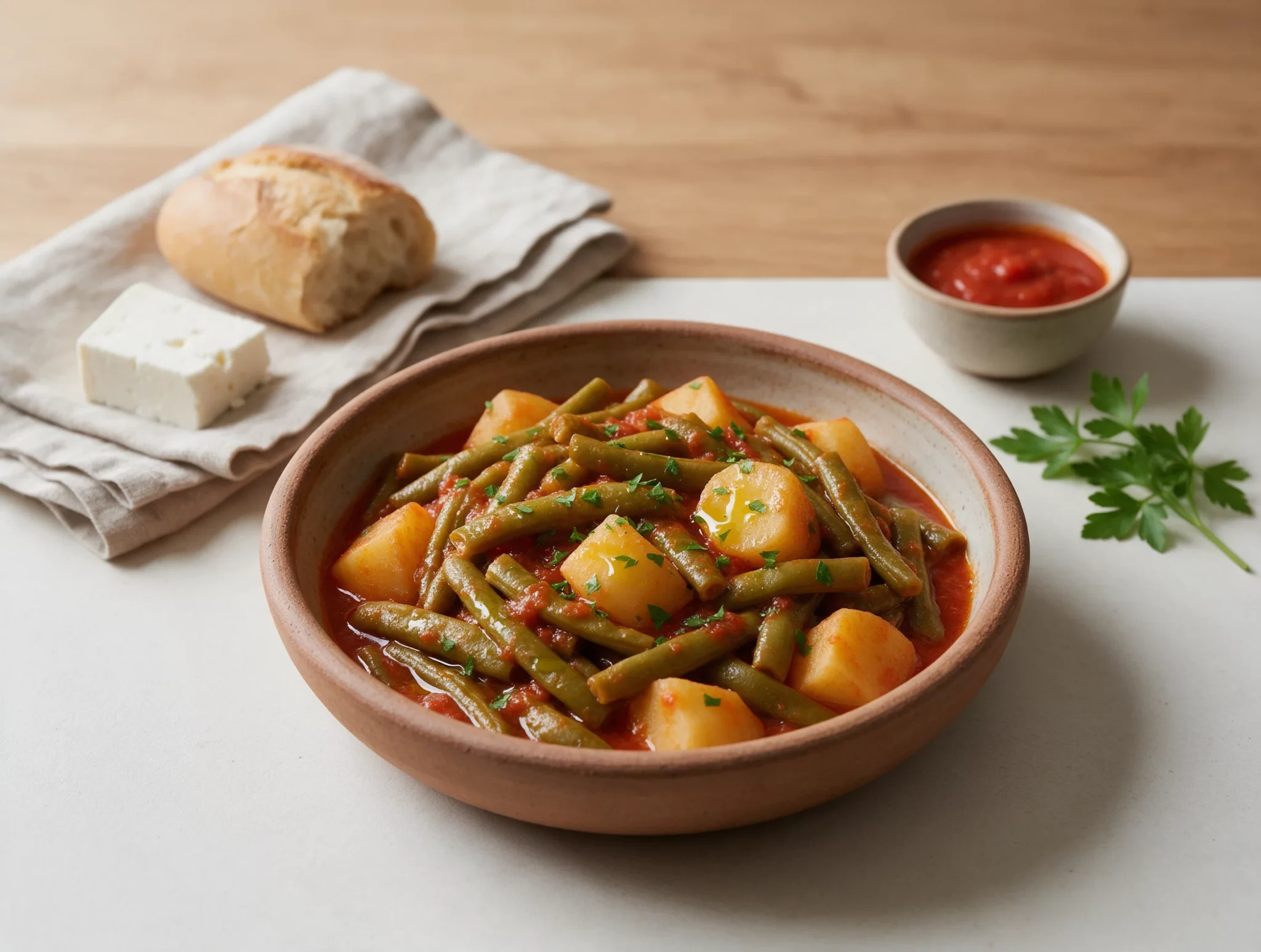
Braised Greek Fasolakia Green Beans in Tomato Sauce
Ingredients
Method
- Heat the olive oil in a 30 cm / 12-inch wide skillet or shallow pot over medium heat. Add the chopped onion and cook for 5 to 6 minutes, stirring now and then, until soft and light gold.
- Add the garlic and cook for 30 seconds, until fragrant.
- Add the green beans and potatoes. Stir to coat everything in the oil and cook for 3 to 4 minutes.
- Pour in the crushed tomatoes, tomato paste, and water. Add the sugar, salt, pepper, and oregano, then stir to combine.
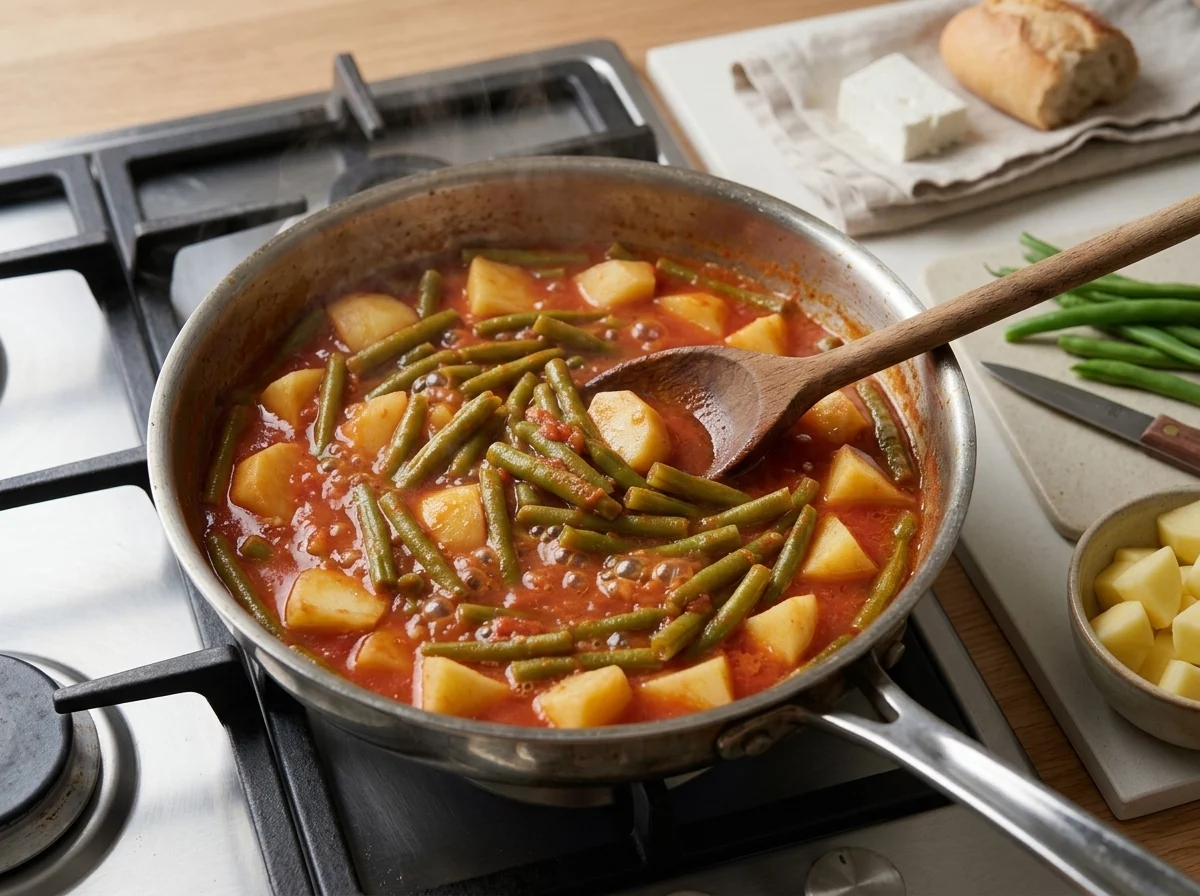
- Bring the sauce to a gentle simmer, cover the pot, and turn the heat down to low. Cook for 35 to 40 minutes, stirring every 10 minutes or so.
- Check the beans at the 35-minute mark. They're ready when they're fully soft, almost falling apart, not crisp-tender like a quick saute.
- If the sauce still looks thin, uncover the pot for the last 5 to 10 minutes to let it reduce and thicken.
- Taste the sauce and add more salt if needed, since canned tomatoes vary in saltiness.
- Stir in the fresh parsley and remove the pot from the heat.
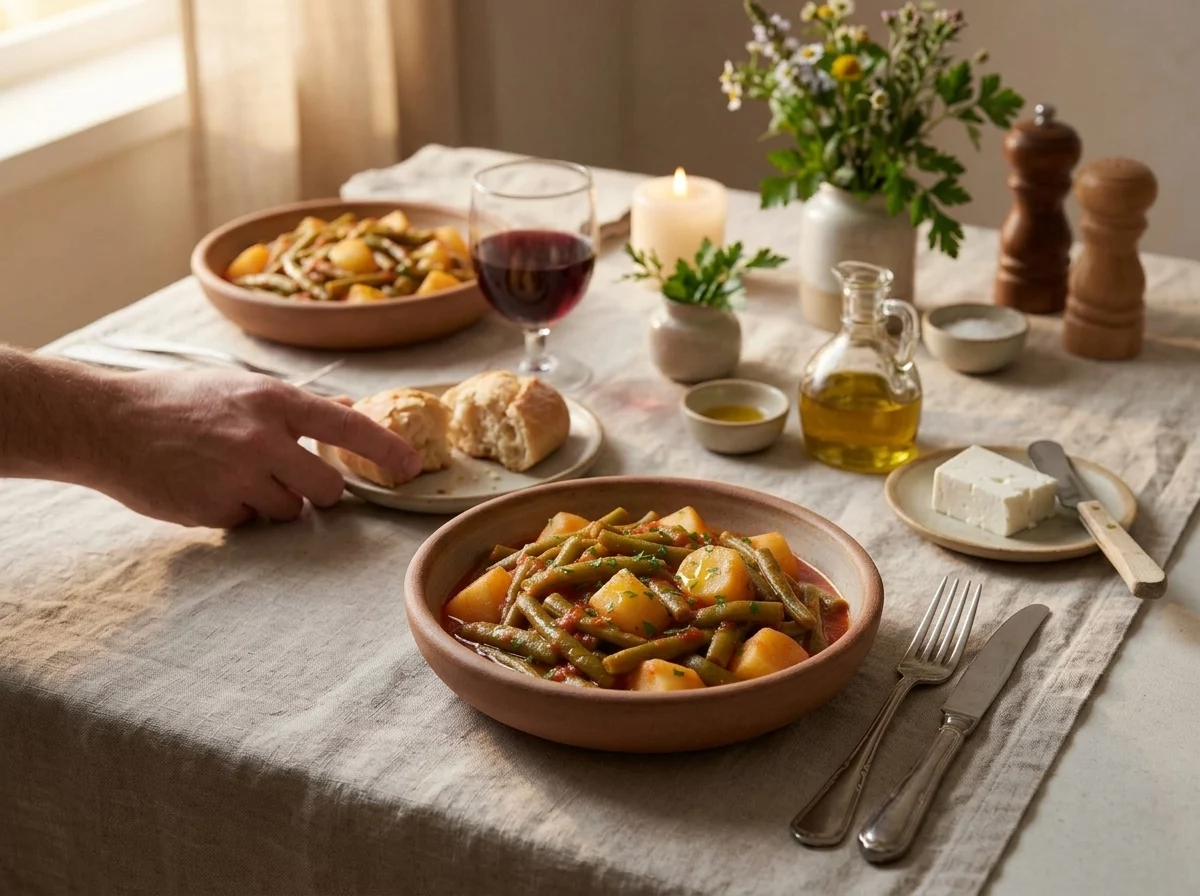
- Serve warm or at room temperature, with crusty bread and feta on the side if you like.
Notes
- Cut green beans into even pieces so they all finish cooking at the same time.
- Cook covered so the beans steam and soften, don't just simmer uncovered from the start.
- Check doneness at 35 minutes, beans should be soft, not crisp-tender.
- Uncover near the end if the sauce needs to thicken further.
Tips for Success
- Trim the green beans and cut them into even 5 cm / 2-inch pieces so they cook at the same rate.
- Cook the onion until it’s fully soft and light gold before adding garlic, or the sauce tastes raw.
- Keep the pot covered while it simmers so the beans steam and soften instead of drying out on top.
- Uncover the pot for the last 10 minutes if the sauce still looks thin, so it can reduce down.
- Taste the sauce before adding extra salt, since canned tomatoes and tomato paste already carry some.
Variations
- Add sliced zucchini or bell pepper in the last 15 minutes for a more colorful version of the dish.
- Stir in crumbled feta at the table for a salty, creamy topping over the hot green beans.
- Drop a cinnamon stick into the pot while it simmers for a warmer, slightly sweet background flavor.
Storage and Reheating
Fasolakia keeps well in the fridge for 4 to 5 days in an airtight container, and the flavor gets better as it sits.
Reheat gently in a saucepan over medium-low heat for 5 to 7 minutes, stirring now and then, or warm it in the microwave in 60-second bursts. Add a splash of water if the sauce has thickened too much in the fridge.
You can freeze it in a sealed container for up to 3 months. Thaw overnight in the fridge before reheating, though the potatoes will soften a bit more once frozen and thawed.
Serving Suggestions
Fasolakia works as a main dish with crusty bread and a block of feta on the side for a simple, meat-free dinner.
I also serve it as a side dish next to grilled chicken, lamb chops, or Mediterranean baked cod, since the tomato sauce goes well with most simple grilled meats.
A spoonful of plain yogurt or a little extra feta on top adds some tang if you want it.
FAQ
Why are my fasolakia green beans still crunchy after cooking?
They probably need more time on the stove. Fasolakia is meant to be cooked until the beans are fully soft, not crisp like a stir-fry, so keep simmering covered for another 10 to 15 minutes and check again. Older, thicker green beans also take longer to soften than young, thin ones.
Can I use frozen green beans for fasolakia?
Yes, frozen green beans work fine here. Add them straight from the freezer and cut the simmer time by 5 to 10 minutes, since they’re already partly softened. Fresh beans give a slightly better texture, but frozen is a good swap when beans aren’t in season.
How long do leftover fasolakia green beans keep in the fridge?
Leftovers keep for 4 to 5 days in a sealed container in the fridge. The sauce thickens as it sits, so add a splash of water when you reheat it on the stove or in the microwave, stirring until it loosens back up.
What do you serve with fasolakia besides bread?
Feta cheese and crusty bread are the classic pairing, but fasolakia also works well next to grilled chicken, lamb, or roasted fish. A dollop of plain yogurt on top adds a nice tang if you want something creamy alongside it.
Is fasolakia vegan and gluten free?
Yes, this fasolakia recipe is both vegan and gluten free as written, since it’s just green beans, potatoes, tomatoes, and olive oil. Double check your tomato paste label though, since a few brands add small amounts of other ingredients.
What’s the difference between fasolakia and green bean casserole?
Fasolakia is a Greek dish of green beans and potatoes simmered slowly in olive oil and tomato sauce, much like Greek briam roasted vegetables, while green bean casserole is an American baked dish with cream soup and fried onions. Fasolakia is lighter, dairy free, and built on a tomato base instead of a creamy one.