Jump to Recipe
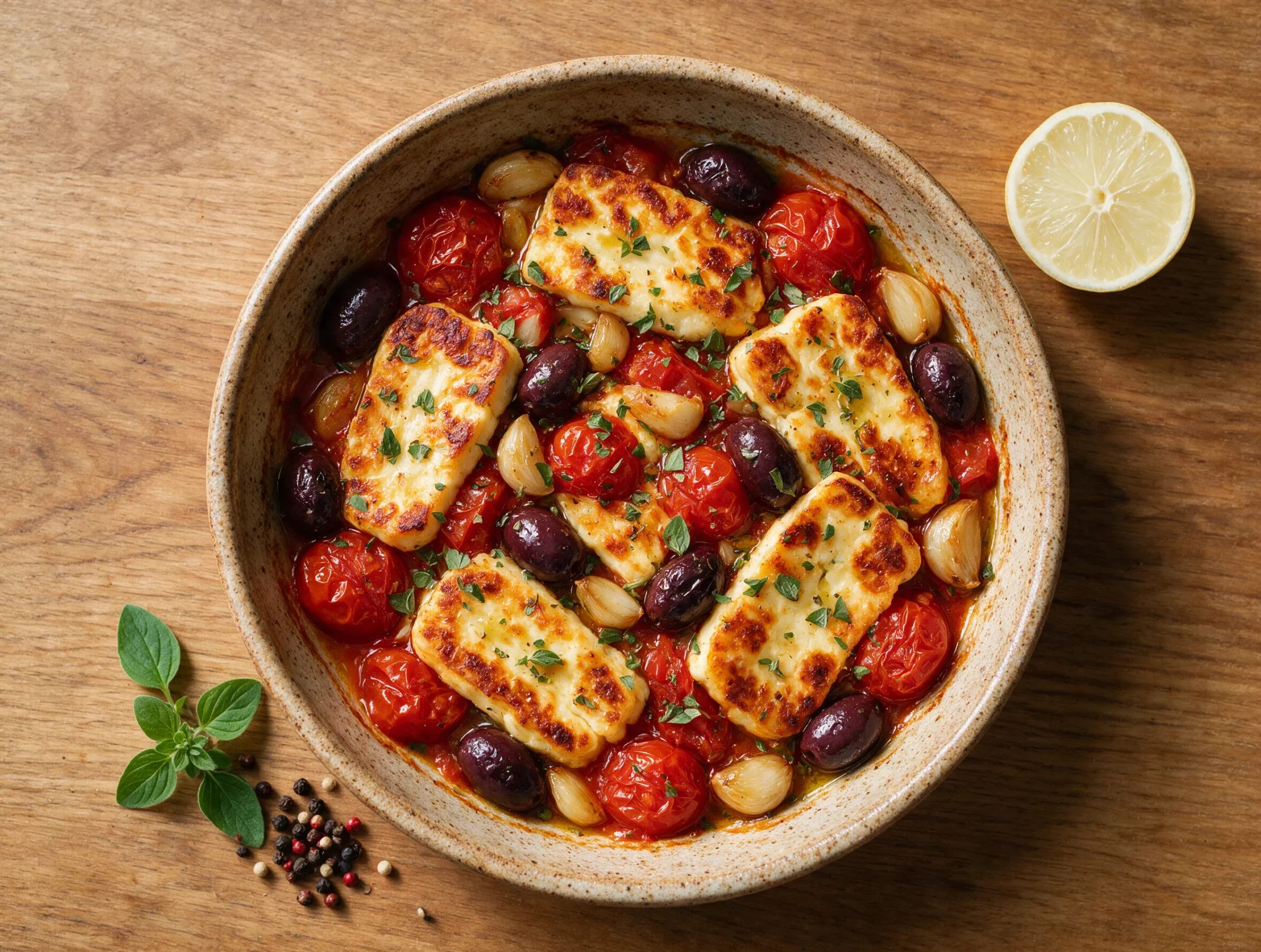
Baked halloumi with tomatoes and olives is a warm dish of firm cheese roasted until soft, surrounded by cherry tomatoes that burst and olives that add a salty bite. It comes out of the oven bubbling, with a light sauce forming from the tomato juices and olive oil.
I make this when I want something warm but don’t feel like standing over a pan. Everything goes into one dish and the oven does the work.
The halloumi stays firm enough to slice, but the edges turn soft and a little golden. The tomatoes cook down just enough to burst and release their juice, and the olives keep the dish from tasting flat.
This works as a weeknight dinner or a starter before a bigger meal. Serve it with warm bread to soak up the juices at the bottom of the dish.
Why You’ll Love This Recipe
- One dish, minimal cleanup, ready in 35 minutes
- Salty olives and juicy tomatoes balance the cheese
- Halloumi holds its shape, no messy melting
- Works as a starter or a light main
Ingredient Notes
- halloumi: Use a firm block, not pre-sliced grilling halloumi, so it holds up in the oven without falling apart.
- cherry tomatoes: Cherry tomatoes burst faster than large ones and give a juicier sauce. Grape tomatoes work the same way.
- kalamata olives: Kalamata olives add a briny bite. Green olives work if that’s what you have, though the flavor is sharper.
- olive oil: Use a decent olive oil since it becomes part of the sauce at the bottom of the dish.
- garlic: Sliced garlic softens in the oven and flavors the oil. Don’t slice it too thin or it can burn under the broiler.
- lemon: A squeeze of lemon juice at the end brightens the whole dish and cuts through the salt.
Baked Halloumi with Cherry Tomatoes and Kalamata Olives
Ingredients
Method
- Heat the oven to 200 C / 400 F.
- In a 23 cm / 9-inch baking dish, toss the cherry tomatoes, olives, garlic, olive oil, dried oregano, red pepper flakes, and a pinch of black pepper.
- Roast for 10 minutes, until the tomatoes start to soften and blister.
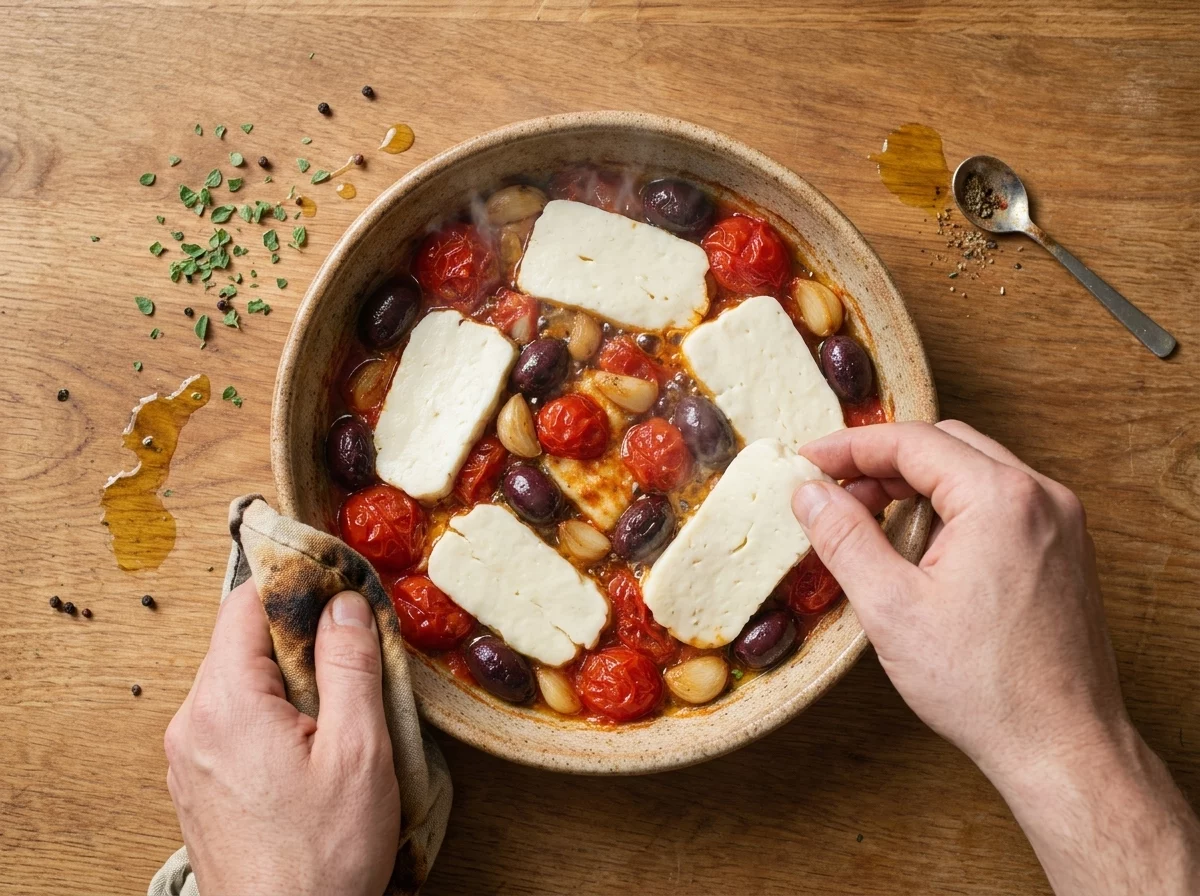
- Remove the dish and nestle the halloumi slices between the tomatoes, pressing them slightly into the juices.
- Return to the oven and roast for 12 to 15 minutes, until the halloumi is soft, the edges are light golden, and the tomatoes have collapsed into a light sauce.
- For extra color, switch the oven to broil for 2 minutes, watching closely so the cheese doesn't turn tough.
- Remove from the oven and squeeze the lemon half over the top. Scatter fresh oregano or parsley over everything.
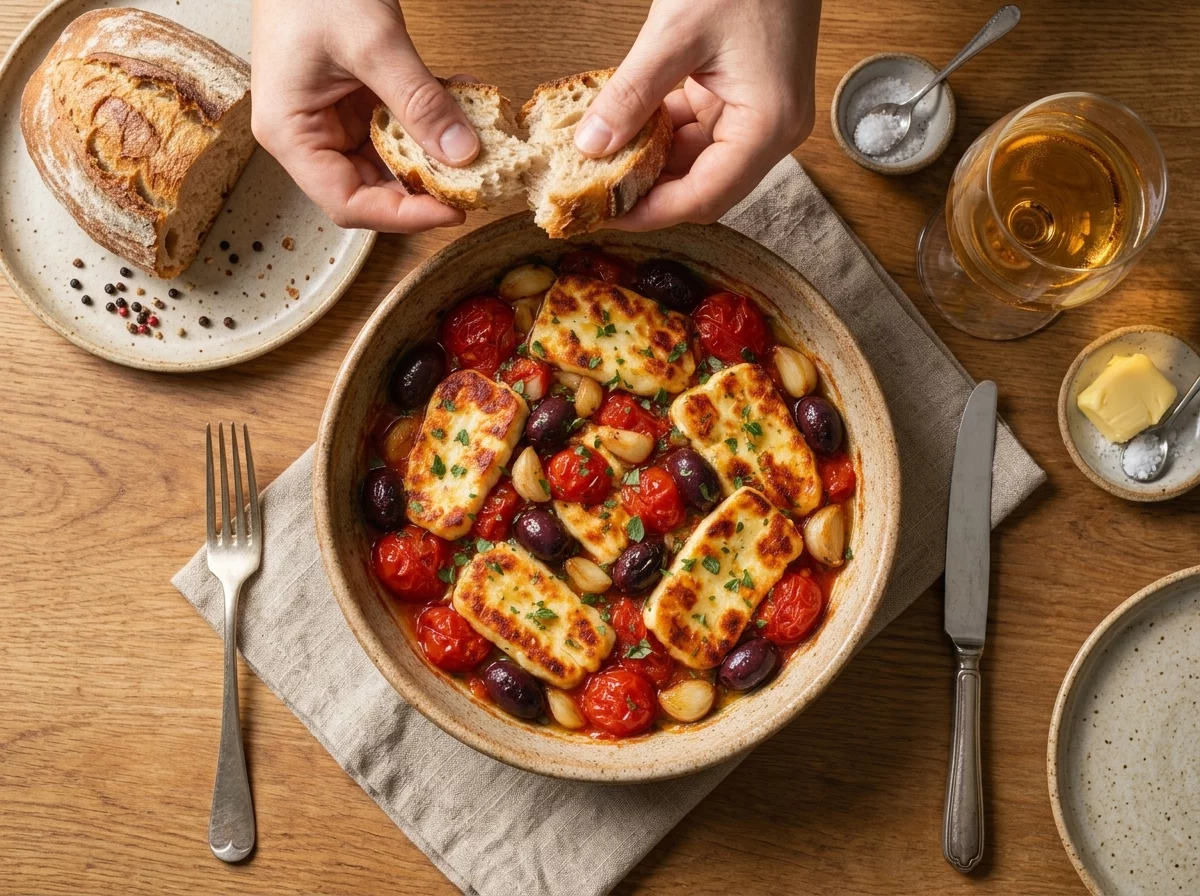
- Serve warm, straight from the dish, with warm bread for scooping up the juices.
Notes
- Slice halloumi at least 1 cm thick so it doesn't dry out in the oven.
- Taste before adding salt, halloumi and olives are both already salty.
- Use a shallow dish so the tomatoes roast instead of steam.
- Watch closely under the broiler, halloumi can go from golden to tough fast.
Tips for Success
- Cut the halloumi at least 1 cm thick so it stays soft in the middle instead of drying out.
- Taste the dish before adding salt, both the halloumi and olives are already salty.
- Use a shallow baking dish so the tomatoes roast and blister instead of steaming in their own juice.
- Add the halloumi halfway through roasting so it doesn’t turn rubbery from too much oven time.
- Serve straight from the baking dish while it’s warm, since the cheese firms up as it cools.
Variations
- Swap kalamata olives for green olives if that’s what you have, though the flavor turns sharper and less briny.
- Add a can of drained chickpeas to the dish before roasting to turn this into a fuller main course.
- Use grape tomatoes instead of cherry tomatoes if that’s what’s in the fridge, they roast the same way.
Storage and Reheating
Baked halloumi with tomatoes and olives keeps in the fridge for 2 to 3 days in an airtight container. The halloumi firms up a lot once cold, so don’t skip reheating.
To reheat, spread everything in a small baking dish and warm in the oven at 180 C / 350 F for 10 to 12 minutes, until the cheese softens again and the tomatoes are warmed through.
I don’t recommend freezing this dish. Halloumi turns rubbery and grainy once frozen and thawed, and the tomatoes turn watery when they defrost.
Serving Suggestions
Baked halloumi with tomatoes and olives works well with warm crusty bread to mop up the juices at the bottom of the dish. A simple green salad with lemon dressing on the side keeps the meal light.
I also like it spooned over cooked orzo or rice, so the grains soak up the tomato and olive oil sauce. For a bigger spread, add it to a mezze table with hummus, flatbread, and a cucumber salad.
FAQ
Why did my baked halloumi turn rubbery instead of soft?
Rubbery halloumi usually means it was sliced too thin or left under the broiler too long. Cut the halloumi at least 1 cm thick and watch it closely once you switch to broil, since it can go from soft to tough in under a minute. Pulling it out as soon as the edges turn light golden keeps the center soft.
Can I use feta instead of halloumi in this dish?
Feta will break down and melt into the sauce instead of holding its shape like halloumi does. You can still make a similar bake with feta, but expect a creamier, crumblier result rather than sliced pieces of cheese. Stick with halloumi if you want that classic sliced texture.
Can I prep baked halloumi with tomatoes and olives ahead of time?
You can toss the tomatoes, olives, garlic, and oil together up to a day ahead and keep it covered in the fridge. Add the halloumi slices right before baking, since raw halloumi doesn’t hold up well sitting around. This keeps the cheese from turning soft or watery before it even hits the oven.
What goes well with baked halloumi and tomatoes?
Warm crusty bread is the easiest pairing, since it soaks up the tomato and olive oil juices at the bottom of the dish. A simple green salad with lemon dressing keeps the meal light, and cooked orzo or rice works well if you want something more filling. It also fits nicely on a mezze spread with hummus and flatbread.
Is baked halloumi with tomatoes and olives gluten free?
Yes, the dish itself is gluten free, since halloumi, tomatoes, olives, and olive oil don’t contain gluten. Just check the bread you serve alongside it, since regular crusty bread contains gluten. Swap in a gluten-free loaf if you’re serving this to someone who needs to avoid it.
What’s the difference between baked halloumi and grilled halloumi?
Baked halloumi cooks slower in the oven, surrounded by tomatoes and olives that turn into a light sauce, while grilled halloumi gets quick, direct heat on a hot pan for a firmer, charred exterior. Baking gives a softer, juicier result since the cheese cooks alongside the vegetables rather than on its own.