
Jump to Recipe
Feta and olive savory olive oil cake is a soft loaf made with olive oil, yogurt and eggs, with salty feta and Kalamata olives folded into the batter. It isn’t sweet. It tastes like a tender quick bread with a briny, tangy bite.
This is a savory take on olive oil cake, using flavors you’d find in Greek cooking: feta, olives, dill and lemon. It isn’t a traditional recipe.
The crumb is moist, the feta softens into creamy pockets, and the lemon zest keeps it fresh. You only need two bowls and a whisk. The cake is good warm or at room temperature.
One thing that helps: pat the olives dry and toss them with a spoonful of flour so they don’t sink to the bottom.
Why You’ll Love This Recipe
- Mix it with a whisk and spatula, no mixer needed
- Stays moist for 4 days in the fridge
- Slices warm up easily in the oven or toaster oven
- Works as a side, a snack, or a light lunch
Ingredient Notes
- feta: I use a block of feta packed in brine and crumble it by hand. Pre-crumbled feta is drier and won’t melt into soft pockets as well.
- Kalamata olives: Buy them pitted to save time. Green olives work too, but they’re sharper, so use the same weight and taste one first.
- olive oil: Use a mild extra-virgin olive oil. A very bitter, grassy oil can taste stronger once it’s baked.
- plain yogurt: Whole-milk yogurt gives the softest crumb. Greek yogurt works if you add an extra 1 tbsp of milk to loosen the batter.
- fresh dill: Fresh dill tastes best here. If you don’t have it, use 1 tbsp of fresh oregano or parsley instead.
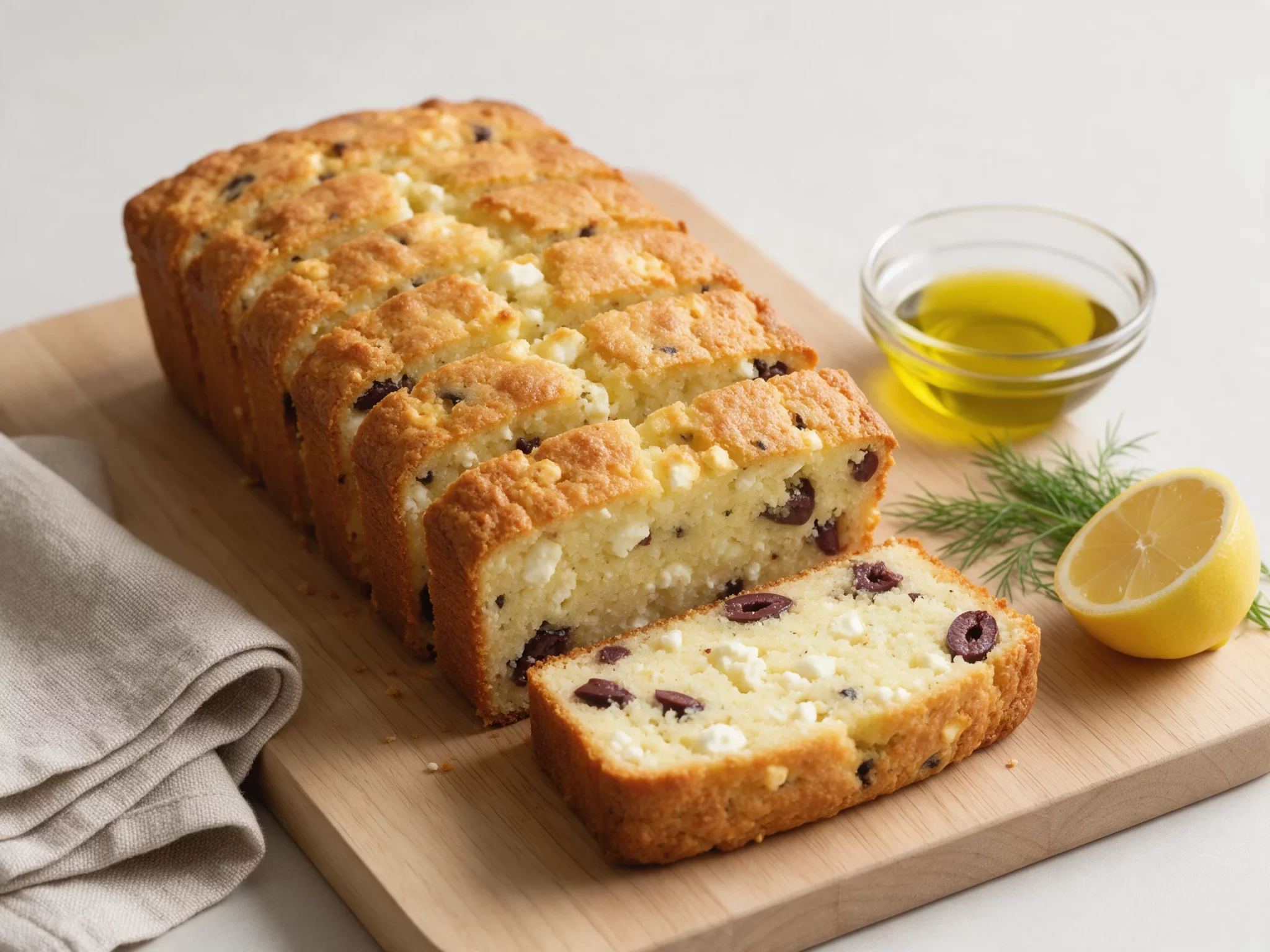
Savory Olive Oil Cake with Feta, Olives and Fresh Dill
Ingredients
Method
- Heat the oven to 180 C / 350 F with a rack in the middle. Brush a 9 x 5 inch / 23 x 13 cm loaf pan with 1 tsp of olive oil and line it with parchment, leaving some overhang on the two long sides.
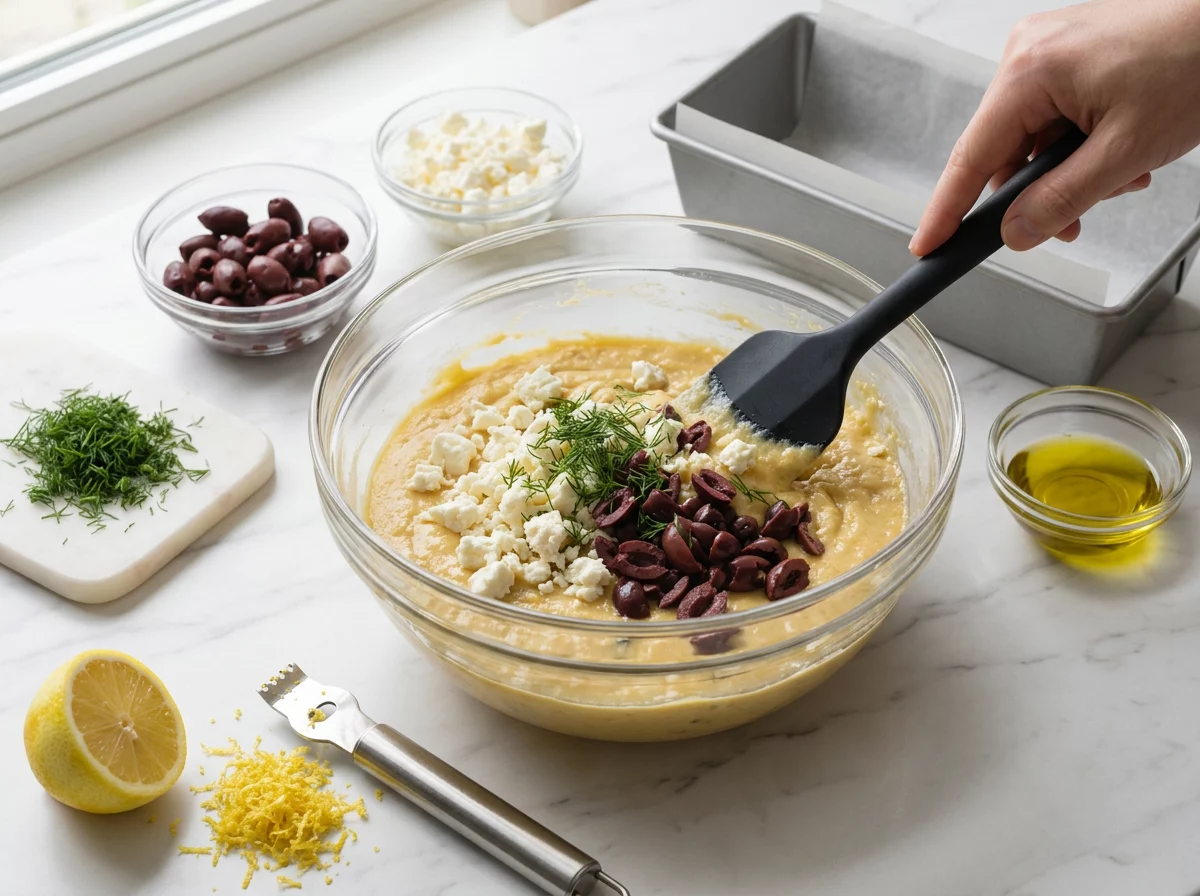
- Toss the chopped olives and crumbled feta in a small bowl with the 1 tbsp of flour you set aside, until the pieces are lightly coated. Set the bowl aside.
- Whisk the remaining flour, baking powder, pepper and salt in a large bowl. In a second bowl, whisk the eggs, yogurt, milk, olive oil and lemon zest for about 1 minute, until smooth and slightly thickened.
- Pour the wet mix into the dry mix and fold with a spatula until just a few streaks of flour remain, about 15 strokes. Add the feta, olives and dill and fold 3 or 4 more times. The batter will be thick.
- Scrape the batter into the pan and smooth the top. Bake for 45 to 50 minutes, until the top is deep golden and springs back when pressed, and a toothpick comes out clean or with dry crumbs. Test in two or three spots, because a toothpick that hits melted feta or an olive can look wet even when the cake is done.
- Cool the cake in the pan for 10 minutes, then lift it out with the parchment and set it on a wire rack for 10 more minutes. Slice into 8 pieces with a serrated knife and serve warm or at room temperature.
Notes
- Line the loaf pan with parchment, leaving overhang so the cake lifts out in one piece.
- Taste your feta and olives first. If both are very salty, skip the added salt.
- Let the loaf rest 20 minutes before slicing, or the crumb will tear.
- Use a block of feta in brine and crumble it by hand just before mixing.
Tips for Success
- Pat the olives dry with paper towel before chopping, then toss them with a spoonful of flour so they stay spread through the batter.
- Crumble the feta into pieces about the size of a pea or a small marble so each slice gets some without big holes.
- Stop folding as soon as a few flour streaks remain, because mixing too much makes the cake tough and dense.
- Take the eggs and yogurt out of the fridge 30 minutes ahead so the olive oil blends in smoothly and doesn’t separate.
- Slice the cake with a serrated knife and a gentle sawing motion so the olives and feta don’t drag through the crumb.
Variations
- Swap the Kalamata olives for green olives and use 1 tbsp of fresh thyme leaves in place of the dill.
- Fold in 50 g of chopped sun-dried tomatoes, patted dry, in place of half the olives for a sweeter, chewier bite.
- Bake the batter in a 12-cup muffin tin for 20 to 22 minutes to make small cakes that are easy to pack.
Storage and Reheating
Store the cooled cake wrapped tightly or in an airtight container in the fridge for up to 4 days. Because it has eggs and feta, I don’t leave it out at room temperature for more than 2 hours.
To reheat, put slices on a baking sheet in a 160 C / 325 F oven for 8 to 10 minutes, until warm and the edges are slightly crisp. A toaster oven works the same way.
The cake freezes well. Wrap slices one by one and freeze them for up to 2 months. Thaw overnight in the fridge and reheat as above, or warm slices straight from frozen at 160 C / 325 F for 12 to 15 minutes.
Serving Suggestions
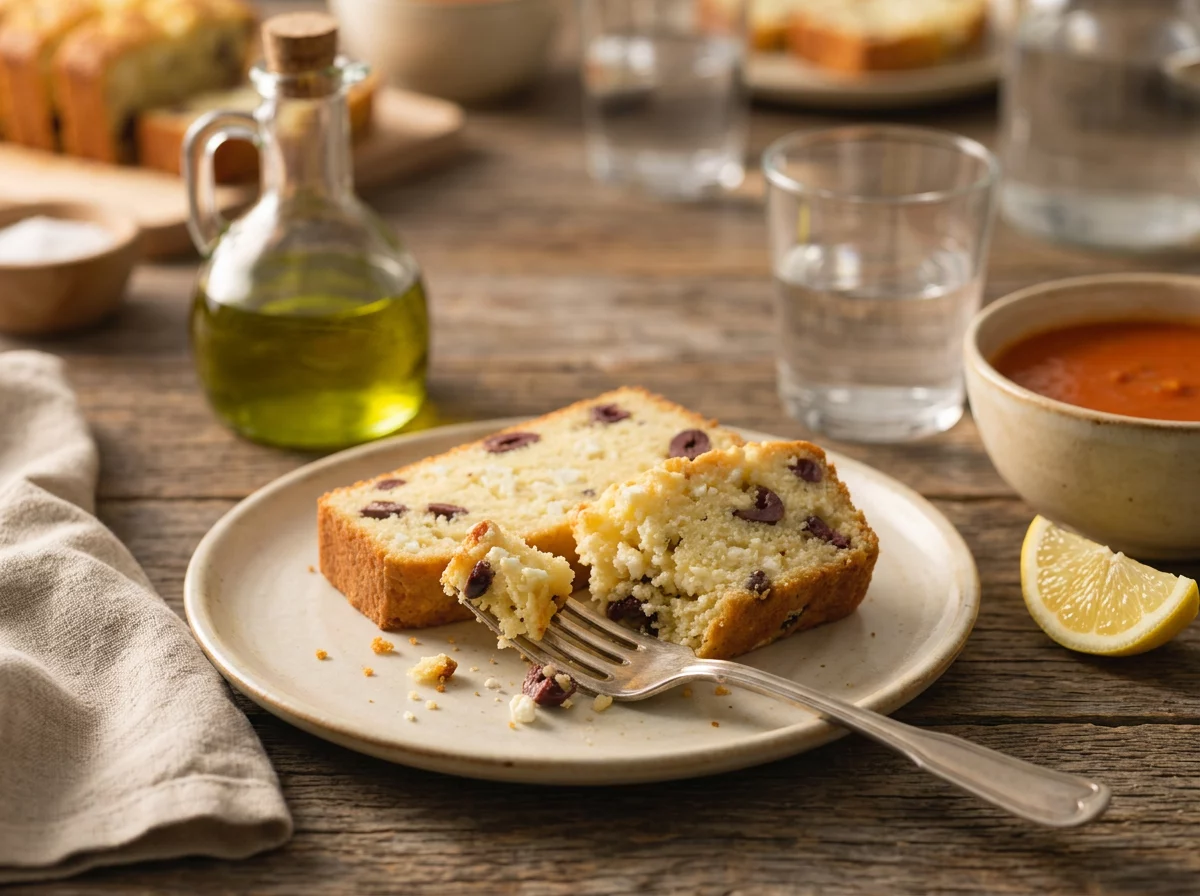
Serve the cake warm or at room temperature. A thick slice goes well next to tomato soup, or with a green salad dressed with lemon juice and olive oil.
For brunch, I like it with soft scrambled eggs or a fried egg on the side. It’s also good with hummus, sliced cucumber and cherry tomatoes for a light lunch plate.
A slice travels well in a lunch box and doesn’t need reheating, so it’s an easy one to pack.
FAQ
Why did the olives and feta sink to the bottom of my savory olive oil cake?
Wet olives and heavy pieces sink when the batter is thin or they’re added wet. Pat the olives dry, toss them and the feta with 1 tbsp of flour, and fold them in last. This batter is thick enough to hold them if you stop folding as soon as a few flour streaks remain.
How do I know when the feta and olive loaf is done baking?
It’s done after 45 to 50 minutes at 180 C / 350 F, when the top is deep golden, springs back when pressed, and a toothpick comes out clean or with dry crumbs. Test in two or three spots. A toothpick that hits melted feta or an olive can look wet even when the cake is cooked through.
Can I use Greek yogurt or sour cream instead of plain yogurt in the olive oil cake?
Yes, use the same 120 g of either one. Greek yogurt and sour cream are thicker, so add an extra 1 tbsp of milk to keep the batter loose. The cake will be a little richer, but the texture and bake time stay about the same.
Can I freeze savory olive oil cake with feta and olives?
Yes, it freezes well for up to 2 months. Cool the loaf fully, slice it, and wrap each slice in parchment, then put the slices in a freezer bag. Thaw overnight in the fridge, or warm them from frozen at 160 C / 325 F for 12 to 15 minutes.
What goes well with a savory olive oil cake with feta and olives?
Tomato soup, a lemony green salad, or soft scrambled eggs all work well. The cake is salty and a little tangy, so pair it with something mild or fresh. Hummus with sliced cucumber and cherry tomatoes also makes an easy light lunch plate.
Is this feta and olive cake vegetarian, and can I make it gluten free?
It’s vegetarian, though some feta is made with animal rennet, so check the label. For a gluten-free version, use a 1:1 gluten-free baking flour that contains xanthan gum. The crumb will be a bit more delicate, so let the loaf cool fully before slicing.