
Jump to Recipe
Greek semolina cake, called ravani, is a soft cake made with fine semolina, eggs, and yogurt, then soaked in lemon syrup while it’s still hot. This is a simple home version. I add a little flour and some yogurt to keep the crumb tender.
The cake tastes lightly of orange, and the syrup adds a fresh lemon note. The inside is moist and a little grainy in a good way, and the top turns golden.
You mix everything in one bowl and you do not need a mixer. The one thing to watch is the syrup. Pour it cool over the hot cake. If both are hot, the cake turns gummy and heavy.
Give it 45 minutes in the pan before you lift out the pieces, so the syrup can soak all the way through.
Why You’ll Love This Recipe
- Mix everything in one bowl, no mixer needed
- Orange zest and lemon syrup keep the cake fresh
- Made with pantry staples like semolina, eggs, and yogurt
- Stays moist for days and cuts into neat diamonds
Ingredient Notes
- fine semolina: Fine semolina gives a soft, even crumb. If you only find coarse, pulse it in a blender for 20 to 30 seconds first.
- plain full-fat Greek yogurt: Full-fat yogurt keeps the cake moist. Plain full-fat regular yogurt works too, but it makes the batter a little looser.
- unsalted butter: Melt it and let it cool a few minutes so it doesn’t cook the eggs. You can use 100 ml of mild olive oil instead.
- orange: Use only the orange part of the peel. The white pith tastes bitter, so stop zesting when you see it.
- lemon: You need two strips of peel and 2 tablespoons of juice for the syrup. One medium lemon is enough.
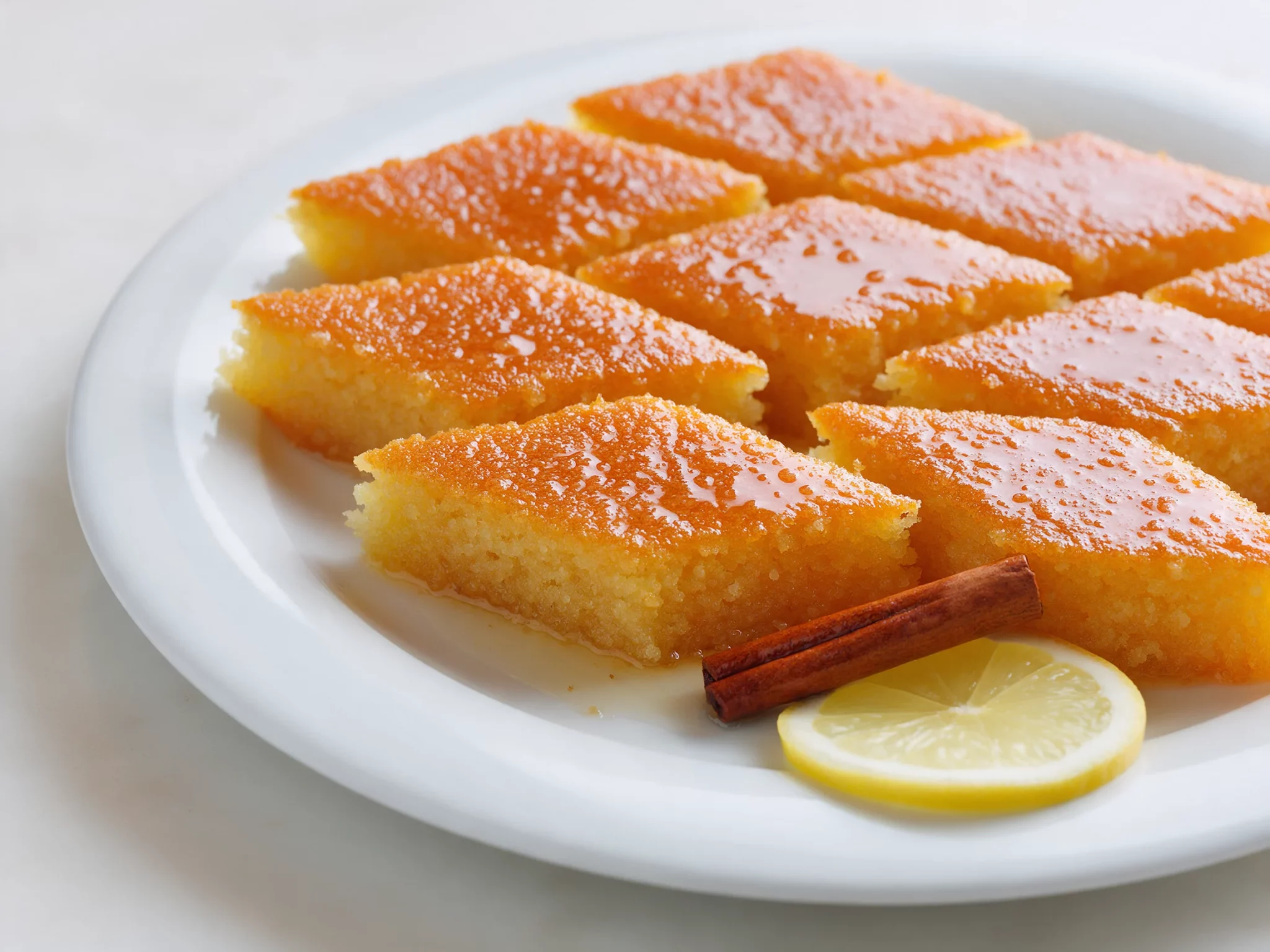
Greek Ravani Semolina Cake with Orange and Lemon Syrup
Ingredients
Method
- Butter a 23 cm / 9-inch square baking pan and line the bottom with parchment paper. Melt the 115 g butter and let it cool for a few minutes while you zest the orange.
- In a large bowl, whisk the eggs and 200 g sugar for about 2 minutes, until pale and a little thick. Whisk in the melted butter, yogurt, orange zest, and vanilla.
- Add the semolina, flour, baking powder, and salt. Stir with a spatula until you see no dry streaks. The batter will be thick. Leave it in the bowl for 15 minutes so the semolina can soften, and heat the oven to 175 C / 350 F during that time.
- Scrape the batter into the pan and smooth the top. Bake for 35 to 40 minutes, until the top is deep golden, the edges pull slightly away from the pan, and a toothpick in the center comes out clean.
- While the cake bakes, make the syrup. Put 250 g sugar, 300 ml water, the lemon peel, and the cinnamon stick in a 2-quart / 1.9 L saucepan. Stir over medium heat until the sugar dissolves, then simmer gently for 8 minutes. Take it off the heat, stir in the lemon juice, and let it cool to room temperature. Remove the peel and cinnamon stick.
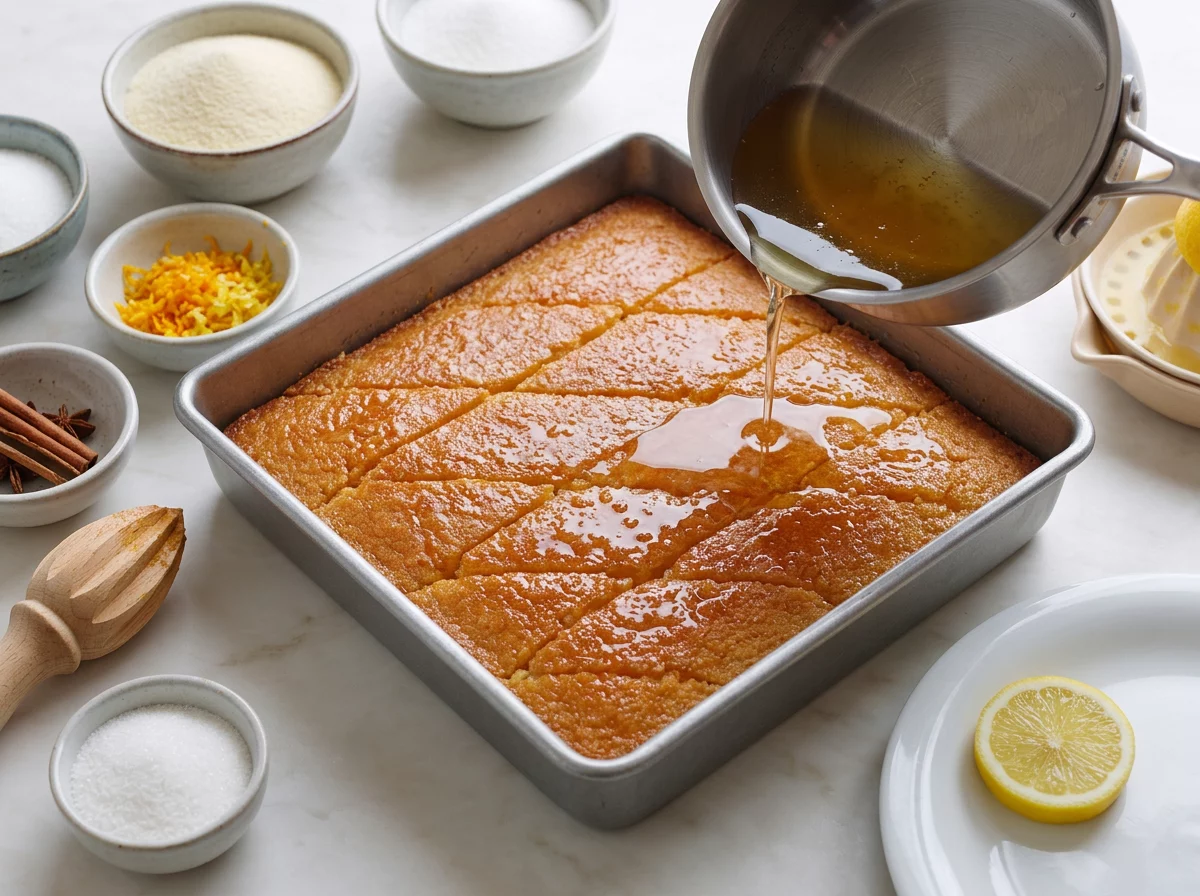
- As soon as the cake comes out of the oven, cut it into 16 diamonds or squares, cutting all the way to the bottom. Pour half of the cool syrup slowly over the hot cake, wait 2 minutes, then pour the rest. Let the cake sit in the pan for 45 minutes, until it has absorbed the syrup and is no longer hot. Lift out the pieces to serve.
Notes
- Use fine semolina, not coarse, for a soft crumb.
- Let the syrup cool completely before pouring it over the hot cake.
- Let the cake soak for 45 minutes before lifting the pieces out of the pan.
- Use room temperature eggs so the batter whisks up smooth.
- Ravani tastes even better the next day, once the syrup has spread evenly.
Tips for Success
- Cool the syrup to room temperature before pouring, so it soaks into the hot cake without making it gummy.
- Zest the orange before you do anything else, and stop when you reach the white pith, which turns bitter.
- Cut the cake into diamonds or squares right out of the oven, so the syrup reaches the sides of every piece.
- Pour the syrup in two rounds and wait 2 minutes in between, so the cake absorbs it evenly instead of letting it pool.
- Weigh the semolina and flour on a kitchen scale, since cups vary and extra semolina makes the cake dense.
Variations
- Stir 1 teaspoon of orange blossom water into the cooled syrup for a light floral note.
- Scatter 2 tablespoons of sliced almonds over the batter before baking for a little crunch on top.
- Swap the orange zest for lemon zest and whisk 1/2 teaspoon of ground cinnamon into the dry ingredients.
Storage and Reheating
Store ravani covered at room temperature for up to 2 days, or in the fridge for 4 to 5 days. The syrup keeps it moist, so it doesn’t dry out quickly. Leave it in the pan under foil, or move the pieces to an airtight container.
Cold ravani tastes fine, but I like it better at room temperature. Take a piece out 20 minutes before serving, or warm it in the microwave for 10 to 15 seconds on medium power.
To freeze, wrap each piece in plastic wrap and put the pieces in a freezer bag. They keep for up to 2 months. Thaw them in the fridge overnight, then let them sit at room temperature for 20 minutes.
Serving Suggestions
I like ravani with a small cup of Greek coffee or black tea. It’s sweet, so a small piece goes a long way.
A spoonful of thick Greek yogurt on the side cuts the sweetness nicely. Fresh berries or sliced strawberries add a little sharpness.
For a dinner party, sprinkle a pinch of ground cinnamon or some crushed pistachios over the diamonds just before serving.

FAQ
How do I know when ravani is done baking?
Ravani is done after 35 to 40 minutes at 175 C / 350 F, when the top is deep golden and a toothpick in the center comes out clean. The edges should also pull slightly away from the pan. If the center looks pale or wet, give it 5 more minutes and check again.
Can I use coarse semolina instead of fine semolina for ravani?
Yes, but pulse it in a blender for 20 to 30 seconds first. Coarse semolina leaves the cake gritty, because the grains don’t soften fully in the batter. Fine semolina gives the soft, even crumb that ravani should have. If you can’t find fine, this quick blend is a realistic fix.
Can I freeze ravani after it’s soaked in syrup?
Yes, ravani freezes well after soaking. Wrap each piece in plastic wrap, put them in a freezer bag, and freeze for up to 2 months. Thaw them in the fridge overnight, then let them sit at room temperature for 20 minutes. The syrup keeps the crumb moist, so it doesn’t dry out in the freezer.
What goes well with Greek semolina cake ravani?
Serve ravani with a spoonful of thick Greek yogurt and a few fresh berries, or alongside Greek coffee or black tea. The yogurt cuts the sweetness of the syrup. A pinch of ground cinnamon or some crushed pistachios on top also works well.
How do I make ravani dairy free?
Swap the butter for 100 ml of mild olive oil and use plain unsweetened soy or coconut yogurt in place of Greek yogurt. The cake will be a little less rich, but the crumb stays soft. Check that the yogurt is unsweetened, or the cake will taste too sweet once the syrup goes on.
What is the difference between ravani and basbousa?
Ravani is usually lighter and more cake-like, with eggs and a little flour in the batter. Basbousa is often denser and may include coconut. Both are semolina cakes soaked in syrup. This recipe is a home version with yogurt and orange zest, so a bakery’s ravani may taste a bit different.