
Jump to Recipe
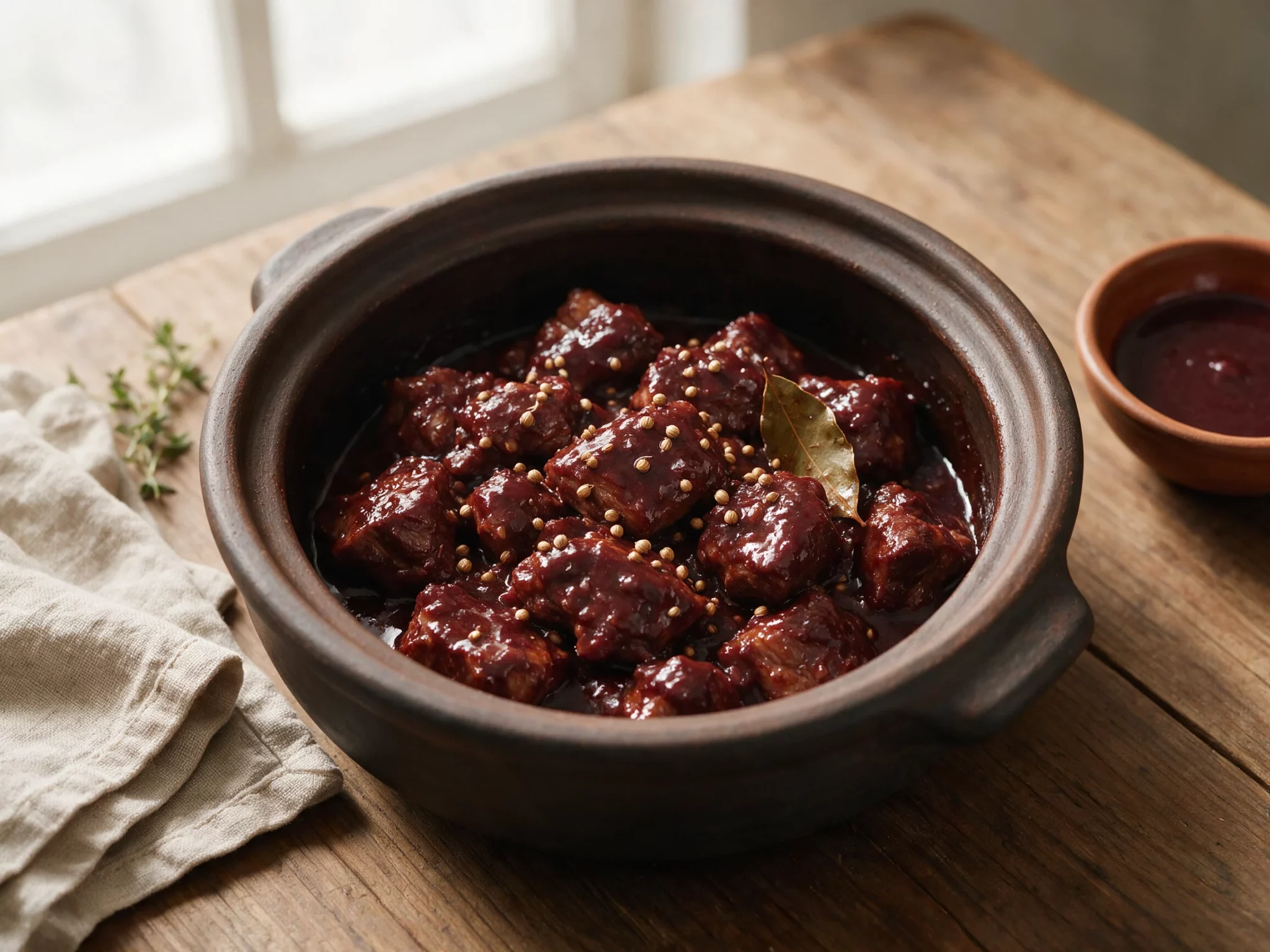
Cypriot afelia is a pork dish from Cyprus, cooked slowly in dry red wine with crushed coriander seeds until the meat falls apart with a fork.
The coriander seeds are what set this dish apart from a regular pork stew. Crushed just before cooking, they give off a warm, slightly citrusy smell that fills the kitchen while the pork simmers.
I use pork shoulder here because it has enough fat to stay soft after a long simmer. Leaner cuts like pork loin dry out and turn tough long before the sauce has time to thicken.
This is an old Cypriot recipe, much like the Cypriot chicken and potato tray bake, and versions of it change from house to house. Some cooks add a bay leaf or a stick of cinnamon, others keep it plain with just wine, coriander, and pork.
Give the pork time in the wine and coriander before it goes in the pan. Even 1 hour helps, but overnight in the fridge gives the best flavor.
Why You’ll Love This Recipe
- Only 8 ingredients, most already in your kitchen
- One pot, so cleanup is quick
- Coriander seeds give a flavor you won’t get from a regular stew
- Tastes even better the next day
Ingredient Notes
- Pork shoulder: Has enough fat to stay soft after a long simmer. Pork loin or leg will work but dries out faster, so watch the cook time closely.
- Coriander seeds: Use whole seeds and crush them yourself with a mortar or the flat of a knife. Pre-ground coriander loses a lot of its aroma and won’t give the same result.
- Dry red wine: A simple, dry red works fine. Cyprus traditionally uses local Mavro wine, but a Cabernet or Merlot from the shop is a fine stand-in.
- Bay leaf: Optional, but it adds a bit of depth to the sauce. Leave it out if you don’t have one, the dish still works.
Cypriot Afelia: Pork Braised in Red Wine
Ingredients
Method
- In a bowl, mix the pork cubes with the crushed coriander seeds, half the red wine, a pinch of salt, and pepper.
- Cover and refrigerate for at least 1 hour, or overnight for deeper flavor.
- Lift the pork out of the marinade with tongs and pat it dry with paper towel. Reserve the marinade liquid.
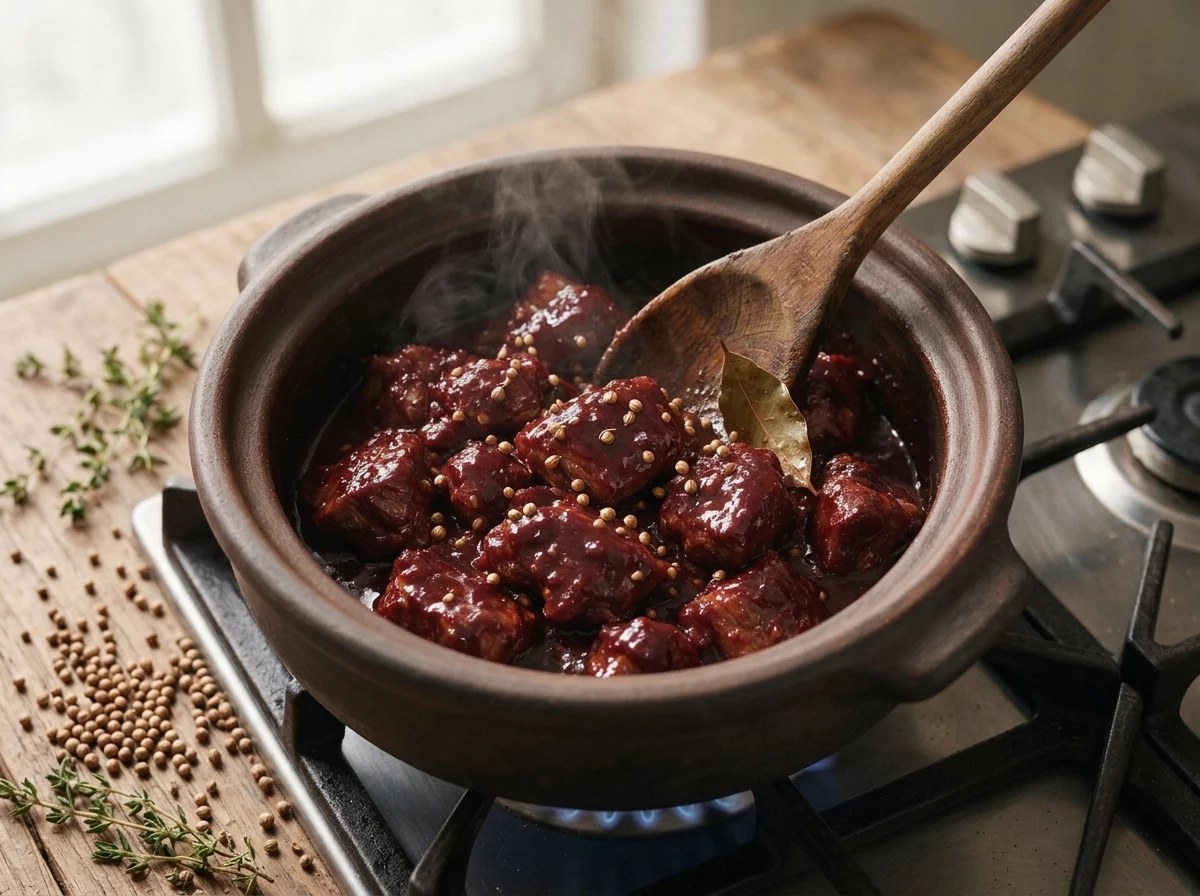
- Heat the olive oil in a heavy pot over medium-high heat. Brown the pork in batches, 3 to 4 minutes per side, until deep brown all over. Don't crowd the pot.
- Return all the pork to the pot. Pour in the reserved marinade, the rest of the wine, and the bay leaf. Bring to a simmer.
- Lower the heat, cover, and simmer for 45 to 50 minutes, stirring now and then, until the pork is fork-tender. Add a splash of water if the sauce reduces too fast.
- Uncover for the last 10 minutes if the sauce looks thin, to let it thicken and coat the pork. Taste and adjust the salt and pepper before serving.
Notes
- Marinate pork for at least 1 hour, overnight is better for flavor.
- Don't crowd the pot when browning, or the pork won't color properly.
- Crush coriander seeds coarsely, don't grind them into powder.
- Simmer covered and low, checking at 45 minutes for tenderness.
Tips for Success
- Pat the pork dry with paper towel before browning, or it will steam instead of turn brown.
- Brown the pork in batches so the pot isn’t crowded, otherwise the meat sweats and stays pale.
- Crush the coriander seeds coarsely, not into a powder, so you still get bits of texture in the sauce.
- Marinate overnight in the fridge if you have time, the flavor goes noticeably deeper.
- Uncover the pot for the last 10 minutes if the sauce looks thin, so it reduces and clings to the pork.
Variations
- Add a cinnamon stick to the marinade for a slightly sweeter, warmer background flavor.
- Stir in a handful of sliced mushrooms during the last 15 minutes for extra body in the sauce.
- Swap half the wine for chicken stock if you want a milder, less winey sauce.
Storage and Reheating
Afelia keeps well in the fridge for up to 3 days in a sealed container. The flavor actually improves after a day, once the coriander and wine have had more time to settle into the meat.
To reheat, warm it gently in a covered pan over low heat with a splash of water or wine, stirring now and then, until hot through. Avoid the microwave if you can, it can dry out the edges of the pork.
You can freeze cooked afelia for up to 3 months. Thaw it in the fridge overnight before reheating on the stove.
Serving Suggestions
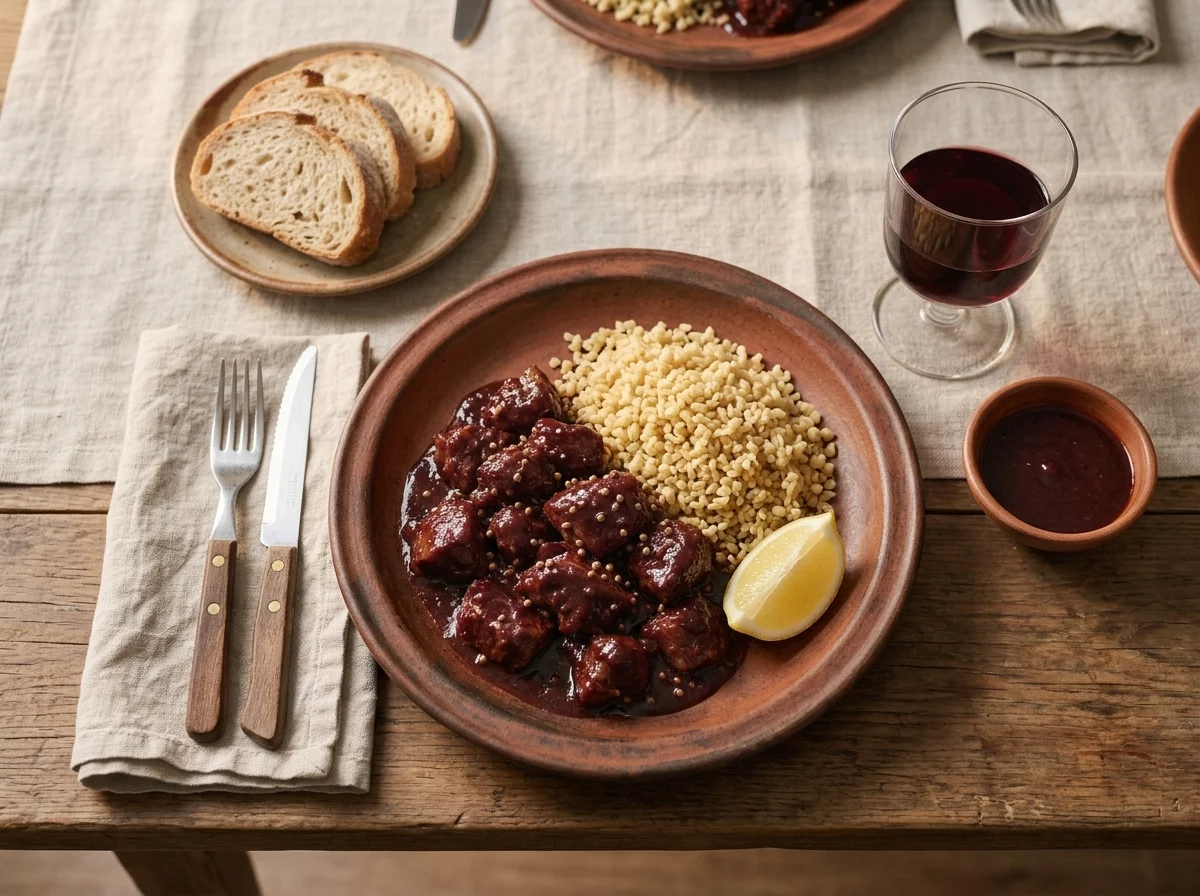
Afelia is traditionally served with pourgouri, a Cypriot bulgur pilaf, which soaks up the wine sauce well. Plain rice or mashed potatoes do the same job if pourgouri isn’t something you keep on hand.
A charred halloumi and watermelon salad with lemon and olive oil cuts through the richness of the sauce. Warm pita or crusty bread on the side is good for mopping up the last bits of sauce in the pot.
I usually put out a small bowl of olives and some sliced cucumber alongside it, the way it’s often served at a Cypriot table.
FAQ
Why is my afelia dry instead of tender?
Dry afelia usually means the pork was cooked too fast or the wrong cut was used. Pork shoulder needs a slow simmer of 45 to 50 minutes to break down, and lean cuts like loin will dry out before that happens. Keep the heat low and covered, and check with a fork rather than a timer alone.
Can I use ground coriander instead of whole coriander seeds in afelia?
You can, but the flavor won’t be as strong or as fresh. Use about 1 teaspoon of ground coriander for every tablespoon of whole seeds called for. Whole seeds crushed just before cooking give a brighter, more citrusy aroma that ground coriander loses over time.
Can I make Cypriot afelia ahead and freeze it?
Yes, afelia freezes well for up to 3 months in a sealed container. It also keeps in the fridge for up to 3 days and tastes better the next day, once the wine and coriander have settled into the meat. Thaw frozen afelia in the fridge overnight before reheating on the stove.
What do you serve with Cypriot afelia?
Afelia is usually served with pourgouri, a Cypriot bulgur pilaf that soaks up the wine sauce. Plain rice, mashed potatoes, or warm pita with a simple lemon salad on the side work just as well. A few olives on the plate is a nice touch too.
Is Cypriot afelia gluten free?
Yes, afelia is naturally gluten free as written, since it’s just pork, wine, coriander, and olive oil. Double check your wine label if you’re strict about cross-contamination, though most dry red wines are fine. Serve it with rice instead of bulgur if you need to keep the whole meal gluten free.
What’s the difference between afelia and Cypriot tavas?
Afelia is pork braised in red wine and coriander seeds with no tomato, while tavas is a baked stew, often lamb or beef, made with tomato, cumin, and onions in a clay pot. They’re both Cypriot classics, but afelia has a darker, wine-heavy sauce and tavas leans more toward a tomato base.