
Jump to Recipe
Naxos beef and aubergine kalogeros is a baked dish of soft aubergine slices layered with a cinnamon-spiced beef and tomato sauce, then topped with grated graviera. This is a simplified, home-style version. Kalogeros means “monk” in Greek, and the dish changes from island to island.
I use beef and graviera because both are linked to Naxos. The sauce is savory with a little warmth from the cinnamon, and the aubergine turns creamy inside with golden edges.
The one step I don’t skip is salting the slices for 30 minutes and patting them dry. If you skip it, the aubergine soaks up oil and the whole bake turns greasy.
It takes a while, but most of the time is hands-off. You can serve it warm or at room temperature.
Why You’ll Love This Recipe
- Aubergine slices turn creamy inside with golden edges
- No béchamel to make, so there is one less pot
- Most of the time is hands-off while things bake
- Tastes good warm or at room temperature, and keeps well
Ingredient Notes
- aubergines: Pick firm, shiny ones that feel heavy for their size. Two large ones (about 800 g) fill a 23 x 33 cm dish in two layers.
- ground beef: I use 80/20 beef for flavor and spoon off the extra fat after browning. Ground lamb is the easiest swap.
- graviera: This is a Greek cheese that is nutty and a little salty. Kefalotyri works well, and so does Parmesan if that’s what you have.
- ground cinnamon: Use only 1/2 teaspoon. It should add warmth in the background and not taste like dessert.
- dry red wine: It adds depth to the sauce. If you’d rather skip it, use 100 ml of water or beef stock.
- canned chopped tomatoes: Choose a plain can with no added herbs or sugar. If the sauce tastes sharp at the end, add a pinch of sugar.
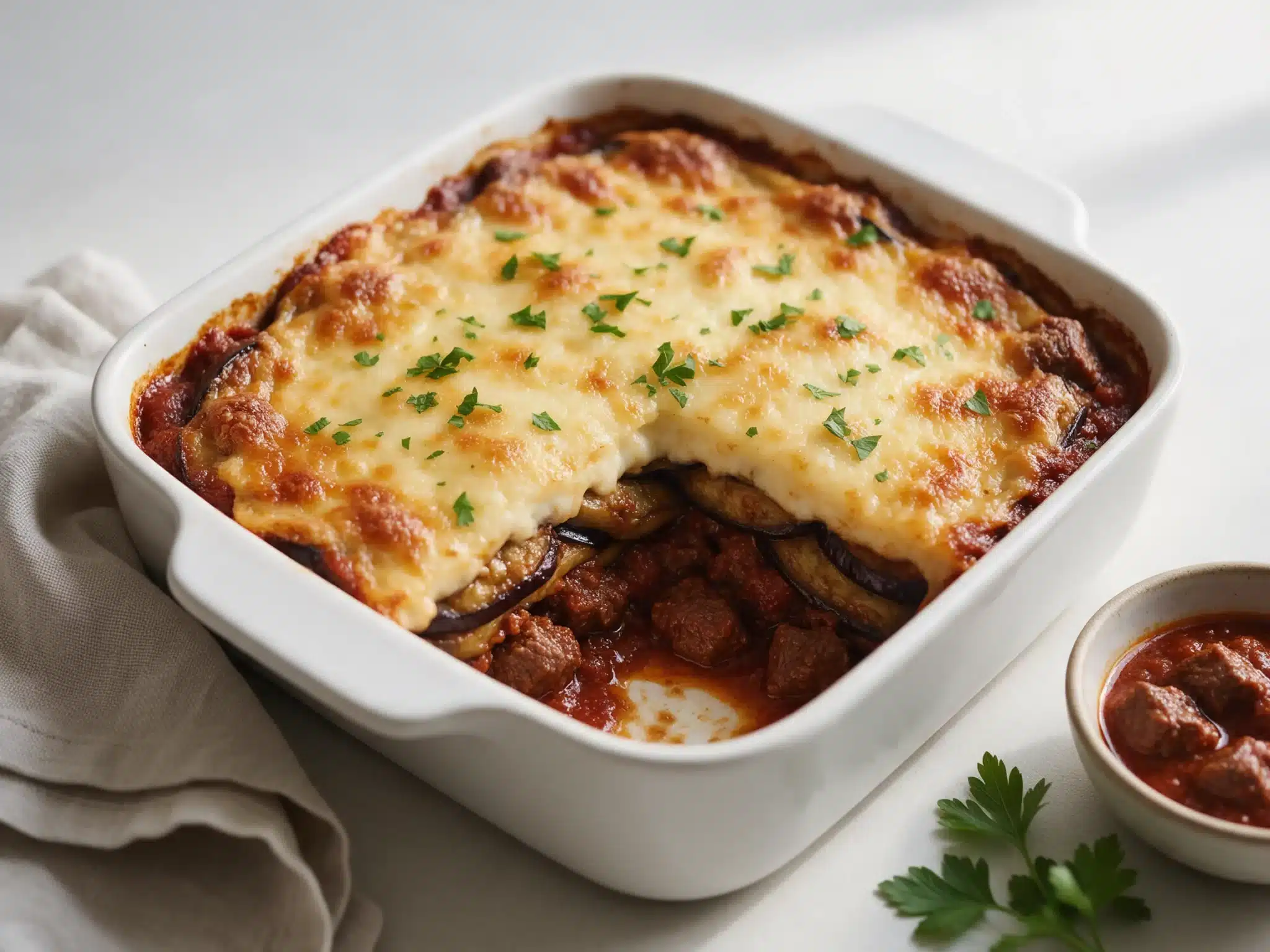
Baked Naxos Beef and Aubergine Kalogeros with Graviera
Ingredients
Method
- Put the aubergine slices in a colander set over a bowl, sprinkle with 1 1/2 tsp coarse salt, and toss. Leave them for 30 minutes, until beads of moisture show on the surface. Heat the oven to 220 C / 425 F during the last 15 minutes.
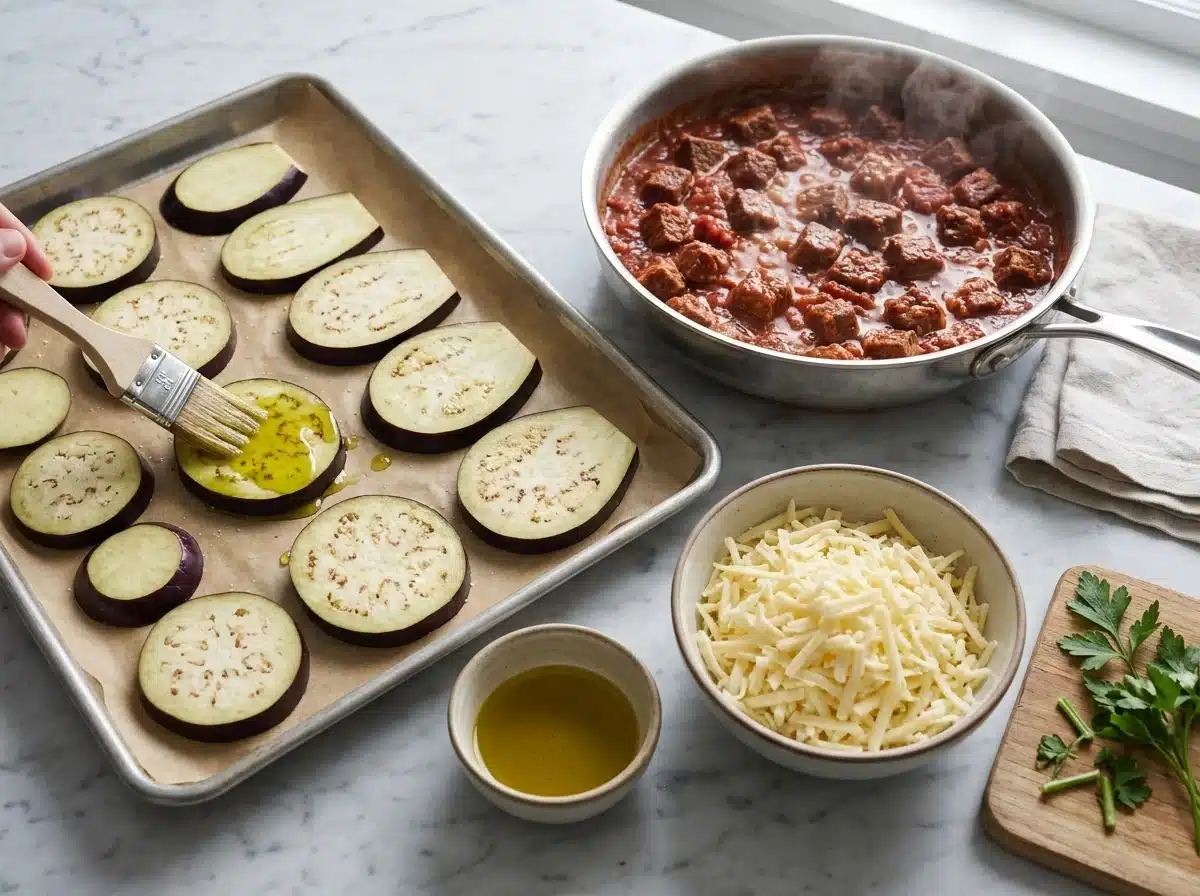
- Pat the slices dry with paper towels and don't rinse them. Spread them in a single layer on two parchment-lined 33 x 46 cm / 13 x 18-inch sheet pans, and brush both sides with the 4 tbsp olive oil. Bake for 25 minutes, flipping after 15 minutes, until golden and soft when pressed.
- While the aubergine bakes, heat 2 tbsp olive oil in a 30 cm / 12-inch deep skillet over medium heat. Cook the onion for 5 minutes, until soft. Add the beef, break it up with a spoon, and cook for 7 minutes, until browned with no pink left. Spoon off extra fat, leaving about 1 tbsp in the pan.
- Stir in the garlic and tomato paste and cook for 1 minute. Pour in the wine and simmer for 2 minutes, scraping up the browned bits. Add the tomatoes, oregano, cinnamon, bay leaf, 1/2 tsp salt, and pepper.
- Simmer over medium-low heat for 20 minutes, stirring now and then, until a spoon dragged across the bottom of the pan leaves a clear trail. Remove the bay leaf, stir in the parsley, then taste and add more salt if needed.
- Lower the oven to 200 C / 390 F. Spread a thin layer of sauce in a 23 x 33 cm / 9 x 13-inch baking dish. Add half the aubergine slices, overlapping them slightly, then half the remaining sauce. Repeat with the rest of the aubergine and sauce, then sprinkle the graviera on top.
- Bake for 20 minutes, until the edges bubble, the top is golden, and the center reads 160 F / 71 C on an instant-read thermometer. Rest for 10 minutes, then cut into 4 squares.
Notes
- Salt the aubergine for 30 minutes, then pat it dry. Don't rinse it.
- Graviera is salty, so taste the sauce before adding extra salt.
- The dish is done when the center reads 160 F / 71 C on an instant-read thermometer.
- Rest the baked dish for 10 minutes before cutting into squares.
Tips for Success
- Cut the aubergine into 1.5 cm slices so they hold their shape after baking and don’t turn mushy when layered.
- Pat the salted slices dry with paper towels instead of rinsing them, so they brown in the oven and take up less oil.
- Spread the slices in a single layer on two sheet pans without overlapping, so the edges brown instead of steaming.
- Simmer the sauce until a spoon dragged across the bottom of the pan leaves a clear trail, or the layers will slide when you cut.
- Rest the baked dish for 10 minutes before cutting, so the layers settle and you get neat squares.
Variations
- Use ground lamb instead of beef and stir 1 tsp dried mint into the sauce for a stronger, earthier flavor.
- Add a layer of thinly sliced, par-boiled potato between the aubergine layers if you want a heartier, more filling dish.
- Swap the graviera for 100 g crumbled feta, and cut the salt in the sauce to a pinch because feta is saltier.
Storage and Reheating
Baked kalogeros keeps in an airtight container in the fridge for 3 to 4 days. Let it cool at room temperature for no more than 2 hours before covering and chilling.
To reheat, cover a portion with foil and warm it in a 180 C / 350 F oven for about 20 minutes, until hot in the middle. A microwave also works at medium power for 2 to 3 minutes, though the top will be softer.
To freeze, wrap cooled squares one by one and freeze for up to 2 months. Thaw overnight in the fridge, then reheat as above. You can also assemble the dish up to 1 day ahead, cover it, and chill it, then bake it for 25 minutes instead of 20.
Serving Suggestions
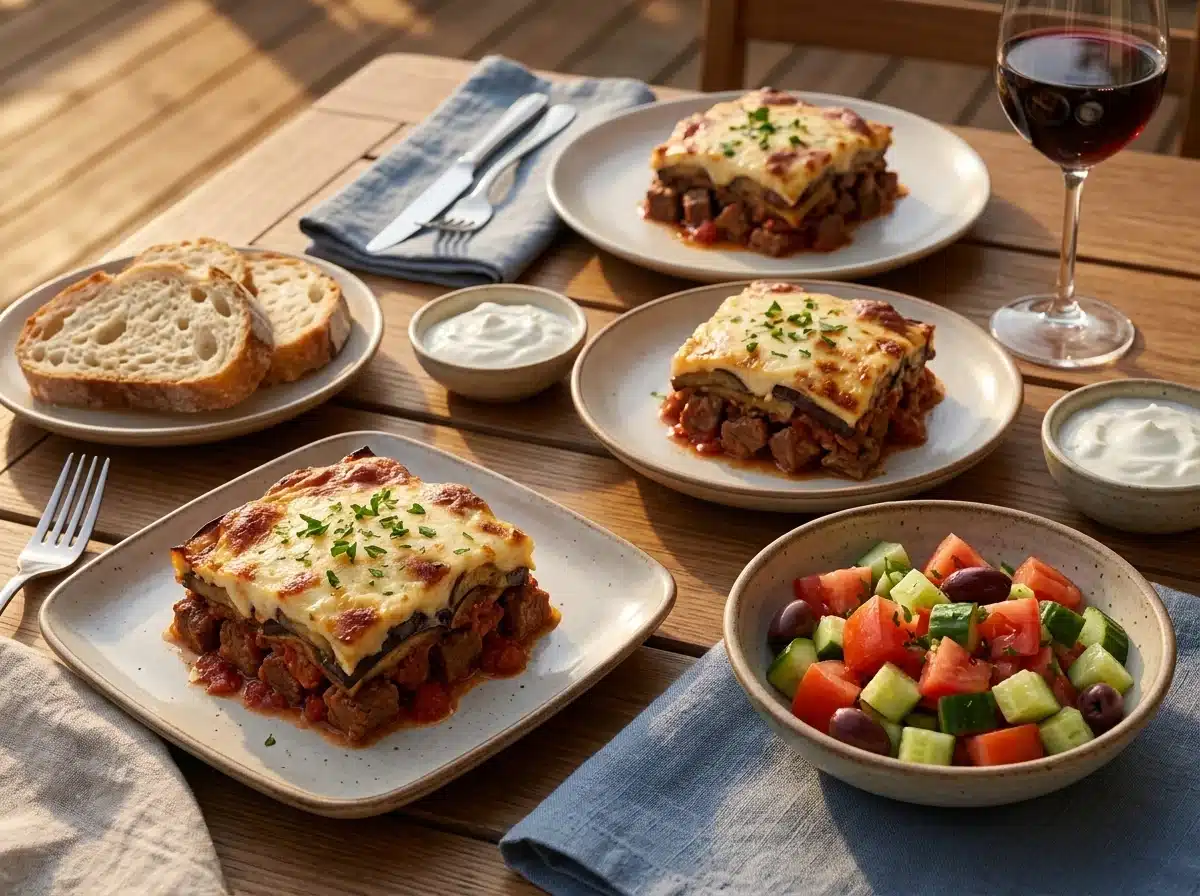
Kalogeros goes well with a simple tomato, cucumber, and olive salad and a basket of crusty bread. The bread is useful for the sauce left on the plate.
A spoonful of thick Greek yogurt on the side adds a cool, tangy contrast to the cinnamon. A glass of dry red wine or a chilled white both work.
It tastes good warm from the oven, and it’s just as good at room temperature, so it’s easy to bring to a gathering.
FAQ
Why is my kalogeros watery or greasy?
It’s usually the aubergine or the sauce. Salt the slices for 30 minutes, pat them dry, and bake them in a single layer so they absorb less oil. Then simmer the beef sauce until a spoon leaves a trail on the bottom of the pan, and spoon off extra fat before layering.
Can I use ground lamb or turkey instead of beef in kalogeros?
Ground lamb works as a 1 to 1 swap and gives a stronger flavor, with the same cooking times. Ground turkey is leaner, so add an extra tablespoon of olive oil when browning it. Cook either one until no pink remains before adding the tomatoes.
Can I freeze Naxos beef and aubergine kalogeros?
Yes, freeze baked and cooled portions for up to 2 months. Wrap each square tightly in foil and a freezer bag, then thaw overnight in the fridge. The aubergine turns a little softer after freezing, but the flavor holds. Reheat covered at 180 C / 350 F for about 20 minutes.
What goes with baked beef and aubergine kalogeros for a full dinner?
A simple tomato, cucumber, and olive salad plus crusty bread covers it. Add a spoonful of thick Greek yogurt on the side if you want something cool against the cinnamon. Lemon roast potatoes work too, but then the meal gets heavy, so I’d keep the rest light.
What’s the difference between kalogeros and moussaka?
Moussaka usually has a creamy béchamel on top and is often layered with potatoes too. Kalogeros is usually simpler, and this version has no béchamel, only aubergine, beef sauce, and cheese. That makes it quicker to put together, though recipes for both vary by region and family.
Is Naxos beef and aubergine kalogeros gluten free?
Yes, as written. There’s no flour, breadcrumbs, or pasta in it, but check the labels on tomato paste and canned tomatoes if you cook for someone with celiac disease. It does contain dairy from the graviera. For a dairy-free version, leave the cheese off and the dish still holds together.