
Jump to Recipe
Greek beef kokkinisto is a slow-braised beef stew cooked in tomato and red wine, with a little cinnamon and allspice in the pot. The name comes from kokkino, the Greek word for red.
The beef gets soft enough to pull apart with a spoon. The sauce is tomato-forward and slightly sweet, and the cinnamon adds warmth without making it taste like dessert.
I cook it in the oven at 160 C / 320 F for about 2 hours. Many Greek cooks make it on the stovetop, so think of this as a simplified version that needs almost no stirring.
You do not need anything special for this recipe. Just brown the meat in batches. If the pan is crowded, the beef turns gray and steams instead of browning, and the sauce loses a lot of its depth.
Why You’ll Love This Recipe
- The oven does most of the work for you
- Beef chuck is affordable and turns very tender
- The sauce is great over pasta, rice, or potatoes
- Leftovers taste even better the next day
Ingredient Notes
- Beef chuck: Chuck has enough fat and connective tissue to turn soft after a long braise. Beef shank or boneless short rib also work, but lean cuts like round get dry.
- Dry red wine: Use a wine you’d drink, such as Merlot or Cabernet. If you skip the wine, use beef stock plus 1 tbsp red wine vinegar.
- Cinnamon stick and allspice: These give the sauce its warm, slightly sweet background. If you only have ground allspice, use 1/4 tsp. Remove the cinnamon stick before serving.
- Crushed tomatoes: A good canned brand saves time and tastes better than out-of-season fresh tomatoes. If the sauce tastes sharp at the end, stir in another 1/2 tsp sugar.
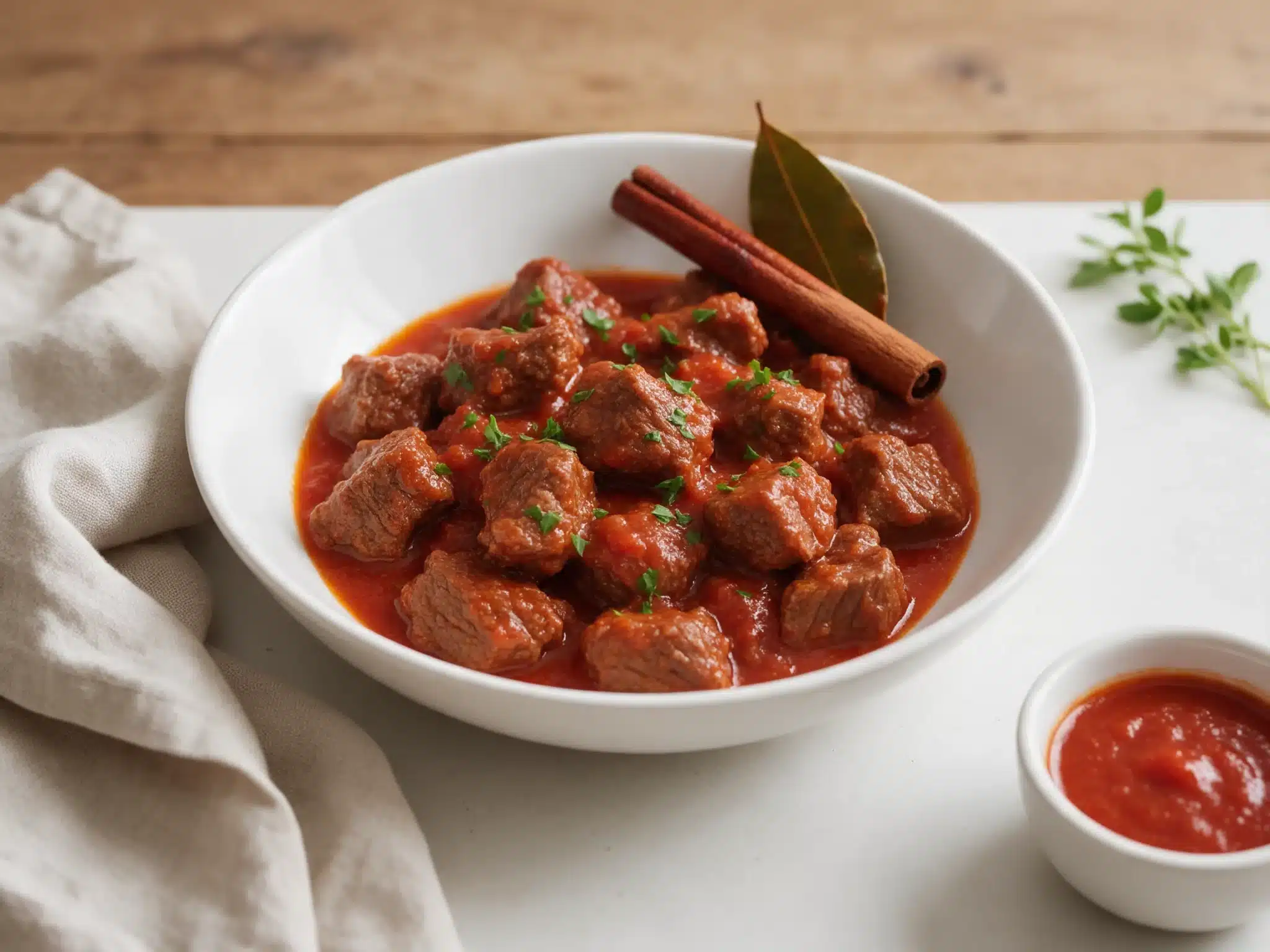
Braised Greek Beef Kokkinisto with Cinnamon and Red Wine
Ingredients
Method
- Heat the oven to 160 C / 320 F and set a rack in the lower third. Pat the beef dry with paper towels, then toss it with the salt and pepper.
- Heat 1 tbsp of oil in a 28 cm / 11-inch oven-safe Dutch oven over medium-high heat until it shimmers. Add one third of the beef, about 400 g, leaving space between the pieces. Brown for 4 to 5 minutes, turning, until deep brown on at least two sides, then move it to a plate. Repeat with 1 tbsp of oil and the second batch, then again with the last batch.
- Lower the heat to medium and add the last 1 tbsp of oil and the onions. Cook for 6 to 8 minutes, scraping up the browned bits, until the onions are soft and golden at the edges. Stir in the garlic and tomato paste and cook for 1 to 2 minutes, until the paste turns brick red.
- Pour in the wine and simmer for 3 minutes, until it has reduced by about half. Add the crushed tomatoes, stock, cinnamon stick, bay leaves, allspice, oregano, and sugar. Return the beef and any juices from the plate to the pot, stir, and bring to a gentle simmer.
- Cover the pot and put it in the oven for 105 minutes. Take the lid off and cook for 15 more minutes, until the beef pulls apart easily with a fork and the sauce coats the back of a spoon.
- Remove the pot from the oven and fish out the cinnamon stick and bay leaves. Let the stew rest for 10 minutes, then stir in the parsley. Taste, add more salt if needed, and serve hot.
Notes
- Brown the beef in three batches so the pan stays hot and the meat browns.
- Use a Dutch oven with a tight lid so the sauce doesn't dry out.
- Rest the stew for 10 minutes before serving so the sauce settles and thickens.
- Make it a day ahead if you can, since the flavor deepens overnight.
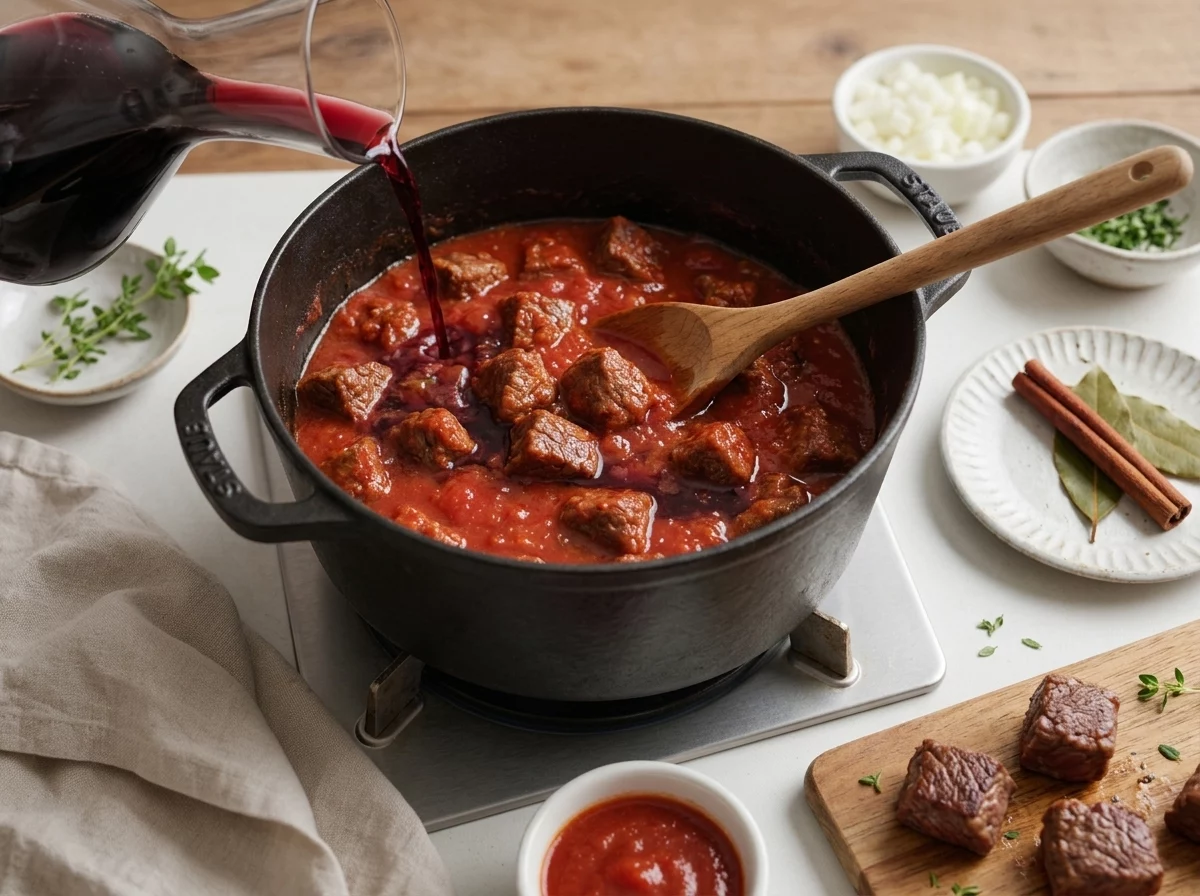
Tips for Success
- Pat the beef dry with paper towels before seasoning, because wet meat steams in the pan and won’t brown.
- Brown the beef in three batches of about 400 g each, and leave a little space between the pieces.
- Cook the tomato paste for 1 to 2 minutes until it turns brick red, which removes the raw canned taste.
- Keep the lid on for the first 105 minutes, then take it off so the sauce thickens enough to coat a spoon.
- Taste before serving and adjust the salt last, since canned tomatoes and reduced sauce vary a lot in saltiness.
Variations
- Add 500 g / 1 lb halved baby potatoes to the pot after the first hour of oven time for a one-pot meal.
- Swap the beef for lamb shoulder cut the same size, and keep the cooking time about the same.
- Add a few strips of orange peel along with the cinnamon stick for a slightly brighter sauce.
Storage and Reheating
Greek beef kokkinisto keeps in the fridge for 4 to 5 days in an airtight container. Let it cool for up to 1 hour at room temperature first, then refrigerate it. The sauce thickens as it chills, which is normal.
You can freeze it for up to 3 months in airtight containers, leaving about 2 cm of space at the top. Thaw it overnight in the fridge.
Reheat it in a saucepan over low heat for 10 to 15 minutes, stirring now and then, until it’s steaming hot all the way through. Add a splash of water if the sauce looks too thick. In the microwave, heat it in 2-minute bursts at 70% power and stir between each one.
Serving Suggestions
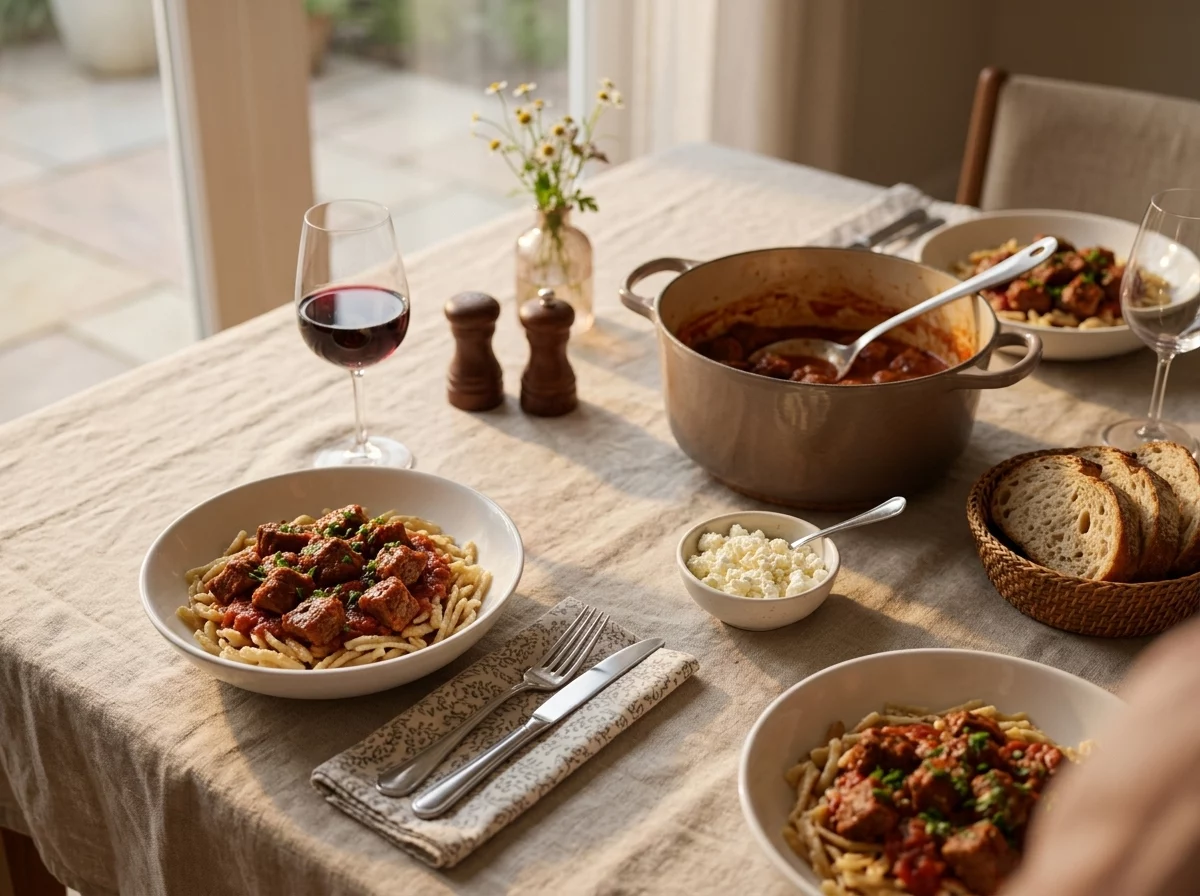
Greek beef kokkinisto goes best over something that soaks up the sauce. In Greece it’s often served over thick pasta. Penne, rigatoni, or hilopites all work well, and a spoonful of grated hard cheese on top is nice.
Mashed potatoes and buttered rice are also good. I like to put out crusty bread too, so nobody leaves sauce in the bowl.
For something fresh on the side, try a cucumber and tomato salad with red onion and crumbled feta. The cool crunch balances the rich beef.
FAQ
How do I know when Greek beef kokkinisto is done?
The beef is done when a chunk falls apart with gentle pressure from a fork, usually after 2 hours at 160 C / 320 F. The sauce should be thick enough to coat the back of a spoon. If the meat still feels firm, cover the pot and cook another 20 minutes.
Can I use beef stock instead of red wine in kokkinisto?
Yes, replace the 180 ml of wine with 180 ml of beef stock and add 1 tbsp of red wine vinegar. The vinegar brings back some of the acidity. The sauce will taste a little less deep, but it’s still good and the cooking time stays the same.
Can I freeze Greek beef kokkinisto if I added potatoes?
You can, but the potatoes turn grainy after thawing. If you plan to freeze it, make the stew without potatoes and cook fresh ones when you reheat. The beef and sauce freeze well for up to 3 months. Thaw overnight in the fridge before reheating.
Is Greek beef kokkinisto gluten free and dairy free?
Yes, as written. There’s no flour, no cheese, and no butter in the pot. Check your beef stock and tomato paste labels, since some brands add gluten. Serve it over rice or potatoes instead of pasta, and skip the cheese topping if you need it dairy free.
What is the difference between kokkinisto and stifado?
Kokkinisto is a tomato-based braise where the onions are diced into the sauce. Stifado is built around lots of small whole onions and often uses vinegar. The two overlap a lot, and Greek cooks don’t always agree on where one ends and the other begins.
What goes with Greek beef kokkinisto besides pasta?
Mashed potatoes, buttered rice, or crusty bread all work well for soaking up the sauce. A cucumber and tomato salad with feta adds a cool contrast. Steamed green beans are another easy side. Pick one starch and one fresh side so the plate doesn’t feel heavy.