
Jump to Recipe
Rabbit stifado with pearl onions is a Greek stew where rabbit pieces simmer with whole small onions, tomato, red wine and a splash of vinegar. The meat turns tender enough to pull off the bone, and the onions go soft and sweet. Cinnamon and cloves give the sauce a warm, gentle sweetness.
You do not need anything special for this recipe. It’s one pot, and after the browning, most of the time is hands-off while it simmers.
Rabbit is lean, so it likes gentle heat. I keep the pot at a bare simmer and the meat stays moist. Peeling pearl onions takes a few minutes, but a quick blanch makes the skins slip right off.
Plan on about 2 1/2 hours from start to table. It tastes even better the next day, so it’s a good one to make ahead.
Why You’ll Love This Recipe
- One pot, and most of the time is hands-off
- The onions turn soft and sweet in the sauce
- Tastes even better after a night in the fridge
- No flour, so it’s naturally gluten free
Ingredient Notes
- rabbit: Ask the butcher to cut a whole rabbit into 8 pieces. Frozen rabbit works too, just thaw it fully in the fridge overnight and pat it very dry before browning.
- pearl onions: Fresh ones hold their shape best. If you only find frozen, thaw them and add them for the last 30 minutes of simmering so they don’t turn mushy.
- red wine vinegar: It gives stifado its slight tang. Use a plain red wine vinegar, not balsamic, which would make the sauce too sweet and dark.
- dry red wine: Use something you’d drink, like a Greek Agiorgitiko or any medium-bodied dry red. Skip anything labeled cooking wine, since it’s often very salty.
- cinnamon stick, cloves and allspice: These are the warm spices that make it stifado. Pull out the cinnamon stick and bay leaves before serving so nobody bites into them.
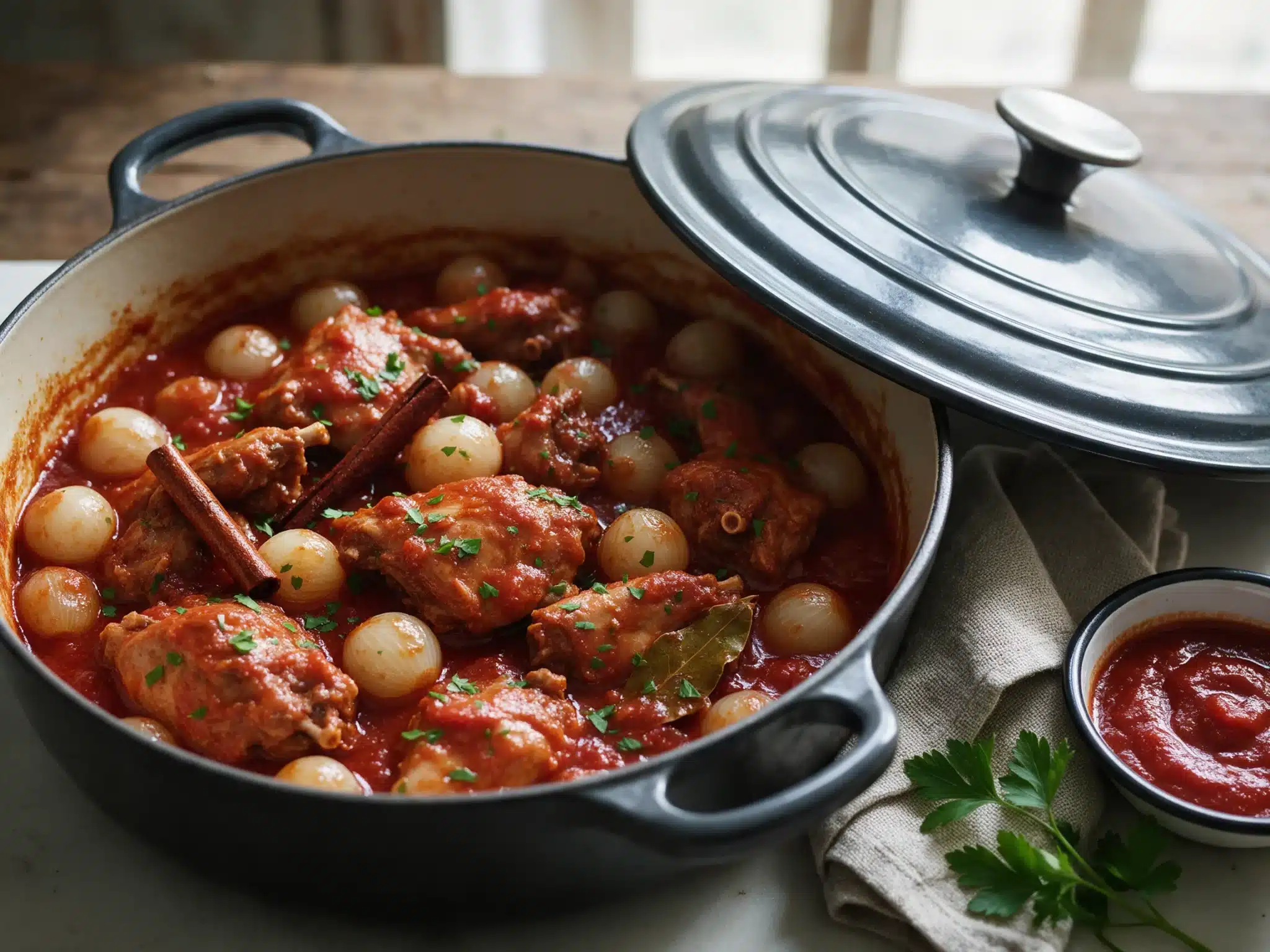
Slow-Braised Greek Rabbit Stifado with Pearl Onions
Ingredients
Method
- Bring a 3-quart / 2.8 L saucepan of water to a boil. Add the pearl onions and boil for 2 minutes, then drain and rinse under cold water. Trim only the stem end of each onion, leave the root end on, and squeeze the onion out of its skin.
- Pat the rabbit dry and season with 1 tsp of the salt and the pepper. Heat 3 tbsp of the oil in a 28 cm / 11-inch (5-quart / 4.7 L) Dutch oven over medium-high heat. Brown the rabbit in two batches of 4 pieces, 3 to 4 minutes per side, until deep golden, about 15 minutes total. Move the pieces to a plate.
- Lower the heat to medium and add the remaining 1 tbsp oil. Add the pearl onions and cook for 5 minutes, stirring, until the edges look lightly golden. Stir in the garlic and tomato paste and cook for 1 minute, until the paste darkens.
- Pour in the wine and vinegar, scraping the browned bits off the bottom with a wooden spoon. Simmer for 3 minutes, until the liquid reduces by about a third and the sharp vinegar smell softens.
- Add the crushed tomatoes, water, bay leaves, cinnamon stick, cloves, allspice and the remaining 1/2 tsp salt. Return the rabbit and any juices from the plate, nestling the pieces among the onions. Bring to a gentle boil, then lower the heat to a bare simmer, around 95 C / 203 F, cover, and cook for 60 minutes. Rabbit is lean, so if the sauce boils hard the meat turns dry and stringy. Turn the heat down if you see big bubbles.
- Uncover and simmer for 20 more minutes, until the sauce coats the back of a spoon and the onions are soft but still whole. The rabbit is safe at 160 F / 71 C, but here you want it well past that, when the meat pulls easily from the bone. Remove the bay leaves and cinnamon stick.
- Turn off the heat, cover the pot, and let the stew rest for 10 minutes. Taste, add a pinch more salt if needed, and sprinkle with the parsley before serving.
Notes
- Brown the rabbit in two batches so the pieces sear instead of steam.
- Keep the simmer low, with bubbles that barely break the surface.
- Rest the stew for 10 minutes before serving so the sauce settles and thickens slightly.
- Taste for salt at the end, since the sauce reduces and the flavor concentrates.
- Remove the bay leaves and cinnamon stick before bringing the pot to the table.
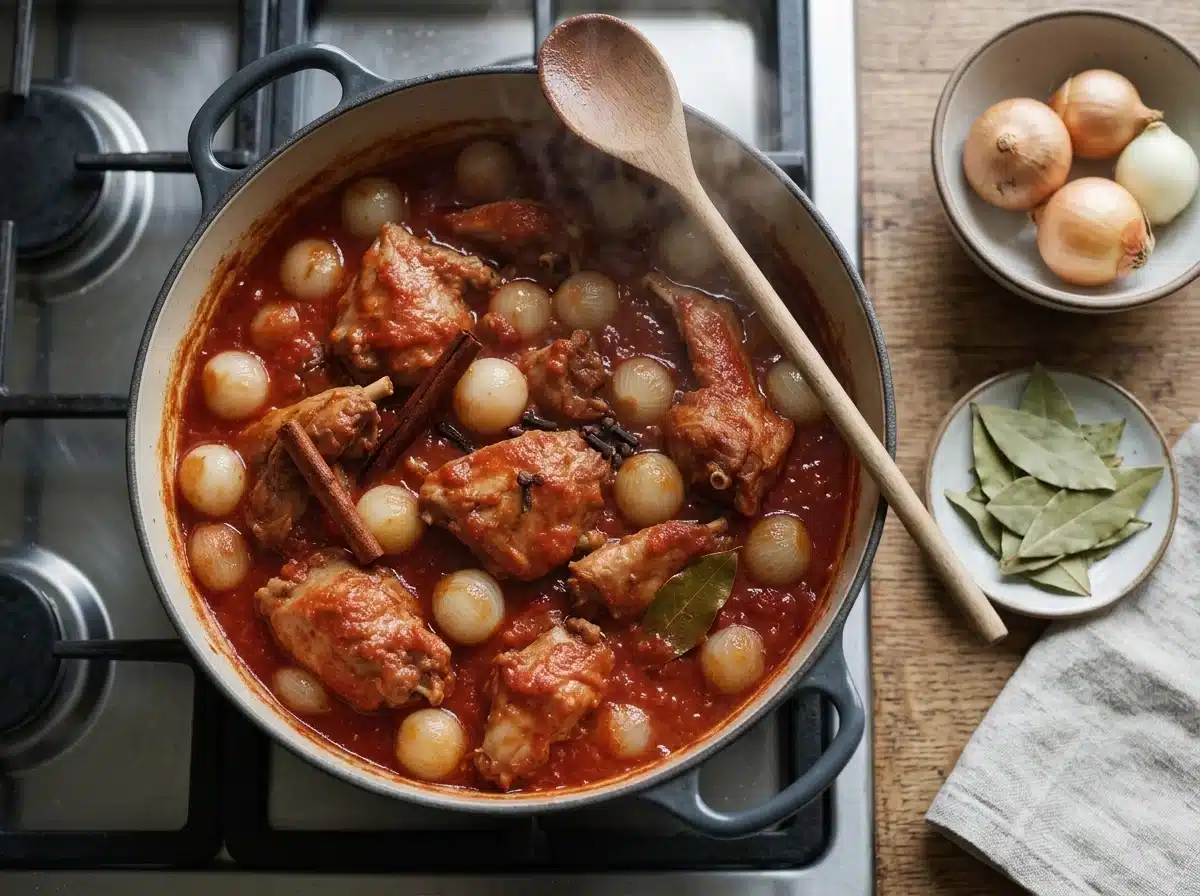
Tips for Success
- Ask the butcher to cut the rabbit into 8 pieces so the legs and loin pieces are close in size and cook evenly.
- Brown the rabbit in two batches and leave the browned bits stuck to the pot, because they flavor the whole sauce.
- Keep the root end on each pearl onion when you peel it, so the onions hold their shape through the long simmer.
- Simmer the wine and vinegar for 3 minutes before adding the tomatoes, which softens the sharp smell of the vinegar.
- Stir in 1 teaspoon of honey after the rest if the sauce still tastes sharp, then taste again before adding more salt.
Variations
- Swap the rabbit for 1 kg / 2.2 lb beef chuck in 4 cm cubes and simmer covered for about 2 hours until tender.
- Add a 5 cm strip of orange peel with the bay leaves for a softer, slightly fruity note in the sauce.
- Stir in a handful of pitted Kalamata olives for the last 15 minutes if you like a saltier, briny edge.
Storage and Reheating
Rabbit stifado keeps in the fridge for 3 to 4 days in an airtight container. Let it cool for no more than 1 hour first, then store the rabbit covered in sauce so it stays moist.
To reheat, put it in a pot over low heat, cover, and warm it for 10 to 15 minutes, stirring once, until steaming hot. If the sauce has thickened, add 2 to 3 tablespoons of water.
You can freeze it for up to 3 months. Thaw it overnight in the fridge, then reheat the same way. The onions soften a little after freezing but still taste good.
Serving Suggestions
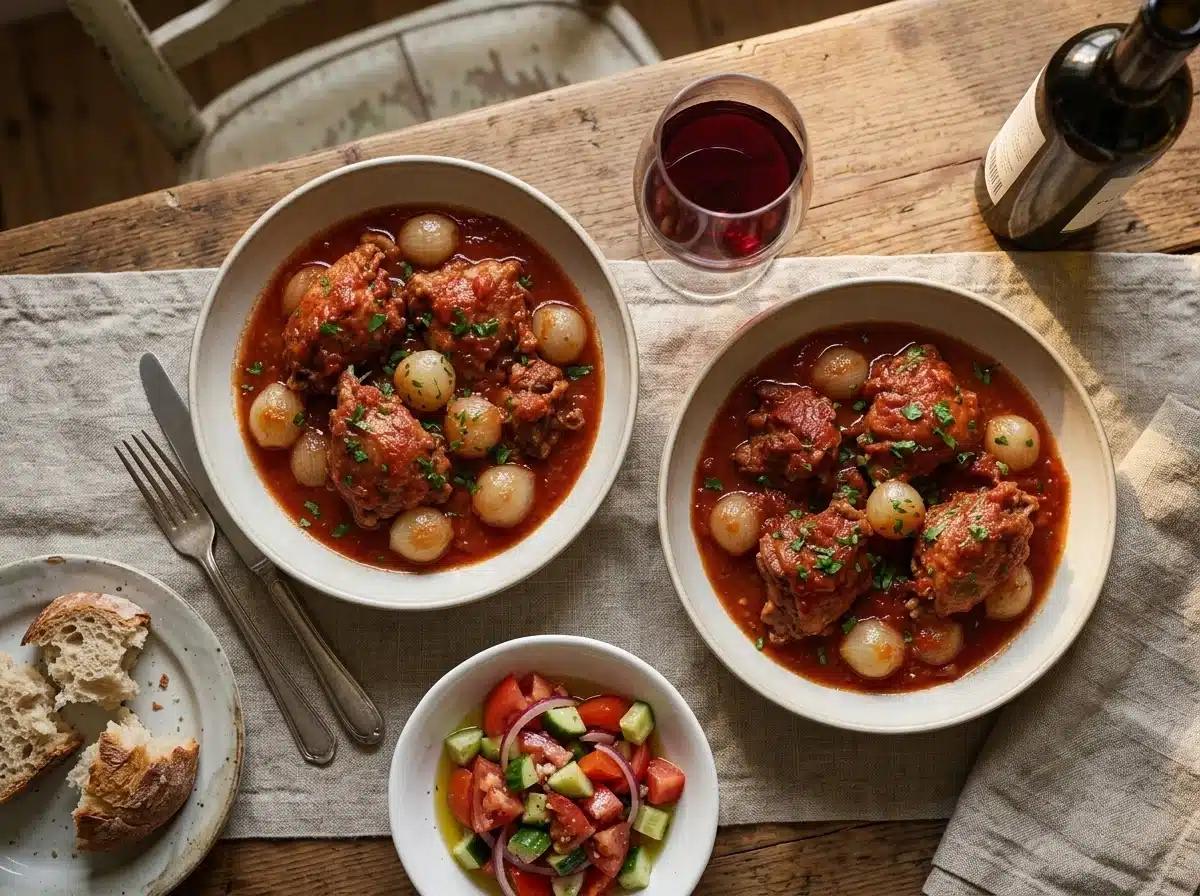
Rabbit stifado is best served in shallow bowls with plenty of sauce and a few onions on each plate. Crusty bread is the easiest way to soak up the sauce, but crisp roasted Greek potatoes, orzo or plain rice work well too.
I like a simple cucumber and tomato salad on the side. It’s cool and fresh next to the sweet, tangy stew.
Sprinkle chopped parsley on top just before serving. A glass of dry red wine, like the one you cooked with, goes nicely.
FAQ
How do I know when rabbit stifado is done?
Rabbit stifado is done when a fork slides into the thickest part of the hind leg and the meat pulls away from the bone with little pressure. The rabbit is safe at 160 F / 71 C, but in this stew it cooks well past that. The sauce should coat the back of a spoon.
Can I use chicken thighs instead of rabbit in stifado?
Yes, use 8 bone-in, skin-on chicken thighs, about 1.2 kg / 2.6 lb. Brown them the same way, then simmer covered for 30 minutes and uncovered for 15. Chicken is fattier than rabbit, so spoon off any extra oil from the top before serving.
Can I freeze rabbit stifado with the pearl onions in it?
Yes, freeze it in an airtight container for up to 3 months, with the sauce covering the rabbit. Thaw it overnight in the fridge. The onions soften a little after freezing, but the rabbit stays moist because it’s packed in sauce.
What goes well with rabbit stifado?
Crusty bread, roasted or boiled potatoes, orzo and plain rice all soak up the sauce well. I like a cucumber and tomato salad on the side because it’s cool and sharp next to the sweet onions. A dry red wine, such as a Greek Agiorgitiko, is a good match.
What is the difference between rabbit stifado and a regular rabbit stew?
Stifado uses a lot of small whole onions, red wine vinegar, and sweet spices like cinnamon and cloves. A general rabbit stew often uses stock, herbs and mustard, with chopped onion as a base. In stifado, the onions are a main part of the dish.
Is rabbit stifado gluten free?
Yes, rabbit stifado is gluten free as written, since nothing is thickened with flour. The sauce reduces by simmering uncovered at the end. If you’re cooking for someone with celiac disease, check the labels on the tomato paste and crushed tomatoes.