Jump to Recipe
Skordalia is a Greek garlic and potato dip made by mashing boiled potatoes with plenty of garlic, olive oil, and a little lemon juice. It’s thick and sharp with raw garlic, but the olive oil makes it feel silky instead of harsh.
I make this when I want something simple to put on the table with bread, raw vegetables, or fried fish. It’s a classic meze in Greece and shows up next to bakaliaros (fried cod) around Easter, but it works fine on any weeknight.
You don’t need any special equipment. A pot, a potato masher, and a bit of patience while you drizzle in the oil are all it takes.
The one thing to watch is the garlic. Taste as you mix, since raw garlic gets stronger the longer it sits, and it’s easy to overdo it.
Why You’ll Love This Recipe
- Ready in under an hour with basic pantry ingredients
- Naturally vegan, dairy-free, and gluten-free as written
- Works as a dip, spread, or side sauce
- Keeps in the fridge for a few days
Ingredient Notes
- potatoes: Use a starchy variety like Yukon gold or russet. Waxy potatoes stay firm and won’t mash smooth.
- garlic: Mash it into a paste with salt so it blends evenly instead of leaving sharp chunks.
- olive oil: Use a good extra virgin olive oil, since it’s the main flavor along with the garlic.
- lemon juice: Fresh juice works best. Bottled juice tastes flat and less bright.
- white wine vinegar: Adds a little extra tang. You can leave it out and use a bit more lemon juice instead.
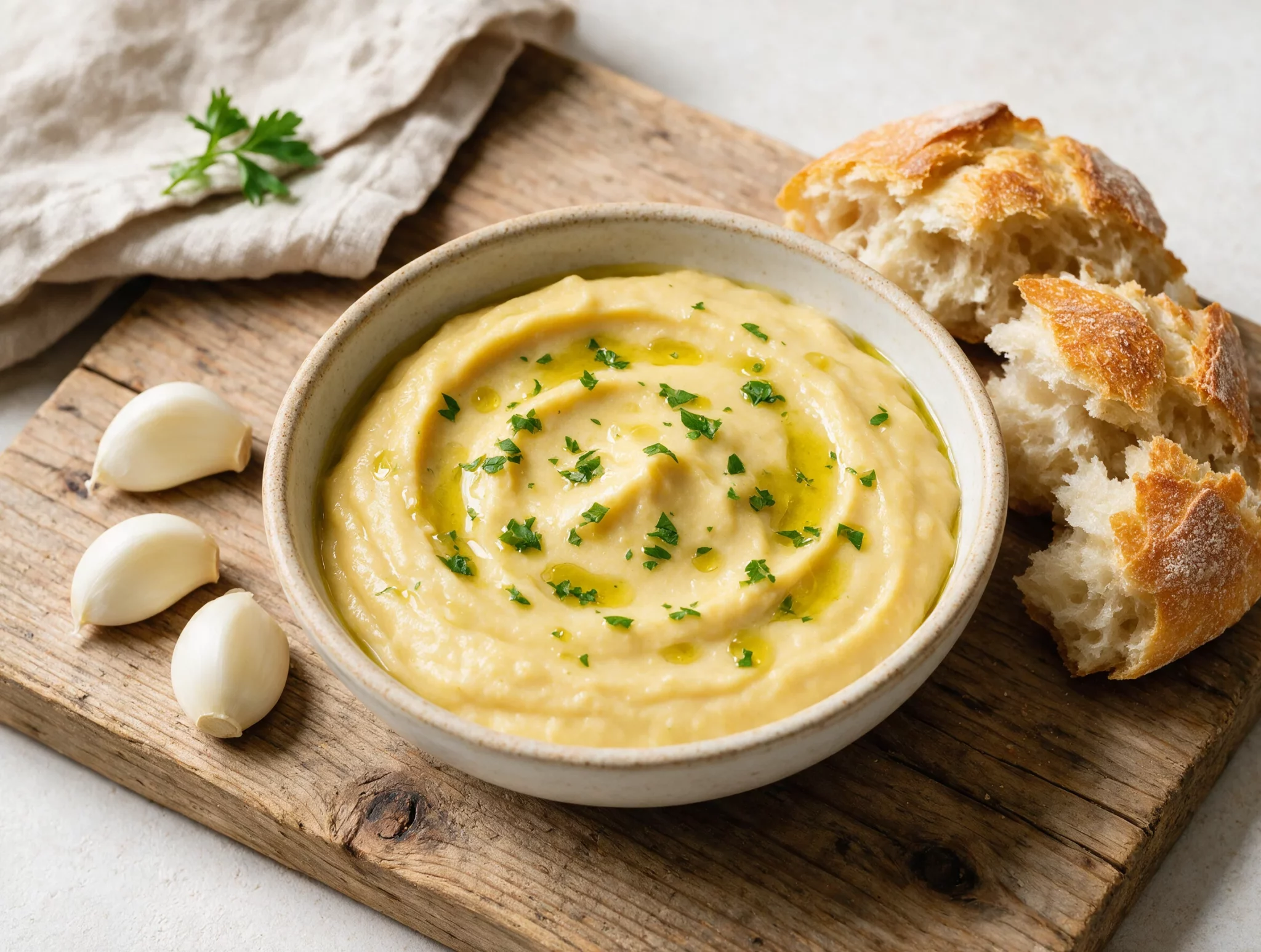
Silky Greek Skordalia Garlic Potato Dip with Olive Oil
Ingredients
Method
- Put the potato chunks in a 3-quart / 2.8 L saucepan and cover with cold water by 5 cm / 2 inches. Add a pinch of salt.
- Bring to a boil over high heat, then lower to a simmer. Cook for 20 to 25 minutes, until a knife slides into the potatoes with no resistance.
- Reserve 1 cup of the cooking water, then drain the potatoes. Let them sit for 2 minutes so extra moisture steams off.
- While the potatoes cook, mash the garlic and 1 1/4 tsp salt into a smooth paste using a mortar and pestle, or grate the garlic finely and mash it with the flat of a knife.
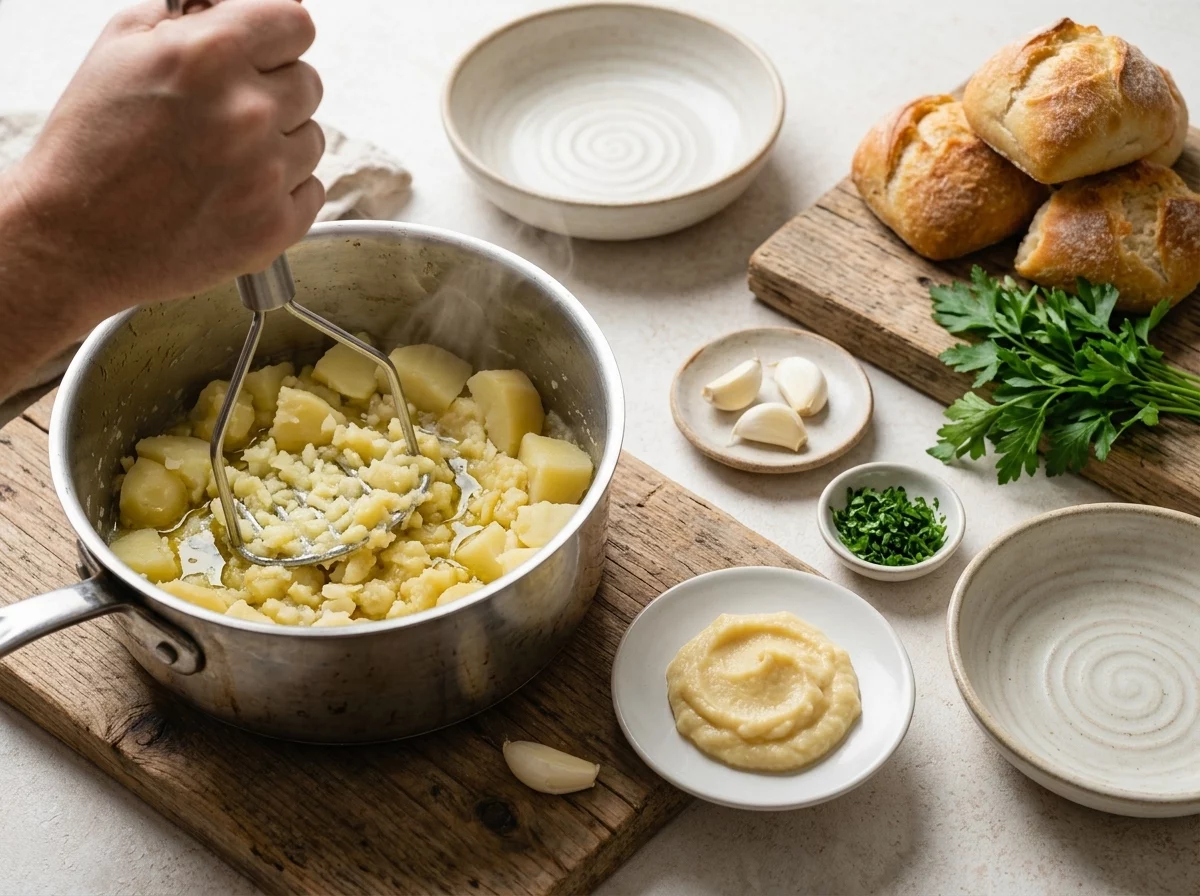
- Mash the warm potatoes with a potato masher until smooth. Don't use a food processor, it turns the starch gluey and the dip loses its texture.
- Stir the garlic paste into the mashed potatoes until evenly mixed.
- Drizzle in the olive oil a little at a time, stirring constantly, until it's fully absorbed and the mixture looks glossy.
- Add the lemon juice and vinegar and stir until combined.
- Loosen the dip with 2 to 4 tbsp of the reserved potato water, a tablespoon at a time, until it's smooth and thick enough to hold its shape on a spoon.
- Taste and add more salt if needed. Transfer to a bowl, drizzle with a little extra olive oil, and scatter parsley on top before serving.
Notes
- Mash potatoes while still warm for the smoothest texture.
- Add oil gradually so it doesn't pool or separate.
- Taste garlic paste before adding, it gets sharper as it sits.
- Use starchy potatoes, not waxy ones, for the best mash.
Tips for Success
- Mash the potatoes while they’re still warm, or the mixture turns gluey and hard to smooth out.
- Add the olive oil slowly, a little at a time, so it blends in instead of pooling on top.
- Taste the garlic paste before mixing it in fully, since raw garlic gets sharper as it sits.
- Skip the food processor, it turns the potatoes into paste and the dip loses its texture.
- Save a cup of the potato cooking water in case the dip needs loosening later.
Variations
- Add a slice of soaked, squeezed bread with the potatoes for a lighter, more traditional island-style texture.
- Stir in a handful of ground almonds for a nuttier, thicker version common on some islands.
- Swap half the lemon juice for white wine vinegar if you want a sharper, tangier bite.
Storage and Reheating
Skordalia keeps in an airtight container in the fridge for 3 to 4 days. The olive oil may separate and rise to the top, so just stir it back together before serving.
This dip is meant to be eaten cold or at room temperature, so there’s no reheating step. If you’re making it ahead, take it out of the fridge 20 to 30 minutes before serving so the oil loosens up again.
Freezing isn’t a good idea here. The potato texture turns watery and grainy once thawed.
Serving Suggestions
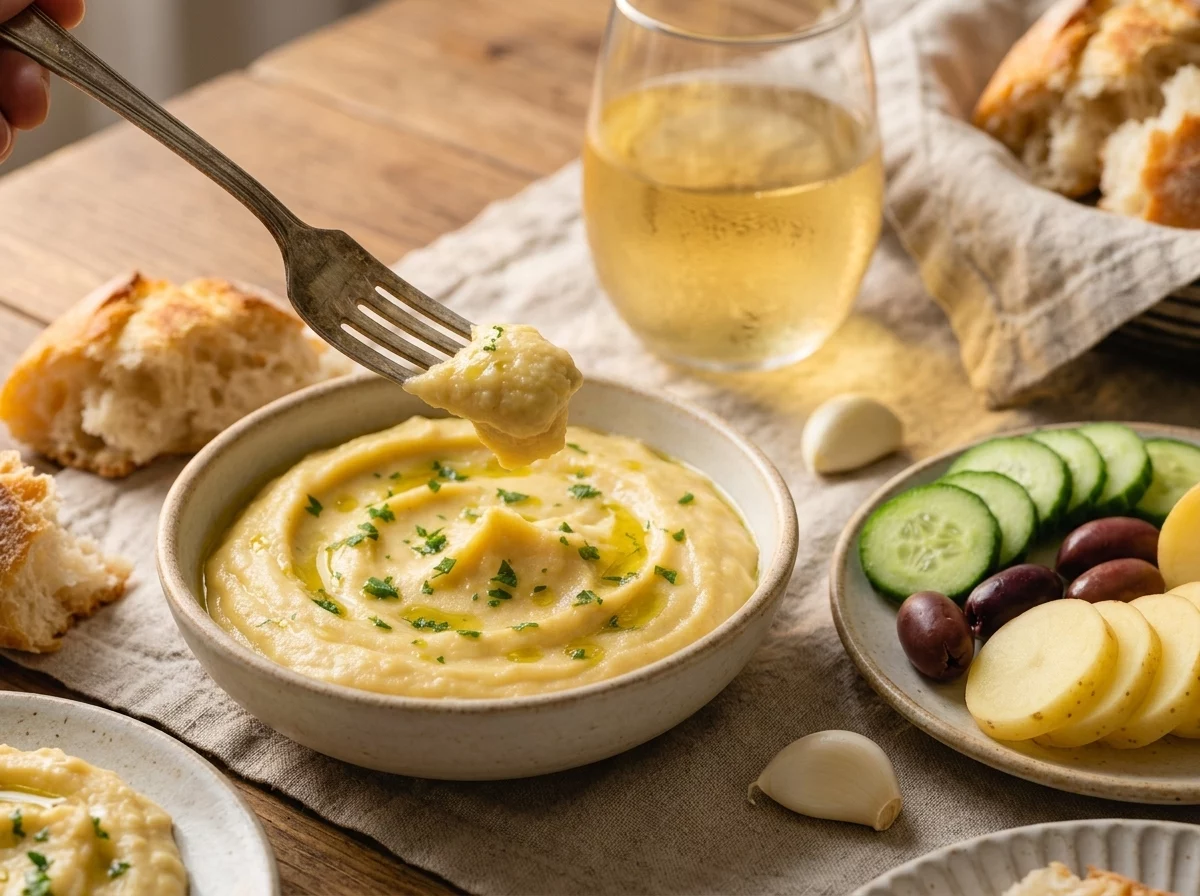
Skordalia goes well with warm pita or crusty bread for scooping, and with raw vegetables like cucumber, carrot, and bell pepper strips.
In Greece it’s often served next to fried or grilled fish, especially bakaliaros (battered cod). It’s also good spooned over roasted beets or grilled zucchini.
For a simple meze spread, put out a bowl of skordalia with olives, feta, smoky roasted eggplant dip, and some warm flatbread.
FAQ
Why is my skordalia too runny?
Most likely you added the potato water too fast, or the potatoes were still wet when mashed. Reserve the cooking water and add it a tablespoon at a time instead of pouring it all in. If it’s already thin, mash in one more boiled potato to thicken it back up.
Can I use russet potatoes instead of Yukon gold for skordalia?
Yes, russets work well and are a common choice because they’re starchy and mash smooth, much like the potatoes in crispy potato salad with tzatziki. Yukon golds give a slightly creamier result. Avoid waxy potatoes like red or new potatoes, since they stay too firm and won’t mash into a smooth paste.
How long does skordalia keep in the fridge?
Skordalia keeps for 3 to 4 days in an airtight container in the fridge. The olive oil may separate and rise to the top, so stir it back in before serving. It’s meant to be eaten cold or at room temperature, so there’s no need to reheat it.
What goes well with skordalia besides bread?
Raw vegetables like cucumber, carrot, and bell pepper strips work well, and so does fried or grilled fish, especially bakaliaros. It’s also good spooned over roasted beets, grilled zucchini, or alongside baked halloumi with tomatoes and olives. In Greece it’s a common meze plate alongside olives and feta.
Is skordalia gluten-free?
Yes, this potato-based version is naturally gluten-free since it uses no bread or flour. Just check your serving bread or crackers if gluten is a concern. The dip itself is only potatoes, garlic, olive oil, and lemon juice.
What’s the difference between skordalia and regular garlic aioli?
Skordalia is thickened with mashed potatoes, while aioli is an egg-based emulsion similar to mayonnaise. Skordalia has a coarser, heartier texture and a stronger raw garlic bite. Aioli is smoother and richer from the egg yolk, with a milder garlic flavor.