Jump to Recipe
Soutzoukos is a traditional Cypriot sweet made from fresh grape juice and whole almonds. You boil the juice down with a little flour until it turns into a thick, dark syrup called palouzes, then dip strings of almonds into it again and again until a soft candy builds up around the nuts.
The outside dries to a light, matte skin. The inside stays soft and chewy, with a flavor that’s sweet and a little tart, close to a dense fruit leather wrapped around toasted almonds.
This is a slow project, not a quick dessert. You dip and hang the strings over several days, so it works well during grape season when you have time to check on them morning and evening.
I’ve simplified the method here for a home kitchen, using kitchen string and a wooden dowel instead of the long drying rods used in Cypriot villages, but the technique is the same one families have used for generations.
Why You’ll Love This Recipe
- Made from just grapes, almonds, and flour
- Naturally sweet with no added sugar
- Keeps for months in an airtight tin
- A good project during grape season
Ingredient Notes
- grapes: Use seedless red or black grapes if you can, since seeds add bitterness to the juice. Bottled 100% grape juice with no added sugar works as a shortcut.
- flour: Plain all-purpose flour thickens the must without changing the flavor much. Cornstarch works too and keeps the recipe gluten free.
- almonds: Whole blanched almonds thread easily and hold up well through repeated dipping. Walnut halves are a common substitute in some villages.
- cotton string: Use plain cotton kitchen string, not synthetic, since it needs to hold up in liquid without stretching or fraying.
- cinnamon stick: Optional, but it adds a warm background flavor to the must while it simmers. Remove it before you start dipping.
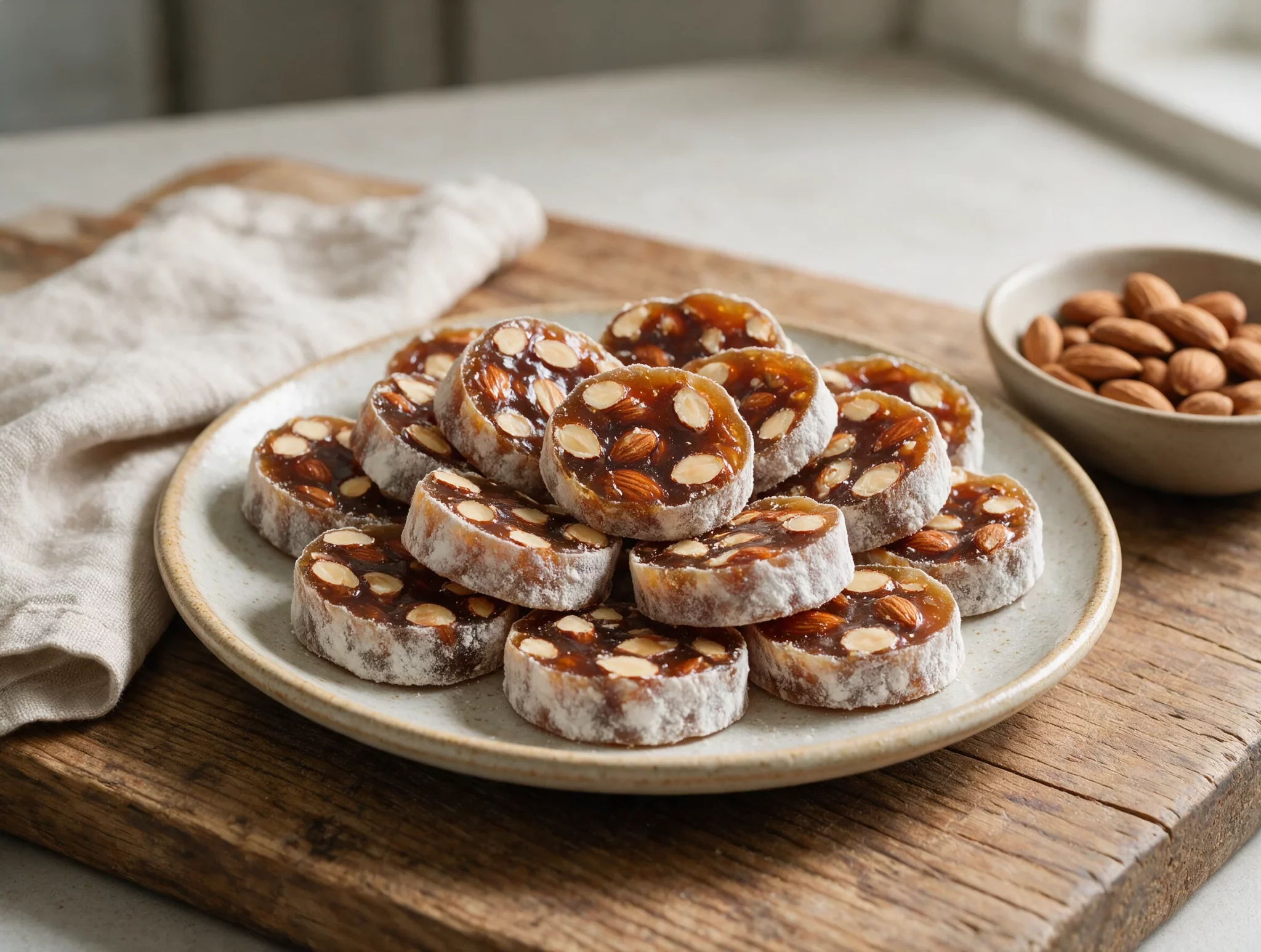
Homemade Cypriot Soutzoukos, Grape and Almond Candy
Ingredients
Method
- Blanch the almonds in boiling water for 1 minute, then drain and pat dry with a towel.
- Thread a large needle with a 30 cm length of cotton string. Push the needle through the center of each almond, leaving 20 cm of bare string at each end to tie into a loop. Repeat until you have 6 to 8 strings, spacing the almonds about 1 cm apart.
- Rinse the grapes and pull them from the stems. Crush them by hand or in batches in a blender, then press through a fine sieve or cheesecloth into a bowl. You need about 1 liter of clear juice. Skip this step if using bottled juice.
- Pour the juice into a 24 cm / 9.5-inch pot with the cinnamon stick if using. Bring to a gentle boil over medium heat and simmer for 15 minutes, skimming off any foam that rises to the top.
- Whisk the flour with the cold water in a small bowl until smooth with no lumps. Pour this slowly into the simmering juice while whisking constantly.
- Cook for 8 to 10 minutes, stirring often, until the must thickens enough to coat the back of a spoon and holds a line when you drag a spoon through it. Remove from heat and discard the cinnamon stick.
- Let the must cool for about 15 minutes, until it's warm to the touch but not hot. If it's too hot it will slide off the almonds instead of sticking, and if it's too thin, boil it another 2 to 3 minutes before you try again.
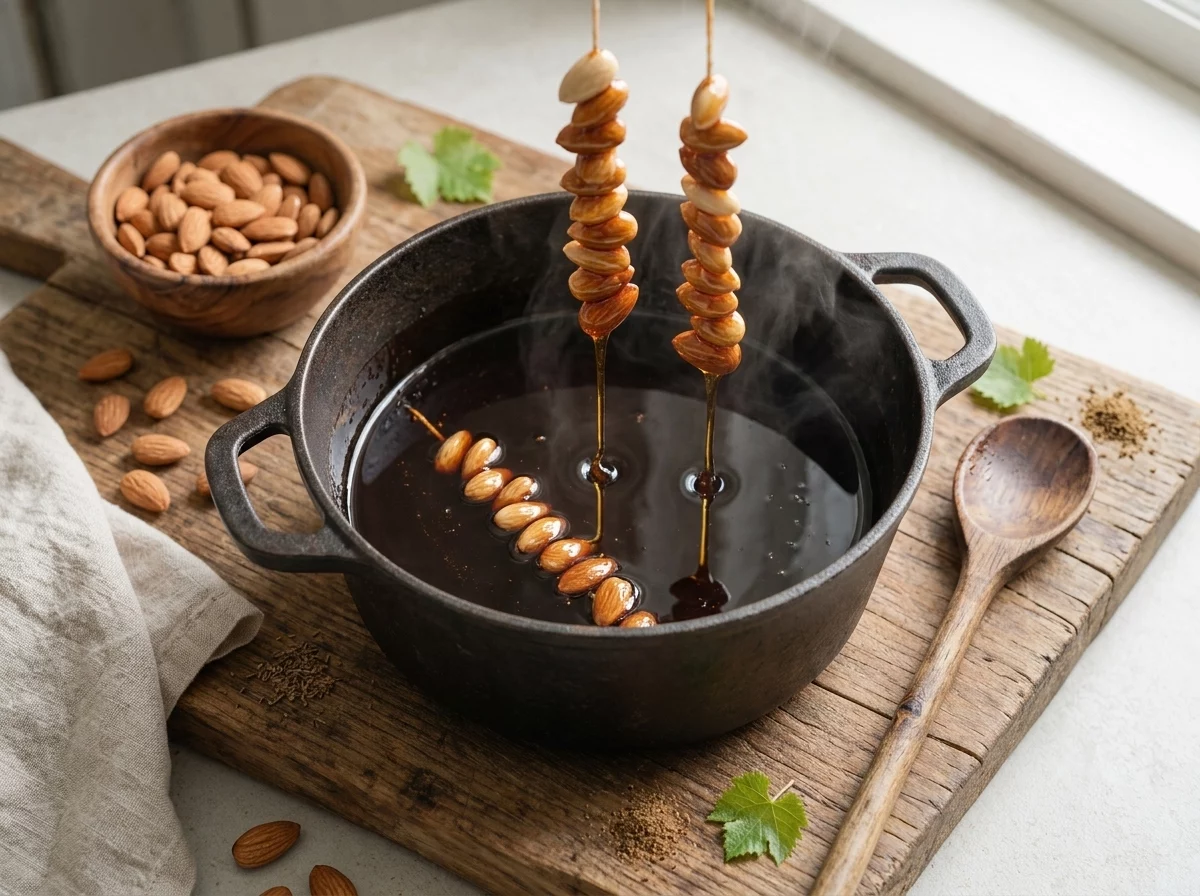
- Dip each string of almonds into the warm must, turning it so the coating is even, then hang it over a dowel or rod set over a tray to catch drips. Let dry for 3 to 4 hours, until the coating feels tacky rather than wet.
- Dip each string again and let dry, repeating this 5 to 7 times over 2 to 3 days. Each string should slowly grow into a thick, sausage-shaped candy about 3 to 4 cm across.
- Once you're happy with the thickness, hang the strings in a cool, dry spot away from direct sun for 2 to 3 more days, until the outside feels firm and slightly matte but the inside still gives when you press it.
- Slice the soutzoukos into rounds and serve at room temperature.
Notes
- Strain grape juice fully through cheesecloth; leftover pulp makes the coating grainy.
- Warm must sticks better than hot must, cool it until just warm before dipping.
- Hang strings somewhere with good airflow, not in direct sun, or the outside can crack.
- Work in a batch of 6 to 8 strings at a time so they all dry at the same rate.
Tips for Success
- Blanch the almonds briefly so they’re easy to thread but still hold their shape on the string.
- Cool the grape must until warm, not hot, before the first dip or it will slide right off.
- Hang strings over a tray to catch drips, since the must keeps dripping for the first hour.
- Check the coating each morning and evening, dipping again only once the last layer feels dry.
- Store finished soutzoukos wrapped in wax paper inside a tin, away from heat and direct sunlight.
Variations
- Swap almonds for walnut halves for a heartier bite, closer to how some Cypriot villages make it.
- Add a whole cinnamon stick or a few cloves to the boiling must for a warmer, spiced flavor.
- Use bottled unsweetened grape juice instead of pressing fresh grapes to skip a full afternoon of juicing.
Storage and Reheating
Soutzoukos keeps well because most of the moisture has already dried out of it. Wrap pieces in wax paper and store them in an airtight tin at room temperature for up to 2 to 3 months.
You can also keep it in the fridge if your kitchen runs warm and humid, though it will firm up more and turn slightly chewier straight from the cold. Let it sit at room temperature for about 15 minutes before eating if you store it this way.
Serving Suggestions
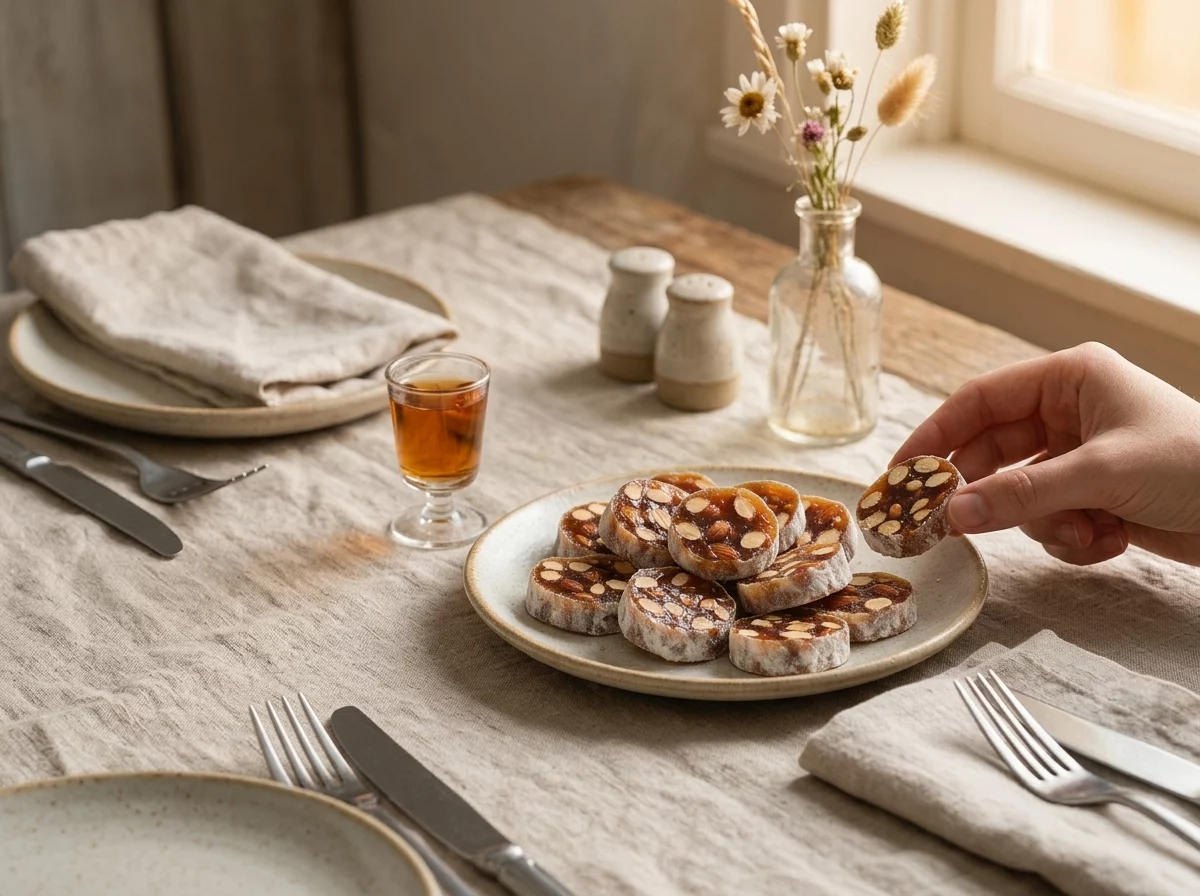
Soutzoukos is a sweet on its own, sliced thin and served with strong coffee or a small glass of commandaria, the sweet Cypriot dessert wine.
In Cyprus it’s often set out with other Cypriot tahini rolls or dried figs, so a small plate with a few slices makes a simple end to a meal.
I also like to chop leftover pieces into small bits and stir them into plain yogurt or oatmeal, since they add a chewy, sweet bite without needing extra sugar.
FAQ
How do I know when the soutzoukos coating is thick enough?
The strings should look like a smooth, thick sausage about 3 to 4 cm across, with no bare string or almond showing through the coating. This usually takes 5 to 7 dips over 2 to 3 days. If the coating looks thin or patchy, dip it once more and let it dry fully before checking again.
Can I use walnuts instead of almonds for soutzoukos?
Yes, walnuts work well and are actually just as traditional in some Cypriot villages as almonds. Thread the walnut halves the same way on the string, though they may need a slightly thicker coating since the pieces are more irregular than whole almonds.
How long does homemade soutzoukos last once it’s dried?
Stored in an airtight tin at room temperature, soutzoukos keeps for 2 to 3 months without going bad. The texture actually improves after the first week, once the outside dries fully and the inside settles into a chewy candy.
What goes well with Cypriot soutzoukos?
Soutzoukos pairs well with strong coffee or a small glass of commandaria, the sweet Cypriot wine. It’s also good alongside other baked Cypriot flaounes or a plate of fresh walnuts, the way it’s traditionally served in Cyprus after a meal.
Is soutzoukos gluten free?
Not as written here, since the grape must is thickened with wheat flour. You can swap the flour for the same amount of cornstarch to make a gluten free version. The must may set up slightly softer, so boil it 2 to 3 minutes longer if needed.
What’s the difference between soutzoukos and Georgian churchkhela?
Both are made the same basic way, dipping threaded nuts into thickened grape juice and drying them, but the sweetness and flavor differ. Soutzoukos usually leans sweeter and thinner-coated, while churchkhela can include walnuts and grape must cooked with extra sugar or a firmer set. They come from different regional traditions that developed similar techniques independently.