Jump to Recipe
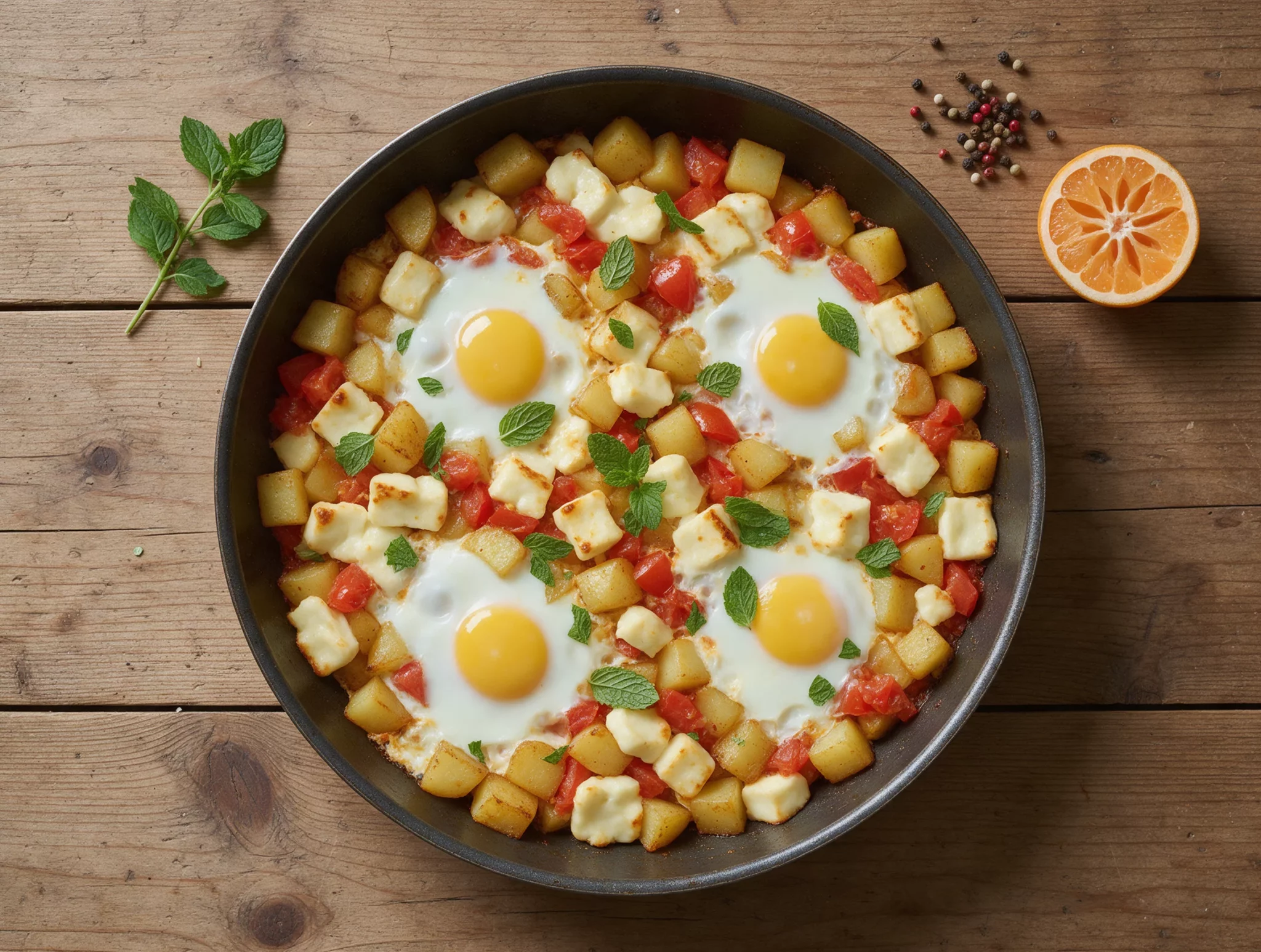
Cypriot potato and egg skillet is a one-pan dish of diced potatoes pan-fried until golden, mixed with halloumi and tomatoes, then finished with eggs cracked right on top and cooked until the whites set and the yolks stay soft.
The potatoes turn crisp at the edges and soft in the middle. Halloumi adds a salty bite like in these pan-seared halloumi grain bowls, and the tomatoes break down into a light sauce that holds everything together. A little fresh mint at the end makes the whole pan taste brighter.
I make this when I want something more than plain fried eggs but don’t want to wash a stack of pans. It works for breakfast, lunch, or a quick dinner with bread on the side.
Halloumi is already salty, so I go easy on the salt until everything is in the pan and I can taste it.
Why You’ll Love This Recipe
- One skillet, minimal cleanup, ready in about 40 minutes
- Crisp potatoes, salty halloumi, and soft eggs in one bite
- Works for breakfast, lunch, or a light dinner
- Simple ingredients you can find at any grocery store
Ingredient Notes
- potatoes: Waxy or all-purpose potatoes both work. Dice them small, about 1.5 cm, so they cook through without burning on the outside.
- halloumi: This salty semi-firm cheese from Cyprus holds its shape when fried. Feta doesn’t work as a direct swap here since it crumbles instead of softening.
- tomatoes: Ripe tomatoes break down into a light sauce as they cook. Cherry tomatoes work too, just halve them instead of dicing.
- eggs: Use eggs close to room temperature so they cook evenly once cracked into the hot pan.
- mint: Fresh mint is common in Cypriot cooking and adds a bright finish. Dried oregano works as a swap but changes the flavor a bit.
- olive oil: Olive oil is the main fat here, so use one you’d be happy to taste on its own.
Pan-Fried Cypriot Potato and Egg Skillet with Halloumi
Ingredients
Method
- Heat 3 tbsp of the olive oil in a 26 cm / 10-inch nonstick skillet with a lid over medium heat. Add the potatoes in a single layer and season with a pinch of salt.
- Cook for 10 to 12 minutes, stirring every 2 to 3 minutes, until the potatoes are golden at the edges and tender when pierced with a fork.
- Push the potatoes to one side of the pan. Add the remaining 1 tbsp oil and the onion, and cook for 2 to 3 minutes until soft. Add the garlic and cook for 30 seconds until fragrant.
- Mix the onion and garlic into the potatoes. Add the diced tomatoes and a light pinch of salt and pepper. Cook for 3 minutes, until the tomatoes soften into a light sauce.
- Scatter the halloumi cubes over the top and cook for 2 minutes, just until the edges soften.
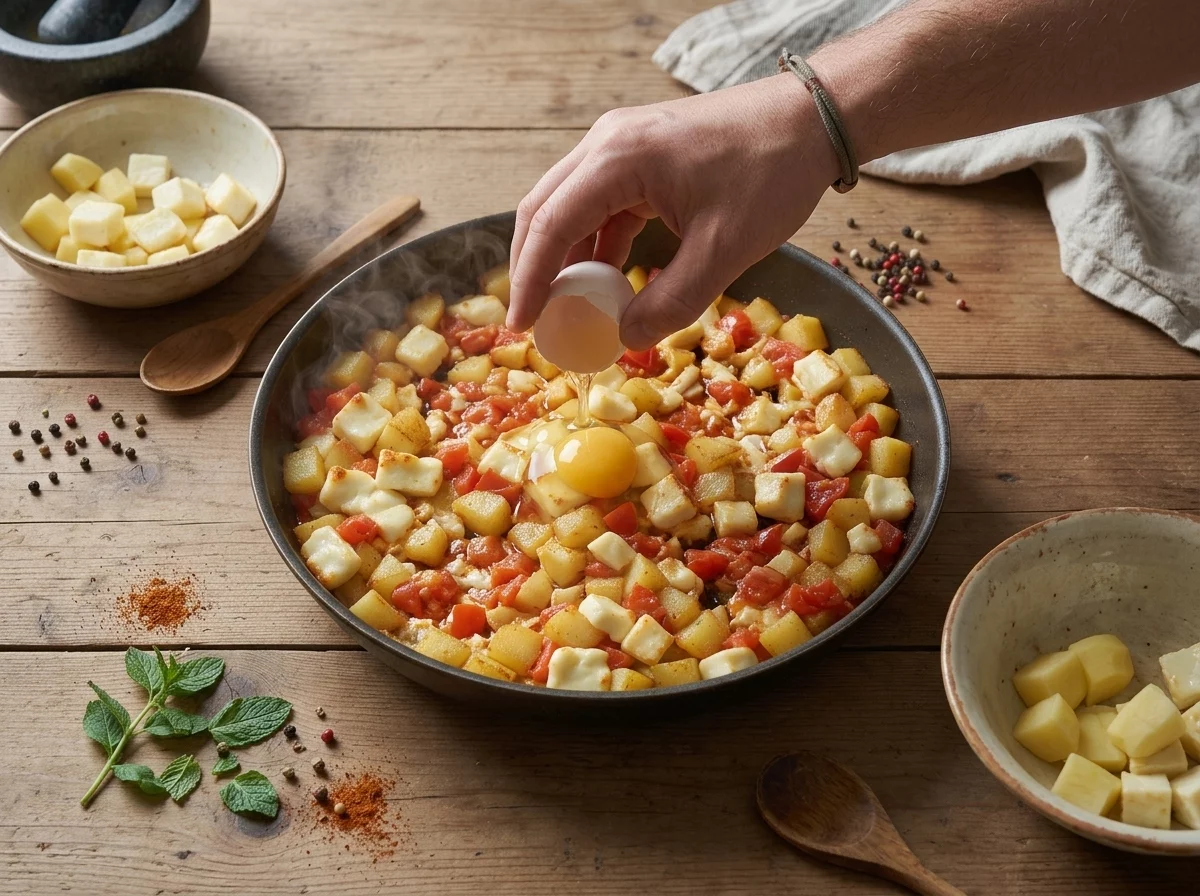
- Use a spoon to make 4 small gaps in the mixture. Crack one egg into each gap.
- Cover the skillet, lower the heat, and cook for 4 to 5 minutes, until the egg whites are set and the yolks are still soft. Cook 1 to 2 minutes longer if you prefer firmer yolks.
- Remove the pan from the heat. Scatter the mint and chili flakes over the top, add a squeeze of lemon, and serve straight from the skillet with warm bread.
Notes
- Dry the diced potatoes with a towel before frying so they crisp instead of steam.
- Halloumi is salty, taste the tomato mixture before adding extra salt.
- Cook the eggs 1 to 2 minutes longer if you prefer firmer yolks or are serving someone who avoids soft yolks.
- Use a lid to set the egg whites evenly without flipping anything in the pan.
Tips for Success
- Cut the potatoes into even 1.5 cm cubes so they cook at the same rate and don’t burn on the edges.
- Dry the diced potatoes with a towel before frying, or they will steam instead of turning crisp.
- Let the potatoes sit for a minute or two between stirs so the edges have time to brown.
- Crack the eggs into gaps between the potatoes so the whites can spread out and set evenly.
- Cover the pan for the last few minutes so the egg whites cook through without needing to flip anything.
Variations
- Swap halloumi for feta added off the heat at the very end, since feta breaks apart if it sits in the hot pan.
- Add a diced bell pepper with the onion for extra color and a little sweetness in the sauce.
- Stir in a handful of chopped spinach in the last 2 minutes for extra greens without changing the dish much.
Storage and Reheating
Cypriot potato and egg skillet tastes best right after cooking, while the yolks are still soft and the halloumi is warm.
If you have leftovers, the potato and halloumi base keeps in an airtight container in the fridge for 2 to 3 days. Reheat it in a 26 cm / 10-inch skillet over medium heat for 4 to 5 minutes, then crack in fresh eggs and cook them the same way as the first time.
I don’t recommend reheating the dish once the eggs are already cooked into it. The yolks turn firm and the whites get tough.
Serving Suggestions
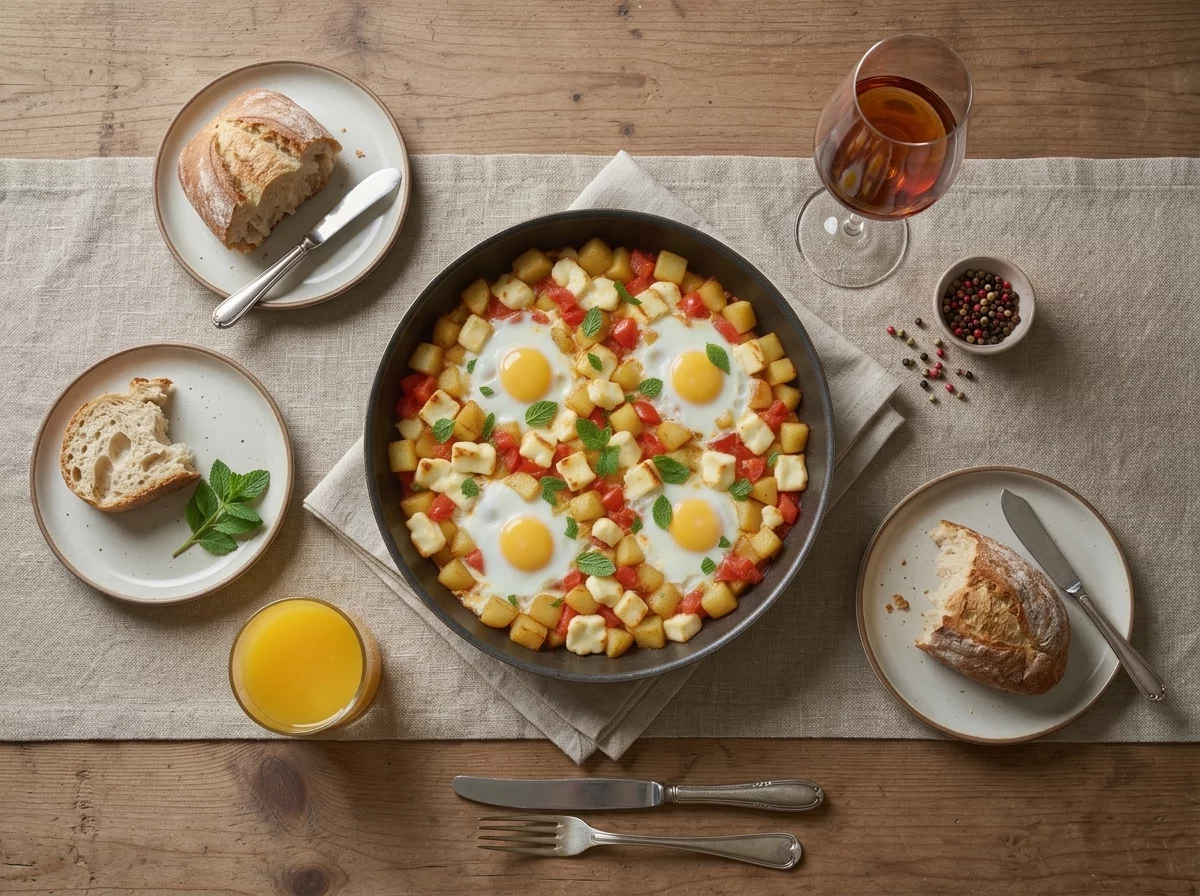
Serve Cypriot potato and egg skillet straight from the pan with warm bread or pita for scooping up the yolk and sauce.
A simple side of sliced cucumber and olives works well, or a spoon of thick yogurt to cool down the halloumi’s salt. In summer, I like a few slices of watermelon next to it.
For drinks, a glass of fresh orange juice or a mint tea suits the mint already in the dish, echoing the mint in this seared halloumi and peach salad.
FAQ
How do I know when the potatoes are ready for the eggs in this skillet?
The potatoes are ready once they’re golden at the edges and a fork slides through the middle with no resistance, usually 10 to 12 minutes. If you crack the eggs in too early, the potatoes will still be starchy in the center by the time the whites set.
Can I use feta instead of halloumi in this Cypriot potato and egg skillet?
You can, but add it off the heat right at the end instead of frying it. Feta breaks down and turns watery if it sits in a hot pan the way halloumi does, much like in a Greek potato and feta pie, so stir it in after you take the skillet off the stove for the last minute or two.
Can I make the potato and halloumi base ahead for this egg skillet?
Yes, the potato, onion, and tomato base keeps well in the fridge for 2 to 3 days in an airtight container. Reheat it in the skillet over medium heat for 4 to 5 minutes, then crack in fresh eggs and cook them the same way as the first time.
What goes well with Cypriot potato and egg skillet besides bread?
Cucumber and tomato salad, a few olives, or a spoon of thick yogurt all work well next to it. The cool, plain flavors balance the salty halloumi, and in summer I like a side of watermelon too.
Is this potato and egg skillet gluten free?
Yes, the skillet itself has no wheat or gluten in it, so it’s naturally gluten free. Just check the halloumi label, since a few brands add flour as an anti-caking agent, and serve it with gluten-free bread if that matters to you.
How is this different from a Spanish tortilla or shakshuka?
This skillet keeps the eggs soft and separate on top instead of baking them into the potatoes like a Spanish tortilla, or simmering them in a heavy tomato sauce like shakshuka. Halloumi and fresh mint give it a saltier, brighter Cypriot character than either of those dishes.