
Jump to Recipe
Greek lamb meatballs with mint are small patties of ground lamb mixed with feta, fresh mint, and oregano, then pan-fried in olive oil until the outside is browned and the center stays juicy. They taste rich from the lamb but bright from all that mint and a squeeze of lemon.
I make these when I want something a little different from the usual beef meatball. The lamb has more flavor on its own, so you don’t need a heavy sauce to make it interesting.
A cool cucumber yogurt sauce on the side balances the richness. It’s basically a quick tzatziki, and it takes five minutes while the meatballs rest.
This is a good recipe for a weeknight dinner or a small gathering. You can shape the meatballs ahead and just fry them when you’re ready to eat.
Why You’ll Love This Recipe
- Ready in under an hour with simple pantry ingredients
- Feta and mint keep the lamb flavor bright, not heavy
- Yogurt sauce comes together in five minutes
- Good hot, warm, or at room temperature for a party plate
Ingredient Notes
- ground lamb: Use lamb with some fat (80/20 if you can find it labeled). Lean lamb makes drier meatballs.
- feta: Crumble it small so it melts into the meat as it cooks. Feta is salty, so go easy on added salt.
- fresh breadcrumbs: Panko works too. Breadcrumbs soak up moisture and keep the meatballs from getting dense.
- fresh mint: Dried mint is weaker in flavor, so if you sub it, use half the amount and let it sit in the mix for a few minutes.
- Greek yogurt: Use full-fat for a thicker sauce. Low-fat yogurt works but the sauce will be thinner and less rich.
- cucumber: Grate it and squeeze out the liquid in a clean towel first, or the sauce turns watery.
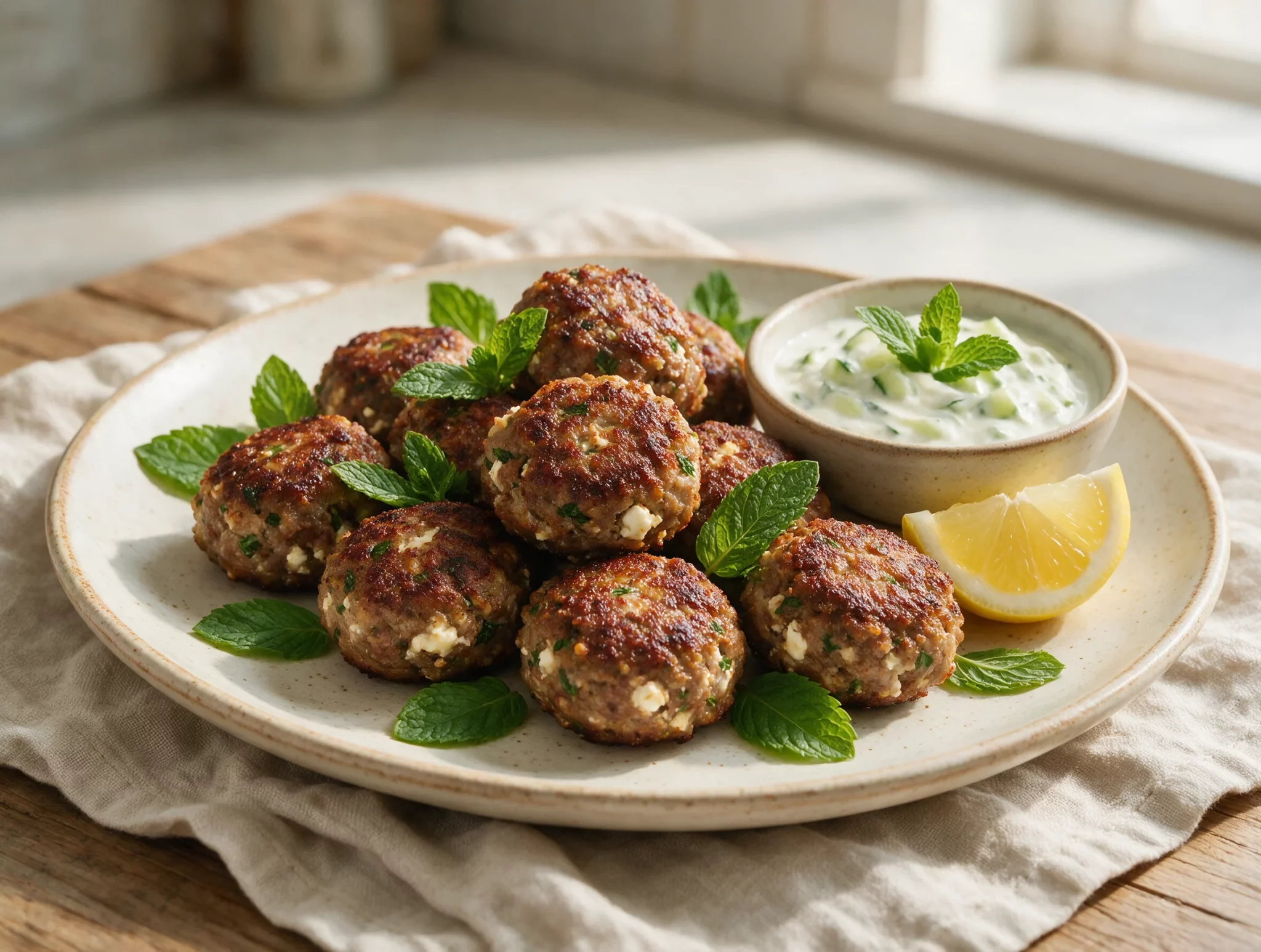
Pan-Fried Greek Lamb Meatballs with Fresh Mint
Ingredients
Method
- Grate the onion on a box grater, then squeeze it in a clean towel to remove excess liquid.
- In a large bowl, mix the lamb, grated onion, garlic, egg, breadcrumbs, feta, mint, parsley, oregano, cumin, salt, and pepper. Mix with your hands just until combined, don't overwork it.
- Cover the bowl and chill for 15 minutes. This firms up the mix so the meatballs hold their shape.
- Shape the mixture into about 20 meatballs, roughly 35 g each, using slightly damp hands so the mix doesn't stick.
- Heat the olive oil in a 12-inch / 30 cm skillet over medium heat until it shimmers.
- Add half the meatballs, leaving space between them so they brown instead of steam. Fry for 4 to 5 minutes on the first side.
- Turn with tongs and cook the other sides for 4 to 5 minutes more, until browned all over and an instant-read thermometer reads 160 F / 71 C at the center.
- Transfer to a plate and repeat with the second batch, adding a little more oil to the pan if it looks dry.
- While the meatballs cook, mix the yogurt, grated cucumber, garlic, olive oil, lemon juice, mint, and a pinch of salt in a bowl. Taste and adjust the salt.
- Let the fried meatballs rest for 2 minutes off the heat, this lets the juices settle.
- Serve warm with the yogurt sauce, extra mint leaves, and lemon wedges on the side.
Notes
- Squeeze grated onion and cucumber dry before mixing, or the mixture gets watery.
- Don't crowd the pan, fry in two batches so meatballs brown instead of steam.
- Check internal temp at 160 F / 71 C at the center of the thickest meatball.
- Rest meatballs 2 minutes off heat before serving, the juices settle and they hold together better.

Tips for Success
- Grate the onion instead of chopping it so it blends smoothly into the meat mixture.
- Chill the shaped meatballs for at least 15 minutes so they hold together better in the pan.
- Fry in two batches so the meatballs have space to brown instead of steaming.
- Turn the meatballs gently with tongs, not a fork, so they don’t fall apart.
- Check for doneness with a thermometer at the thickest meatball, not just by color.
Variations
- Swap lamb for ground beef or a lamb-beef mix if lamb isn’t available near you.
- Bake the meatballs at 400 F / 200 C for 18 to 20 minutes instead of pan-frying, turning once.
- Add a pinch of cinnamon or allspice to the meat mix for a warmer, more traditional keftedes flavor.
Storage and Reheating
Store cooked meatballs in an airtight container in the fridge for 3 to 4 days. Keep the yogurt sauce in a separate container, since it doesn’t freeze or reheat well.
To reheat, warm the meatballs in a 350 F / 175 C oven for 8 to 10 minutes, or in a skillet over medium heat with a splash of water, covered, for 5 to 6 minutes.
You can also freeze cooked meatballs on a tray until firm, then transfer to a freezer bag for up to 3 months. Thaw overnight in the fridge before reheating.
Serving Suggestions
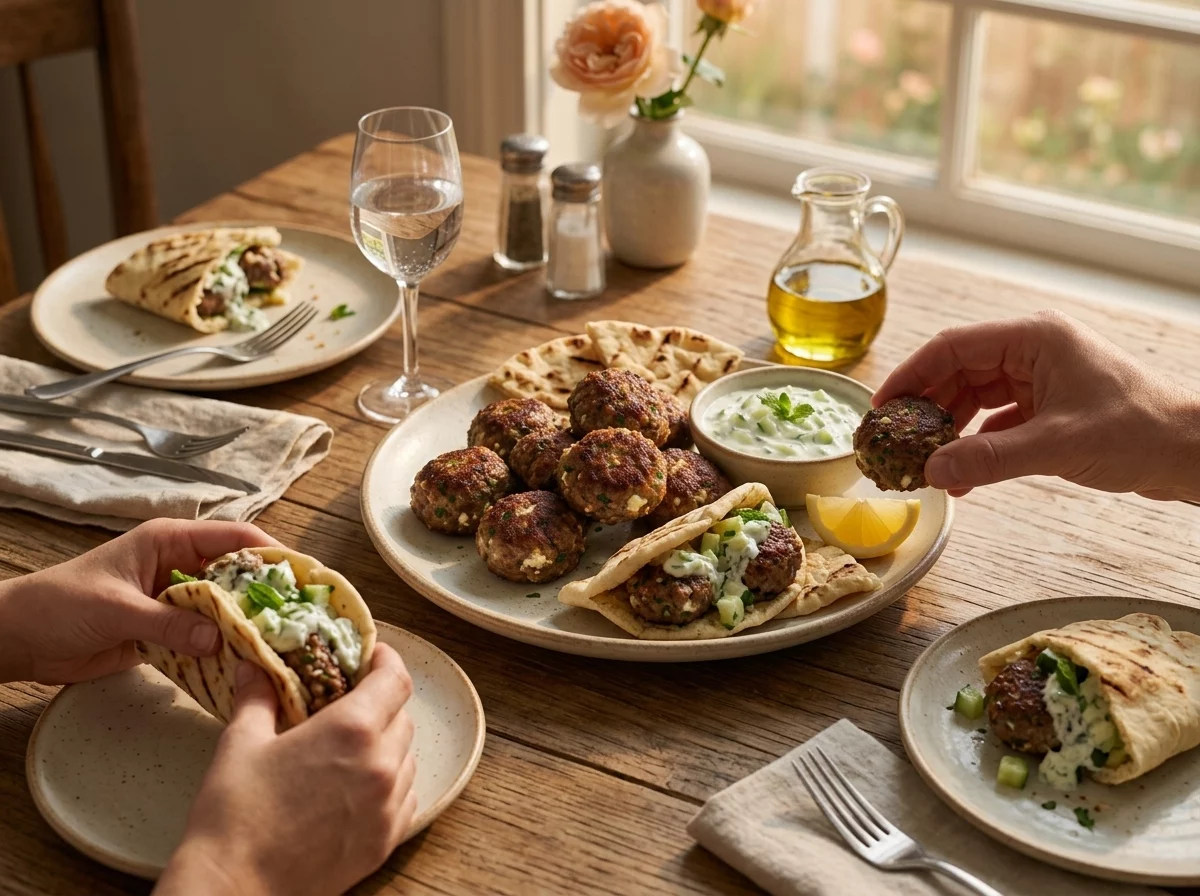
Pile the meatballs onto warm pita with the yogurt sauce, sliced tomato, and red onion for a simple wrap. A Greek salad with cucumber, tomato, and olives works well on the side too.
For a bigger plate, serve them over rice or with roasted potatoes and a lemon wedge. Leftover meatballs are also good cold, tucked into a lunch box with the sauce on the side.
FAQ
Why are my Greek lamb meatballs falling apart in the pan?
This usually means the mix was too wet or didn’t rest long enough before frying. Chill the shaped meatballs for at least 15 minutes so the egg and breadcrumbs can bind everything, and turn them gently with tongs instead of a fork.
Can I use ground beef instead of lamb for these meatballs?
Yes, ground beef works, though the flavor will be milder without the lamb’s natural richness. A 50/50 mix of lamb and beef is a good middle ground if you want a lighter taste but still some of that lamb flavor.
Can I freeze cooked Greek lamb meatballs?
Yes, freeze them on a tray until firm, then move to a freezer bag for up to 3 months. Thaw overnight in the fridge and reheat in a 350 F / 175 C oven for 8 to 10 minutes before serving.
What pairs well with Greek lamb meatballs besides yogurt sauce?
Warm pita, a simple Greek salad, or rice with lemon all work well alongside these meatballs. Roasted potatoes or a plate of grilled vegetables also round out the meal without competing with the mint and feta.
Are Greek lamb meatballs with mint gluten free?
Not as written, since they use breadcrumbs as a binder. Swap in gluten-free breadcrumbs or cooked rice in the same amount, and check that your yogurt is plain with no added thickeners.
How are these different from traditional Greek keftedes?
Traditional keftedes are usually beef or a beef-pork mix seasoned with mint and sometimes cinnamon, often deep-fried. This version uses lamb, adds feta for extra flavor, and pan-fries in less oil, so it’s a simpler, lighter take on the same idea.