
Jump to Recipe
Greek turkey meatballs with lemon and herbs are ground turkey meatballs mixed with lemon zest, fresh dill, parsley, and feta, then pan-fried in a skillet until golden on the outside and juicy in the middle.
The lemon keeps everything tasting fresh instead of heavy, and the feta adds little salty pockets through each bite. The herbs do a lot of work here, so don’t skip the dill if you can help it.
I make these on busy weeknights because turkey cooks fast and the whole thing comes together in one skillet. They’re lighter than beef meatballs but still filling with a salad or some rice on the side.
One thing I learned the hard way: don’t overmix the meat. Squeeze it too much with your hands and the meatballs turn dense instead of tender.
Why You’ll Love This Recipe
- Ready in about 40 minutes start to finish
- Lighter than beef meatballs but still filling
- Feta and lemon zest add flavor without extra sauce
- One skillet, easy cleanup
Ingredient Notes
- ground turkey: Use 93/7 ground turkey, not the leanest 99% fat-free kind, or the meatballs turn dry and rubbery.
- feta: Crumble it yourself from a block if you can. Pre-crumbled feta is drier and has less flavor.
- fresh dill: This is what makes them taste Greek. If you really can’t find it, use extra parsley plus a pinch more oregano.
- panko breadcrumbs: Panko keeps the mix light. Swap in gluten-free panko or regular gluten-free breadcrumbs if needed.
- lemon zest: Zest before you juice the lemon for serving. The zest carries more lemon flavor than the juice does here.
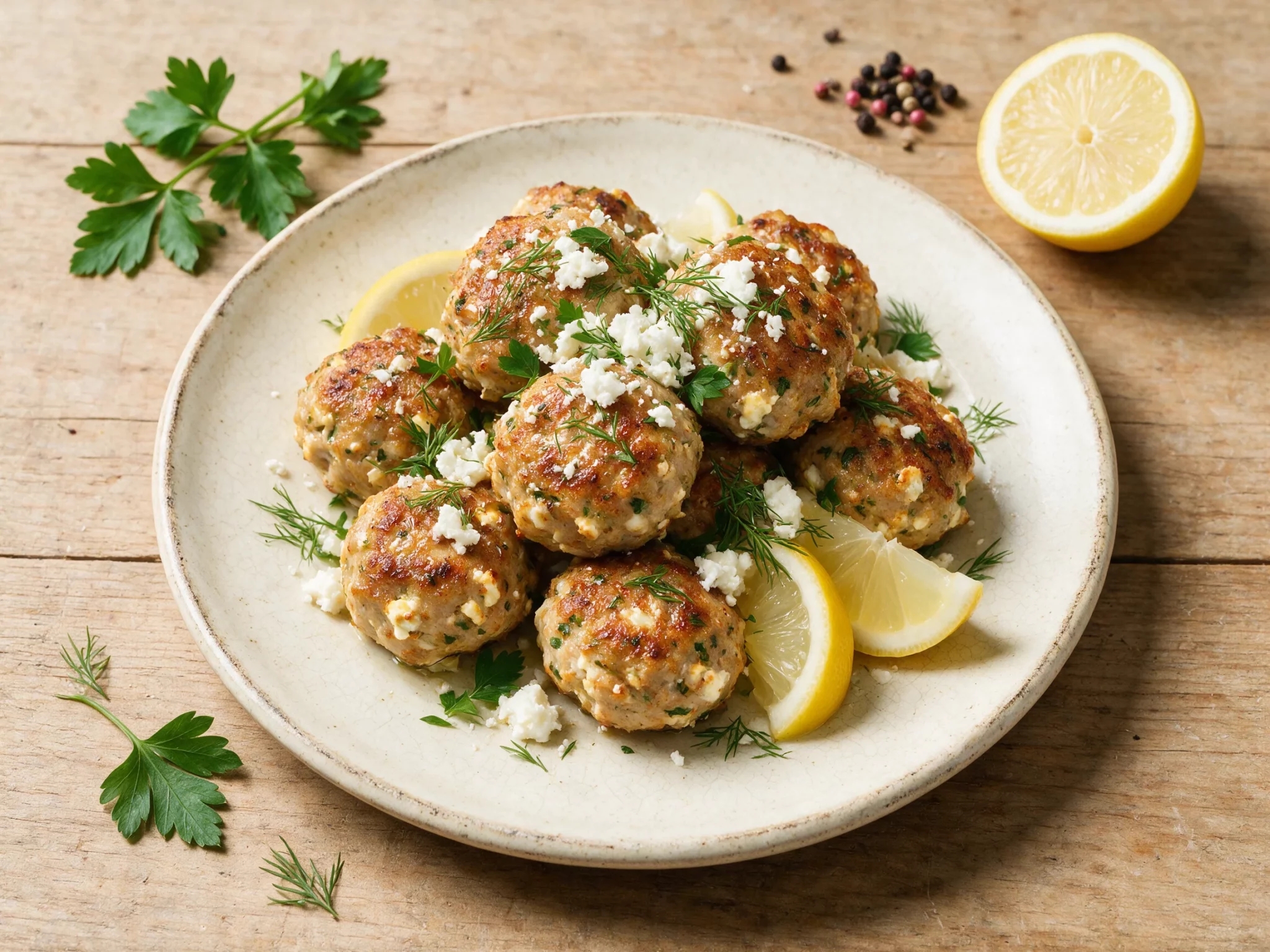
Pan-Fried Greek Turkey Meatballs with Feta and Lemon
Ingredients
Method
- Grate the onion into a large mixing bowl, then add the minced garlic, parsley, dill, and lemon zest.
- Add the ground turkey, egg, panko, feta, oregano, salt, and pepper. Mix gently with your hands just until everything is combined. Stop as soon as it holds together, overmixing makes the meatballs dense.
- Shape the mixture into about 16 meatballs, roughly 45 to 50 g each, a little smaller than a golf ball. Place them on a sheet pan and chill for 10 to 15 minutes.
- Heat 2 tablespoons of olive oil in a 12-inch nonstick skillet over medium heat.
- Add half the meatballs, leaving space between each one so they brown instead of steam. Sear for 3 to 4 minutes per side, turning gently, until golden brown all over, about 8 minutes total.
- Lower the heat to medium-low, cover the skillet, and cook for 5 more minutes, until an instant-read thermometer inserted in the center reads 165 F / 74 C.
- Transfer the first batch to a plate and tent loosely with foil to keep warm. Add the remaining tablespoon of oil and repeat searing and covered cooking with the second batch.
- Squeeze fresh lemon juice over the meatballs and serve warm with lemon wedges on the side.
Notes
- Grate the onion, don't chop it, for a juicier mix.
- Chill shaped meatballs 10 to 15 minutes before frying.
- Sear in two batches, don't crowd the skillet.
- Pull meatballs at 165 F / 74 C internal temperature.
- Squeeze fresh lemon juice over right before serving, not during cooking.
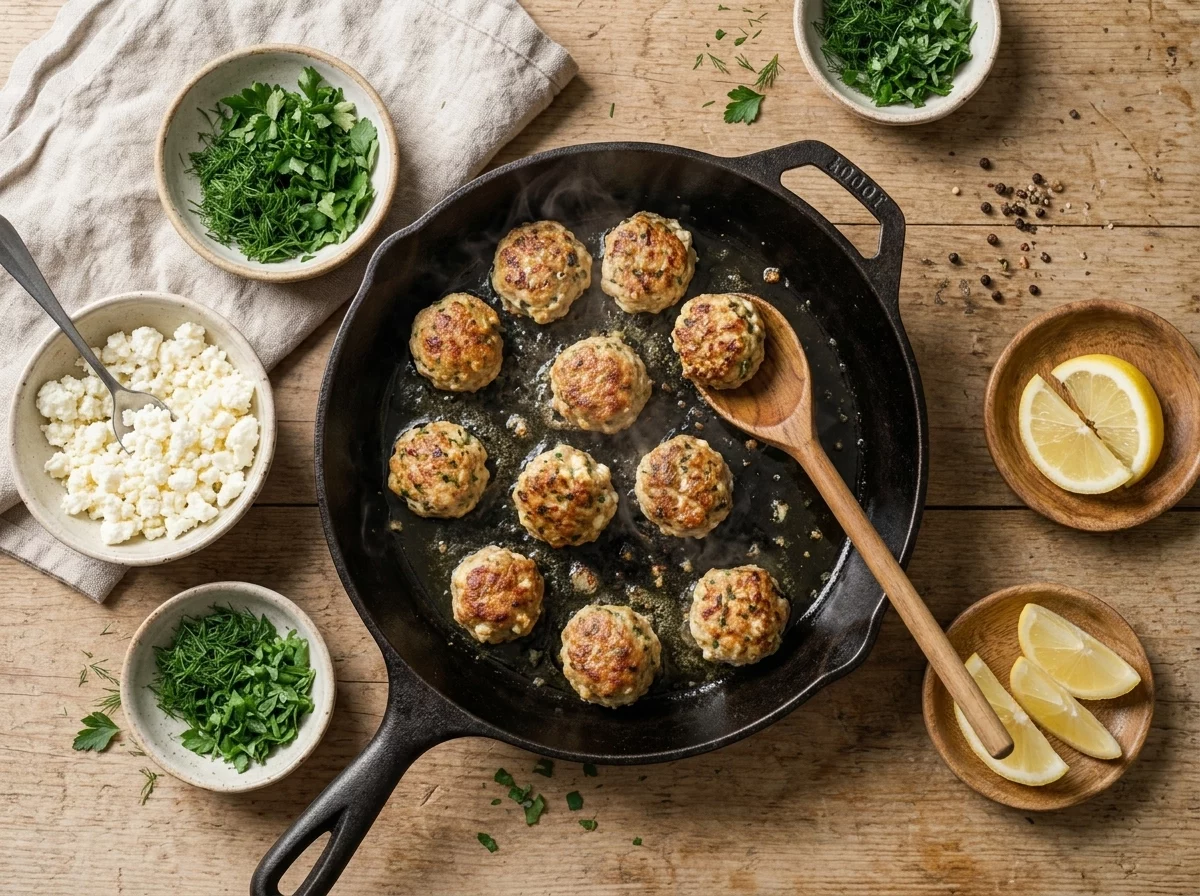
Tips for Success
- Grate the onion instead of chopping it, the extra moisture keeps the meatballs juicy.
- Mix the meat gently with your hands and stop as soon as it’s combined, overmixing makes it dense.
- Chill the shaped meatballs for 10 to 15 minutes before frying so they hold together better.
- Sear the meatballs in two batches in the skillet, crowding the pan drops the heat and they steam instead of brown.
- Check doneness with an instant-read thermometer and pull them at 165 F / 74 C.
Variations
- Swap the ground turkey for ground chicken thighs for a richer, more forgiving meatball.
- Add 1/4 cup chopped Kalamata olives to the mix for a briny, Greek-style twist.
- Skip the feta and stir in 2 tablespoons grated parmesan for a milder, less salty version.
Storage and Reheating
Store leftover meatballs in an airtight container in the fridge for 3 to 4 days.
Reheat them in a 25 cm / 10-inch skillet over medium-low with a splash of water, covered, for 4 to 5 minutes until warmed through. You can also microwave them in 30-second bursts for about 60 to 90 seconds total.
To freeze, cool the cooked meatballs completely and freeze in a single layer before transferring to a bag, up to 3 months. Thaw in the fridge overnight before reheating.
Serving Suggestions
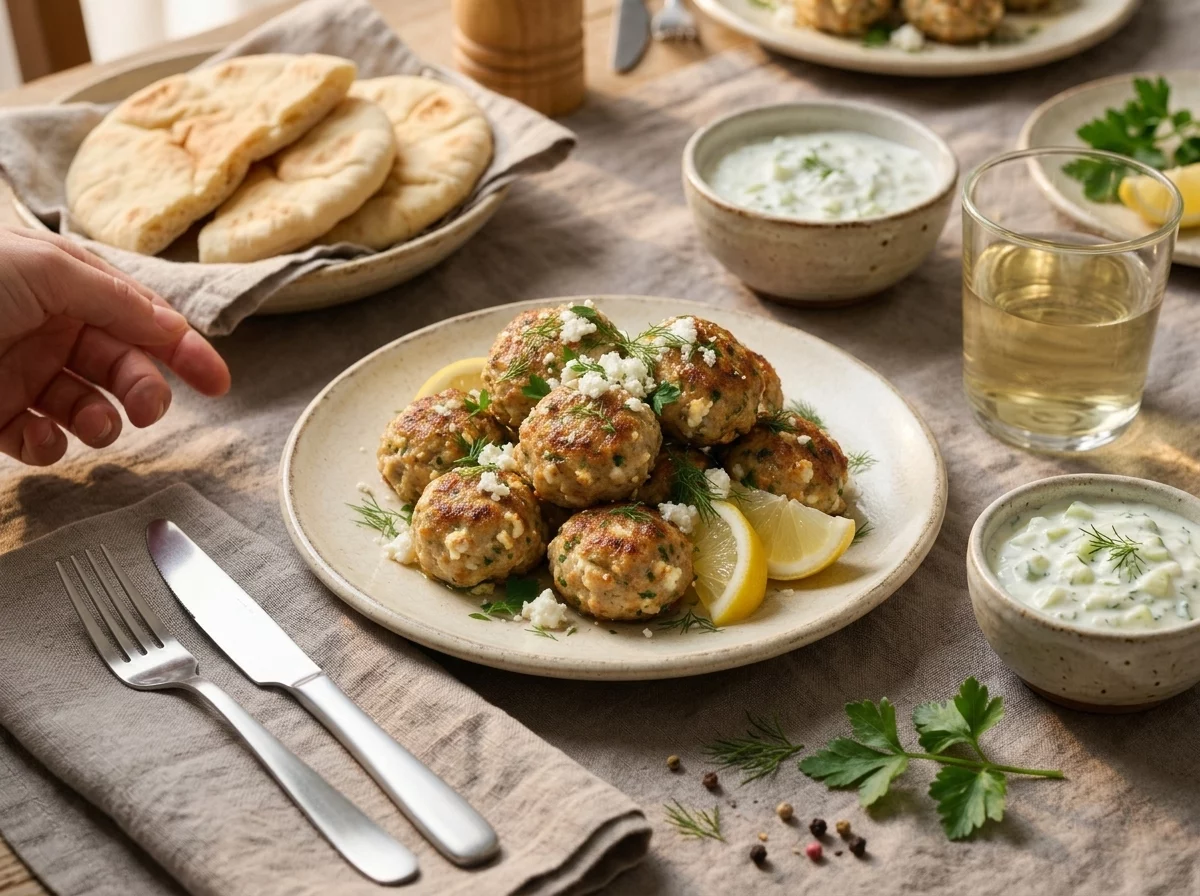
I usually serve these with tzatziki and warm pita for scooping, or over lemon rice with a simple Greek salad on the side.
They also work well tucked into pita pockets with tomato, cucumber, and a drizzle of yogurt sauce for a quick lunch.
For a lighter meal, pile them on top of a creamy lemon orzo with feta alongside cucumber, tomato, and a squeeze of extra lemon.
FAQ
Why are my Greek turkey meatballs falling apart in the skillet?
This usually happens if the mix is too wet or you flip them too soon. Let each side sear undisturbed for 3 to 4 minutes so a crust forms before you turn them. If the mixture feels loose, chill it for 15 minutes before shaping, or add 1 to 2 extra tablespoons of breadcrumbs.
Can I use ground chicken instead of turkey for these meatballs?
Yes, ground chicken thighs work well and actually give a juicier result than turkey since they have more fat. Keep the same amounts of feta, herbs, and breadcrumbs. Cook to the same 165 F / 74 C internal temperature to check they’re done.
Can I bake these lemon herb turkey meatballs instead of pan-frying?
You can, though the outside won’t get as golden as it does in a skillet. Bake at 200 C / 400 F for 18 to 20 minutes on a lined sheet pan, flipping once, until they hit 165 F / 74 C inside. The pan-fried version has more color and a crisper crust.
How do I store and reheat leftover Greek turkey meatballs?
Keep them in an airtight container in the fridge for 3 to 4 days. Reheat in a covered skillet over medium-low with a splash of water for 4 to 5 minutes, or microwave in short bursts. They also freeze well for up to 3 months.
What goes with Greek turkey meatballs besides tzatziki?
Lemony Greek rice, a simple Greek salad, warm pita, or an orzo salad with cucumber and tomato all work well. I also like them on their own with extra lemon wedges and a side of roasted potatoes. Any bright, acidic side balances the richness of the feta.
Are these Greek turkey meatballs gluten free?
Not as written, since they use panko breadcrumbs. Swap in gluten-free panko or gluten-free breadcrumbs in the same amount and the recipe works the same way. Double check your feta too, most brands are naturally gluten free but it’s worth a quick label check.