
Jump to Recipe
Pistachio and orange olive oil cake is a simple loaf-style cake made with fruity olive oil instead of butter, orange zest and juice, and toasted pistachios folded right into the batter. The crumb stays moist for days because of the oil, and the orange keeps it tasting fresh instead of heavy.
I use extra virgin olive oil here, the kind you’d actually drizzle on a salad, since it’s doing most of the flavor work. A cheap, flavorless oil will bake fine but the cake won’t taste like much.
This is a good cake for a Sunday afternoon when you want something to have with coffee that isn’t too sweet. It’s also forgiving. You mix the wet ingredients in one bowl, the dry in another, and fold them together.
The glaze on top is optional but I like the extra citrus hit it gives, plus it helps the pistachios on top stick.
Why You’ll Love This Recipe
- Ready in about 80 minutes start to finish
- Olive oil keeps the crumb moist for days
- Toasted pistachios add crunch and color on top
- No stand mixer needed, just two bowls and a whisk
Ingredient Notes
- extra virgin olive oil: Use a fruity, good-tasting oil since it’s the main flavor here. A bitter or very strong oil will come through in the finished cake.
- oranges: Zest the oranges before you juice them, it’s much easier to zest a whole orange. You need about 2 medium oranges for the zest and juice combined.
- pistachios: Buy shelled, raw, unsalted pistachios and toast them yourself for the best flavor. Salted ones work too, just skip extra salt in the topping.
- plain yogurt: Whole milk yogurt keeps the crumb moist. Sour cream works in the same amount if that’s what you have.
- powdered sugar: Sift it if it’s lumpy so the glaze whisks up smooth without white specks.
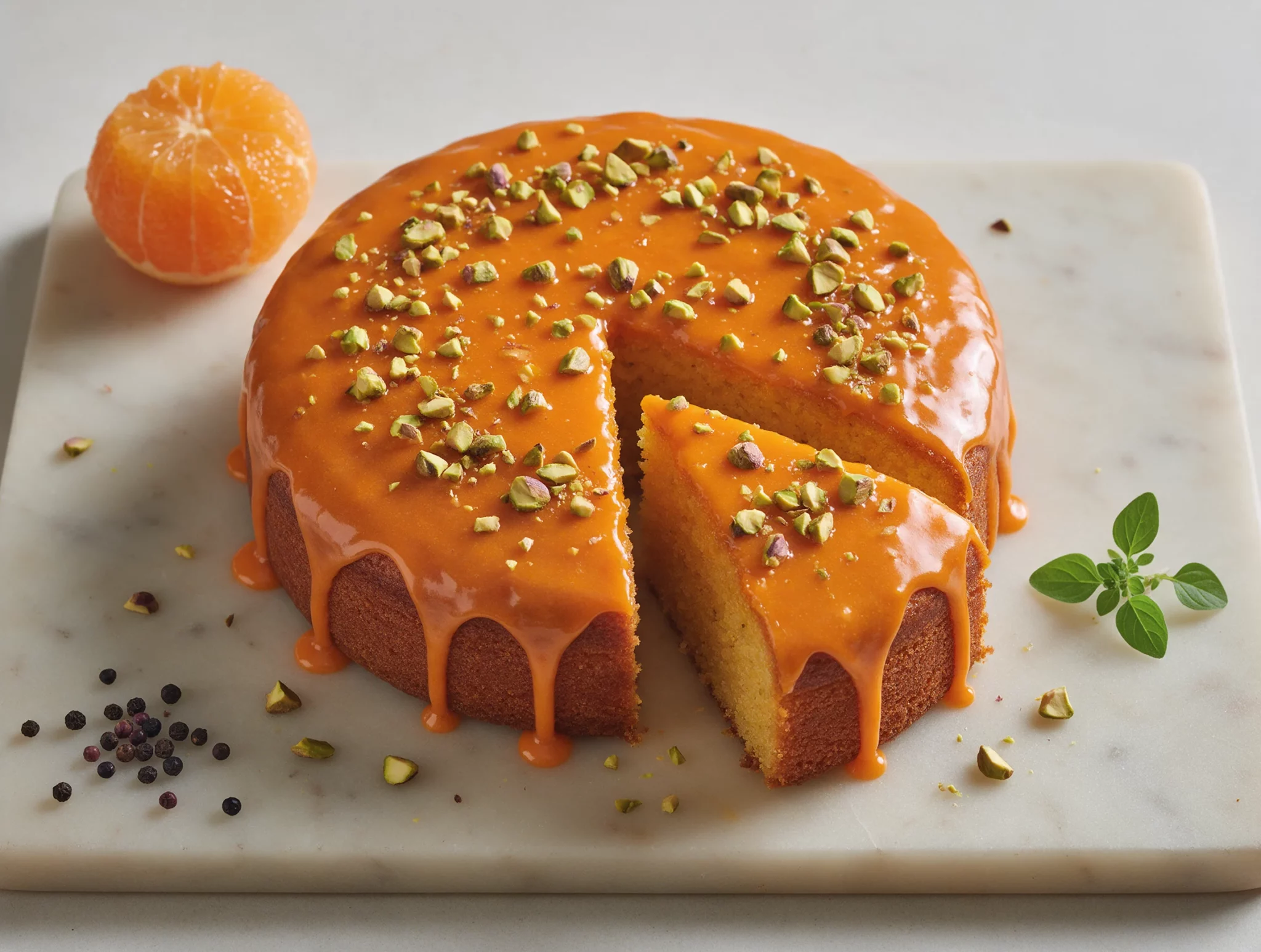
Moist Orange Olive Oil Cake with Toasted Pistachios
Ingredients
Method
- Heat the oven to 175 C / 350 F. Grease a 23 cm / 9-inch round cake pan and line the base with parchment paper.
- Toast all 90 g of pistachios in a dry 25 cm / 10-inch skillet over medium heat for 3 to 4 minutes, shaking the pan often, until fragrant and lightly colored. Cool, then chop 60 g finely for the batter and 30 g more roughly for topping.
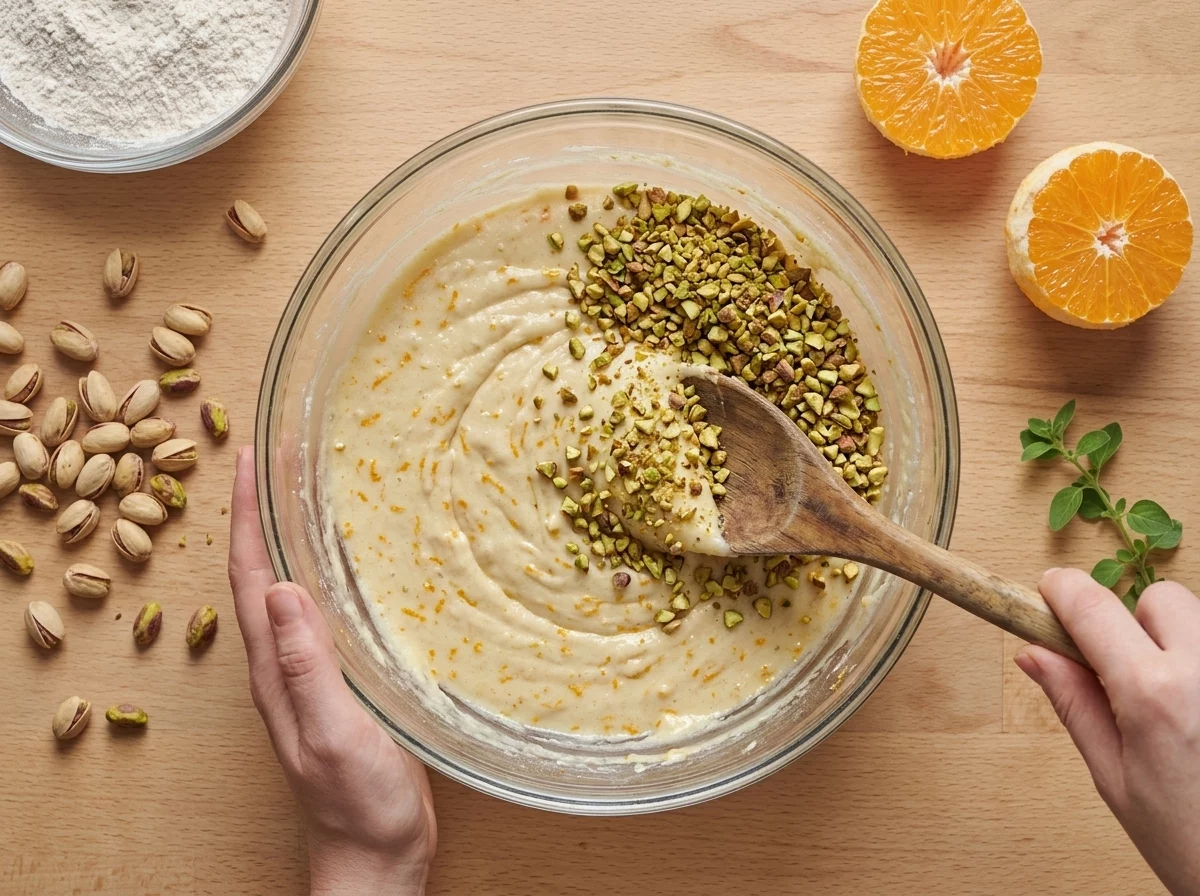
- In a large bowl, whisk the olive oil, sugar, and eggs together for about 2 minutes, until pale, thick, and slightly foamy.
- Whisk in the orange zest, orange juice, and yogurt until smooth.
- In a second bowl, whisk together the flour, baking powder, and salt.
- Add the dry ingredients to the wet mixture in two batches, folding gently with a spatula just until no streaks of flour remain. Don't overmix or the cake will turn dense.
- Fold in the 60 g of finely chopped toasted pistachios.
- Pour the batter into the prepared pan and smooth the top with a spatula.
- Bake for 42 to 48 minutes, until a skewer inserted in the center comes out clean and the top springs back when lightly pressed. Check at 40 minutes since darker pans can bake faster.
- Cool the cake in the pan for 15 minutes, then turn it out onto a wire rack and let it cool completely before glazing.
- Whisk the powdered sugar and 2 tbsp orange juice together until smooth and pourable, adding a few extra drops of juice if it's too thick.
- Pour the glaze over the cooled cake and immediately scatter over the remaining 30 g of chopped pistachios. Slice and serve at room temperature.
Notes
- Toast pistachios before chopping, it makes a real difference in flavor.
- Cool the cake fully before glazing or the glaze slides off.
- A cheap olive oil will taste flat, use one you'd eat plain.
- Yogurt can be swapped for sour cream in the same amount.
Tips for Success
- Toast the pistachios in a dry skillet for 3 to 4 minutes until fragrant before chopping them.
- Zest the oranges before juicing them, it’s much easier to get zest off a whole orange.
- Don’t overmix the batter once the flour goes in, or the cake turns dense and tight.
- Let the cake cool completely before adding the glaze, or it will just slide right off.
- Check the cake at 40 minutes, ovens vary and a dark metal pan can bake faster.
Variations
- Swap the pistachios for chopped almonds or walnuts if that’s what you have on hand.
- Add 1 teaspoon of ground cardamom to the batter for a warmer, spiced flavor.
- Use blood orange juice and zest for a pink-tinted glaze and a slightly deeper flavor.
Storage and Reheating
Keep the cake covered at room temperature for 3 to 4 days, or in the fridge for up to 5 days since the yogurt makes it more perishable. Bring cold cake back to room temperature before serving, it tastes better and the crumb softens back up.
This cake is best eaten at room temperature, not warmed. There’s no need to reheat it, gentle heat can make the glaze slide off and dry out the edges.
To freeze, wrap the unglazed cake tightly in plastic and foil and freeze for up to 2 months. Thaw overnight on the counter, then make the glaze fresh and add the topping before serving.
Serving Suggestions
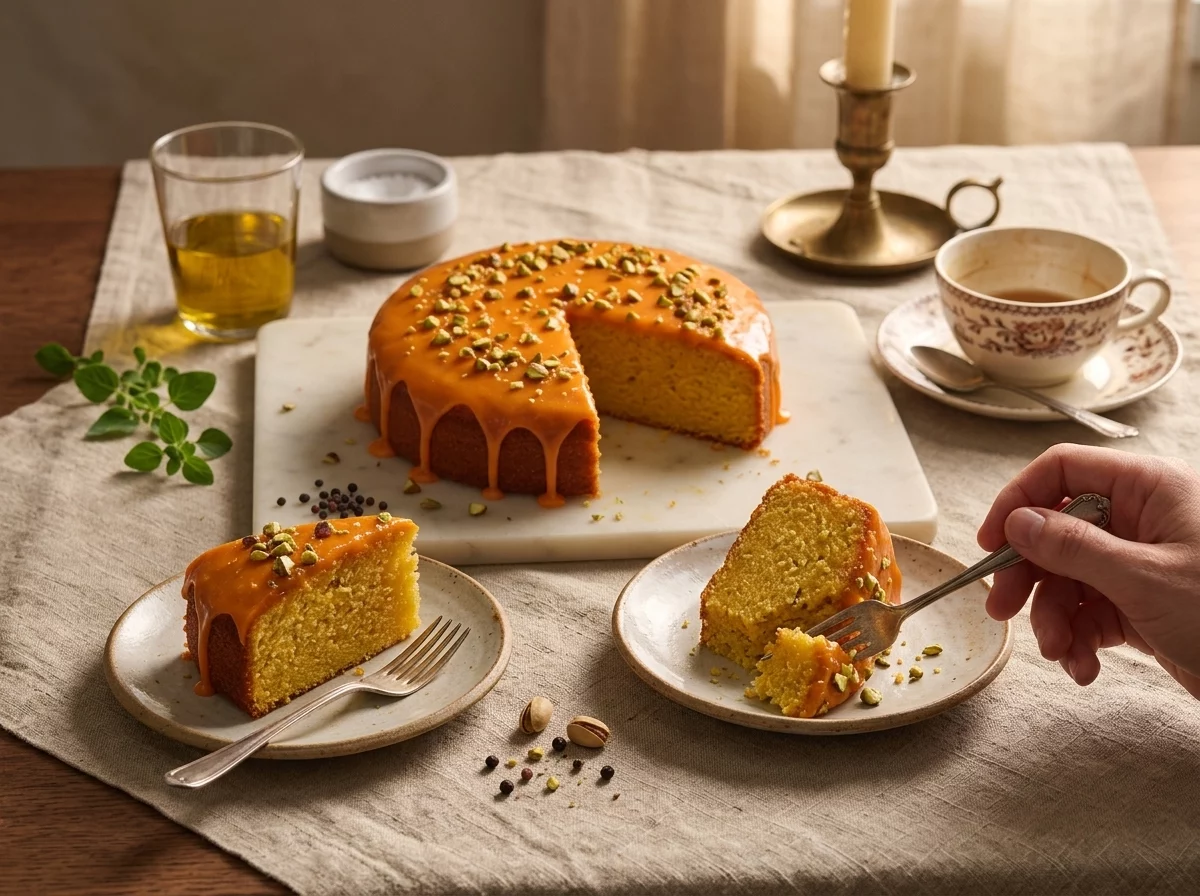
I usually serve this with coffee or tea in the afternoon, plain or with a dollop of whipped cream on the side. A spoon of mascarpone or plain yogurt on each slice works well too if you want it less sweet.
For something a bit more finished, add a few fresh orange segments or thin orange slices next to the cake on the plate. It looks nice and adds a little extra juice.
This also works as a light dessert after a Mediterranean-style dinner, since it isn’t too rich or heavy.
FAQ
Why did my orange olive oil cake sink in the middle?
The most common reason is underbaking, especially if the oven door was opened early to check on it. Test with a skewer at 40 minutes, then again at 45, and only pull the cake once it comes out clean and the top springs back when pressed gently.
Can I use almond flour instead of all-purpose flour in this pistachio orange cake?
You can swap in almond flour for up to half the all-purpose flour, but not all of it, or the cake won’t hold its structure and will be too dense. Using the full amount of all-purpose flour gives the most reliable, springy crumb.
How do I store orange olive oil cake, and does it freeze well?
Store the cake covered at room temperature for 3 to 4 days, or in the fridge for up to 5 days. The unglazed cake freezes well for up to 2 months wrapped tightly, then thaw overnight and glaze it fresh before serving.
What goes well with pistachio and orange olive oil cake?
Coffee or tea is my go-to, along with a spoon of whipped cream or plain yogurt on the side. Fresh orange segments plated next to a slice add extra juice and make it feel more like a proper dessert.
Is pistachio and orange olive oil cake gluten-free?
No, this recipe uses all-purpose flour so it contains gluten. If you need it gluten-free, swap in a 1:1 gluten-free baking flour blend, though the crumb will be a little more delicate and you should check it a few minutes earlier.
What’s the difference between this olive oil cake and a regular butter-based orange cake?
Olive oil cakes stay moist for longer because oil doesn’t firm up in the fridge the way butter does, and they have a slightly fruitier, more savory edge from the oil itself. Butter cakes tend to be lighter and more purely sweet in comparison.