Jump to Recipe
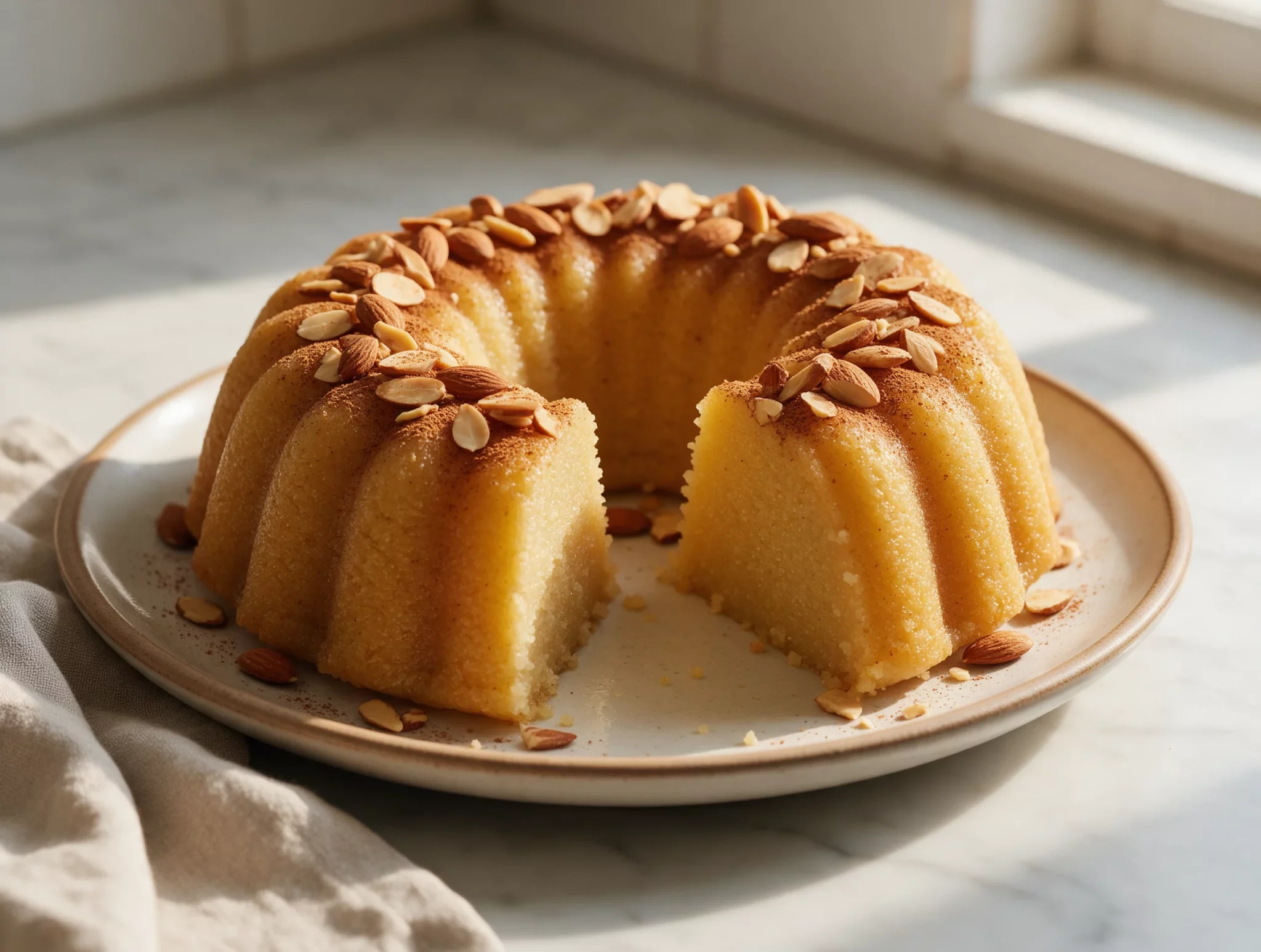
Greek semolina halva, or halvas simigdali, is a stovetop pudding made from semolina, butter, sugar, and water, spiced with cinnamon and a little orange zest. It’s soft, a bit sticky, and tastes like caramelized butter with a warm cinnamon edge.
This is one of the easier Greek desserts to make. You don’t need an oven, a mixer, or anything fancy, just one wide pot and a wooden spoon.
The key step is toasting the semolina in butter until it turns pale gold and smells nutty, then pouring in a hot syrup while you keep stirring. Add the syrup cold or stop stirring halfway, and you’ll end up with lumps instead of a smooth pudding.
I like to press mine into a bundt-shaped mold so it unmolds with a ring in the middle, then I fill that space with toasted almonds and a dusting of cinnamon.
Why You’ll Love This Recipe
- Made in one pot with basic pantry ingredients
- Ready in under an hour, no oven needed
- Soft, buttery texture with a warm cinnamon scent
- Keeps well on the counter for days
Ingredient Notes
- coarse semolina: Use the coarse grind, not fine. Fine semolina turns gummy instead of giving that soft, slightly grainy bite.
- unsalted butter: Butter gives the best flavor here. You can swap in a neutral oil, but the halva loses some richness.
- orange zest: A strip of zest in the syrup adds a light citrus note. Lemon zest works too if that’s what you have.
- sliced almonds: Walnuts are a common substitute and give a slightly earthier flavor.
- ground cinnamon: Used only for dusting at the end, separate from the cinnamon stick in the syrup.
Buttery Greek Semolina Halva Pudding with Toasted Almonds
Ingredients
Method
- Combine the water, sugar, salt, cinnamon stick, and orange zest in a 2-quart / 1.9 L saucepan. Bring to a boil over medium-high heat, then lower the heat and simmer for 5 minutes.
- Remove the cinnamon stick and orange zest strip. Keep the syrup hot over low heat while you toast the semolina.
- Melt the butter in a 26 cm / 10-inch heavy-bottomed pot over medium heat.
- Add the semolina and stir constantly for 8 to 10 minutes, until it turns pale gold and smells toasted and nutty. Stir in half the sliced almonds during the last 2 minutes so they toast lightly too.
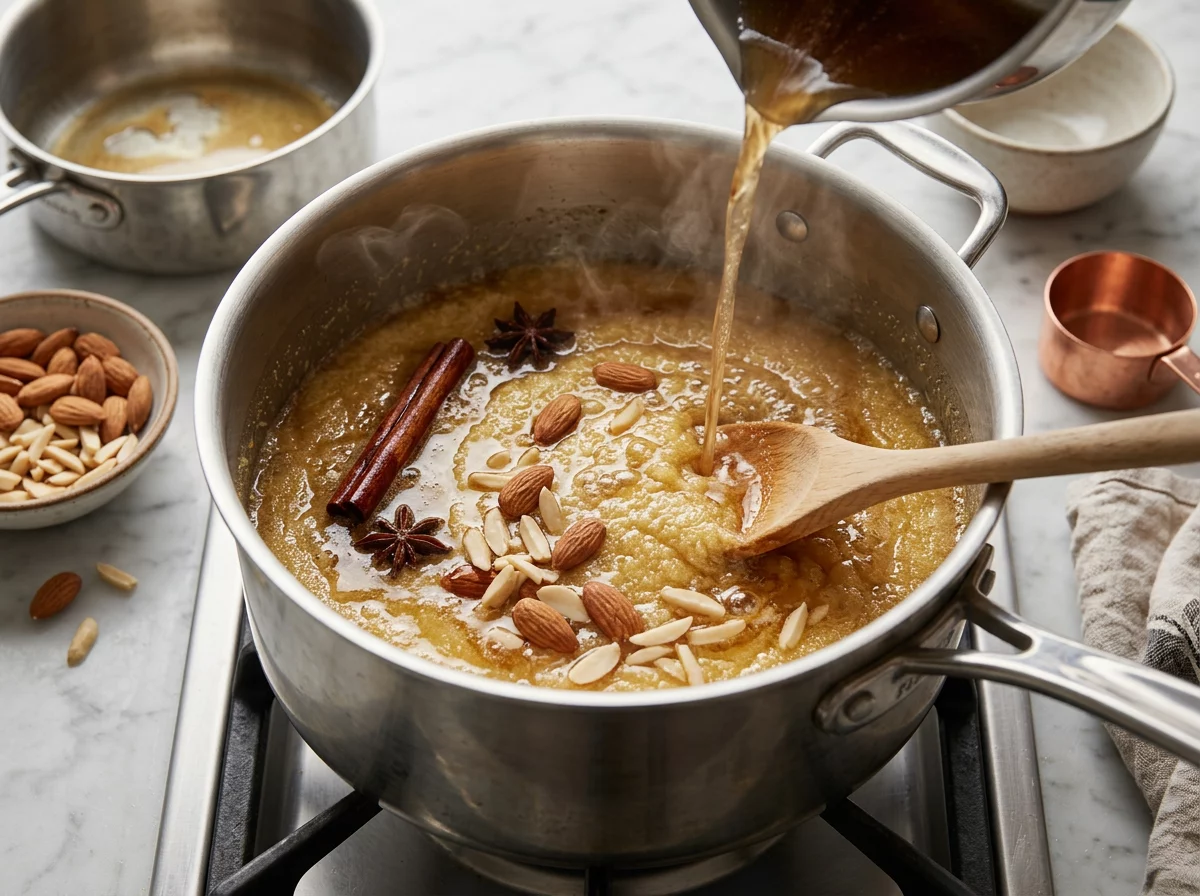
- Reduce the heat to low. Pour the hot syrup into the semolina in a slow, steady stream while stirring constantly with a long wooden spoon. The mixture will bubble and steam, so pour carefully and keep your face back.
- Keep stirring for 3 to 5 minutes, until the pudding thickens and starts to pull away from the sides of the pot. If lumps form, that just means the syrup went in too fast, keep whisking hard and they'll smooth out before it's done.
- Cover the pot and remove it from the heat. Let it rest for 10 minutes so the semolina finishes absorbing the liquid and turns fully soft.
- Spoon the warm halva into a 20 cm / 8-inch bundt pan or mold, pressing down firmly to remove air pockets. Let it sit for 15 minutes.
- Run a knife around the edge and invert the pudding onto a serving plate. Dust with ground cinnamon and scatter the remaining almonds over the top.
- Serve warm or at room temperature, sliced into wedges.
Notes
- Toast semolina until pale gold, not brown, or it turns bitter.
- Keep the syrup hot on low heat while you toast the semolina.
- Press the pudding firmly into the mold to avoid air pockets.
- Let the halva rest covered for 10 minutes before shaping.
Tips for Success
- Use coarse semolina, not fine, or the pudding turns gummy instead of grainy-soft.
- Keep the syrup hot when you add it, cold syrup makes the semolina seize into lumps.
- Stir constantly while pouring in the syrup so the mixture stays smooth.
- Let the halva rest covered for 10 minutes before shaping, it needs that time to soften fully.
- Grease the mold lightly with butter so the pudding releases cleanly when you flip it.
Variations
- Swap half the water for milk to make a creamier, richer version of the pudding.
- Use chopped walnuts instead of almonds for a more common Greek variation.
- Add a splash of brandy or ouzo to the syrup for a warmer, slightly boozy note.
Storage and Reheating
Store leftover halva covered at room temperature for up to 2 days, or in the fridge for up to 5 days.
To warm it back up, microwave a slice for 20 to 30 seconds, or heat slices in a low oven at 150 C / 300 F for about 8 minutes.
I don’t freeze this one. The semolina texture turns grainy and separates once thawed, so it’s better made fresh within the week.
Serving Suggestions
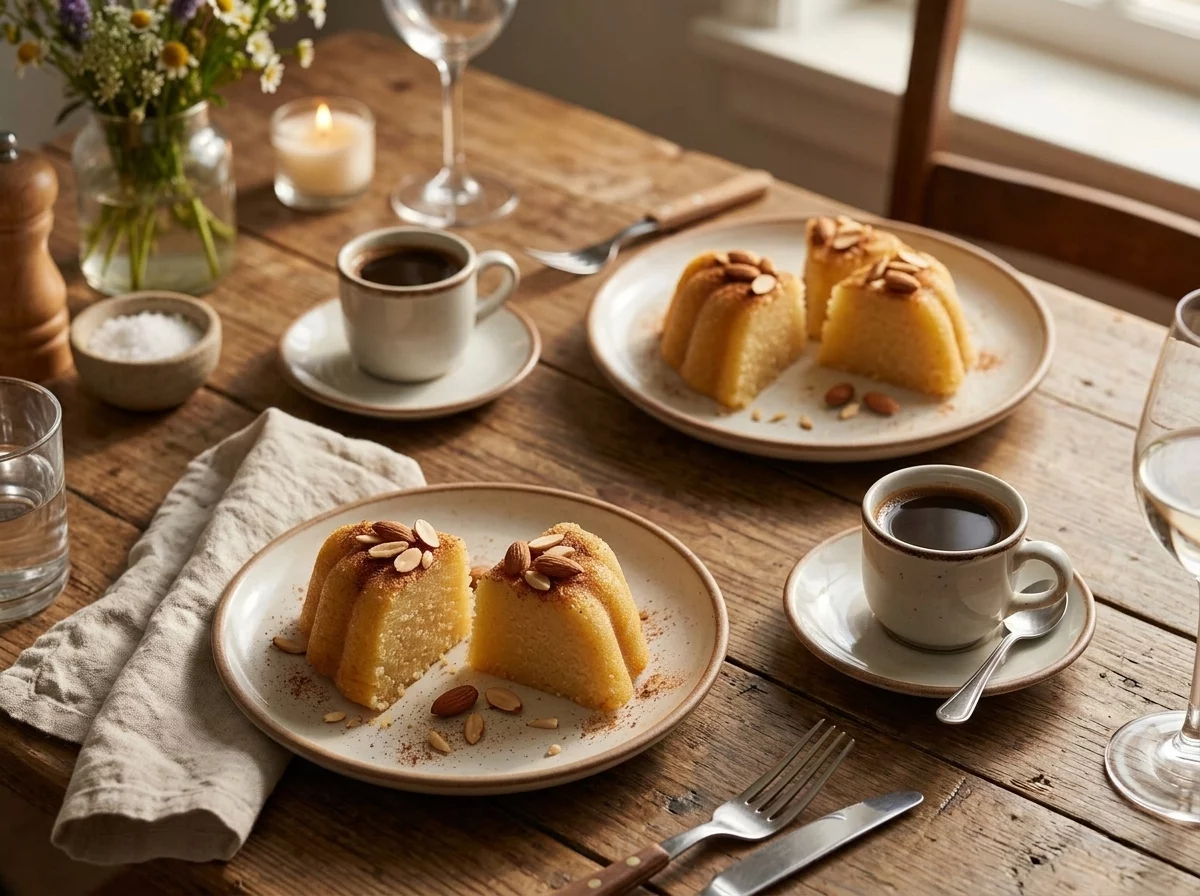
Serve halvas simigdali warm, cut into wedges, with a small cup of Greek coffee or hot tea.
A few extra toasted almonds and a light dusting of cinnamon on top make it feel finished.
For a simple dessert table, add fresh orange slices or a spoon of Greek yogurt on the side to cut through the sweetness.
FAQ
Why is my halvas simigdali lumpy instead of smooth?
Lumps usually mean the syrup went in too fast or you stopped stirring. Keep the syrup hot, pour it in a slow steady stream, and whisk hard the whole time. If lumps do form, keep stirring vigorously for another minute or two, they usually smooth out before the pudding thickens fully.
Can I use fine semolina instead of coarse for this halva?
Yes, but the texture changes. Fine semolina gives a smoother, softer pudding without the slightly grainy bite coarse semolina has. If you use fine semolina, cut the toasting time by about 2 minutes since it browns faster than coarse.
How long does Greek semolina halva keep, and can I make it ahead?
It keeps 2 days at room temperature or up to 5 days in the fridge, covered. You can make it a day ahead too, the flavor actually settles nicely overnight and many people think it tastes better on day two.
What goes well with Greek semolina halva pudding?
Strong Greek coffee or a small glass of ouzo pairs well with the sweetness. A spoon of plain Greek yogurt or a few extra toasted almonds on the side also works if you want something to balance the syrup.
Is Greek semolina halva dairy free or vegan?
No, this version isn’t dairy free since it uses butter. You can swap in olive oil or a plant-based butter to make it dairy free, though the flavor will be less rich and slightly different from the traditional version.
What is the difference between halvas simigdali and tahini halva?
Halvas simigdali is a stovetop semolina pudding made with butter and a sugar syrup, soft enough to slice with a spoon. Tahini halva is a dense, crumbly candy made from ground sesame paste and sugar, with no semolina at all, and a completely different texture.