
Jump to Recipe
Chios mastic cookies are soft butter cookies flavored with ground mastic, a resin from trees grown on the Greek island of Chios. The taste is gently piney and a little sweet, with a clean, slightly cool finish. The texture is tender and crumbly, and they melt in your mouth.
This is a simplified version inspired by Greek butter cookies like kourabiedes, without the almonds. You don’t need anything special except the mastic, which you can find in Greek shops or online.
A little goes a long way. One teaspoon of tears flavors the whole batch of 24 cookies.
The one thing to watch is the grinding. Mastic turns sticky when it warms up, so I grind it with a spoonful of sugar.
The dough chills for 30 minutes and the cookies bake in about 15, so you can have them on the table in about 75 minutes.
Why You’ll Love This Recipe
- Buttery, crumbly texture that melts without feeling heavy
- Only one teaspoon of mastic flavors the whole batch
- Dough chills ahead and freezes for up to 2 months
- Needs one egg yolk and basic pantry staples besides mastic
Ingredient Notes
- Mastic tears: Look for small, pale, translucent pieces labeled Chios mastic (masticha) in Greek or Middle Eastern shops. Ground mastic powder works too, use the same 2 g.
- Unsalted butter: Use unsalted so you control the salt. If you only have salted butter, leave out the 1/4 tsp salt.
- Powdered sugar: Store-bought powdered sugar with a little cornstarch is fine. It makes the dough smooth and the coating cling better than granulated sugar would.
- All-purpose flour: Weigh it if you can. Packed cups of flour make the dough dry and the cookies crumble before you can coat them.
- Egg yolk: The yolk adds richness and helps the dough hold together. Save the white for scrambled eggs or a meringue.
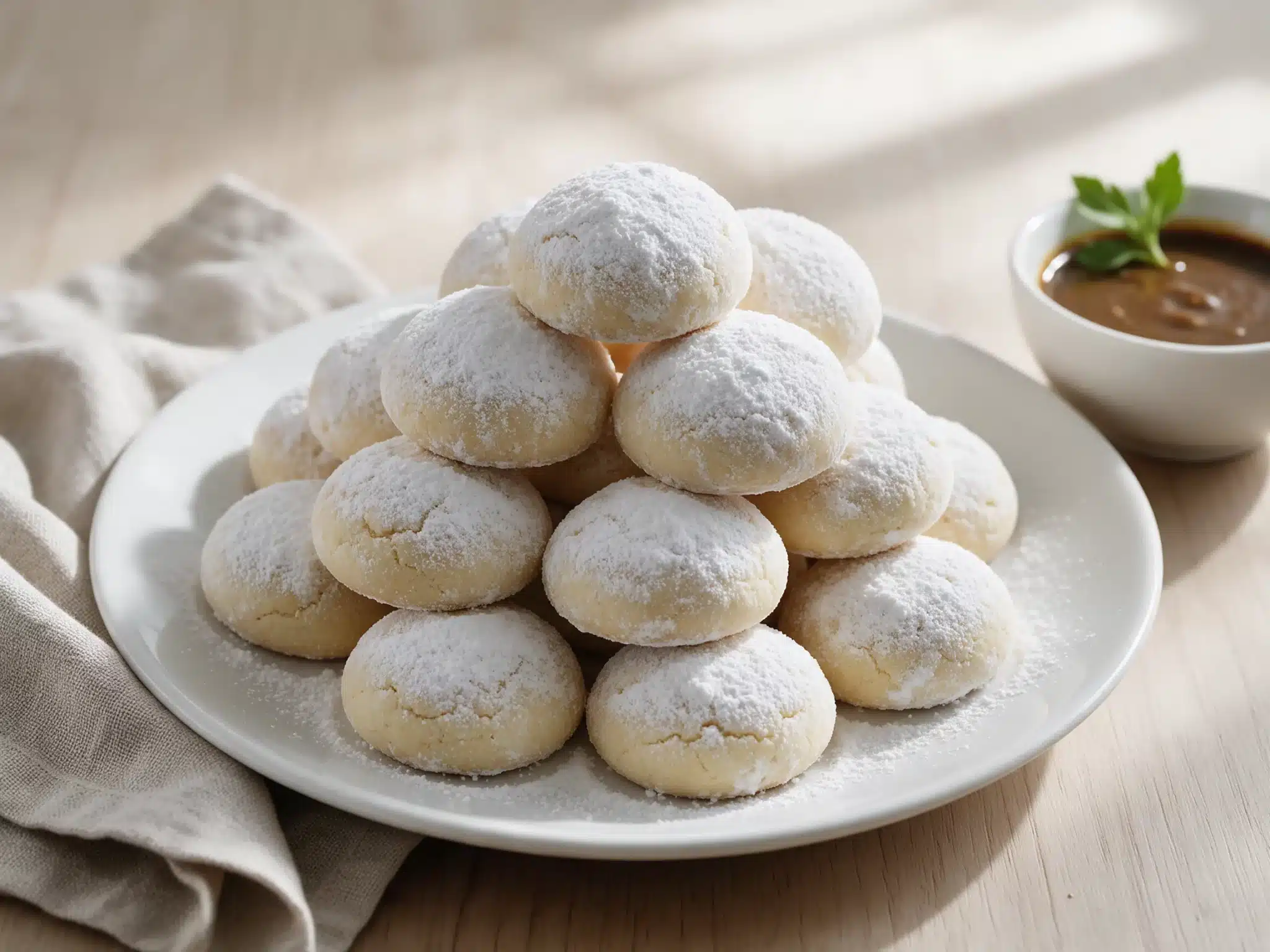
Soft Baked Chios Mastic Cookies with Powdered Sugar
Ingredients
Method
- Put the mastic tears and 1 tablespoon of granulated sugar in a mortar. Grind for 2 to 3 minutes, until you have a fine powder with no chunks. Don't grind the mastic alone, because it warms up and turns into a sticky clump.
- In a mixing bowl, beat the softened butter and 90 g of powdered sugar with a mixer for 3 to 4 minutes, until pale and fluffy. Add the egg yolk, vanilla, and mastic sugar and beat until smooth.
- Add the flour and salt and mix on low speed until no dry flour is left and the dough comes together. It will be soft. Cover and chill for 30 minutes, until firm enough to shape without sticking to your hands.
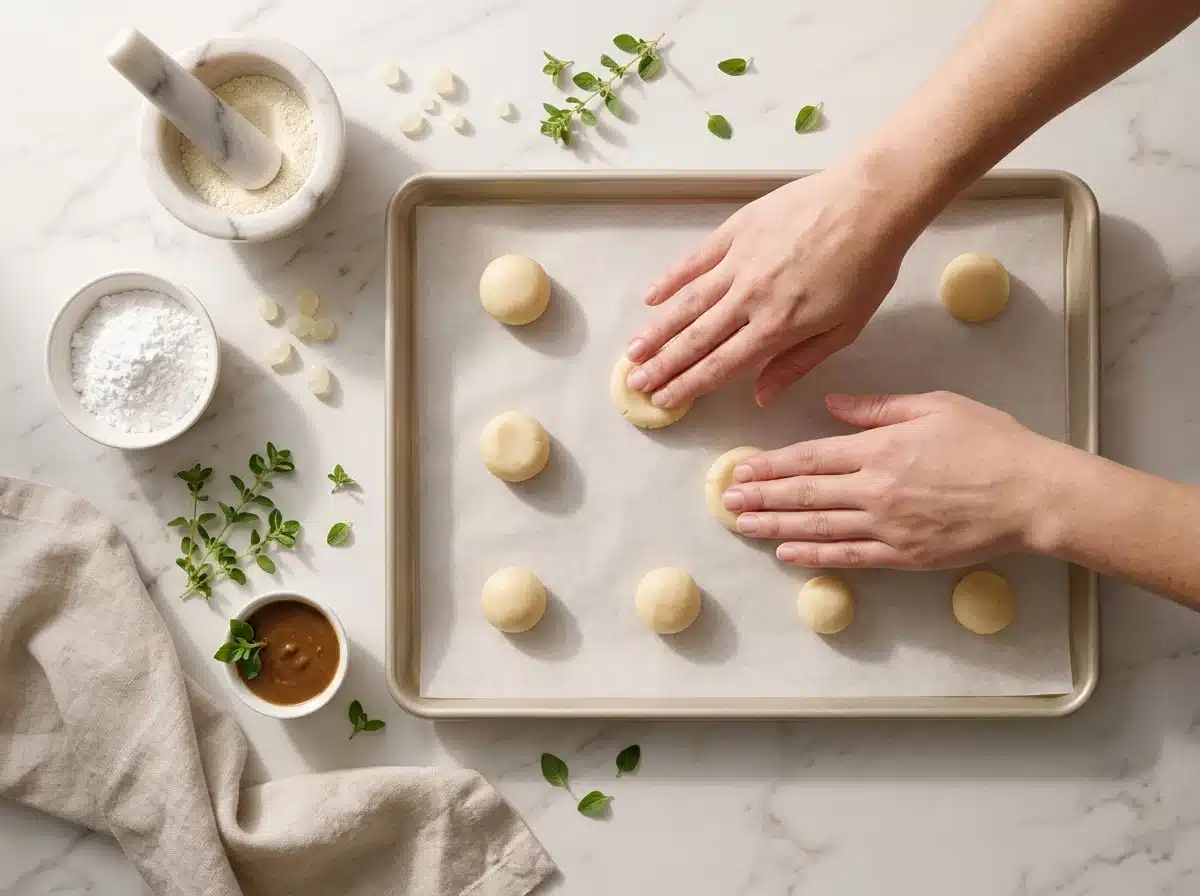
- Heat the oven to 165 C / 325 F and line two 33 x 46 cm / 13 x 18 inch sheet pans with parchment. Roll the dough into 24 balls of about 25 g each, a heaped tablespoon. Place 12 on each pan and press each one to about 1.5 cm / 1/2 inch thick.
- Bake both pans together on the middle and lower racks for 14 to 16 minutes, swapping their positions halfway. The cookies are done when the bottoms are light golden and the tops are pale and set. Don't wait for the tops to brown.
- Cool the cookies on the pans for 10 minutes. Roll each warm cookie gently in the 60 g of powdered sugar until coated, then move it to a wire rack. Dust a little extra over the top through a sieve if you like.
Notes
- Ovens vary, so check the bottoms of the cookies at 14 minutes.
- Grind the mastic with sugar, never on its own, so it stays a powder.
- Chill the dough for the full 30 minutes so the discs hold their shape.
- Handle the warm cookies gently when rolling them in sugar, since they're fragile until they cool.
- Use a kitchen scale for the flour to keep the dough soft and easy to press.
Tips for Success
- Weigh the flour at 280 g instead of scooping cups, because packed flour gives dry dough that cracks when you press it.
- Grind the mastic with the sugar, never alone, and sift out any hard bits before adding it to the butter.
- Soften the butter for about 45 minutes on the counter, until a finger leaves a dent but the butter isn’t shiny or oily.
- Press each ball to the same thickness, about 1.5 cm / 1/2 inch, so the whole tray bakes at the same speed.
- Roll the cookies in powdered sugar after the 10-minute rest on the pan, while they’re still warm, so the sugar clings.
Variations
- Replace 50 g of the flour with finely ground blanched almonds for a nuttier cookie closer to kourabiedes.
- Add 1 teaspoon of finely grated orange zest with the vanilla for a brighter, citrusy cookie that still lets the mastic come through.
- Make bite-size cookies from 12 g dough balls and bake for 10 to 12 minutes, until the bottoms are light golden.
Storage and Reheating
Store the finished cookies in an airtight container at room temperature for 5 to 7 days. Put parchment between layers so the sugar coat doesn’t smudge. In humid weather the coat can melt in, so dust a little fresh powdered sugar on top before serving.
You can make the dough ahead and keep it, wrapped, in the fridge for up to 2 days. Let it sit on the counter for 10 minutes before shaping so it’s easy to press.
Shaped dough discs freeze well for up to 2 months. Bake them straight from the freezer and add 2 to 3 minutes. The cookies are meant to be eaten at room temperature, so they don’t need reheating.
Serving Suggestions
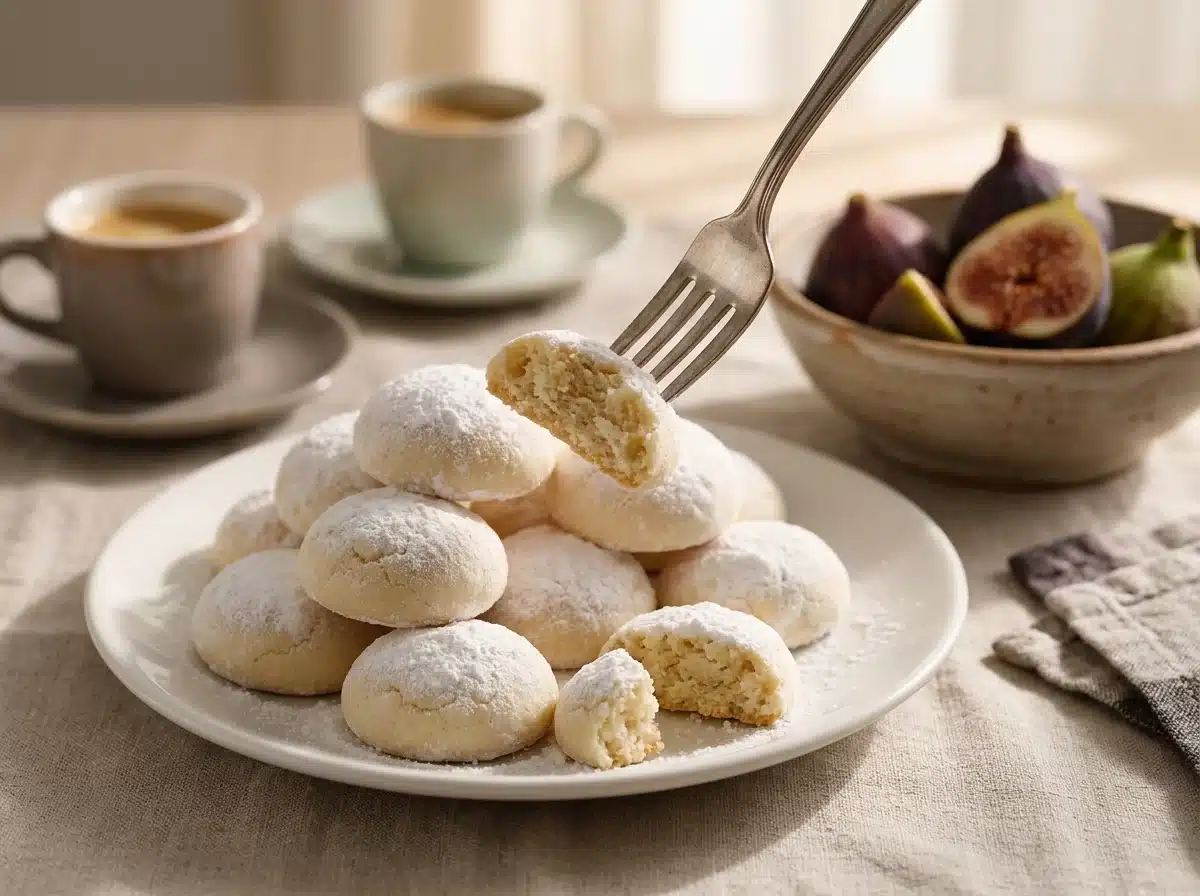
I like these with a small cup of Greek coffee or black tea. The cookies are buttery and only lightly sweet, so an unsweetened drink lets the mastic come through.
A glass of cold milk works well too. You can also set them out next to fresh figs or a bowl of strained yogurt with honey.
For gifts, stack them in a tin with parchment between the layers and dust them with a little extra powdered sugar just before you close the lid.
FAQ
Why does my mastic turn into a sticky clump when I grind it?
Mastic softens from the heat of grinding and the friction, so it gums up on its own. Grind it with about 1 tablespoon of granulated sugar, which coats the pieces and keeps them separate. Stop when you have a fine powder, usually after 2 to 3 minutes. If a few bits stay hard, sift them out.
How do I know when mastic cookies are done baking?
Mastic cookies are done after 14 to 16 minutes at 165 C / 325 F, when the bottoms are light golden and the tops are pale and set. The tops should not brown. They’ll feel soft when you take them out and firm up as they cool for 10 minutes on the pan.
Can I use mastic powder instead of mastic tears?
Yes, use about 2 g of mastic powder, which is the same weight as 1 teaspoon of tears. Mix it with the granulated sugar so it spreads evenly through the dough. Check that the powder still smells piney, since old powder tastes flat.
Can I freeze Chios mastic cookie dough?
Yes. Shape and flatten the dough into 24 discs, freeze them on a tray until solid, then move them to a freezer bag for up to 2 months. Bake straight from frozen at 165 C / 325 F, adding 2 to 3 minutes to the time. Roll them in powdered sugar after baking, as usual.
What drink goes well with Chios mastic cookies?
Greek coffee, black tea, or a small glass of cold milk all work well, since the cookies are buttery and only lightly sweet. They also go with fresh figs or a bowl of strained yogurt with honey. Keep the drink unsweetened so the mastic flavor stays clear.
What is the difference between mastic cookies and kourabiedes?
Kourabiedes are Greek butter cookies, usually made with toasted almonds and often finished with a thick coat of powdered sugar. Mastic cookies use a similar buttery base but get their flavor from ground mastic and have no nuts in this version. Mastic gives a piney, slightly sweet note that almonds don’t.