Jump to Recipe
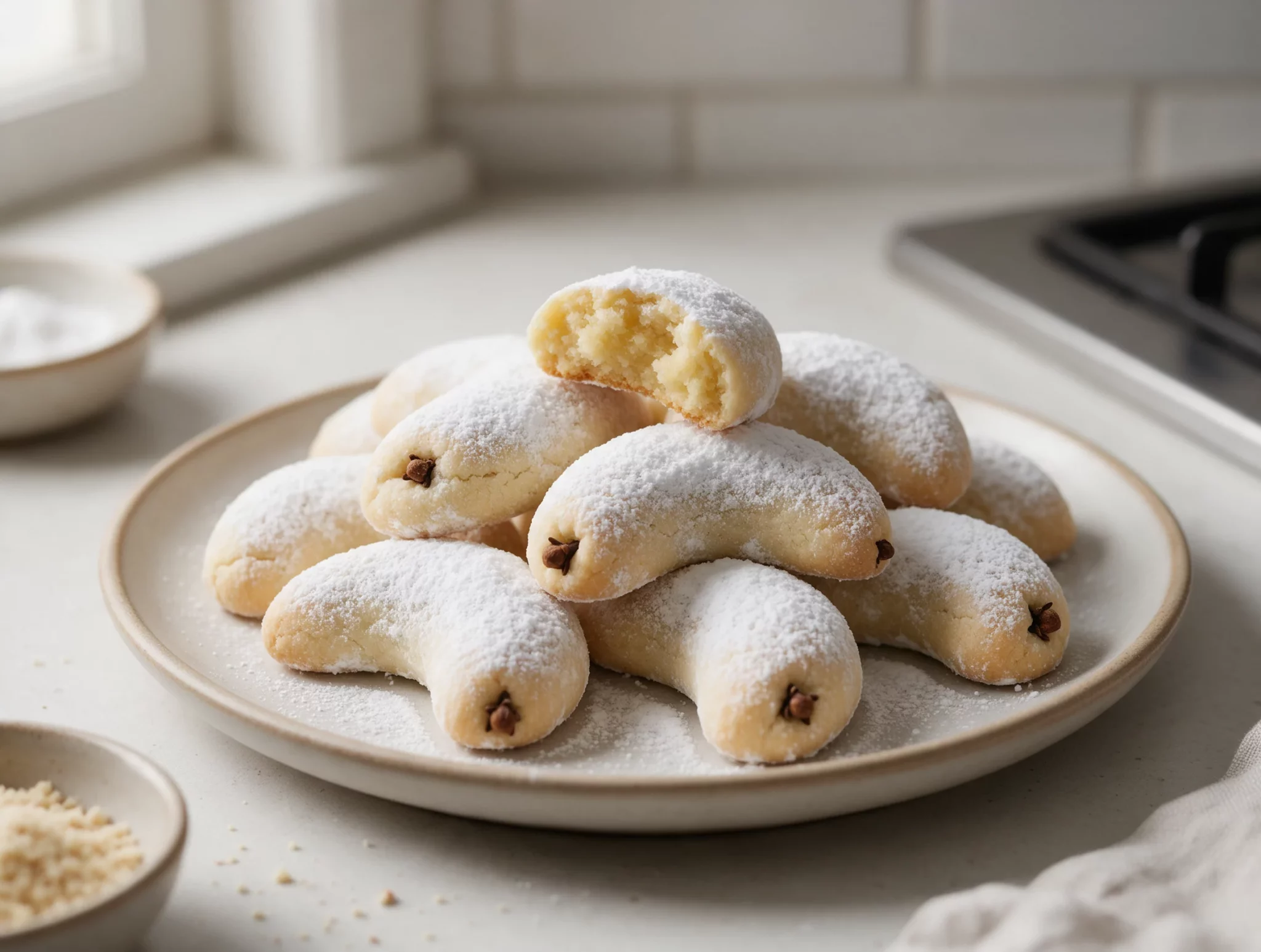
Amygdalota are Greek almond cookies made with ground almonds instead of flour, so they come out naturally gluten-free. They taste close to marzipan, sweet and nutty, with a soft chewy center and a light crust.
In Greece, you’ll often see these on trays around Christmas and Easter, sometimes shaped into crescents, sometimes into small teardrops with a whole clove pressed into the tip.
The dough is just almond flour, sugar, and egg whites, with a little orange blossom water or almond extract for scent. It’s soft and slightly sticky, easy to roll between your palms.
They bake low and slow at 150 C / 300 F, so the outside stays pale instead of turning golden brown. Once they cool, roll them in powdered sugar and they’re done.
Why You’ll Love This Recipe
- Naturally gluten-free, made with ground almonds instead of flour
- Soft chewy center with a light almond flavor
- Only a handful of ingredients, no mixer required
- Keeps well for over a week in a sealed tin
Ingredient Notes
- blanched almond flour: Use fine blanched almond flour, not almond meal with the skins on, or the cookies will look speckled and taste a bit more bitter.
- granulated sugar: Sweetens the dough and helps it hold together. Don’t reduce it much, it also affects texture, not just sweetness.
- egg whites: Bind the dough without adding fat. Save the yolks for scrambled eggs or a custard another day.
- almond extract: Sharpens the almond flavor. Swap for vanilla extract if you want a milder cookie.
- orange blossom water: Gives the cookies their classic Greek scent. Rosewater works too, or leave it out if you don’t have either.
- whole cloves: Purely for the traditional look pressed into each tip. They’re hard and bitter, so pull them out before eating.
- powdered sugar: Coats the cooled cookies. Sift it on twice for a thicker, more even layer.
Soft Greek Almond Cookies (Amygdalota) with Cloves
Ingredients
Method
- Heat the oven to 150 C / 300 F and line a sheet pan (33 x 46 cm / 13 x 18 inch) with parchment paper.
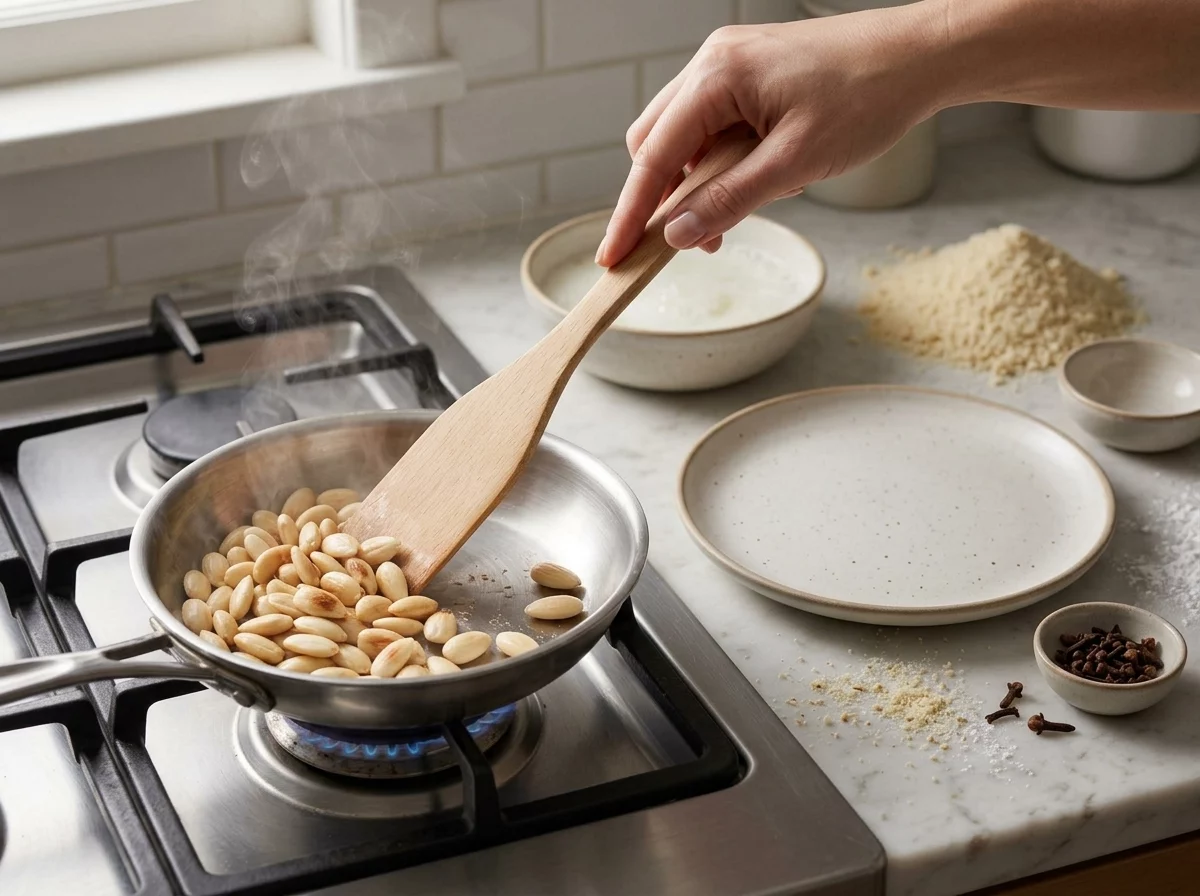
- In a large bowl, whisk the egg whites with a pinch of salt until frothy and slightly thickened, about 1 minute. You're not looking for stiff peaks, just loosened whites.
- Add the almond flour, sugar, almond extract, and orange blossom water to the egg whites. Mix with a spatula until you get a soft, slightly sticky dough that holds together when pressed.
- If the dough feels too soft to shape, chill it for 15 to 20 minutes in the fridge until firmer.
- Scoop out about 1 tablespoon (25 to 27 g) of dough and roll it between your palms into a small crescent or teardrop shape. Place on the sheet pan, spacing the cookies 3 cm / 1 inch apart.
- Press a whole clove into the pointed tip of each cookie, if using, for the traditional look.
- Bake for 18 to 20 minutes, until the bottoms are light golden and the tops stay pale. Rotate the pan halfway through for even color.
- Cool the cookies on the pan for 5 minutes, then move them to a wire rack to cool completely. Remind anyone eating them to pull out the cloves first.
- Once fully cool, sift powdered sugar generously over the cookies, coating them on all sides.
Notes
- Use room temperature egg whites, they blend into the almond flour more easily.
- Don't skip chilling if the dough feels sticky, it makes shaping much easier.
- Cloves are for looks only, pull them out before eating.
- Bake until the bottoms are golden but tops stay pale, that's normal for this cookie.
Tips for Success
- Chill the dough for 20 minutes if it feels too sticky to shape, it firms up fast in the fridge.
- Use blanched almond flour, not almond meal with skins, or the cookies will look speckled and taste slightly bitter.
- Press a whole clove into each tip if you want the classic look, and warn guests to remove it before eating.
- Watch the bottoms, not the tops, since amygdalota stay pale on top even when fully baked underneath.
- Sift powdered sugar over the cookies while slightly warm, then again once fully cool for a thicker, even coat.
Variations
- Swap orange blossom water for rosewater for a softer floral scent common in some Greek island versions of amygdalota.
- Add 50 g of finely chopped almonds to the dough for extra crunch inside the soft cookie center.
- Shape the dough into small balls instead of crescents for a rounder, more rustic looking amygdalota.
Storage and Reheating
Amygdalota keep well for up to 10 days in a sealed tin at room temperature. The texture actually softens a bit more after a day or two, which a lot of people prefer.
You don’t need to reheat these, they’re meant to be eaten at room temperature. If the powdered sugar coating looks patchy after a week, just sift on a fresh layer before serving.
To freeze, shape the dough into cookies, freeze them on a tray until firm, then move them to a freezer bag for up to 2 months. Bake straight from frozen, adding 2 to 3 minutes to the bake time.
Serving Suggestions
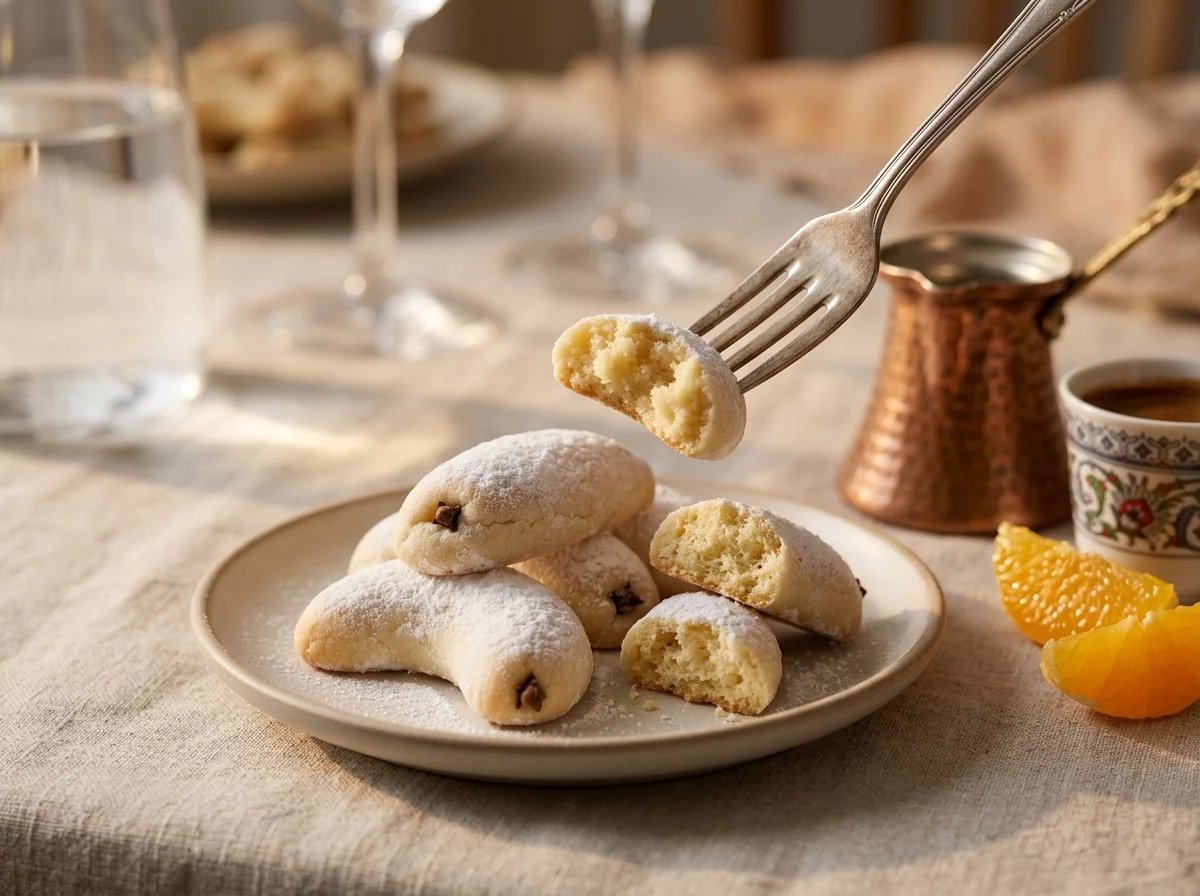
Amygdalota go well with Greek coffee or a strong espresso, since the sweetness balances the bitterness of the coffee.
Serve them on a small plate at the end of a meal, alongside orange slices or a bowl of fresh figs.
They also make a good edible gift. Stack them in a small box lined with parchment paper, and they’ll hold their shape for the trip.
FAQ
Why did my amygdalota spread flat in the oven instead of holding their shape?
Flat cookies usually mean the dough was too warm or too wet when it went into the oven. Chill the shaped cookies for 15 minutes before baking, and make sure you’re using fine almond flour, not one with extra oil separated out. A firmer dough holds its crescent or teardrop shape as it bakes.
Can I use almond meal instead of blanched almond flour in amygdalota?
You can, but the cookies will look speckled from the almond skins and taste slightly more bitter. Blanched almond flour gives the classic pale, smooth look these cookies are known for. If almond meal is all you have, pulse it a bit finer in a food processor first.
Can I freeze the dough for amygdalota before baking?
Yes, shape the cookies, freeze them on a tray until firm, then move them to a freezer bag for up to 2 months. Bake straight from frozen, adding 2 to 3 minutes to the bake time. This is handy if you want fresh cookies without doing all the shaping at once.
What should I serve with Greek almond cookies besides coffee?
Amygdalota pair well with Greek coffee, but they also go nicely with fresh orange slices or a bowl of figs after a meal. The citrus cuts through the sweetness of the powdered sugar coating. They also work as a small gift when stacked in a lined box.
Are amygdalota gluten free?
Yes, amygdalota are naturally gluten-free since they’re made with ground almonds instead of flour. Just double check any store-bought powdered sugar or flavored extracts, since some brands add a small amount of wheat starch as an anti-caking agent.
What’s the difference between amygdalota and marzipan?
Amygdalota are baked cookies, while marzipan is a soft, unbaked almond paste often shaped into candy. Both share the same base of ground almonds and sugar, but baking gives amygdalota a light crust and chewy center that marzipan doesn’t have.