
Jump to Recipe
Cretan smoked pork apaki with peppers is a quick skillet dish. You pan-fry thin slices of cured, smoked pork until the edges crisp, then toss them with soft peppers, red onion and a splash of red wine vinegar. It takes about 30 minutes.
Apaki is lean pork from Crete, marinated in vinegar and herbs and then smoked. It tastes smoky and salty, with a little tang. I buy it ready-made at a Greek deli, so this is a simple home version and not the full curing process.
The peppers turn sweet as they soften, and the vinegar cuts through the smoke. Apaki is already well seasoned, so you won’t add salt to the pan. Keep an eye on the slices, because a minute too long makes them dry and leathery.
You can serve it warm with bread or potatoes, or put it on the table as a small meze.
Why You’ll Love This Recipe
- Ready in about 30 minutes in one skillet
- Smoked pork is already cured, so it cooks fast
- Sweet peppers balance the salty, smoky meat
- Works as a meze, a main, or a sandwich filling
Ingredient Notes
- Apaki: Look for it at Greek delis or online, sliced or in a piece. If you can’t find it, smoked pork loin slices are the closest swap.
- Green frying peppers: Long, thin-skinned Greek or Italian frying peppers soften quickly and taste mild. Regular green bell peppers work too, but cut them a little thinner.
- Red wine vinegar: It adds the tang that balances the smoke. Apple cider vinegar is a fine swap if that’s what you have.
- Extra virgin olive oil: Use a regular everyday bottle here. Save the expensive one for drizzling on bread or salad.
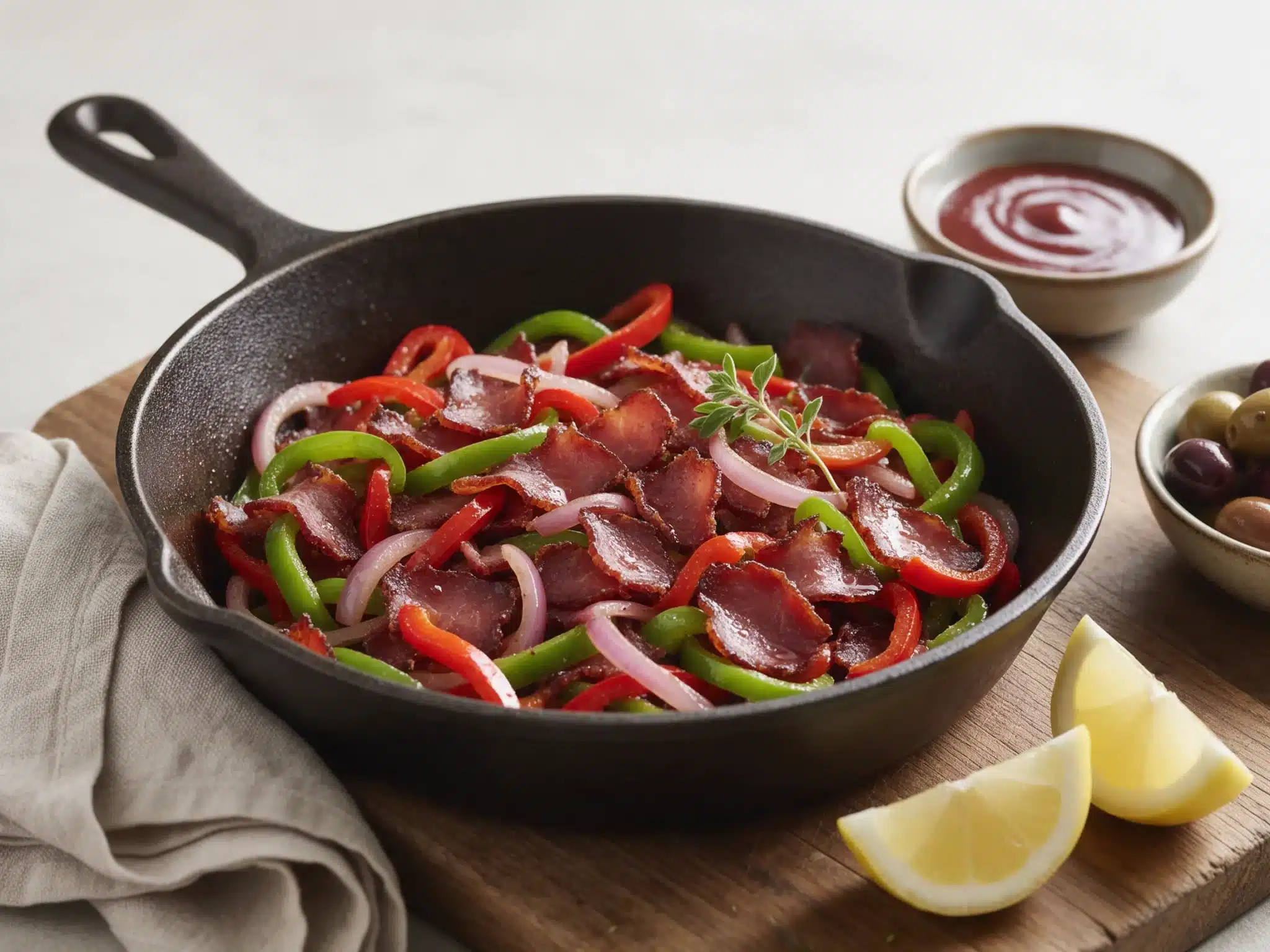
Pan-Fried Cretan Apaki: Smoked Pork with Sweet Peppers
Ingredients
Method
- Cut the peppers into strips about 1.5 cm wide, slice the onion into half-moons, and slice the garlic. If your apaki isn't already sliced, cut it about 5 mm thick.
- Heat 1 tbsp olive oil in a 30 cm / 12-inch nonstick or cast-iron skillet over medium heat. Cook the peppers and onion for 8 to 10 minutes, stirring now and then, until the peppers are soft with a few browned spots. Add the garlic for the last minute, then move everything to a bowl.
- Wipe the skillet, add the remaining 1 tbsp oil, and heat over medium-high. Fry half the apaki in a single layer for 1.5 to 2 minutes per side, until the edges are browned and slightly curled. Move it to a plate and repeat with the rest. Take the slices off the heat as soon as they brown, because longer cooking makes them dry and tough.
- Turn the heat to medium and return the peppers and all the apaki to the skillet. Add the vinegar, oregano and black pepper, and toss for 30 to 60 seconds, until most of the vinegar has cooked off. Taste before adding any salt, since the apaki is already salty. Serve right away with lemon wedges.
Notes
- Taste before adding any salt, because apaki is already cured and well seasoned.
- Fry the apaki in two batches so the slices brown instead of steam.
- Cut the peppers into strips about 1.5 cm wide so they soften evenly.
- Serve within 10 minutes of cooking, while the edges are still crisp.
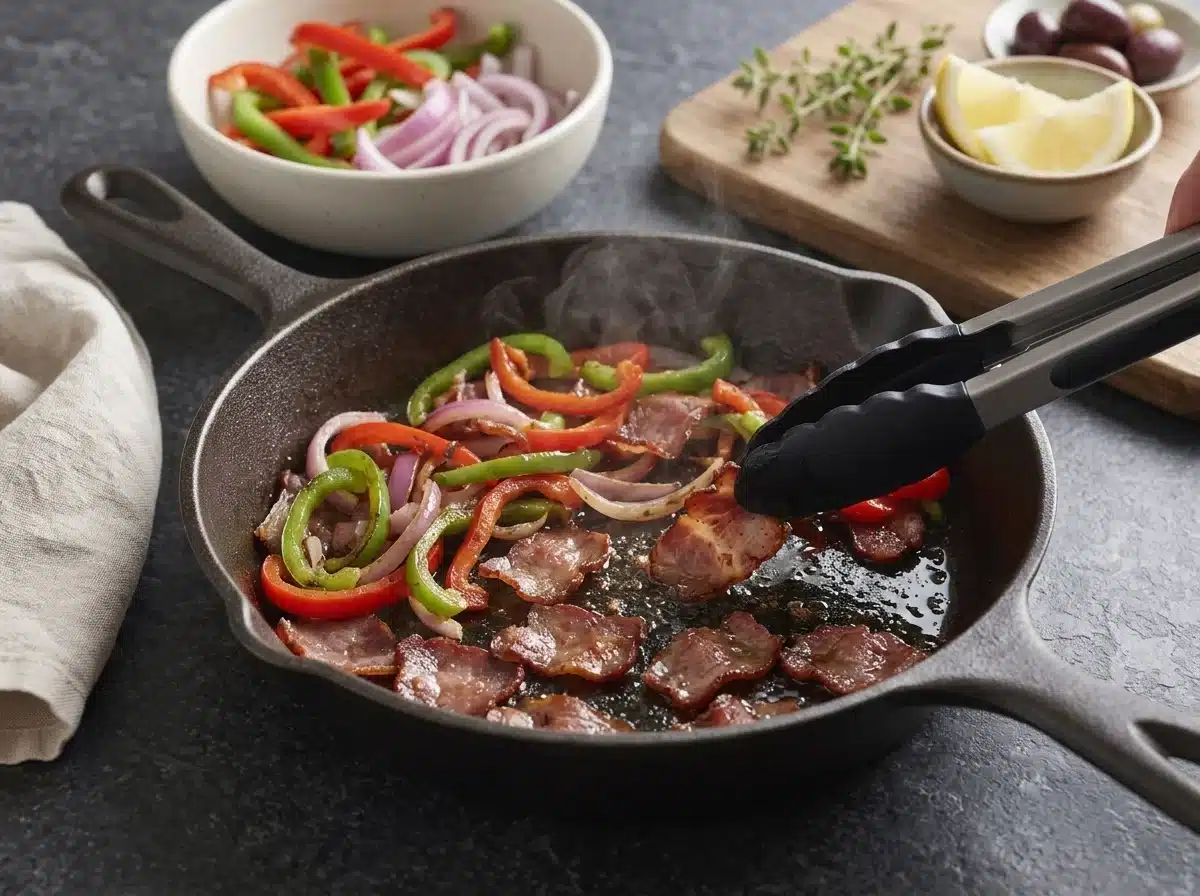
Tips for Success
- Slice the apaki about 5 mm thick, or buy it that way, so every piece cooks in the same 3 to 4 minutes.
- Skip the salt until you’ve tasted the finished dish, because the cured pork carries most of the seasoning.
- Fry the apaki in two batches so the slices brown instead of steaming in their own juices.
- Take the peppers off the heat when they’re soft with a few dark spots, before they turn mushy.
- Toss in the vinegar over medium heat for 30 to 60 seconds, so it coats the pork instead of boiling away.
Variations
- Add 2 chopped ripe tomatoes with the peppers for a juicier version to spoon over rice or serve with bread.
- Swap the vinegar for 60 ml / 1/4 cup dry white wine and let it reduce by half for a softer tang.
- Pile the apaki and peppers into warm pita with a spoonful of thick yogurt for a quick sandwich.
Storage and Reheating
Leftover apaki and peppers keep for 3 to 4 days in an airtight container in the fridge. The flavor holds well, though the edges won’t be as crisp as when it’s fresh.
Reheat in a 30 cm / 12-inch skillet over medium heat for 3 to 4 minutes with a teaspoon of olive oil, stirring once or twice, until hot and the edges crisp up a little.
Keep unopened apaki as the pack says. Once opened, wrap it tightly and keep it in the fridge.
Serving Suggestions
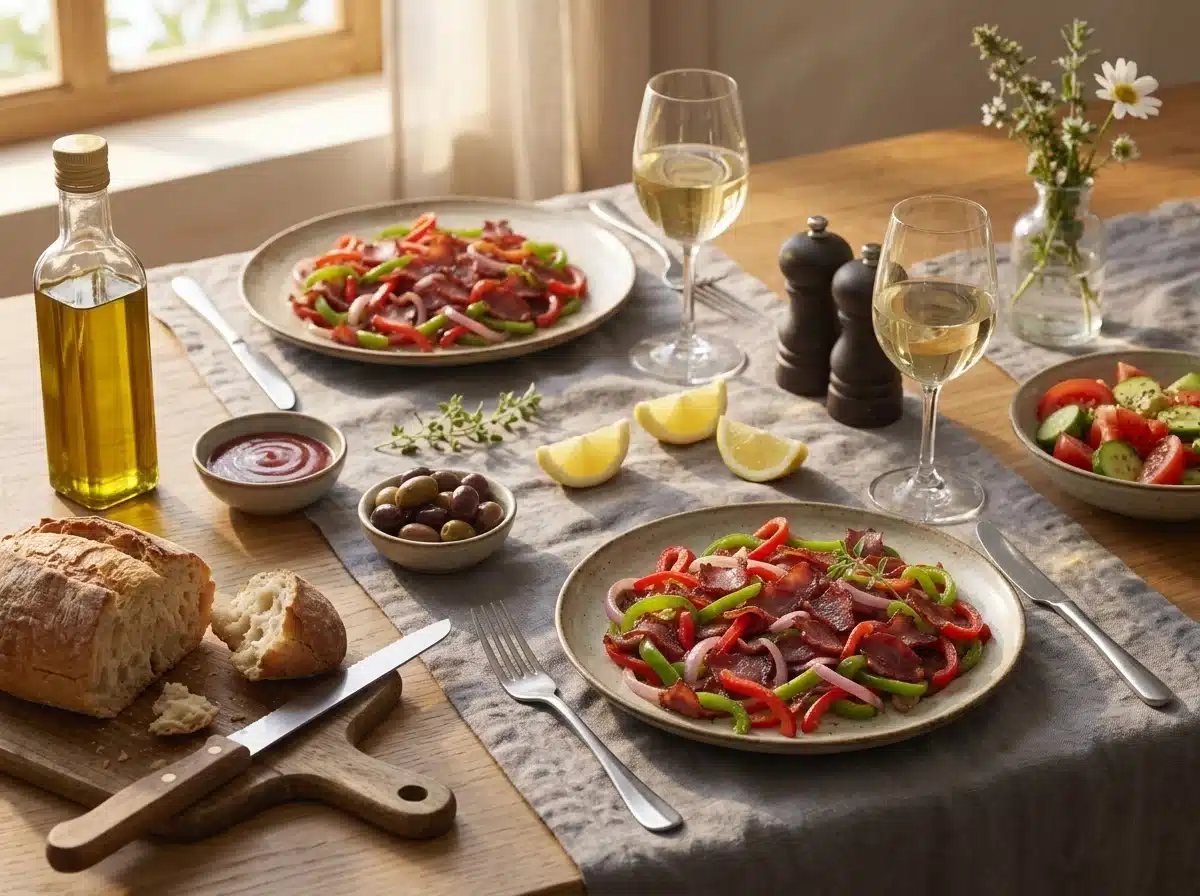
Serve the apaki and peppers straight from the skillet, ideally within 10 minutes of cooking while the edges are still crisp. Crusty bread is the easiest side, because it soaks up the oil and vinegar left in the pan.
Fried potatoes or a tomato and cucumber salad work well with the salty pork. A lemon wedge on the side brightens everything.
It also works as a meze for sharing, with olives and a small glass of tsikoudia, the Cretan grape spirit.
FAQ
How do I know when the apaki is done frying?
The apaki is done when the edges are browned and slightly curled, which takes 1.5 to 2 minutes per side over medium-high heat. The slice should still bend a little. If it turns stiff and dark, it’s overcooked and will taste dry and extra salty.
Can I use smoked bacon instead of apaki?
Yes, thick-cut smoked bacon cut into 1 cm strips works, but it’s fattier and less tangy. Use only 1 tbsp olive oil for the peppers, skip the oil for the pork, and fry the bacon 5 to 6 minutes per batch until crisp. Smoked pork loin slices are closer to apaki.
How long do leftover apaki and peppers last, and how do I reheat them?
Leftovers keep 3 to 4 days in an airtight container in the fridge. Reheat in a skillet over medium heat for 3 to 4 minutes with a teaspoon of olive oil, until hot and the edges crisp up again. The microwave makes the slices rubbery.
What goes well with apaki and peppers?
Crusty bread is the easiest pairing, since it soaks up the vinegar and oil in the pan. Fried potatoes and a tomato and cucumber salad balance the salty pork. A squeeze of lemon on top brightens everything. I usually put a bowl of olives on the table too.
Is Cretan apaki with peppers gluten free and dairy free?
Yes, as written it’s gluten free and dairy free, since it only uses pork, peppers, onion, oil and vinegar. Check the apaki label, because some producers add extra ingredients. Sodium is high, around 1,400 mg per serving, so it’s not a good fit for low-salt diets.
What is the difference between apaki and bacon?
Apaki is made from lean cuts of pork, marinated in vinegar and herbs, then smoked, so it’s chewy and tangy. Bacon comes from fatty pork belly and is cured with salt and often sugar. That’s why apaki crisps only at the edges, while bacon renders its fat and turns crisp all over.