
Jump to Recipe
Orange olive oil cake is a simple cake made with fresh orange zest, orange juice, and olive oil instead of butter. It has a soft, moist crumb and a light citrus flavor that isn’t too sweet.
I like this cake because it comes together in one bowl and doesn’t need a mixer. You whisk the wet ingredients, stir in the dry ones, and pour the batter into the pan.
The olive oil keeps the cake moist for days, so it’s a good one to make ahead. A simple glaze made from orange juice and powdered sugar adds a little shine and extra citrus flavor on top.
This is a good cake for breakfast with coffee, or after dinner with a scoop of yogurt. Don’t worry if the batter looks thin before baking, it turns into a tender, even cake once it’s out of the oven.
Why You’ll Love This Recipe
- Comes together in one bowl, no mixer needed
- Stays moist for days thanks to the olive oil
- Fresh orange zest and juice give real citrus flavor
- Simple enough for breakfast, nice enough for dessert
Ingredient Notes
- all-purpose flour: Spoon the flour into the measuring cup instead of scooping. Packed flour makes the cake dense.
- extra virgin olive oil: Use a good olive oil since you can taste it in the cake. A milder oil gives a softer, less peppery flavor.
- oranges: You need both the zest and the juice, so zest the oranges before you cut and juice them.
- plain whole milk yogurt: This adds moisture and a little tang. Sour cream works the same way in the same amount.
- baking powder and baking soda: Both help the cake rise. Check the dates on your baking powder, an old tin gives a flatter cake.
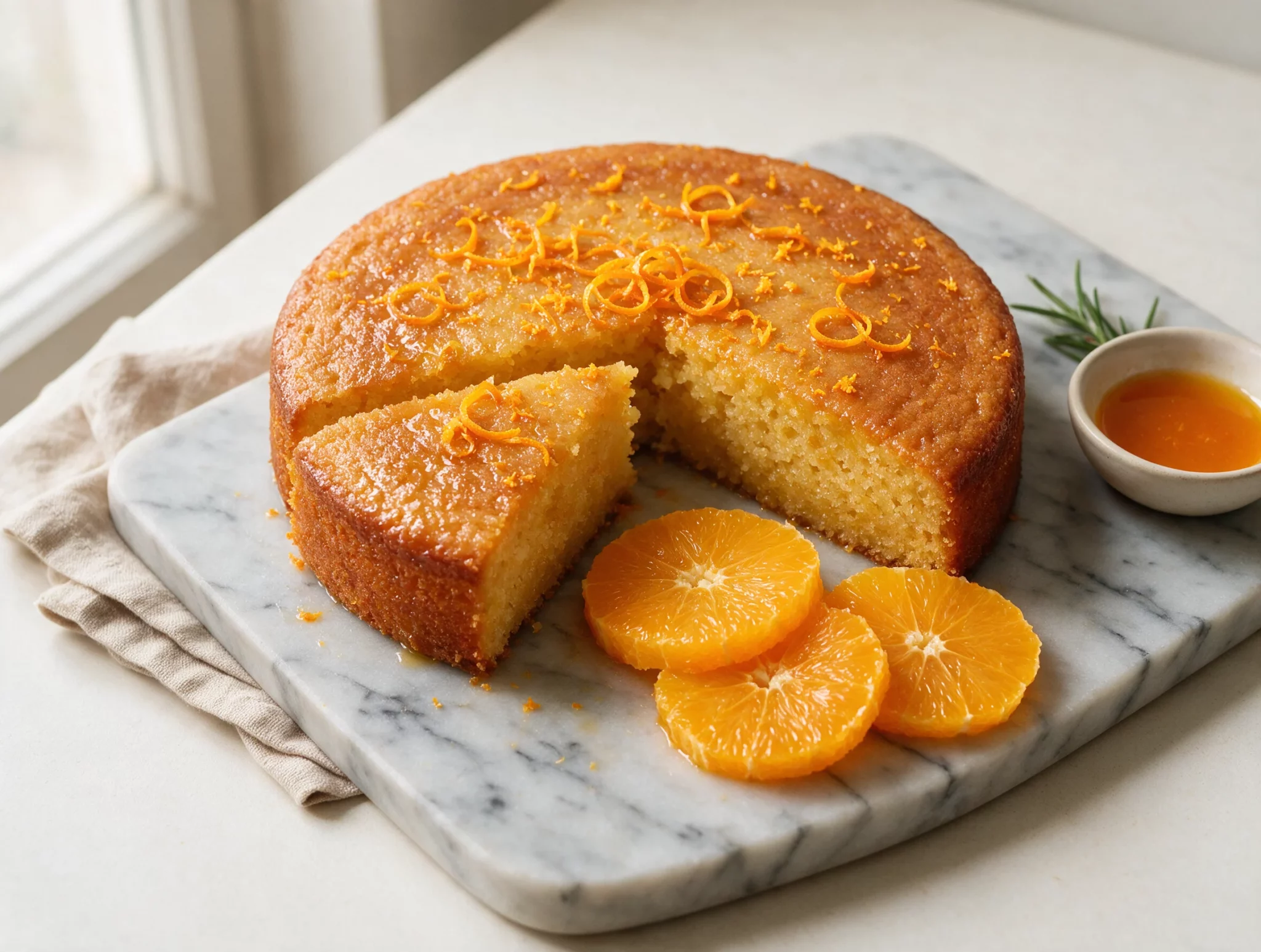
Soft Orange Olive Oil Cake with Fresh Orange Glaze
Ingredients
Method
- Heat the oven to 175 C / 350 F. Grease a 23 cm / 9-inch round cake pan and line the bottom with parchment paper.
- In a large bowl, whisk the flour, sugar, baking powder, baking soda, salt, and orange zest together.
- In another bowl, whisk the eggs, olive oil, yogurt, orange juice, and vanilla extract until smooth.
- Pour the wet ingredients into the dry ingredients. Whisk gently just until no streaks of flour remain, the batter will be thin.
- Pour the batter into the prepared pan and smooth the top with a spatula.
- Bake for 40 to 45 minutes, until the top is golden and a toothpick inserted in the center comes out clean or with a few moist crumbs.
- Let the cake cool in the pan for 15 minutes, then run a knife around the edge and turn it out onto a wire rack.
- While the cake cools, whisk the powdered sugar with the orange juice, 1 tablespoon at a time, until you get a pourable glaze.
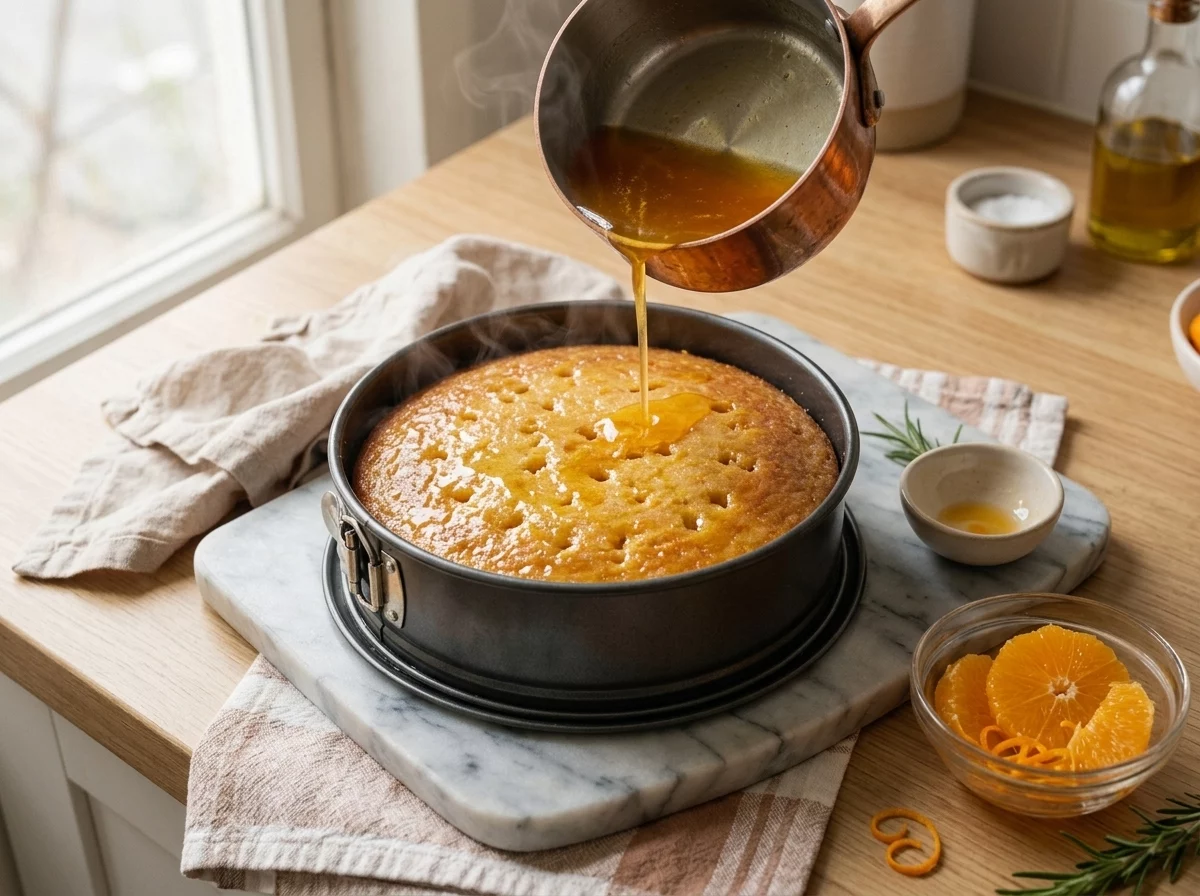
- Poke a few holes in the top of the warm cake with a skewer, then pour the glaze over the top and let it soak in.
- Slice and serve warm or at room temperature.
Notes
- Use room temperature eggs and yogurt for a smoother batter.
- Don't overmix once the flour goes in, or the cake gets dense.
- Check the cake at 40 minutes since ovens vary.
- Poke holes in the warm cake so the glaze soaks in.
Tips for Success
- Zest the oranges before you juice them, since it’s much harder to zest a juiced orange half.
- Use room temperature eggs and yogurt so the batter mixes smoothly and evenly.
- Check the cake at 40 minutes, then add a few more minutes if the center still looks wet.
- Let the cake cool for at least 15 minutes in the pan before turning it out.
- Poke a few holes in the warm cake before pouring on the glaze so it soaks in.
Variations
- Swap the orange for two lemons and use lemon juice in the glaze for a tangier version.
- Add 1 teaspoon of ground cardamom or a splash of orange blossom water for a floral note.
- Bake the batter in a loaf pan instead of a round cake pan, adding about 10 extra minutes.
Storage and Reheating
Orange olive oil cake keeps well at room temperature. Store it covered with plastic wrap or in an airtight container for up to 3 days, or in the fridge for up to 5 days since the glaze can turn sticky with humidity.
To warm a slice, microwave it for 10 to 15 seconds, just until it’s slightly warm, not hot. A cold slice also tastes fine left at room temperature for 20 minutes before serving.
This cake freezes well without the glaze. Wrap unglazed slices tightly in plastic and freeze for up to 3 months, then thaw at room temperature and add fresh glaze before serving.
Serving Suggestions
Orange olive oil cake is good on its own with coffee or tea in the morning. A light dusting of powdered sugar is enough if you want to skip the glaze.
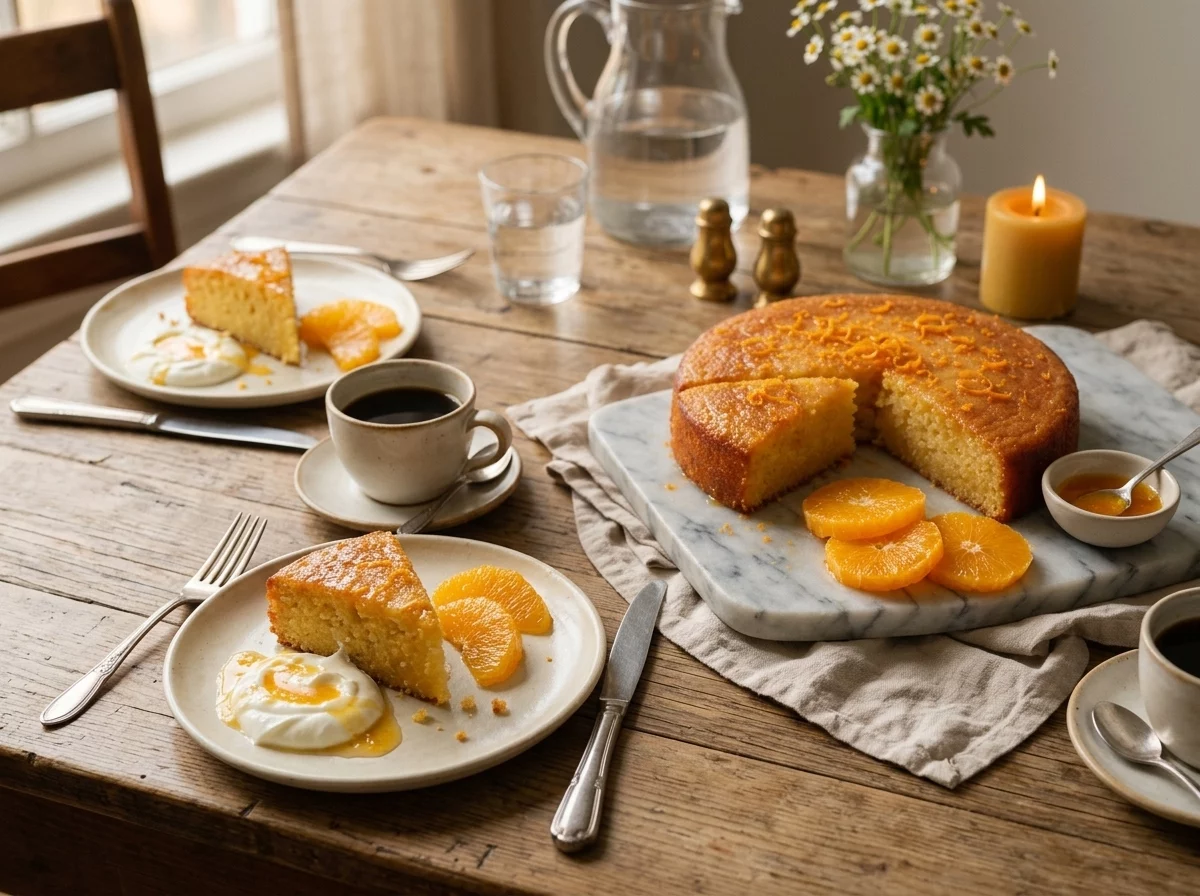
For dessert, serve a slice with a spoonful of plain yogurt or lightly whipped cream and a few fresh orange segments on the side.
It also works well on a brunch table next to fresh fruit, or as a simple end to a Mediterranean-style chicken dinner.
FAQ
Why did my orange olive oil cake sink in the middle?
Your cake likely sank because it came out of the oven too early or the batter had too much liquid. Check for doneness with a toothpick in the center, it should come out clean or with a few moist crumbs, not wet batter. Old baking powder can also cause a weak rise.
Can I use a different oil instead of olive oil in this cake?
You can use a neutral oil like sunflower or avocado oil, but the cake will lose its light olive flavor. Extra virgin olive oil gives this cake its slightly fruity, savory edge, which is part of what makes it different from a regular butter cake. Avoid strong-flavored oils like coconut oil, they clash with the orange.
Can I make this orange olive oil cake ahead of time?
Yes, this cake actually tastes better the next day once the orange flavor settles in. Bake it up to 2 days ahead, store it covered at room temperature, and add the glaze right before serving so it stays fresh and doesn’t turn sticky.
What goes well with orange olive oil cake?
Plain yogurt, lightly whipped cream, or a few fresh orange segments all pair well with this cake. Coffee or tea works well alongside it for breakfast, and a glass of dessert wine or sweet Moscato suits it well after dinner. Extra orange slices on the plate add color too.
Is orange olive oil cake dairy free?
This version isn’t dairy free since it uses yogurt for moisture, much like a Greek lemon yogurt cake. You can swap the yogurt for a dairy-free yogurt or coconut cream in the same amount, and the cake will still turn out moist. Check your powdered sugar too, since some brands add dairy-based fillers.
What’s the difference between olive oil cake and a regular butter cake?
Olive oil cake uses olive oil instead of butter, which makes the crumb moister and gives it a slightly fruity, savory flavor. Butter cakes taste richer and more neutral, while this orange olive oil cake gets extra character from the oil and the orange zest and juice in the batter.