Jump to Recipe
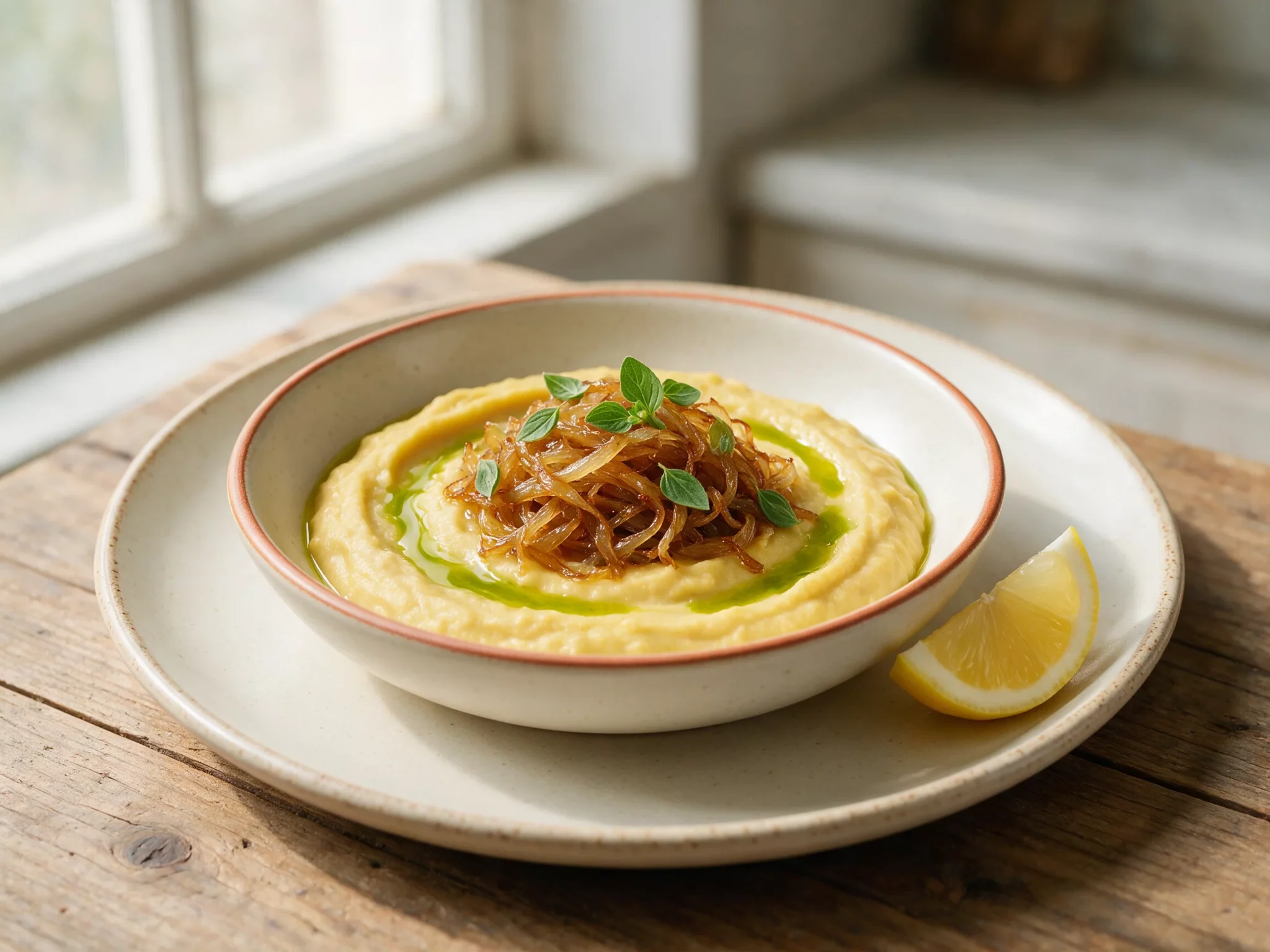
Greek fava is a thick puree made from yellow split peas, cooked slow with onion, garlic, and plenty of olive oil until they fall apart. Despite the name, it has nothing to do with fava beans, it’s closer to a Greek cousin of hummus, but earthier and simpler.
The texture is smooth and a little grainy at the same time, thick enough to hold a spoon standing up. The lemon keeps it fresh instead of heavy, and the olive oil gives it that soft, almost buttery feel on the tongue.
Caramelized onions on top are what make this dish. They take a good 25 to 30 minutes on low heat, but that’s where the sweetness comes from, and it’s worth the wait.
I make this on slow weeknights when I don’t feel like standing over a pan. The peas mostly cook themselves while I caramelize the onions in another pan.
Why You’ll Love This Recipe
- Made from cheap pantry staples like split peas and onions
- Mostly hands-off simmering while the onions caramelize on their own pan
- Naturally vegan and gluten free with no special substitutes needed
- Tastes even better the next day once the flavors settle
Ingredient Notes
- yellow split peas: These are the real fava in Greek fava, not fava beans. Rinse them well before cooking to remove starchy dust.
- onion (for simmering): Cooked whole in the pot with the peas, then mashed right in for flavor. No need to chop it small.
- olive oil: Use a good everyday olive oil since it’s a main flavor here, not just a cooking fat. A milder oil keeps the fava from tasting bitter.
- onions (for caramelizing): Yellow onions work best for sweetness. Slice them thin and even so they cook at the same rate.
- honey: Just a touch helps the onions caramelize faster and rounds out the sweetness. You can leave it out if you’d rather keep the onions plain.
- lemon juice: Added at the end, not during cooking. It brightens the puree without dulling to a flat taste.
Silky Greek Fava with Golden Caramelized Onions
Ingredients
Method
- Rinse the split peas under cold water until the water runs clear, picking out any small stones or debris.
- Add the peas to a 3-quart / 2.8 L saucepan with the water, bay leaf, halved onion, and garlic cloves. Bring to a boil over high heat, then skim off any foam that rises to the top.
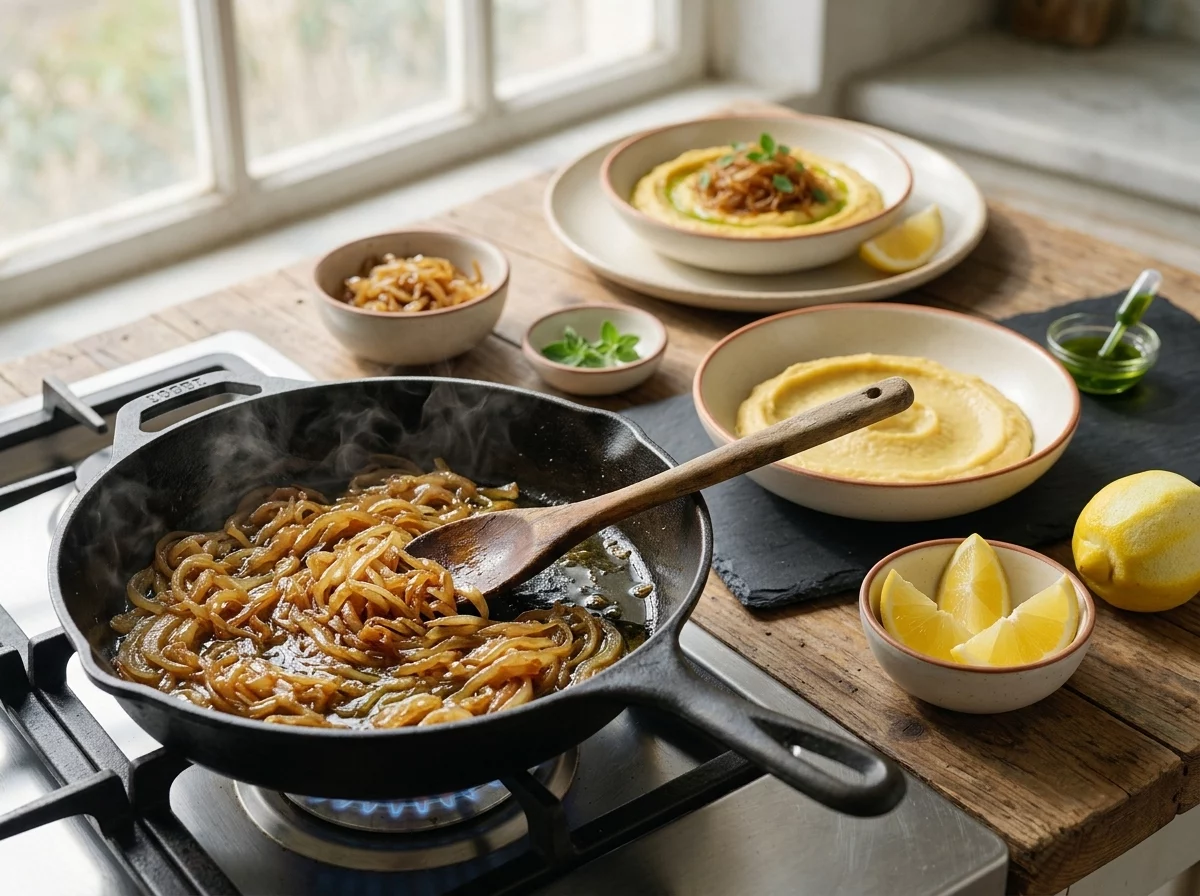
- Reduce the heat to low and simmer uncovered for 40 to 45 minutes, stirring now and then, until the peas are fully soft and mash easily against the side of the pot. Add a little more water if the pot looks dry before the peas are done.
- While the peas cook, heat 2 tablespoons olive oil in a 10-inch / 26 cm skillet over medium-low heat. Add the sliced onions and a pinch of salt.
- Cook the onions for 25 to 30 minutes, stirring every few minutes, until deep golden brown and soft. Stir in the honey and vinegar for the last 2 minutes, then take the pan off the heat.
- Once the peas are tender, remove the bay leaf. Drain off most of the liquid, keeping about 1 cup / 240 ml of the cooking water aside.
- Mash the peas, onion, and garlic right in the pot with a potato masher, or blend with an immersion blender, until fairly smooth. Drizzle in the remaining olive oil gradually as you mash.
- If the puree feels too thick, stir in a little of the reserved cooking water until it's thick but spreadable, like hummus. Stir in the lemon juice and season with salt to taste.
- Spread the warm fava onto plates or a shallow serving dish. Top with the caramelized onions, a drizzle of olive oil, and a sprinkle of oregano or dill. Serve with lemon wedges.
Notes
- Rinse split peas until water runs clear to avoid a gummy puree.
- Don't rush the onions, 25 to 30 minutes on low heat is what makes them sweet.
- Add olive oil gradually so you can stop once the puree feels right.
- Keep the pot uncovered while the peas simmer so the liquid reduces on its own.
Tips for Success
- Rinse the split peas well to remove starchy dust that can make the puree gummy.
- Simmer the peas uncovered so the liquid reduces on its own without extra draining later.
- Cook the onions low and slow for 25 to 30 minutes, rushing them with high heat burns the sugars.
- Add the olive oil gradually while mashing so you control exactly how thick the fava turns out.
- Taste before adding extra salt, the onion and garlic already carry a lot of flavor into the broth.
Variations
- Swap yellow split peas for green split peas for a slightly earthier, less sweet fava.
- Stir a spoon of tomato paste into the caramelized onions for a deeper, sweeter topping.
- Top with crumbled feta and capers instead of oregano for a saltier, tangier finish.
Storage and Reheating
Greek fava keeps in an airtight container in the fridge for 4 to 5 days. It thickens a lot as it cools, that’s normal.
To reheat, warm it in a saucepan over low heat with a splash of water or broth, stirring often, for about 5 minutes until it loosens up and turns smooth again. You can also microwave it covered in 30-second bursts, stirring between each one.
Store the caramelized onions separately in their own container and warm them briefly in a skillet before serving, so they don’t turn mushy sitting in the puree. The puree also freezes well for up to 2 months, thaw it in the fridge overnight before reheating.
Serving Suggestions
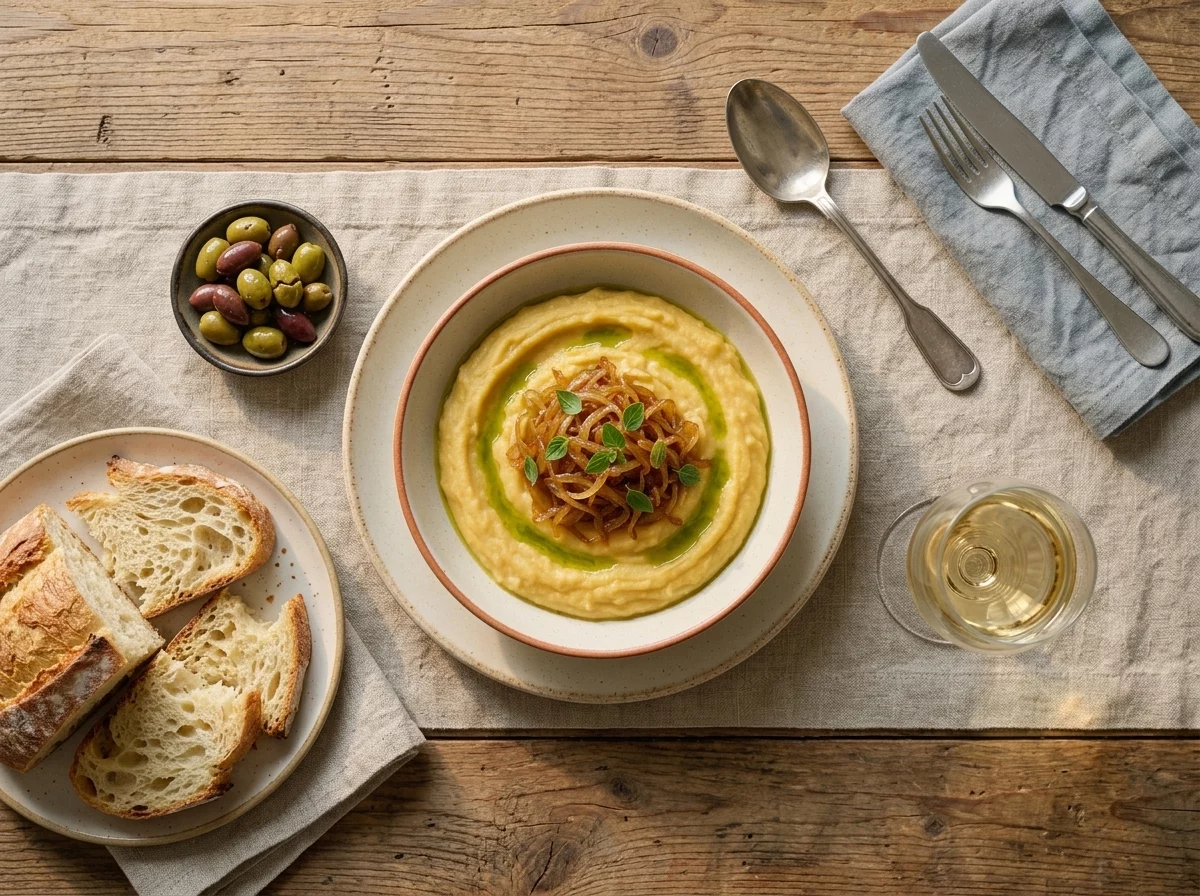
Crusty bread is the classic partner here, since it’s perfect for scooping up the puree. I usually serve it with a simple tomato and cucumber salad, some olives, and a little crumbled feta on the side.
For a light lunch, spread the fava on a plate, top with the caramelized onions, and drizzle more olive oil over everything. A glass of ouzo or a crisp white wine works well alongside it.
Leftovers make a good sandwich spread too, just thin the fava with a bit of water or lemon juice and layer it with grilled vegetables in flatbread.
FAQ
Why is my Greek fava still grainy instead of smooth?
Your split peas probably need more time. Simmer them for the full 40 to 45 minutes, until they mash easily against the side of the pot with a spoon. If they’re still firm, add a splash more water and keep cooking, then mash or blend again once they give way.
Can I use red lentils instead of yellow split peas for this fava?
You can, but the texture and cook time change. Red lentils cook in about 20 minutes instead of 45 and give a softer, looser puree, so add the olive oil more slowly. The flavor turns milder than a traditional Greek fava, which relies on split peas for its texture.
Can I make Greek fava ahead of time and how do I store it?
Yes, Greek fava keeps well in the fridge for 4 to 5 days in an airtight container. It thickens as it cools, so reheat it gently on the stove with a splash of water or broth, stirring until smooth again. Make the caramelized onions separately and warm them just before serving.
What goes well with Greek fava and caramelized onions?
Crusty bread is the classic pairing, since it’s good for scooping up the puree. A simple tomato and cucumber salad with olive oil, some olives, and crumbled feta on the side turns it into a full meal. A glass of ouzo or a light white wine works too.
Is Greek fava with caramelized onions vegan and gluten free?
Yes, this dish is naturally vegan and gluten free, since it’s just split peas, onions, olive oil, and lemon. Just double check any bread or topping you serve alongside it, since some crusty breads and feta cheese are not gluten free or vegan.
What is the difference between Greek fava and hummus?
Greek fava is made from yellow split peas, not chickpeas, and cooked into a soft puree rather than blended with tahini. It leans savory and mellow, while hummus has a nuttier, tangier edge from tahini and lemon. Fava is traditionally topped with caramelized onions, not paprika or pine nuts.