
Jump to Recipe
Cretan kalitsounia cheese pastries are small baked parcels made with an olive oil dough and a filling of fresh mizithra, honey and mint. They taste mildly sweet and a little tangy, somewhere between a cheese pie and a light cheesecake.
Kalitsounia change from town to town in Crete, and many are made around Easter. This is a simplified home version. I bake them instead of frying, and the filling mixes in one bowl.
The dough is easy to work with and doesn’t need any special skills. The part that matters most is the cheese. If it’s wet, the filling leaks and the bottoms turn soggy, so drain it well before you start.
I like them warm with a little extra honey on top. They also taste good at room temperature.
Why You’ll Love This Recipe
- Small pastries that are easy to serve and share
- Simple olive oil dough with no yeast or butter
- The filling mixes in one bowl while the dough rests
- Good warm or at room temperature, so you can bake ahead
Ingredient Notes
- mizithra: Use fresh, soft mizithra, not the aged dry kind, which is hard and salty. Whole-milk ricotta is the closest substitute, as long as you drain it well.
- extra-virgin olive oil: Pick a mild one. A strong, peppery oil will come through in the crust.
- honey: Thyme honey is common in Crete, but any runny honey works. The same honey goes in the filling and on top.
- fresh mint: Fresh mint gives a light, cool note against the sweet cheese. If you only have dried, use 2 tsp.
- orange zest: A teaspoon of zest keeps the filling from tasting flat. Lemon zest is a fine swap.
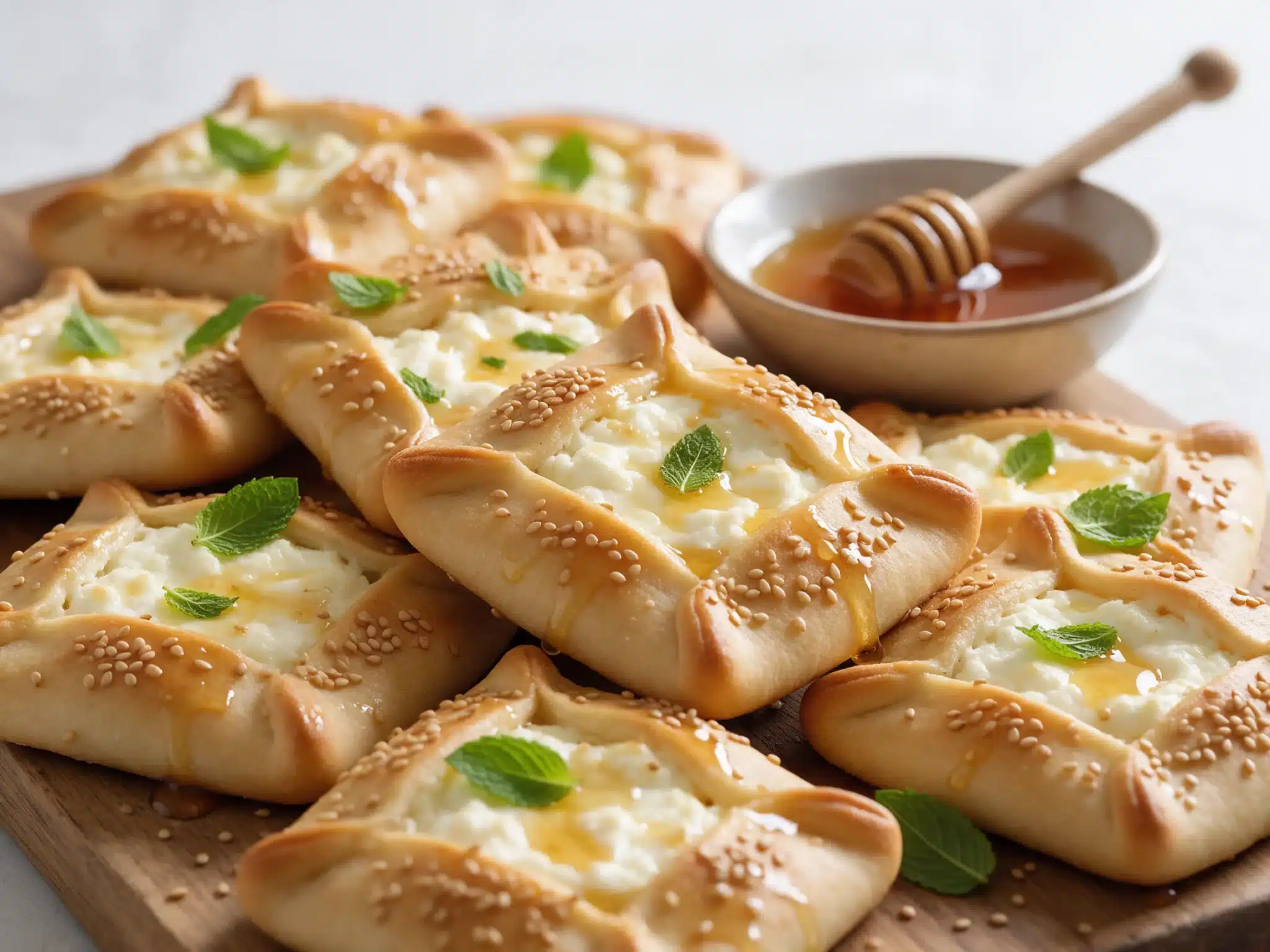
Baked Cretan Kalitsounia with Honey and Mizithra Cheese
Ingredients
Method
- Mix the flour and salt in a 26 cm / 10-inch bowl. Add the olive oil and rub it in with your fingers until the flour looks crumbly. Pour in 170 ml lukewarm water, mix, then knead on the counter for 5 minutes until the dough is soft but not sticky. If it feels dry, add 1 tbsp water at a time. Cover and rest for 30 minutes.
- While the dough rests, set the mizithra in a fine-mesh sieve over a 20 cm / 8-inch bowl and drain it for 30 minutes, pressing gently once or twice. Discard the liquid, return the cheese to the bowl, and stir in the eggs, 3 tbsp honey, cinnamon, mint and orange zest until smooth. The filling should hold a soft mound on a spoon.
- Heat the oven to 190 C / 375 F with racks in the upper and lower thirds. Line two 33 x 46 cm / 13 x 18 inch sheet pans with parchment.
- Divide the dough in half and keep one half covered. Roll the other half on a lightly floured counter to 3 mm thick. Cut 11 cm / 4.5-inch rounds, then gather the scraps and reroll them once. Repeat with the second half to get about 16 rounds.
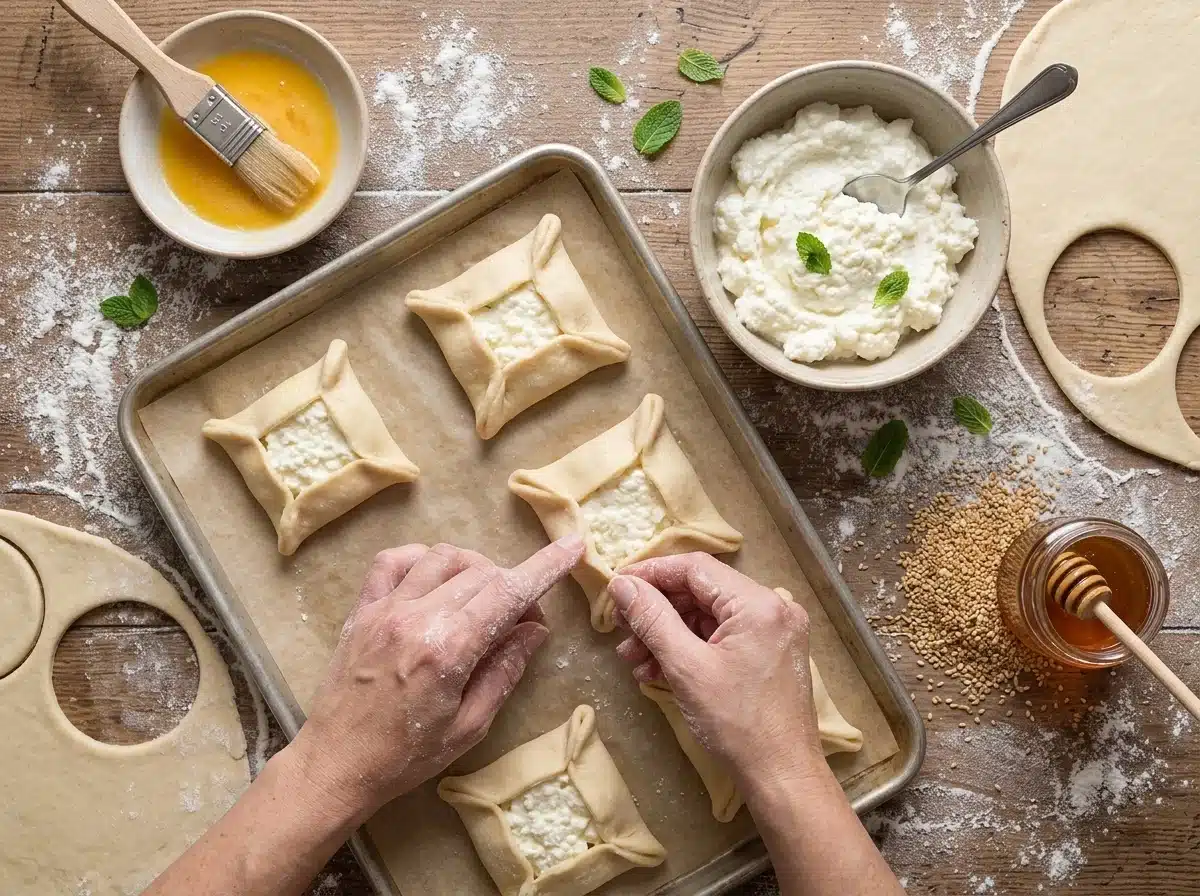
- Spoon about 1.5 tbsp (30 g) of filling into the center of each round. Lift the edge at four evenly spaced points and pinch each point to the dough beside it, so you get a small square tray with the filling showing. Set 8 pastries on each pan, 3 cm / 1 inch apart.
- Mix the egg yolk with 1 tbsp water and brush it on the dough edges, not the filling. Sprinkle the sesame seeds on the edges. Bake both pans for 30 minutes, swapping their positions after 15 minutes, until the edges are deep golden and the filling is set and doesn't wobble.
- Cool the pastries on the pans for 10 minutes so the filling firms up. Drizzle with the remaining 3 tbsp honey and serve warm.
Notes
- Drain the cheese for the full 30 minutes before mixing the filling.
- Roll the dough to 3 mm so the crust stays crisp at the edges.
- Bake two pans at once and swap them after 15 minutes.
- Cool the pastries for 10 minutes so the filling firms up before serving.
Tips for Success
- Drain the mizithra or ricotta in a fine-mesh sieve for the full 30 minutes, or the filling will leak and the bottoms will turn soft.
- Roll the dough to about 3 mm so the edges bake crisp and the crust still holds the filling without tearing.
- Fill each round with about 1.5 tablespoons, since overfilled pastries puff up in the oven and spill over the sides.
- Taste the cheese before mixing. If it’s salty, keep the honey at 3 tablespoons in the filling and don’t add any salt.
- Swap the two pans between oven racks after 15 minutes, because the lower pan browns faster than the upper one.
Variations
- For a savory version, skip the honey, cinnamon and orange zest. Add 2 tbsp chopped dill, extra mint, a pinch of salt and black pepper.
- Use 300 g mizithra and 100 g crumbled feta for a saltier filling, and cut the honey in the filling to 2 tbsp.
- Press chopped walnuts onto the edges instead of sesame seeds for a bit more crunch, and add them just before baking.
Storage and Reheating
Baked kalitsounia keep in an airtight container in the fridge for 3 to 4 days. Let them cool completely first, and don’t leave them out for more than 2 hours, since the filling has eggs and cheese.
To reheat, put them on a sheet pan in a 160 C / 320 F oven for 8 to 10 minutes, until the crust is crisp again. I skip the microwave because it makes the dough soft and chewy.
For the freezer, freeze cooled pastries in a single layer, then move them to a freezer bag for up to 2 months. Reheat from frozen at 160 C / 320 F for 15 minutes.
Serving Suggestions
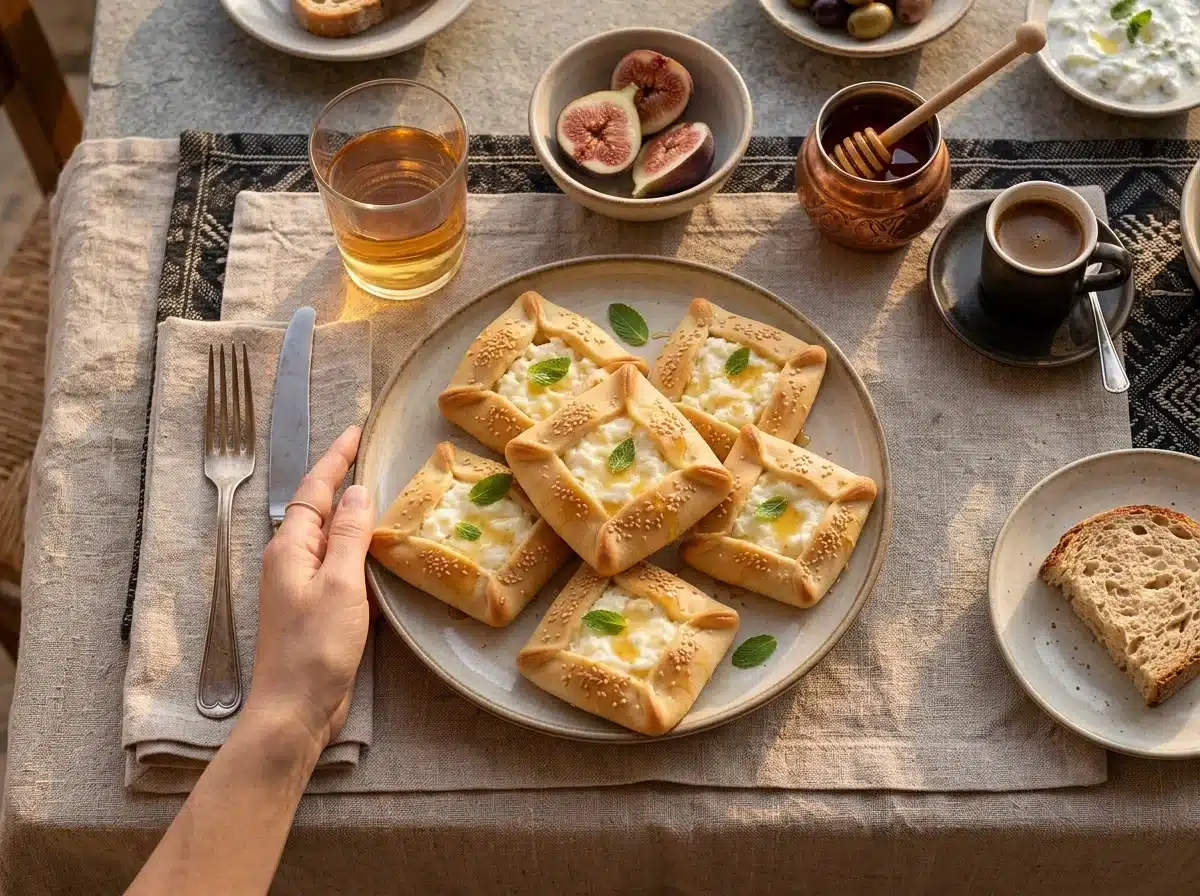
Serve kalitsounia warm, about 10 minutes out of the oven, with a little honey drizzled on top. A few fresh mint leaves on the plate add a cool note.
They go well with Greek coffee or herbal tea. For brunch, add fresh fruit and a bowl of thick Greek yogurt.
You can also serve them at room temperature within 2 hours of baking. That makes them easy to bring to a picnic or a family table.
FAQ
How do I know when kalitsounia are done baking?
Kalitsounia are done when the edges are deep golden and the filling is set. Nudge the pan: the center shouldn’t wobble. Light brown spots on top of the filling are normal and a good sign. At 190 C / 375 F this takes about 30 minutes, so check at 25 if your oven runs hot.
Why is my kalitsounia filling watery or leaking out?
Wet cheese is the usual cause. Fresh mizithra and ricotta hold a lot of whey, which turns to steam in the oven and pushes the filling out. Drain the cheese in a fine-mesh sieve for 30 minutes while the dough rests, and fill each pastry with only 1.5 tablespoons.
Can I use ricotta instead of mizithra for kalitsounia?
Yes, whole-milk ricotta is the closest substitute. It’s creamier and wetter than fresh mizithra, so drain it for the full 30 minutes, pressing gently with a spoon. Skip low-fat ricotta, since it bakes up drier. A mix of ricotta and mizithra works well too.
Can you freeze kalitsounia after baking, and how do you reheat them?
Yes, baked kalitsounia freeze well for up to 2 months. Cool them fully, freeze in a single layer on a tray, then move them to a freezer bag. Reheat from frozen on a sheet pan at 160 C / 320 F for 15 minutes, until the crust is crisp and the center is hot.
What do you serve with Cretan kalitsounia?
Serve kalitsounia warm with a drizzle of thyme honey and a cup of Greek coffee or herbal tea. For a brunch plate, add fresh figs or sliced oranges and a bowl of thick Greek yogurt. The mild cheese works with both sweet and tangy sides.
What is the difference between kalitsounia and tiropita?
Kalitsounia are small, individual pastries made with a soft olive oil dough and fresh mizithra, often sweetened with honey. Tiropita is usually a larger pie with layers of phyllo and a salty feta filling. So the sweet kalitsounia taste closer to a mild cheesecake, while tiropita is savory.