
Jump to Recipe
Palouzes is a traditional Cypriot dessert made by boiling fresh grape juice down with flour until it turns into a soft, spoonable pudding. It tastes like concentrated grapes, sweet on its own with no added sugar, and the texture sits somewhere between a firm jelly and a thick custard.
Cypriot families make palouzes every September, right after the grape harvest, when there’s more fresh juice than anyone knows what to do with. Walnuts get pressed into the top while it’s still warm, so every square has a bit of crunch.
The one thing that trips people up is the straining step. If you leave bits of skin or seed in the juice, the pudding turns gritty, so take the extra few minutes to press it through cheesecloth.
This version uses plain flour to thicken, the way most home cooks in Cyprus do it, and sets firm enough to slice once it’s chilled.
Why You’ll Love This Recipe
- Made from real grape juice, no added sugar needed
- Sets soft and glossy without any gelatin
- Keeps in the fridge for a week, ready whenever you want a bite
- A simple way to use up extra grapes from the harvest
Ingredient Notes
- grapes: Use sweet, ripe red or purple grapes like Mavro or Concord. The pudding’s whole flavor comes from the fruit, so taste one before you buy.
- water: Just enough to help the grapes release their juice while simmering, you’ll strain most of it away with the skins.
- flour: Plain all-purpose flour thickens the juice into a pudding. Cornstarch works too, but use about half the amount since it thickens more strongly.
- walnuts: Halved walnuts get pressed into the warm pudding for crunch. Almonds are a common swap in some villages.
- cinnamon: A light dusting on top is optional, it adds warmth without covering up the grape flavor.
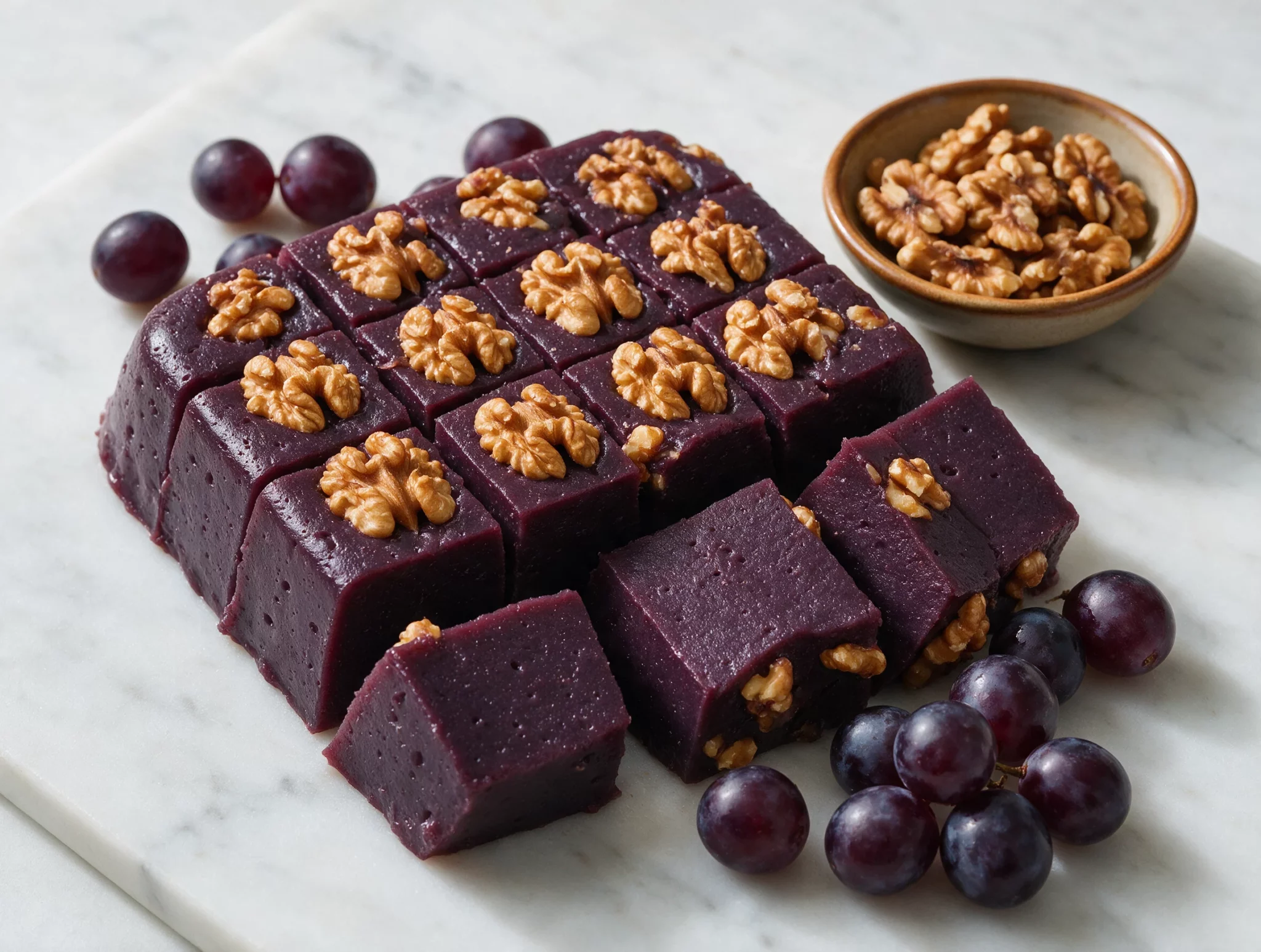
Cypriot Palouzes: Grape Pudding with Toasted Walnuts
Ingredients
Method
- Wash the grapes and pull them off the stems. Put them in a 6-quart / 5.7 L stockpot with the 250 ml water.
- Crush the grapes a little with a wooden spoon, then bring to a gentle boil over medium heat. Simmer for 15 to 20 minutes, stirring now and then, until the grapes are soft and pale.
- Set a fine-mesh sieve lined with cheesecloth over a large bowl. Pour the grapes and their liquid through, then press with the back of a spoon to squeeze out as much juice as you can. Discard the skins and seeds.
- Measure the strained juice, you should have about 2 liters. Pour all but 1 cup (240 ml) of it back into the cleaned stockpot.
- Whisk the flour into the reserved 1 cup of juice in a small bowl until completely smooth, with no lumps.
- Bring the juice in the pot to a gentle simmer over medium heat.
- Slowly pour in the flour slurry while whisking constantly, this keeps the pudding smooth.
- Cook for 20 to 25 minutes, stirring often with a wooden spoon, until the pudding thickens enough to coat the back of the spoon and pulls away from the sides of the pot when you stir.
- Pour the hot pudding into the 23 x 33 cm / 9 x 13-inch dish and smooth the top with a spatula.
- Press the walnut halves into the surface while the pudding is still warm, spacing them evenly. Dust with the cinnamon if using.
- Let the pudding cool at room temperature for about 1 hour, then cover and refrigerate for at least 4 hours, or overnight, until fully set and sliceable.
- Slice into squares or diamonds and serve chilled or at room temperature.
Notes
- Strain the juice through cheesecloth twice for a smooth pudding, not just once.
- Whisk the flour slurry into cold juice, never directly into the hot pot.
- Chill at least 4 hours, overnight gives the cleanest slices.
- Press walnuts in while the pudding is still warm so they hold in place.
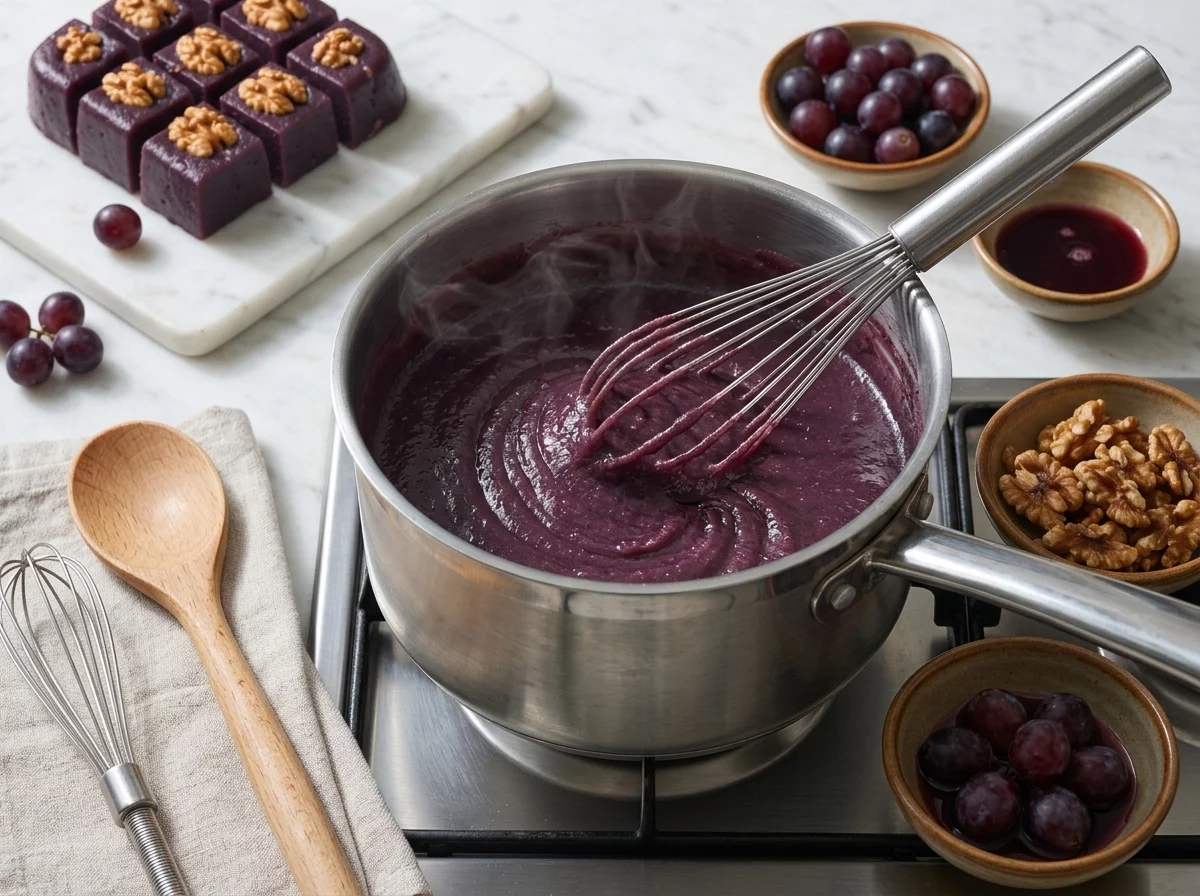
Tips for Success
- Strain the juice twice through cheesecloth to catch every seed and bit of skin, or the pudding will feel gritty.
- Whisk the flour into cold juice first, adding it straight into hot juice always makes lumps.
- Stir the pudding often near the end of cooking, it can catch and stick to the bottom of the pot.
- Press the walnuts in while the pudding is still warm, they won’t stick once it cools and sets.
- Use grapes that taste sweet on their own, since palouzes gets all of its sweetness from the fruit.
Variations
- Swap walnuts for whole almonds for a lighter crunch, common in some Cypriot villages.
- Add a cinnamon stick or a strip of orange peel to the juice while it simmers for extra warmth.
- Pour the thickened pudding around a hanging string dipped repeatedly to make soutzoukos, the chewy dried version.
Storage and Reheating
Cover the dish tightly and keep palouzes in the fridge for 5 to 7 days. It’s a cold-set pudding, so it only gets firmer and better as it chills.
Freezing isn’t a good idea here. The pudding separates and turns watery once thawed, since the flour that holds it together breaks down.
There’s no reheating step needed. Palouzes is meant to be eaten cold or at room temperature, so just pull a slice out and let it sit on the counter for 15 to 20 minutes before serving if you want it less cold.
Serving Suggestions
Palouzes is usually served on its own, cut into small squares or diamonds, alongside a cup of Cypriot coffee. The bitterness of the coffee balances the sweetness of the grapes well.
A slice of crusty village bread on the side is common too, torn and dipped straight into the pudding if it’s still a bit soft in the middle.
For a simple dessert spread, set out palouzes next to a bowl of fresh figs or grapes and a small plate of walnuts, so people can pick at all three.
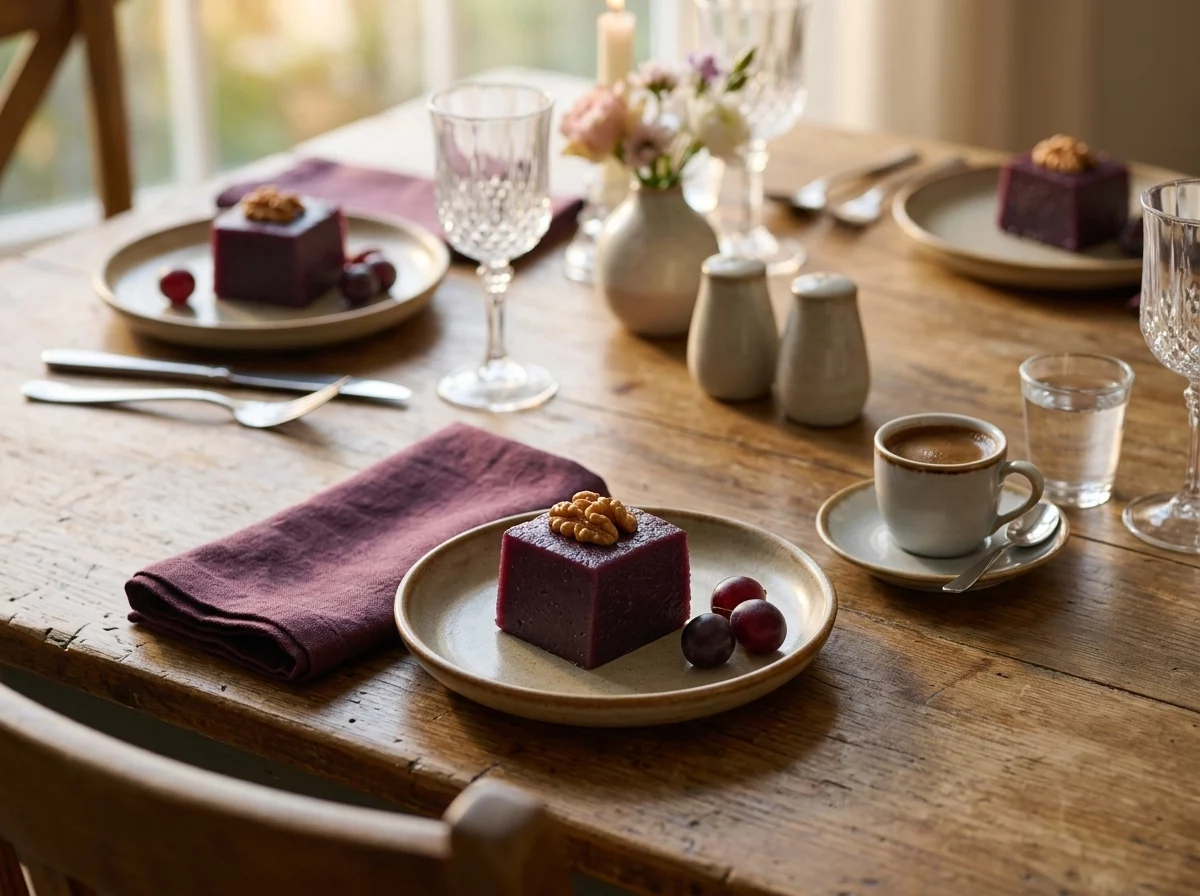
FAQ
Why is my palouzes still runny after cooking?
It just needs more time on the heat. The pudding is ready when it coats the back of a spoon thickly and pulls away from the sides of the pot when you stir. If it’s thin after 25 minutes, keep cooking in 5-minute stretches, stirring often, until it holds its shape.
Can I use cornstarch instead of flour in palouzes?
Yes, cornstarch works as a swap for flour. Use about half the amount since cornstarch thickens more strongly, and whisk it into cold juice first before adding it to the hot pot. This also makes the pudding gluten free.
How long does Cypriot palouzes pudding keep in the fridge?
Palouzes keeps well for 5 to 7 days when covered and refrigerated. It actually firms up more as it sits, which makes it easier to slice into neat squares after the second day.
What goes well with palouzes grape pudding?
Cypriot coffee is the classic pairing, its bitterness cuts through the pudding’s natural sweetness. Fresh figs, crusty bread, or a small plate of extra walnuts also work well alongside a slice.
Is Cypriot palouzes vegan and gluten free?
Palouzes is naturally vegan since it’s just grape juice, flour, and walnuts, with no dairy or eggs. It isn’t gluten free as written because of the wheat flour, but swapping in cornstarch at half the amount makes a gluten-free version.
What’s the difference between palouzes and soutzoukos?
Palouzes is the soft version, poured into a dish and eaten with a spoon once chilled. Soutzoukos is made from the same thickened grape juice but dipped repeatedly around a string of nuts and hung to dry, turning into a chewy, rope-like sweet.