Jump to Recipe
Cypriot souvla is a whole-cut pork dish threaded on long metal skewers and cooked low over glowing charcoal for close to two hours. The meat turns slowly until the outside is dark and the inside stays soft enough to pull apart with a fork. It’s the dish Cypriot families cook outside on Sundays and holidays like Green Monday, with everyone taking turns at the fire.
Souvla is different from souvlaki. Souvlaki is small cubes on short skewers cooked fast over direct heat. Souvla uses big chunks, threaded loosely with bay leaves between them, and it needs patience and a low, steady fire instead of a hot one.
The seasoning stays simple. Salt, pepper, dried oregano, and a squeeze of lemon at the end. The pork does most of the work here, especially if you pick a cut with a good amount of fat running through it.
I cook mine on a charcoal grill with the coals banked to one side so the meat sits over gentle heat, not direct flame. If you don’t have a spit or a charcoal setup, there’s an oven version in the variations below.
Why You’ll Love This Recipe
- Feeds a crowd from one cut of pork and a charcoal fire
- Slow cooking means you can’t easily overcook it if you watch the temp
- Only five ingredients in the seasoning, no marinade to plan days ahead
- Good for a weekend outdoor cook with family taking turns at the fire
Ingredient Notes
- pork shoulder: Pick a cut with visible fat running through it, lean pork dries out over a two hour cook. Lamb shoulder works as a swap using the same method.
- bay leaves: They char and release fragrance as the meat cooks. Dried bay leaves work fine if you don’t have fresh.
- dried oregano: A Mediterranean pantry staple here. If you have fresh oregano, use about three times the amount.
- olive oil: Used for basting near the end so the outside doesn’t dry out while it finishes charring.
- lemon: Brightens the meat right before serving. Adding it too early can toughen the exterior, so save most of it for the last 20 minutes and the platter.
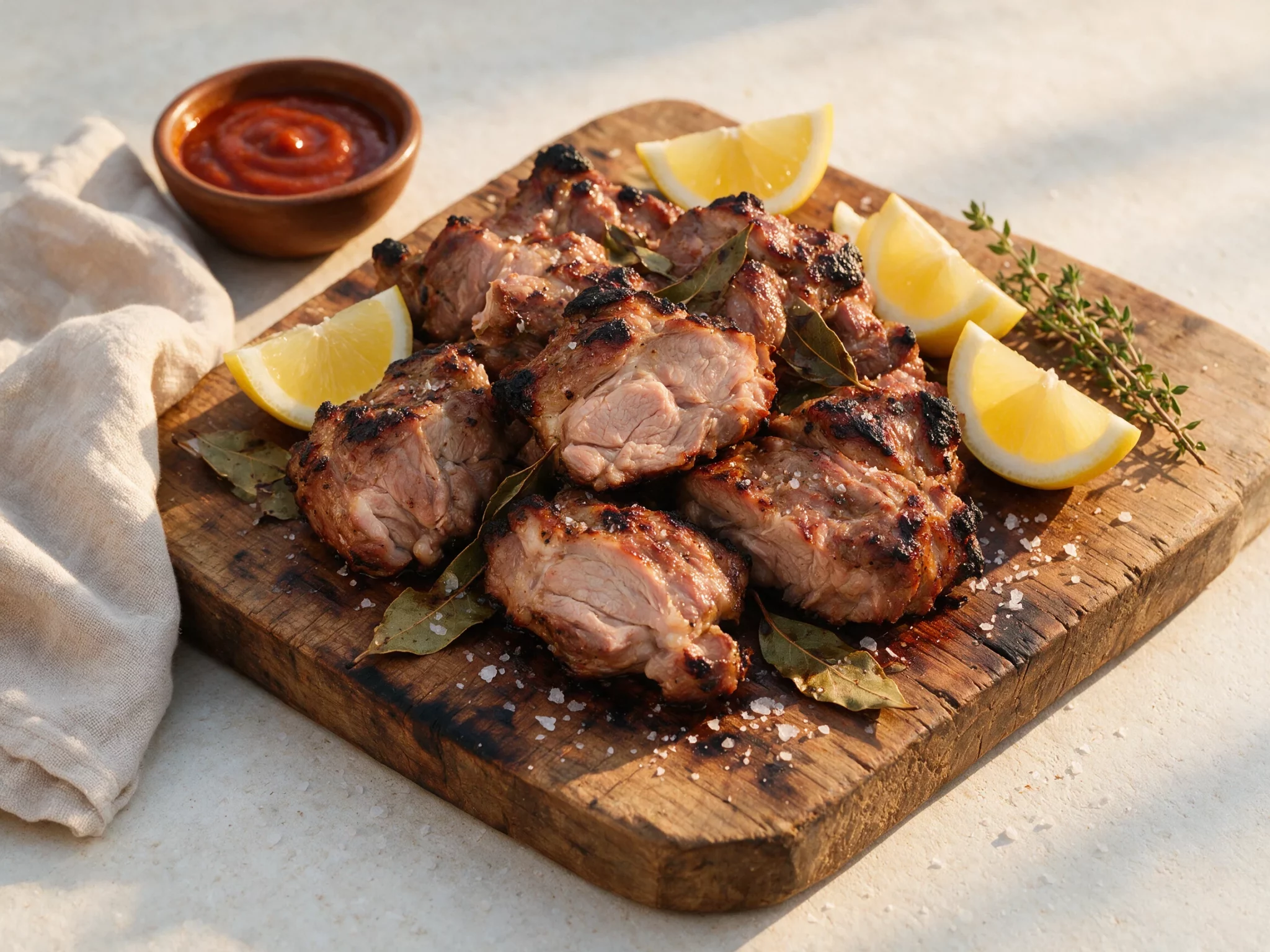
Traditional Cypriot Souvla: Charcoal-Grilled Pork
Ingredients
Method
- Trim the pork shoulder of excess silverskin, keeping most of the fat. Cut the meat into rough 5 cm / 2-inch chunks.
- Toss the chunks in a bowl with salt, pepper, and dried oregano. Cover and let sit in the fridge for at least 30 minutes, or overnight for more flavor.
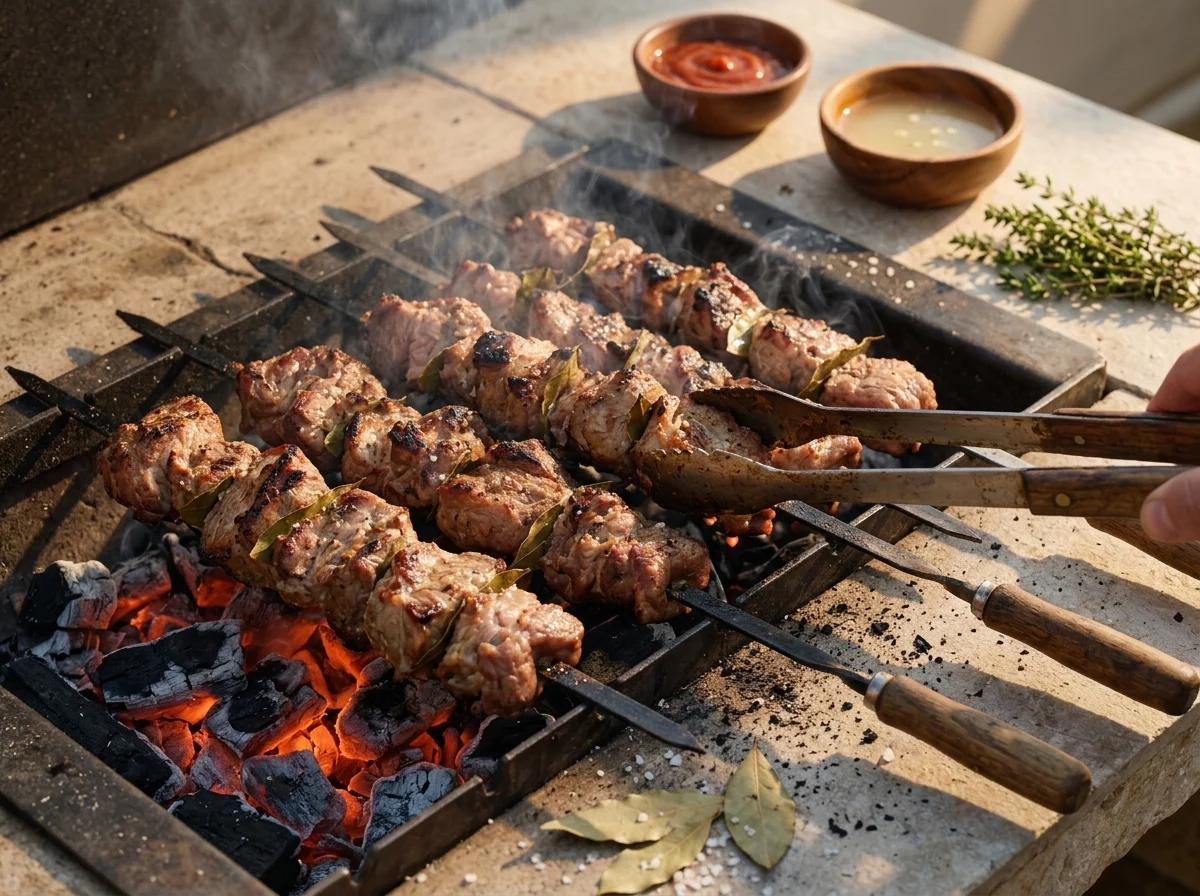
- Thread the pork chunks onto the long metal skewers, tucking a bay leaf between every second or third piece. Leave a small gap after every third chunk so heat moves through the meat, packing it too tight leaves the center raw while the outside chars.
- Light a charcoal fire and let it burn down until the coals are covered in gray ash with no open flame. Bank the coals to one side so the skewers sit 25 to 30 cm / 10 to 12 inches above the heat, not directly over the hottest coals.
- Set the skewers over the fire and turn every 10 to 15 minutes so the meat cooks evenly on all sides. Grill for 1.5 to 2 hours total, adding a small handful of fresh coals every 30 minutes to keep the heat steady.
- About 20 minutes before the end, mix the olive oil and lemon juice and brush it over the meat each time you turn the skewers.
- Check the internal temperature with an instant-read thermometer in the thickest chunk. Pull the skewers off the fire once it reads 90 C / 194 F and the meat pulls apart easily with light pressure from tongs.
- Lift the skewers off the heat and tent loosely with foil. Rest for 10 minutes before sliding the meat off the skewers.
- Pile the meat onto a platter, squeeze the remaining lemon over the top, and serve right away with pita, lemon potatoes, or a village salad.
Notes
- Pack the skewer with small gaps every third chunk so heat moves through evenly.
- Keep coals banked to one side, direct flame chars the outside before the inside cooks.
- Pull the meat at 90 C / 194 F, not before, the fat needs that heat to render fully.
- Rest under foil for 10 minutes before slicing off the skewer.
Tips for Success
- Choose pork shoulder or neck with visible marbling, lean cuts turn dry over the long cook time.
- Use long metal skewers only, wood would burn through during two hours over coals.
- Bank the coals to one side so the meat cooks by radiant heat instead of sitting over direct flame.
- Add a small handful of fresh coals every 30 minutes rather than dumping a big pile, this keeps the heat steady.
- Rest the meat under foil for 10 minutes before serving so the juices settle instead of running onto the platter.
Variations
- Swap the pork shoulder for lamb shoulder cut into the same size chunks, the cook time stays close to the same.
- Thread small wedges of onion or green pepper between the meat every so often for a mixed grill style skewer.
- No charcoal grill? Set the skewers on a rack over a sheet pan and cook in a 160 C / 325 F oven for about 2 hours, until the same internal temperature is reached.
Storage and Reheating
Cooked souvla keeps in the fridge for 3 to 4 days in an airtight container. Slide the meat off the skewers before storing so it packs down flat.
Reheat gently in a 160 C / 325 F oven, covered with foil, for 12 to 15 minutes until warmed through. A skillet over medium-low heat with a splash of water or broth, covered, also works well.
Freeze the cooked, cooled meat in a sealed bag for up to 2 months. Thaw overnight in the fridge before reheating using either method above.
Serving Suggestions
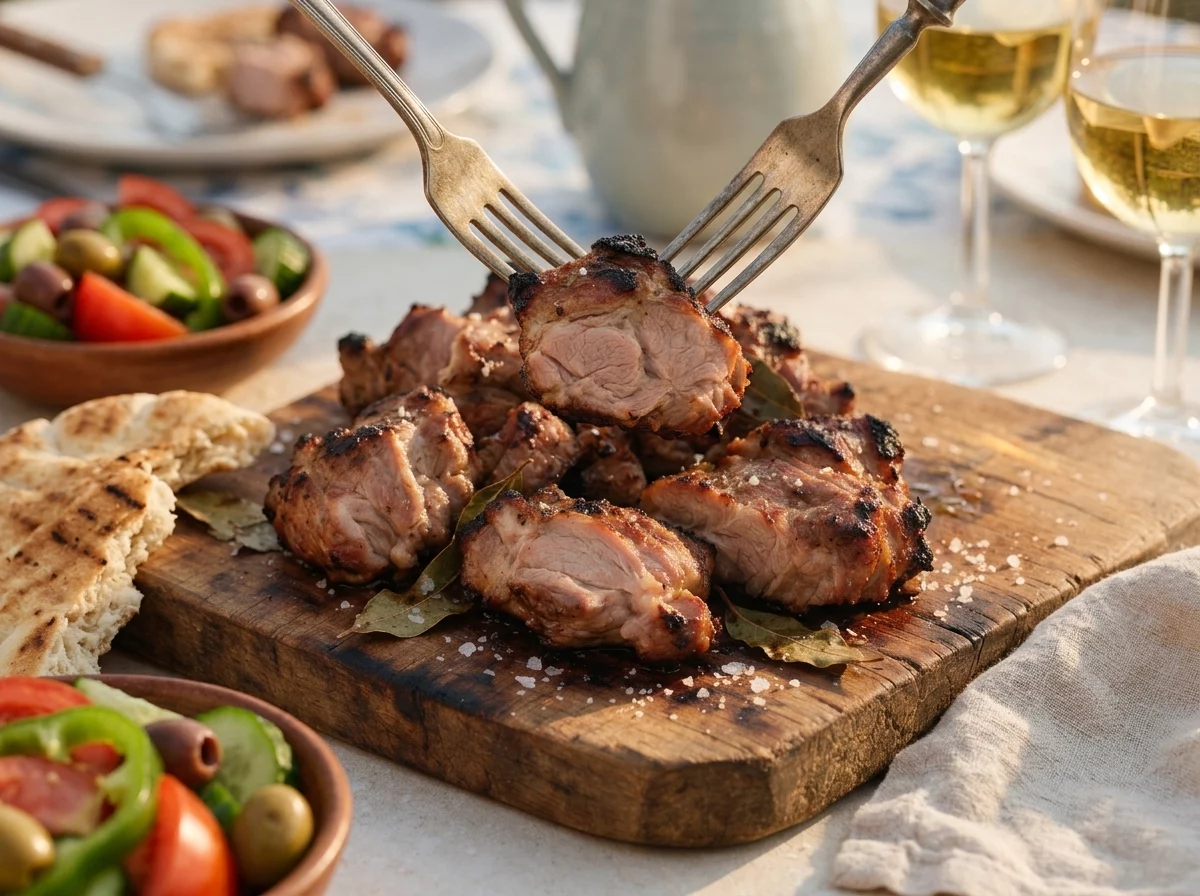
Souvla is usually piled onto a platter and served family style with warm pita, lemon potatoes, and a Cypriot village salad with tomatoes, cucumber, olives, and a slab of halloumi. A squeeze of extra lemon over the meat right before eating makes a real difference.
I like to slide the meat straight off the skewer onto flatbread with a spoon of yogurt and cucumber dip on the side. A cold beer or a glass of dry white wine both work well with the smoky pork.
FAQ
What’s the difference between souvla and souvlaki?
Souvla uses large pork chunks threaded on long skewers and cooked slowly over charcoal for about 2 hours, while souvlaki is small bite-size cubes grilled fast over direct heat in 10 to 15 minutes. Souvla is the slow weekend version, souvlaki is the quick everyday one. Both come from the same Cypriot grilling tradition.
How do I know when Cypriot souvla is done cooking over charcoal?
Check the thickest chunk with an instant read thermometer, souvla is done at 90 C / 194 F. At that point the meat should pull apart easily with light pressure from tongs rather than feeling firm or springy. The outside should look dark and slightly crisp, not black or burnt.
Can I use lamb instead of pork for souvla?
Yes, lamb shoulder cut into the same 5 cm / 2-inch chunks works with the same method and roughly the same cook time. Lamb has less internal fat in some cuts, so keep an eye on the coals and don’t let the fire run too hot. Baste it the same way with olive oil and lemon near the end.
Can I freeze leftover cooked souvla?
Yes, cooked and cooled souvla freezes well for up to 2 months in a sealed bag or container. Thaw it overnight in the fridge, then reheat in a 160 C / 325 F oven covered with foil, or in a skillet with a splash of water or broth over medium-low heat.
What goes well with Cypriot souvla?
Warm pita, lemon potatoes, and a village salad with tomatoes, cucumber, and olives are the classic pairings, along with grilled halloumi on the side. A cucumber and yogurt dip cuts through the richness of the pork. A cold beer or dry white wine rounds it out.
Is traditional Cypriot souvla gluten free?
Yes, the pork and seasoning of salt, pepper, oregano, and lemon are naturally gluten free. Just watch what you serve alongside it, pita bread contains gluten, so swap in rice, potatoes, or a gluten-free flatbread if that matters to you.