
Jump to Recipe
Pourgouri is a Cypriot bulgur pilaf made by toasting broken vermicelli in butter, then simmering it with coarse bulgur and stock until every grain turns soft and separate. It tastes nutty and a little toasty from the noodles, with a mild savory backbone from the onion and stock.
I first made this as a side for sheet-pan chicken souvlaki and now I make it most weeks because it needs one pot and about 45 minutes, most of that hands-off.
The bulgur soaks up the stock slowly, so the texture stays tender but not mushy if you don’t lift the lid too often. That’s the one thing that trips people up: peeking during the simmer lets steam escape and the bulgur cooks unevenly.
You don’t need anything special for this recipe. Coarse bulgur, a handful of vermicelli, one onion, and stock you probably already have in the fridge.
Why You’ll Love This Recipe
- Uses pantry staples you likely already have on hand
- One pot start to finish, easy cleanup after dinner
- Nutty flavor from toasted vermicelli, no fancy technique needed
- Works as a side for almost any grilled meat or vegetable
Ingredient Notes
- Coarse bulgur wheat: Use the coarse grind, not fine. Fine bulgur turns gummy in this method and won’t hold its shape.
- Vermicelli noodles: Break dry vermicelli into short pieces before toasting. Angel hair pasta snapped into 1-inch bits works the same way.
- Chicken stock: Swap in vegetable stock for a vegetarian version. Homemade or a good boxed stock both work fine here.
- Butter: Olive oil is a fine swap if you want this dairy-free, though the toasted vermicelli tastes a bit richer with butter.
- Onion: Chop it fine so it melts into the pilaf instead of standing out as separate bites.

Cypriot Bulgur Pourgouri Pilaf with Toasted Vermicelli
Ingredients
Method
- Rinse the bulgur in a fine-mesh strainer under cold water for a few seconds, then drain well and set aside.
- Melt the butter in a 3-quart / 2.8L saucepan over medium heat until it foams.
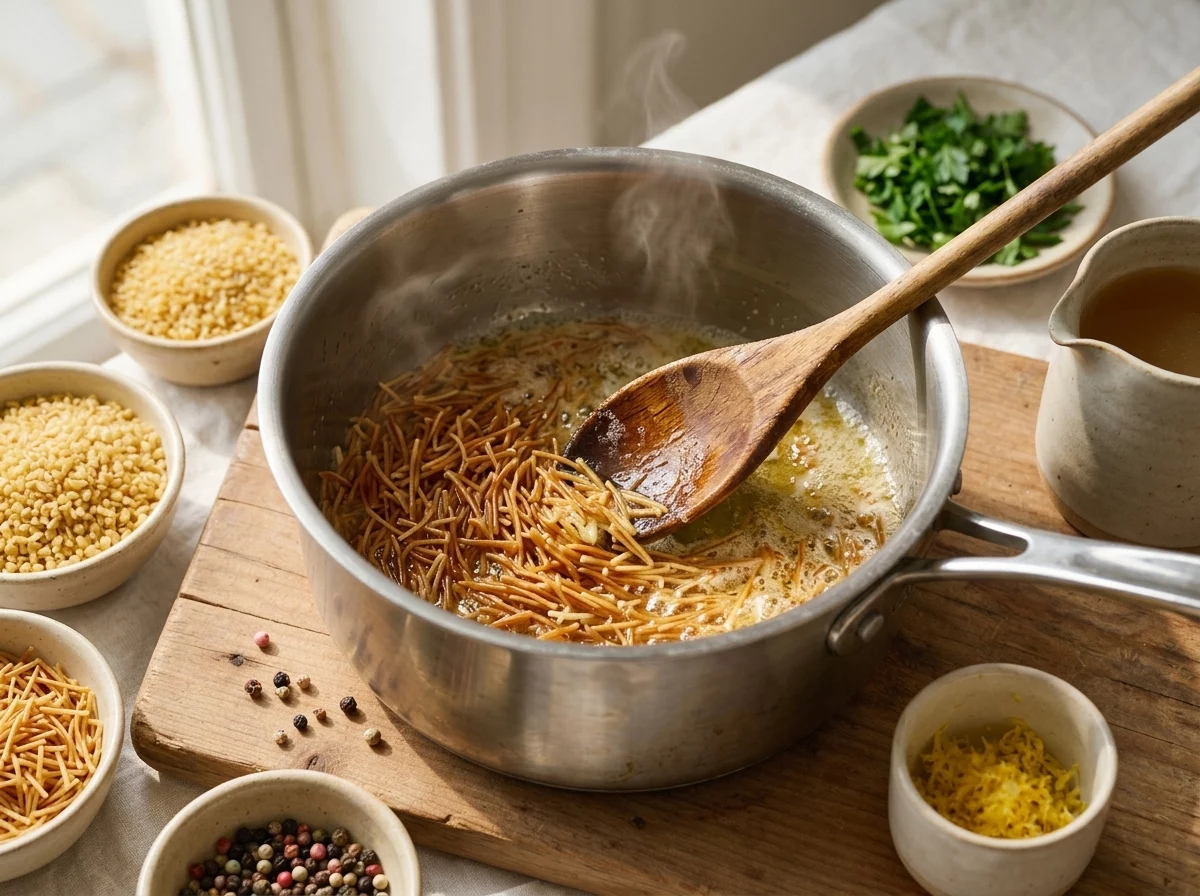
- Add the broken vermicelli and stir constantly for 2 to 3 minutes until golden brown. Watch it closely, it can burn fast once it starts to color.
- Add the chopped onion and cook for 4 to 5 minutes, stirring often, until soft and translucent.
- Stir in the rinsed bulgur and coat it in the butter and onion for about 1 minute.
- Pour in the stock, add the salt and pepper, and bring everything to a boil.
- Lower the heat, cover the pan tightly, and simmer for 15 to 18 minutes without lifting the lid, until the liquid is absorbed and the bulgur is tender.
- Remove the pan from the heat and let it sit covered for 10 minutes to finish steaming.
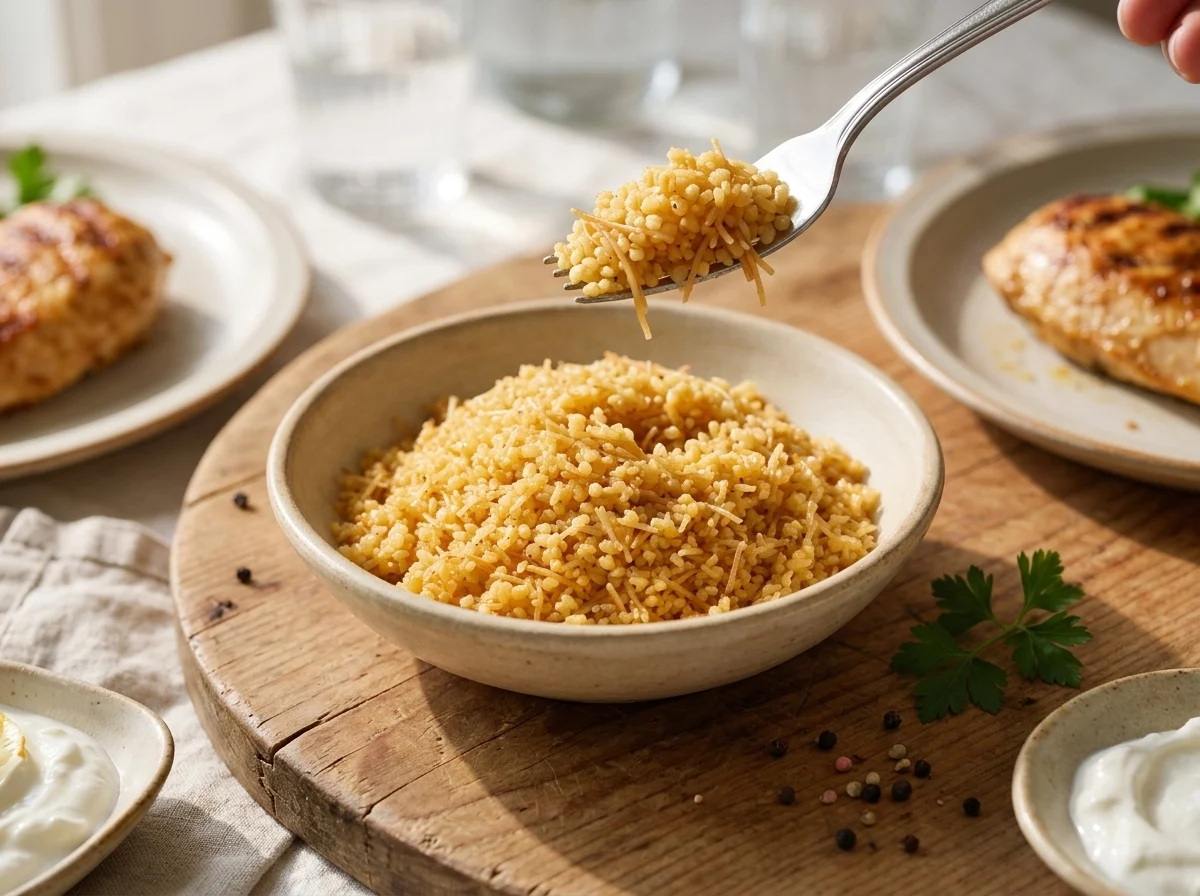
- Fluff the pilaf with a fork, taste, and adjust the salt if needed. Serve warm.
Notes
- Use coarse bulgur, not fine, or the texture turns gummy.
- Don't lift the lid while it simmers, steam loss undercooks the grains.
- Let it rest 10 minutes off heat before fluffing with a fork.
- Taste the stock's saltiness before adding extra salt to the pot.
Tips for Success
- Rinse the bulgur briefly under cold water to wash off extra starch before it goes in the pan.
- Watch the vermicelli closely while it toasts, it turns from golden to burnt in under a minute.
- Keep the lid on for the whole simmer, lifting it lets steam escape and leaves the bulgur undercooked.
- Let the pan rest off heat for 10 minutes before fluffing, this finishes the cooking evenly.
- Taste before adding extra salt, stock brands vary a lot in how salty they already are.
Variations
- Swap chicken stock for vegetable stock and butter for olive oil to make this a vegan side dish.
- Stir a tablespoon of tomato paste in with the onion for a rosier color and a tangier finish.
- Add a handful of toasted almonds or chickpeas at the end for extra crunch and protein.
Storage and Reheating
Cypriot bulgur pilaf pourgouri keeps well in an airtight container in the fridge for 4 to 5 days. The grains firm up as they chill, which is normal.
To reheat, add a splash of water or stock to the pilaf and warm it in a covered skillet over low heat for 4 to 5 minutes, stirring once or twice. A microwave works too, about 1 to 2 minutes covered, stirring halfway through.
For longer storage, freeze cooled pourgouri in portions for up to 2 months. Thaw overnight in the fridge before reheating on the stove.
Serving Suggestions
Pourgouri works as a side for grilled chicken, lamb chops, or crispy pan-seared halloumi fries, since the mild, nutty pilaf balances richer, charred flavors.
I like to spoon it next to a simple Cypriot village salad with a squeeze of lemon, or serve it with a dollop of thick yogurt on top.
For a light meal on its own, top it with a fried egg and a few chopped herbs.
FAQ
Why is my pourgouri mushy instead of fluffy?
Mushy pourgouri usually means too much liquid or a lifted lid during the simmer. Steam needs to stay trapped for the bulgur to cook evenly, so keep the lid on the full 15 to 18 minutes and measure your stock rather than eyeballing it.
Can I use orzo instead of vermicelli in pourgouri?
Yes, orzo works as a stand-in for vermicelli in this Cypriot bulgur pilaf. Toast it in the butter the same way until golden, then follow the recipe as written, though the texture will be slightly plumper than with broken vermicelli.
Can I make Cypriot pourgouri ahead and reheat it later?
Yes, pourgouri reheats well, unlike some rice dishes that dry out. Store it in the fridge for up to 5 days and reheat in a covered skillet with a splash of stock or water over low heat until warmed through, about 4 to 5 minutes.
What goes well with Cypriot bulgur pilaf pourgouri?
Grilled chicken, slow-baked Cypriot lamb tava, or pan-seared halloumi all pair well with this pilaf since its nutty, mild flavor balances richer grilled meats. A cucumber and tomato salad or a spoon of yogurt on the side rounds out the plate.
Is Cypriot pourgouri gluten free?
No, traditional pourgouri is not gluten free because both bulgur and vermicelli are made from wheat. For a gluten-free version, you’d need to swap in a gluten-free small pasta and use rice instead of bulgur, which changes the texture and dish significantly.
What’s the difference between pourgouri and regular bulgur pilaf?
Pourgouri is a specific Cypriot version of bulgur pilaf made by toasting broken vermicelli in butter before adding the bulgur and stock. That toasting step gives it a nutty, slightly deeper flavor than a plain bulgur pilaf made without noodles.