
Jump to Recipe
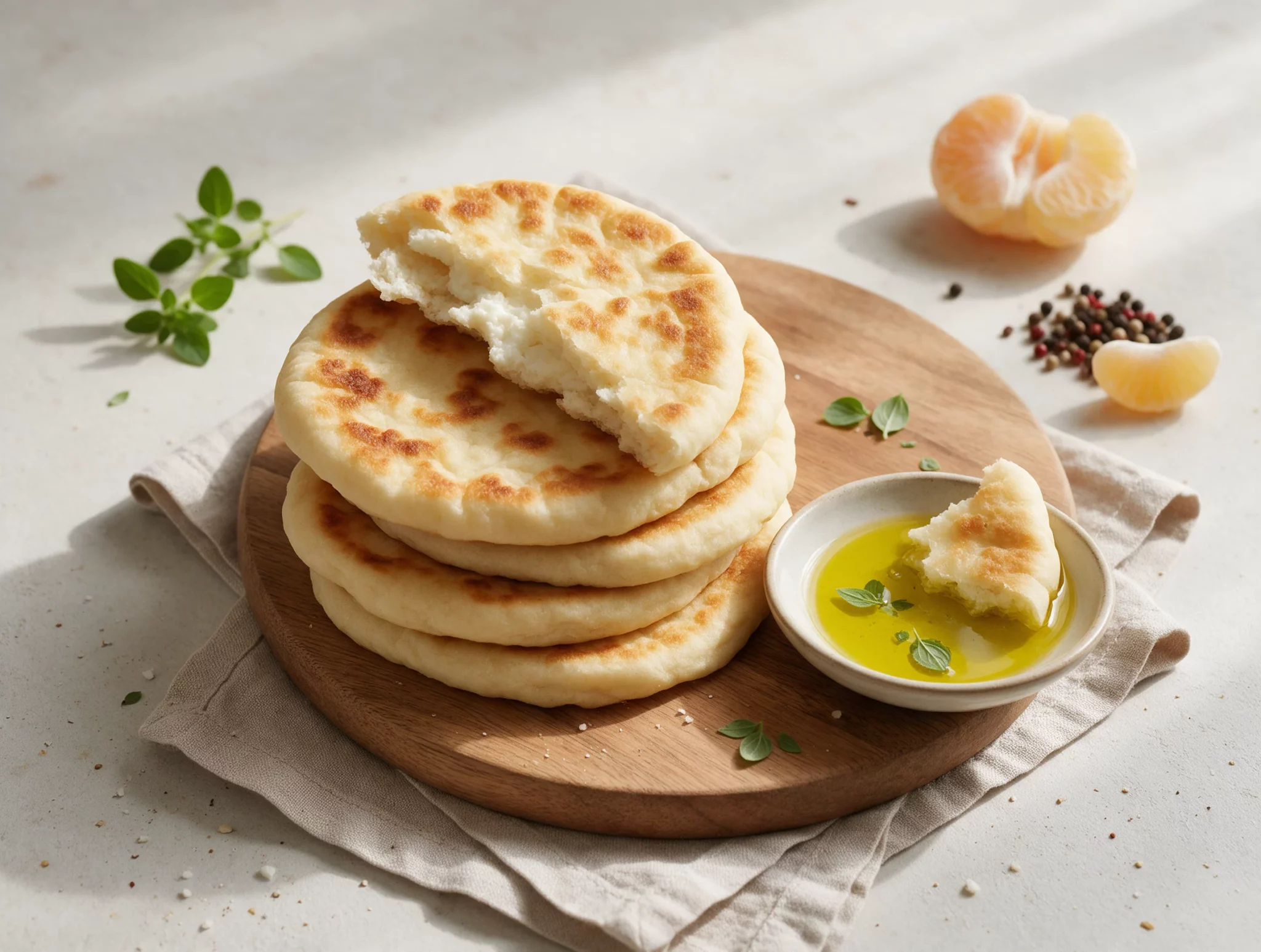
Greek yogurt flatbreads are soft, chewy flatbreads made from flour, Greek yogurt, and baking powder, cooked in a hot skillet on the stovetop. There’s no yeast and no waiting around for dough to rise.
The yogurt does two jobs here. It adds moisture so the dough stays soft, and it gives the bread a slight tang that plain flatbread doesn’t have. Once it hits the hot pan, the dough puffs up and gets brown blistered spots, the kind you’d expect from a good pita.
I make these when I want fresh bread for wraps or dips but don’t have two hours for a yeasted dough to rise. From mixing bowl to the table, you’re looking at about 40 minutes.
The dough should feel soft and slightly tacky, not wet and sticky. If it sticks to your hands like glue, work in more flour a tablespoon at a time before you roll it out.
Why You’ll Love This Recipe
- No yeast and no rise time, just mix and cook
- Only 4 pantry ingredients plus a splash of oil
- Ready from bowl to table in about 40 minutes
- Works for wraps, dips, or scooping up curry
Ingredient Notes
- Greek yogurt: Use full-fat plain Greek yogurt for the softest dough. Low-fat works but the flatbreads turn out a bit drier.
- all-purpose flour: Standard all-purpose flour gives the best texture here. Whole wheat works too but the dough will need a bit more yogurt to stay soft.
- baking powder: This is what puffs the bread in the skillet since there’s no yeast. Check that it’s not expired or the flatbreads will stay flat.
- olive oil: A small amount goes into the dough and more for brushing after cooking. Melted butter works instead of the brushing oil if you want a richer flavor.
Easy 2-Ingredient Stovetop Greek Yogurt Flatbreads
Ingredients
Method
- Whisk the flour, baking powder, and salt together in a mixing bowl.
- Add the Greek yogurt and 1 tablespoon of the olive oil. Mix with a spoon, then your hands, until a shaggy dough forms.
- Turn the dough onto a lightly floured surface and knead for 2 to 3 minutes, until smooth and slightly tacky but not sticky. Add flour a tablespoon at a time if it sticks to your hands.
- Cover the dough with a towel and let it rest for 10 minutes so it's easier to roll.
- Divide the dough into 6 equal pieces, about 85 g each. Roll each piece into a round about 15 cm / 6 inches wide and 5 mm thick.
- Heat a 10-inch / 25 cm nonstick skillet over medium-high heat until hot. You shouldn't need oil in the pan itself.
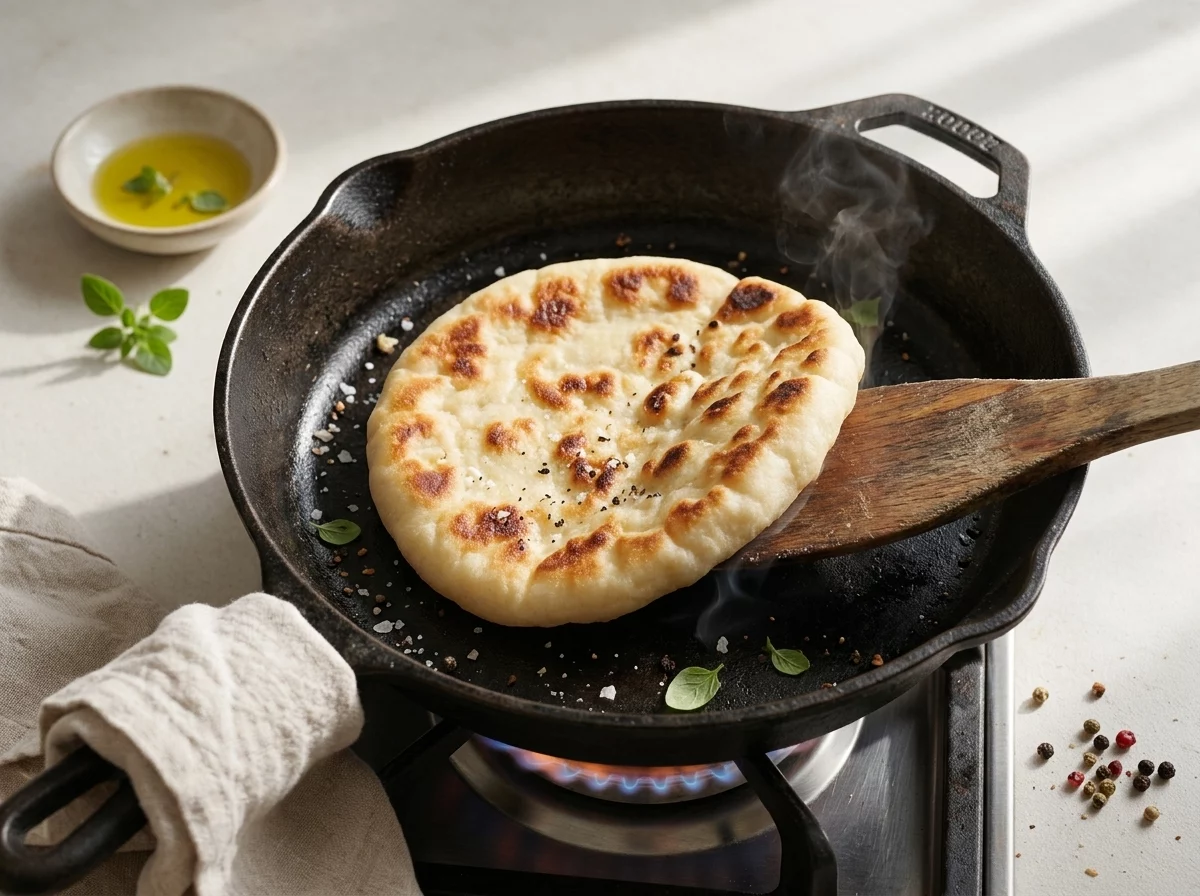
- Cook one flatbread at a time. Cook for 2 to 3 minutes on the first side, until brown spots appear and bubbles form.
- Flip and cook the second side for 1 to 2 minutes, pressing gently with a spatula, until it puffs slightly and both sides show golden brown spots.
- Transfer to a plate and brush lightly with the remaining olive oil. Stack cooked flatbreads under a clean towel to keep them soft while you cook the rest.
- Repeat with the remaining dough rounds, letting the pan reheat for a minute between batches if it starts to cool down.
- Serve warm, or let cool completely before storing.
Notes
- Rest the dough for 10 minutes before rolling for easier shaping.
- Cook one or two flatbreads at a time so the pan heat doesn't drop.
- Check baking powder freshness before starting, it's the only rising agent here.
- Brush with oil or butter right off the skillet while still warm.
Tips for Success
- Knead the dough for only 2 to 3 minutes, just until it’s smooth and holds together.
- Rest the dough for 10 minutes before rolling so it doesn’t spring back when you shape it.
- Roll the flatbreads evenly to about 5 mm thick so they cook through without burning the outside.
- Cook only one or two flatbreads at a time so the skillet stays hot enough to puff the dough.
- Stack cooked flatbreads under a clean towel right away to keep them soft while the rest cook.
Variations
- Mix chopped garlic and parsley into the olive oil you brush on after cooking for a garlic naan feel.
- Add 1 tsp za’atar or dried oregano into the dry ingredients for a herby, Mediterranean-style flatbread.
- Swap half the flour for whole wheat flour for a heartier, slightly nutty flatbread.
Storage and Reheating
Let the flatbreads cool completely, then stack them with a piece of parchment between each one. Store in an airtight bag or container at room temperature for 2 days, or in the fridge for up to 5 days.
To reheat, warm them in a dry skillet over medium heat for 30 to 45 seconds per side, or wrap a stack in foil and heat in a 180 C / 350 F oven for about 8 minutes. A few seconds in the microwave works in a pinch, though the edges will be softer instead of crisp.
To freeze, stack the cooled flatbreads with parchment between each one and seal in a freezer bag for up to 2 months. Thaw at room temperature, then reheat in the skillet as above.
Serving Suggestions
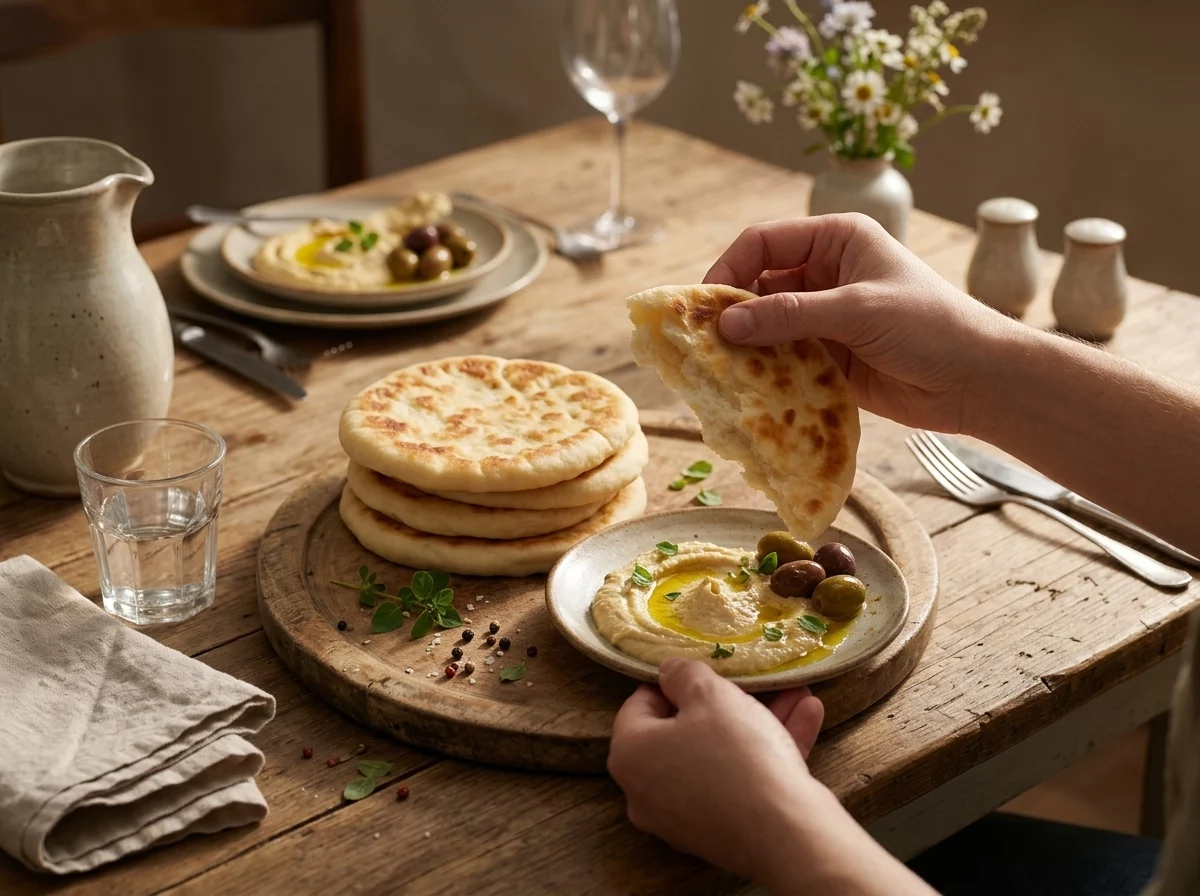
These flatbreads work well as a wrap for lemon roasted chicken thighs, ground beef, or falafel with a spoon of yogurt sauce. They’re also good torn into pieces for scooping up hummus, tzatziki, or a lentil soup.
For a simple lunch, I brush a warm flatbread with olive oil, add crumbled feta, cucumber, and a few olives, then fold it in half. They also hold up well next to a bowl of curry or chili instead of rice.
Serve them warm from the skillet if you can. They soften as they cool, so a quick reheat brings back the chew.
FAQ
Why are my Greek yogurt flatbreads tough instead of soft?
Tough flatbreads usually mean the dough was overworked or too much flour got added while rolling. Knead just until the dough is smooth, about 2 to 3 minutes, and only dust the surface lightly with flour. Overcooking on the skillet also dries them out, so pull them once golden spots appear, around 2 to 3 minutes per side.
Can I use regular yogurt instead of Greek yogurt in this flatbread dough?
You can, but the dough will be wetter since regular yogurt has more liquid than Greek yogurt. Add an extra 2 to 3 tablespoons of flour to bring it back to a soft, slightly tacky texture. The flatbreads will still puff, though the tang will be milder.
Can I make Greek yogurt flatbread dough ahead of time?
Yes, you can mix the dough and keep it wrapped in the fridge for up to 24 hours before rolling and cooking. Let it sit at room temperature for 15 minutes before rolling so it’s easier to shape. Cooked flatbreads also freeze well for up to 2 months.
What goes well with Greek yogurt flatbreads for dinner?
Grilled chicken, falafel, or a simple lentil soup all pair well with these flatbreads. Use them to scoop up hummus or tzatziki, or fold them around Greek briam roasted vegetables and feta for a quick wrap. They also work as a side next to a bowl of curry.
Are Greek yogurt flatbreads gluten free?
Not as written, since they use all-purpose wheat flour. To make them gluten free, swap in a 1:1 gluten-free flour blend that contains xanthan gum, though the dough will feel stickier and may need a few extra minutes to rest before rolling.
What’s the difference between Greek yogurt flatbread and regular pita bread?
Pita bread is a yeasted dough that needs time to rise and puffs from steam in a very hot oven. Greek yogurt flatbread skips the yeast entirely, using baking powder for lift and Greek yogurt for softness, so it cooks on the stovetop in a fraction of the time.