
Jump to Recipe
Tzatziki is a cold Greek sauce made from thick yogurt, grated cucumber, garlic, and dill. It tastes cool and tangy, with a good garlic kick and a hint of fresh herbs.
I make this when I want something fast to put on the table. It takes 15 minutes of hands-on work, then 30 minutes in the fridge to firm up and let the flavors settle.
The key is draining the cucumber well. If you skip this step, the sauce turns watery and thin instead of thick and spoonable.
I use full-fat Greek yogurt here because it holds its shape and doesn’t turn runny. Regular yogurt works in a pinch, but the sauce will be looser.
Why You’ll Love This Recipe
- Ready in 15 minutes of hands-on work, no stove needed
- Stays thick, not watery, if you drain the cucumber right
- Works as a dip, a sauce, or a wrap spread
- Keeps well in the fridge for busy weeknights
Ingredient Notes
- Greek yogurt: Use full-fat yogurt with at least 5% fat for a thick, rich result. Low-fat yogurt works but the sauce will be thinner.
- Cucumber: English or Persian cucumber has fewer seeds and less water. Regular cucumber works too, just drain it a bit longer.
- Garlic: Fresh cloves give the best punch. Grate or press them so you don’t get large chunks in the sauce.
- Fresh dill: Fresh dill gives the brightest flavor. You can swap in fresh mint for a different, still traditional, take.
- Olive oil: Extra virgin olive oil adds richness and a good finish drizzled on top before serving.
- White wine vinegar or lemon juice: Either works to add a little brightness. Use lemon juice if you want a slightly more citrus taste.
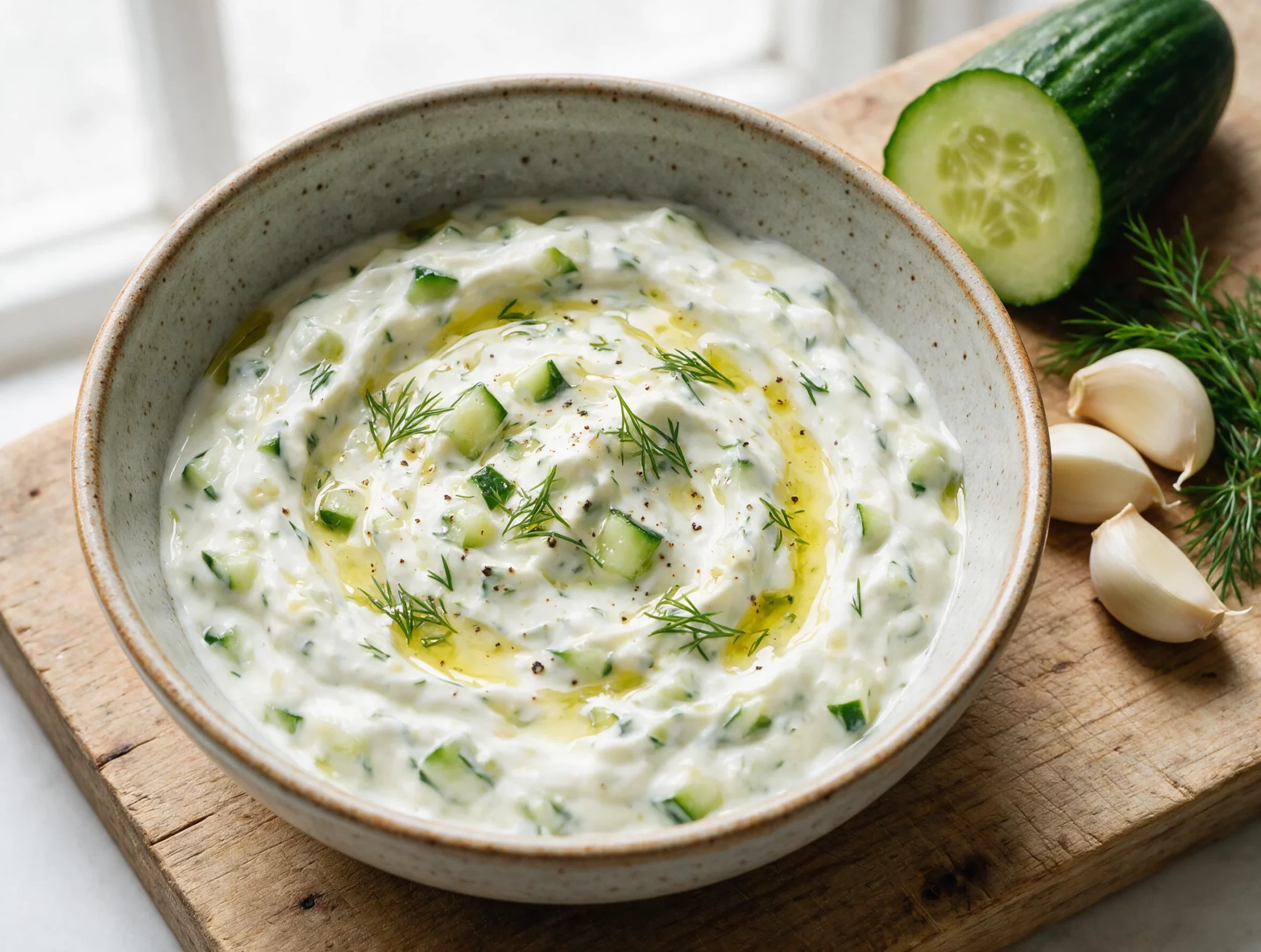
Easy Homemade Greek Tzatziki with Cucumber and Dill
Ingredients
Method
- Grate the cucumber on the coarse side of a box grater into a bowl, skin on or off, whichever you prefer.
- Toss the grated cucumber with 1/2 tsp salt and tip it into a fine-mesh sieve set over a bowl. Let it drain for 10 minutes.
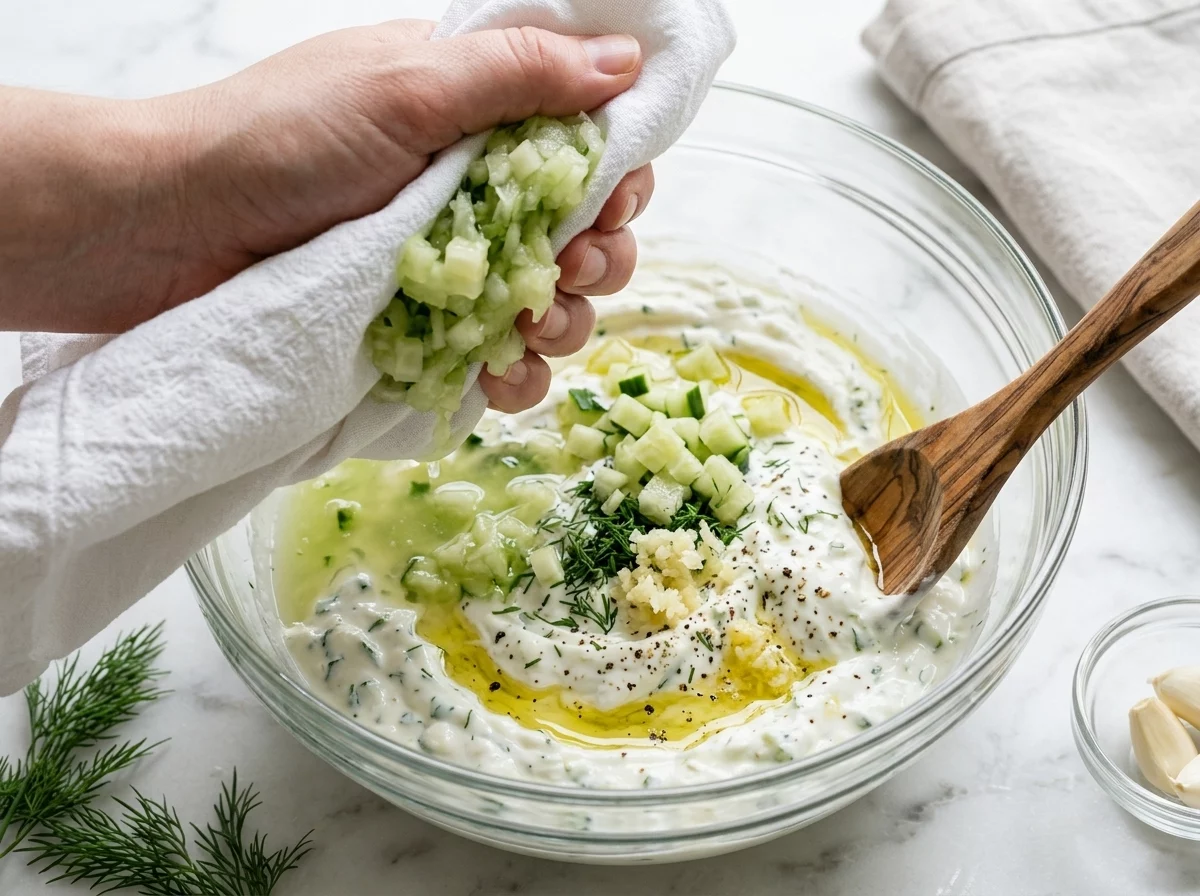
- Wrap the drained cucumber in a clean kitchen towel or cheesecloth and squeeze hard over the sink until no more liquid comes out. This step is what keeps the sauce thick instead of watery.
- In a mixing bowl, combine the Greek yogurt, squeezed cucumber, grated garlic, chopped dill, olive oil, and vinegar or lemon juice.
- Stir everything together until smooth. Taste and add more salt if needed, keeping in mind the yogurt may already be a little salty.
- Cover the bowl and chill in the fridge for at least 30 minutes, so the garlic and dill have time to settle into the yogurt.
- Give the tzatziki a quick stir before serving. Drizzle with a little more olive oil and a sprinkle of dill on top.
Notes
- Drain the cucumber well or the sauce turns watery.
- Chill for at least 30 minutes so the flavors blend.
- Use fresh garlic, not jarred, for the best flavor.
- Taste before salting, some yogurt brands are already salty.
Tips for Success
- Squeeze the grated cucumber hard in a towel – this step keeps the sauce thick, not watery.
- Use full-fat Greek yogurt with at least 5% fat for the thickest, creamiest result.
- Grate the garlic on a fine grater or press it so you avoid big chunks in the sauce.
- Chill the tzatziki for at least 30 minutes before serving so the flavors have time to blend.
- Taste before adding extra salt, since some yogurt brands are already fairly salty.
Variations
- Swap fresh dill for fresh mint for a brighter, slightly different take on the classic sauce.
- Add a pinch of dried oregano and use lemon juice instead of vinegar for a more citrus-forward version.
- Stir in extra grated garlic and a small pinch of cayenne if you want more heat and punch.
Storage and Reheating
Tzatziki keeps well in the fridge for 3 to 4 days in an airtight container. The cucumber will let out a little more water as it sits, so give the sauce a quick stir before serving it again.
I don’t recommend freezing tzatziki. Yogurt separates and turns watery and grainy once it thaws, and the texture never really comes back.
There’s no reheating step here since this is a cold sauce. If you want to make it ahead, mix it a few hours before your meal so the garlic and dill have time to settle in.
Serving Suggestions
Tzatziki works as a dip, a sauce, or a spread. I put it next to warm pita, grilled souvlaki skewers, or lamb chops, and let people spoon it on themselves.
It also works well as a cool topping for grilled or roasted vegetables, or spread inside a gyro wrap with tomato and onion.
For a simple lunch, I serve it alongside a fresh cucumber tomato feta salad, radishes, and a plate of olives on the side.

FAQ
Why is my tzatziki watery instead of thick?
Your tzatziki turns watery when the cucumber isn’t drained well before mixing. Grated cucumber holds a lot of liquid, so salt it, let it sit in a sieve for 10 minutes, then squeeze it hard in a towel. Skipping that squeeze is the most common reason tzatziki comes out thin instead of thick and spoonable.
Can I use regular yogurt instead of Greek yogurt for tzatziki?
You can, but the sauce will be looser and slightly more tangy. Greek yogurt is strained, so it’s thicker and holds up better once mixed with cucumber and garlic. If you only have regular yogurt, strain it through a cheesecloth-lined sieve for an hour first to thicken it up.
How long does homemade tzatziki last in the fridge?
Tzatziki keeps for 3 to 4 days in a sealed container in the fridge. The cucumber can release a little more liquid as it sits, so give it a quick stir before serving. I don’t recommend freezing it, since yogurt separates and turns grainy once thawed.
What goes well with Greek tzatziki besides pita bread?
Tzatziki works well with grilled chicken pita bowls, roasted vegetables, or as a dip for raw carrots and cucumber sticks. I also spread it on gyro wraps or spoon it over grilled fish. It’s a cool contrast next to anything smoky or spiced.
Is Greek tzatziki gluten free?
Yes, tzatziki made with yogurt, cucumber, garlic, dill, and olive oil is naturally gluten free. Just check the label on your yogurt if you have celiac disease, since some flavored or thickened yogurts add gluten-containing stabilizers. Serve it with gluten-free bread or fresh vegetables instead of regular pita.
What’s the difference between tzatziki and cucumber raita?
Tzatziki uses thick Greek yogurt, garlic, dill or mint, and olive oil, while raita is an Indian yogurt sauce often spiced with cumin, coriander, or chaat masala and skips the olive oil. Tzatziki leans garlicky and herbal, raita leans warm and spiced. Both use grated or diced cucumber as the base.