
Jump to Recipe
Cypriot pork and potato stew is a slow-simmered dish of pork shoulder, potatoes, red wine, and whole coriander seeds, cooked low on the stove until the meat falls apart and the sauce turns rich and glossy.
The coriander gives it a citrusy, slightly sweet edge that shows up a lot in Cypriot cooking, and the cinnamon stick adds a warm background note without making the stew taste sweet. The potatoes soak up the wine sauce and go soft enough to break apart with a spoon.
This version is close to the classic afelia, which usually skips the potatoes, but I add them here because it turns one pot into a full dinner.
It’s a good dish for a Sunday when you already have the stove going for something else. Most of the work is just waiting for the pot to do its thing.
Why You’ll Love This Recipe
- One pot feeds a crowd with little cleanup
- Coriander seed and cinnamon give it a warm, citrusy flavor
- Pork shoulder turns fork-tender after a long, slow simmer
- Potatoes cook right in the sauce, so there’s nothing extra to make
Ingredient Notes
- pork shoulder: Also called pork butt. It has enough fat and connective tissue to turn tender after a long simmer; leaner cuts like loin will dry out.
- coriander seeds: Use whole seeds and crush them lightly with the flat side of a knife for the best aroma. Ground coriander works in a pinch but tastes flatter.
- cinnamon stick: Adds warmth without sweetness. If you only have ground cinnamon, use a small pinch, about 1/4 tsp, added with the tomato paste.
- dry red wine: Pick something you’d drink, nothing sweet. A basic Cabernet or Merlot works fine here.
- potatoes: Yukon gold or another waxy potato holds its shape better than a starchy russet, which can fall apart in the sauce.
- tomato paste: Just enough to thicken the sauce and add color. This isn’t a tomato-based stew.
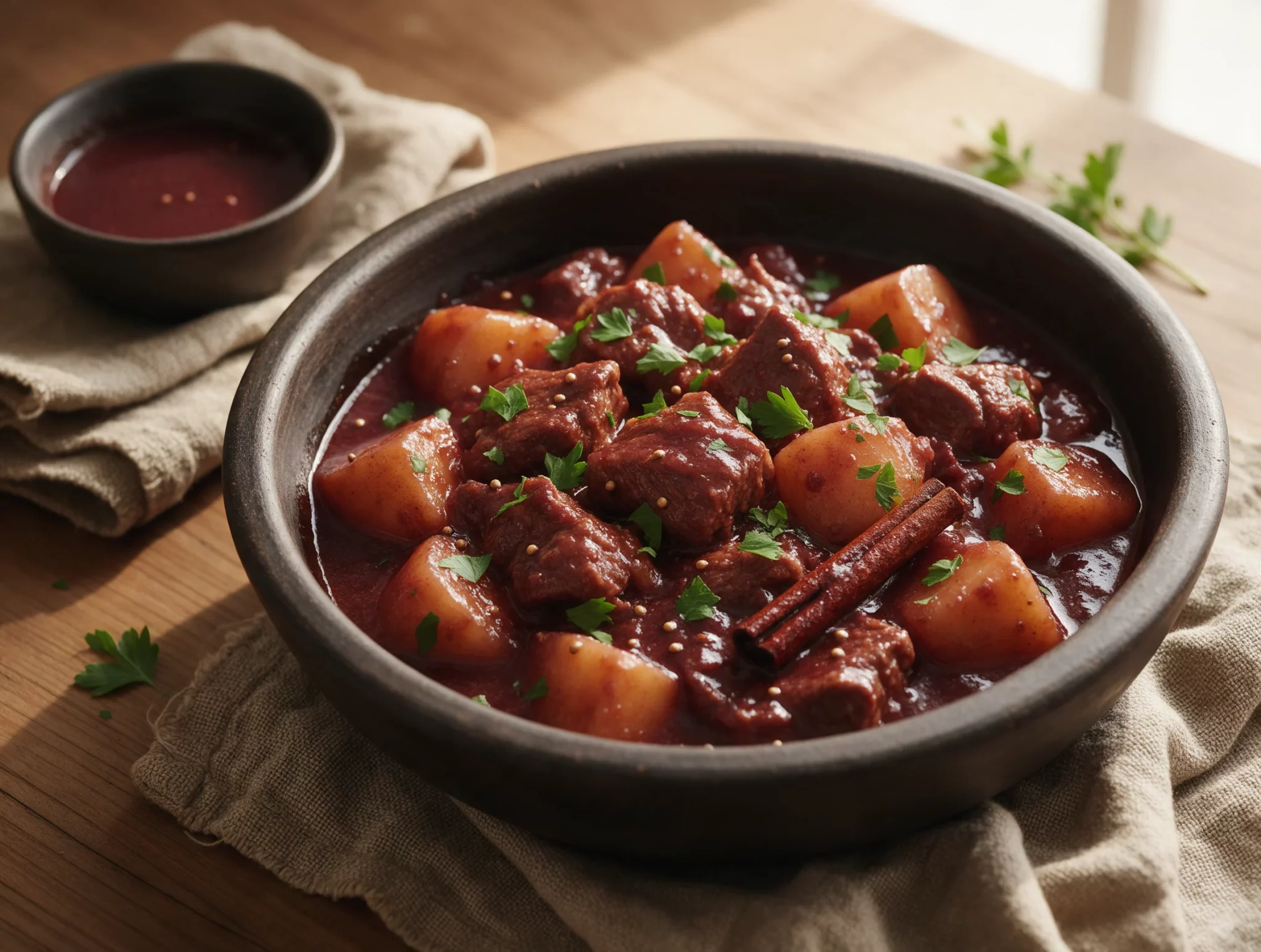
Cypriot Pork and Potato Stew with Wine and Coriander
Ingredients
Method
- Pat the pork dry with paper towels and season with the salt and black pepper.
- Heat 2 tbsp of the olive oil in a 5-quart / 4.7 L Dutch oven over medium-high heat. Brown the pork in 2 batches, about 4 to 5 minutes per batch, turning until golden on most sides. Don't crowd the pot or the pork will steam instead of brown. Transfer to a plate.
- Lower the heat to medium and add the remaining 1 tbsp oil. Add the onion and cook for 5 to 6 minutes, until soft and light gold.
- Stir in the garlic, coriander seeds, cinnamon stick, and bay leaves. Cook for 1 minute, until fragrant.
- Add the tomato paste and cook for 1 minute, stirring, until it darkens slightly.
- Return the pork to the pot. Pour in the red wine and scrape the bottom of the pot with a wooden spoon to loosen any browned bits. Simmer for 2 minutes.
- Add the chicken stock and bring to a gentle simmer. Cover, lower the heat, and cook for 1 hour 15 minutes, stirring every 20 minutes or so, until the pork starts to soften.
- Add the potatoes, cover again, and simmer for 30 to 35 minutes, until the potatoes are tender and the pork shreds easily with a fork.
- Uncover and simmer for 10 more minutes, until the sauce thickens and coats the back of a spoon.
- Remove the cinnamon stick and bay leaves. Taste and add more salt if needed. Scatter parsley over the top and serve warm.
Notes
- Use bone-in pork shoulder if you can find it, and remove the bone before serving.
- Crushed coriander seeds give more flavor than whole ones left intact.
- Don't skip browning the pork; it builds the base flavor for the whole sauce.
- Sauce should coat the back of a spoon when done, not run off it.

Tips for Success
- Brown the pork in two batches so each piece gets real color instead of steaming in its own juice.
- Crush the coriander seeds before adding them so they release more aroma into the sauce.
- Wait to add the potatoes until the pork has simmered at least an hour, or they’ll turn to mush.
- Skim any extra fat off the top of the pot before serving if you want a lighter sauce.
- Let the stew sit for 10 minutes off the heat before serving so the sauce settles and thickens more.
Variations
- Swap the pork shoulder for lamb shoulder to make a version closer to Cypriot tavas.
- Use a splash of red wine vinegar mixed with extra stock instead of wine for an alcohol-free version.
- Add a handful of chopped carrots or celery with the onion for a heartier, slightly sweeter stew.
Storage and Reheating
Cypriot pork and potato stew keeps well in the fridge for 3 to 4 days in an airtight container. The flavor actually gets better on day two, once the coriander and cinnamon have more time to settle into the sauce.
You can freeze it for up to 3 months in a freezer-safe container. The potatoes soften a bit more after freezing and thawing, but they still taste fine in the sauce.
Reheat on the stove over medium-low heat with a splash of water or stock, stirring occasionally, for 8 to 10 minutes until hot all the way through. You can also microwave individual portions in 1-minute bursts, stirring between each, until steaming.
Serving Suggestions
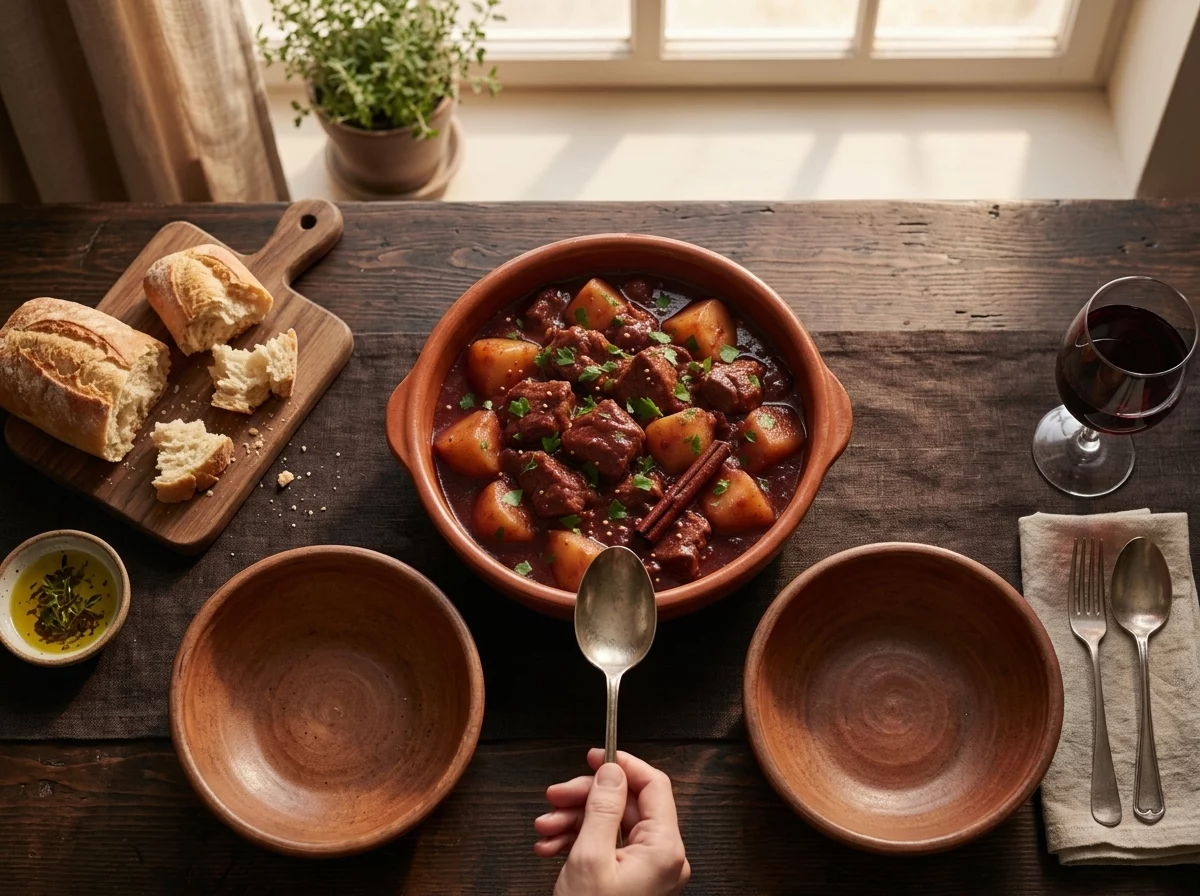
I like to serve this stew with a thick slice of crusty bread to soak up the sauce. A simple Cyprus-style salad of tomatoes, cucumber, and olives on the side keeps the plate fresh.
Spoon it over rice or bulgur if you want something more filling. A glass of the same red wine you cooked with is a natural match.
FAQ
Why is my Cypriot pork and potato stew watery instead of thick?
It usually means the lid was on too long during the final stretch of cooking. Uncover the pot for the last 10 minutes so the liquid can reduce and thicken around the potatoes. If it’s still thin, simmer uncovered a bit longer, stirring so it doesn’t stick.
Can I use pork loin instead of pork shoulder for this stew?
Pork shoulder works better here because its fat and connective tissue break down during the long simmer, giving a fork-tender texture. Pork loin is leaner and turns dry and stringy after over an hour of cooking. Stick with shoulder, or pork butt, for the best result.
Can I freeze Cypriot pork and potato stew?
Yes, it freezes well for up to 3 months in a freezer-safe container. The potatoes get a little softer once thawed, but the flavor holds up fine. Thaw overnight in the fridge, then reheat on the stove with a splash of stock or water.
What goes well with Cypriot pork and potato stew?
Crusty bread for soaking up the sauce is the simplest match. A Cyprus-style salad with tomatoes, cucumber, and olives adds freshness, and rice or bulgur works if you want a bigger meal. A glass of dry red wine, the same kind used in the pot, rounds it out.
Is Cypriot pork and potato stew gluten free?
Yes, as long as you use a gluten-free stock, since the other ingredients, pork, potatoes, wine, coriander, and cinnamon, are naturally gluten free. Always check the label on store-bought stock, since some brands add wheat-based thickeners.
What is the difference between this stew and traditional Cypriot afelia?
Traditional afelia is pork simmered in red wine with coriander seeds, but without potatoes. This stew adds potatoes right into the pot, turning it into a complete one-pot meal instead of a side you’d serve with something else. The core flavors, wine and coriander, stay the same.