
Jump to Recipe
Pitaroudia, or Rhodes chickpea fritters, come from the Greek island of Rhodes. They’re made with soaked chickpeas, diced tomato, onion and fresh mint. This pan-fried version makes about 20 fritters that are crisp outside and soft inside.
They taste fresh and a little sweet from the tomato, with mint in every bite. The chickpeas stay slightly coarse, so you get some texture instead of a smooth paste.
You’ll need dried chickpeas for this one. I soak them for 8 hours and grind them raw, because canned chickpeas make the batter pasty. Recipes change from house to house, so think of this as a simple home version.
Don’t worry if the batter looks loose at first. Let it rest for 15 minutes, then fry a test fritter before you cook the whole batch.
Why You’ll Love This Recipe
- Crisp edges and a soft, tomato-sweet middle
- Made with simple pantry ingredients and fresh herbs
- Vegan, dairy-free and egg-free with no special swaps
- Freezes well, so you can fry a big batch
Ingredient Notes
- Dried chickpeas: Use dried chickpeas soaked for 8 hours. Canned ones work in a pinch, but the batter is softer and needs a few extra tablespoons of flour.
- Ripe tomatoes: Scoop out the seeds and juice before dicing, or the batter gets watery. Firm, ripe tomatoes work better than very soft ones.
- Fresh mint: Mint is the main flavor here. If you can’t find fresh, use 1 tablespoon of dried mint, but the taste will be less bright.
- Extra virgin olive oil: I fry in olive oil for flavor. Sunflower oil also works if you want a milder taste.
- All-purpose flour: The flour only helps bind the batter. Chickpea flour is a fair swap if you need gluten free.
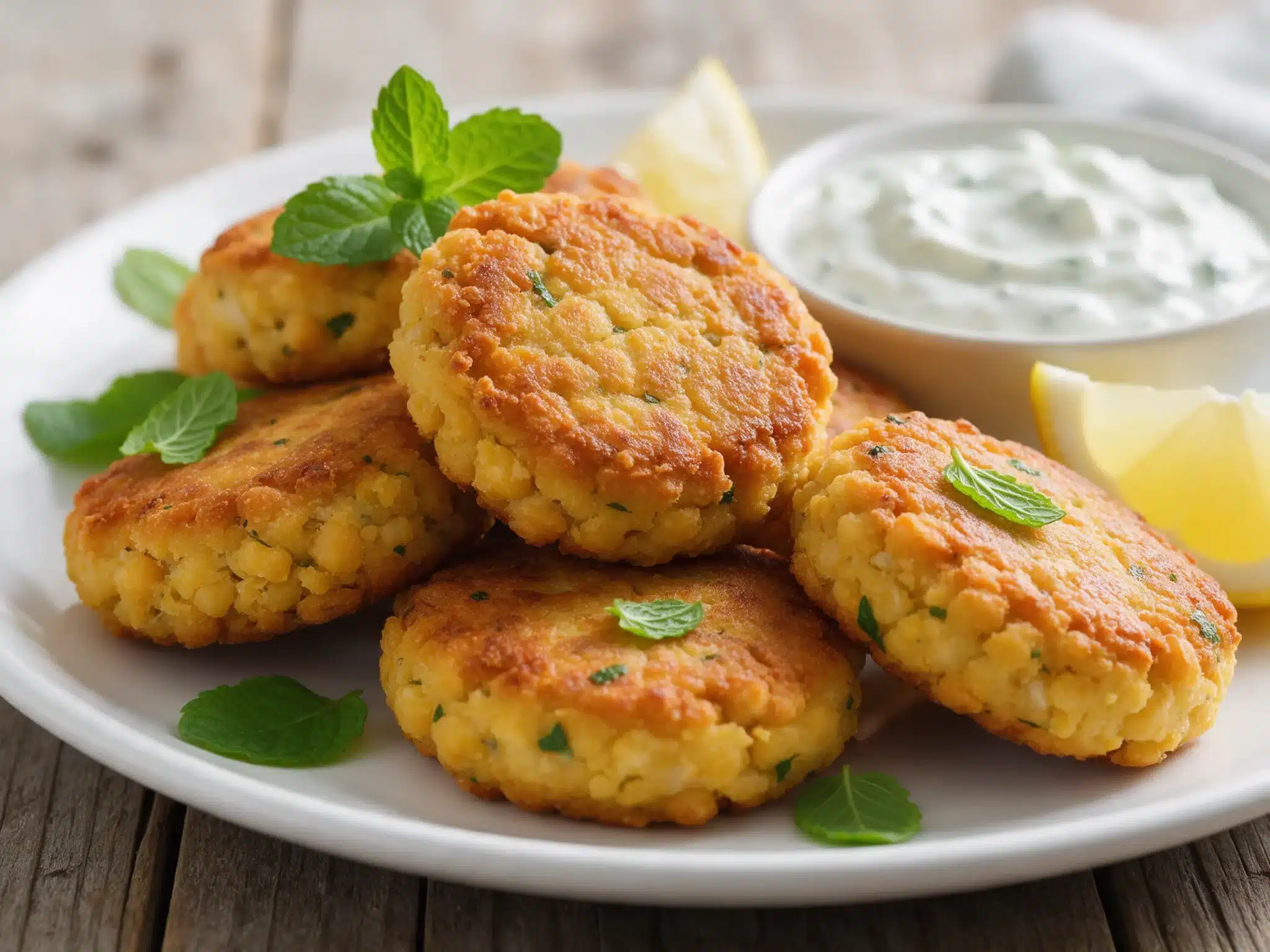
Pan-Fried Rhodes Chickpea Fritters (Pitaroudia) with Mint
Ingredients
Method
- Put the dried chickpeas in a bowl and cover them with cold water by about 5 cm / 2 inches. Soak for 8 hours or overnight, until they've roughly doubled in size, then drain well.
- Pulse the drained chickpeas in a food processor in 10 to 12 short bursts, scraping down the sides once, until they look like coarse couscous. Don't add water, and stop before they turn into a paste.
- Tip the chickpeas into a large bowl with the tomatoes, onion, mint, parsley, flour, baking powder, cumin, salt and pepper. Mix with a spoon until the batter holds together when you squeeze a little in your hand. Let it rest for 15 minutes so the flour can soak up some of the moisture.
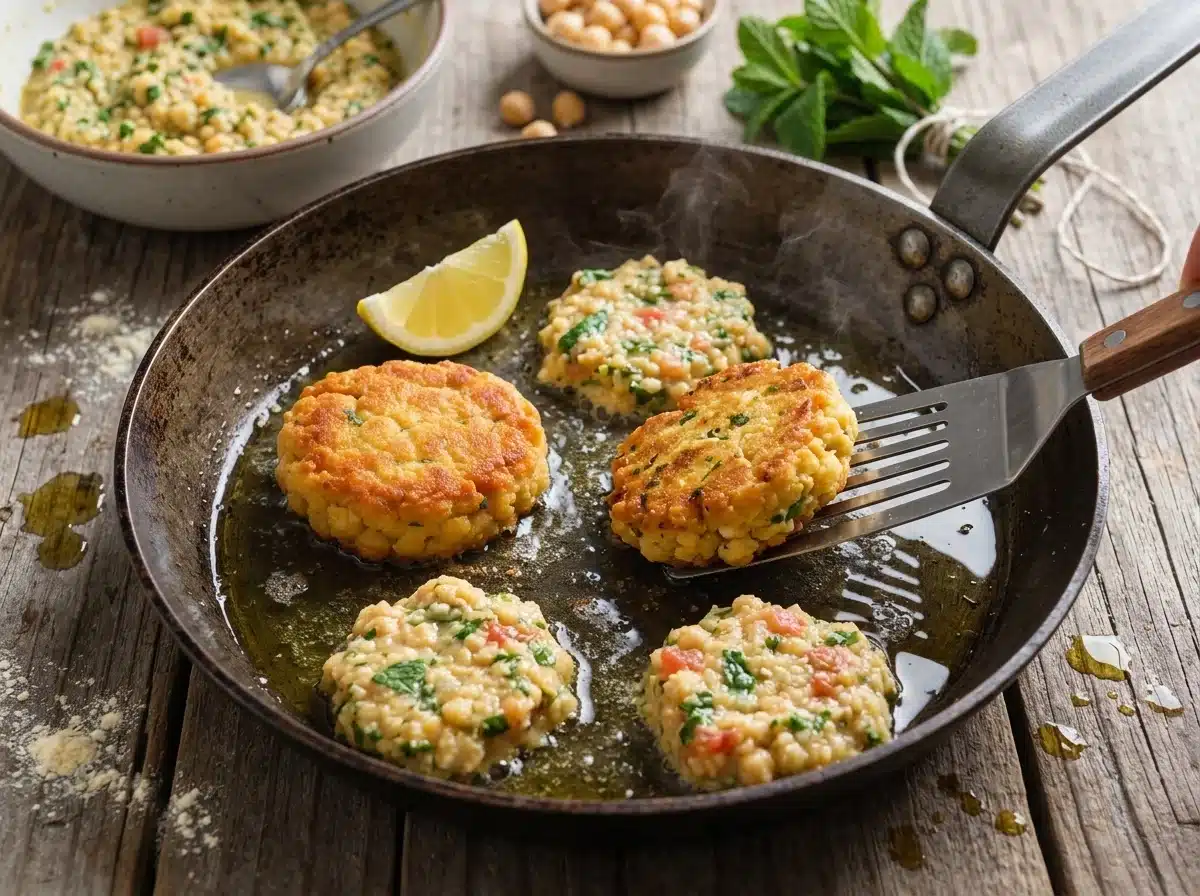
- Pour the olive oil into a 26 cm / 10-inch heavy skillet and heat over medium heat to 175 C / 350 F, about 4 minutes. Drop in a small pinch of batter. It should sizzle steadily right away.
- Scoop 2 tablespoons of batter, press it into a flat round about 6 cm / 2 1/2 inches wide and 1.5 cm / 3/4 inch thick, and slide it into the oil. Fry a test batch of 2 to 3 fritters for 3 minutes per side, until deep golden and crisp. If one falls apart, stir 1 more tablespoon of flour into the batter, and taste a fritter to check the salt.
- Fry the rest in batches of 5 to 6, about 3 minutes per side, so the pan never gets crowded. Lower the heat a little if the fritters brown in under 2 minutes. Move each batch to a wire rack, which makes about 20 fritters in total.
- Serve warm within 20 minutes of frying, with lemon wedges and a pinch of flaky salt if you like.
Notes
- Taste the first test fritter and adjust the salt in the batter before frying the rest.
- Don't overcrowd the pan, or the oil cools down and the fritters turn greasy.
- Fry the first batch as a test of 2 to 3 fritters.
- Squeeze a little batter in your hand. If it holds its shape, it's ready.
Tips for Success
- Soak the chickpeas for the full 8 hours in plenty of cold water, then drain them well so the batter doesn’t turn loose.
- Scoop out the tomato seeds and juice before dicing, since extra liquid is the main reason fritters fall apart.
- Pulse the chickpeas in short bursts until they look like coarse couscous, and stop before they turn into a smooth paste.
- Keep the oil at 175 C / 350 F and lower the heat if the fritters brown in under 2 minutes, because the middle will stay raw.
- Drain the fritters on a wire rack instead of paper towels so the bottoms stay crisp, and serve them within 20 minutes.
Variations
- Add 1 finely minced garlic clove and 1/2 teaspoon ground coriander to the batter for a warmer, more spiced fritter.
- Swap the parsley for the same amount of fresh dill, which goes well with the tomato and mint.
- Brush the shaped fritters with olive oil and bake on a lined sheet at 220 C / 425 F for 20 minutes, flipping once. They’re less crisp than fried.
Storage and Reheating
Pitaroudia keep in the fridge for 3 to 4 days in an airtight container. Put a sheet of parchment between the layers so they don’t stick.
To reheat, set them on a wire rack over a baking sheet and heat at 200 C / 400 F for 8 to 10 minutes, flipping once halfway. The oven brings back the crisp edge, while a microwave makes them soft.
You can freeze the cooked fritters for up to 2 months. Cool them completely, freeze them on a tray, then move them to a freezer bag and reheat from frozen at 200 C / 400 F for 12 to 14 minutes. I don’t freeze the raw batter, since it turns watery as the tomato and onion release juice.
Serving Suggestions
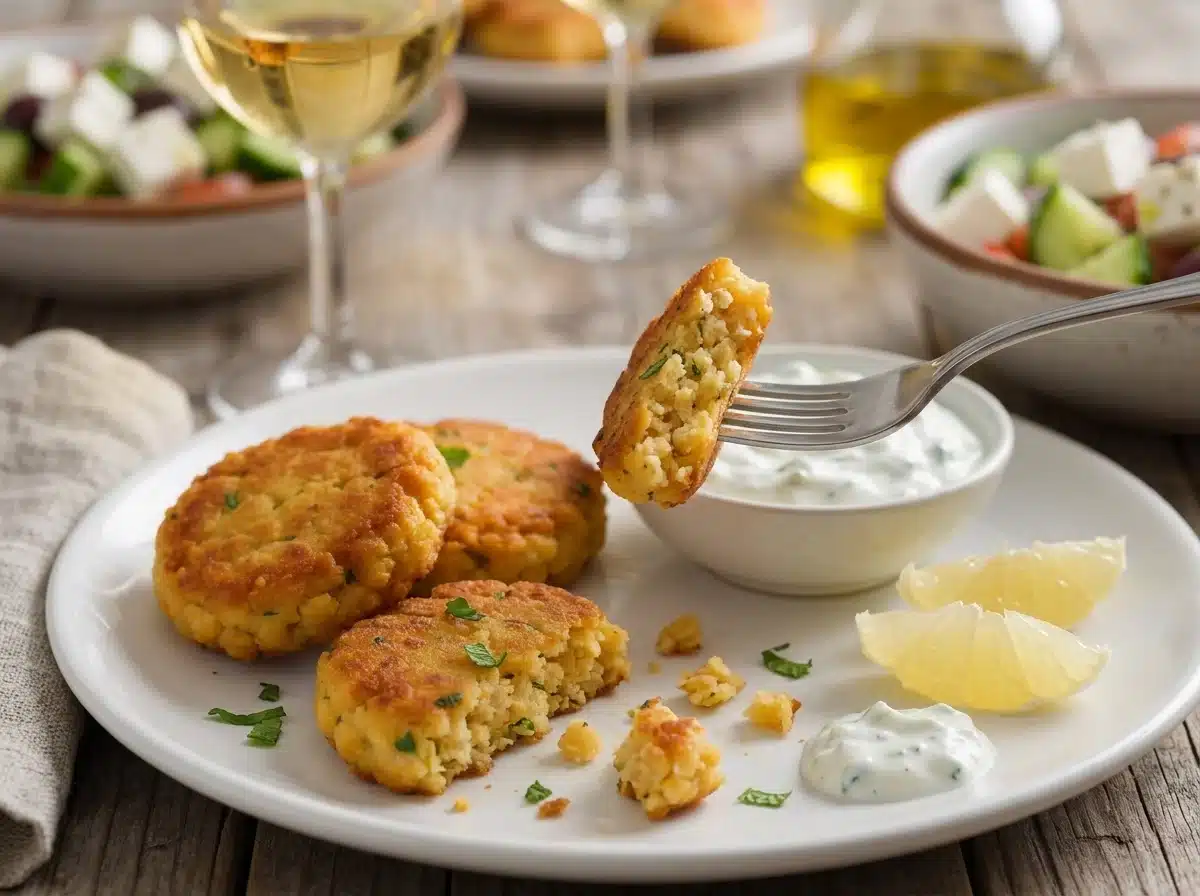
Pitaroudia are best served warm, within 20 minutes of frying, with lemon wedges and a bowl of thick Greek yogurt or tzatziki. A pinch of flaky salt right after frying adds a nice finish.
For a light meal, pile them next to a Greek salad with cucumber, tomato and olives. They also work as part of a meze spread with feta and olives.
They’re still good at room temperature, but the crispness fades as they sit.
FAQ
Why are my pitaroudia falling apart in the pan?
Loose pitaroudia usually mean the batter has too much moisture, often from tomato seeds and juice, or the oil is too cool. Scoop out the tomato seeds, then stir in 1 tablespoon of flour at a time until the batter holds when pressed. Keep the oil at 175 C / 350 F and fry a test fritter first.
Can I use canned chickpeas instead of dried for pitaroudia?
You can, but the fritters come out softer and a bit pasty. Drain the chickpeas well, pat them dry, pulse them until coarse, and add 2 to 3 extra tablespoons of flour. Soaked dried chickpeas give a firmer, crisper bite, so I use them when I have time.
Can I freeze pitaroudia or make the batter the night before?
Freeze the cooked fritters, not the batter. Cool them fully, freeze on a tray, then bag them for up to 2 months and reheat from frozen at 200 C / 400 F for 12 to 14 minutes. Raw batter gets watery overnight because the tomato and onion release juice.
What goes well with Rhodes chickpea fritters?
Tzatziki or thick Greek yogurt and lemon wedges are the easiest match. A Greek salad with cucumber, tomato and olives turns the fritters into a light meal. I also put them out with feta and olives as a small meze spread when friends come over.
Are pitaroudia gluten free?
Not as written, because the recipe has 3 tablespoons of all-purpose flour. Swap in 3 tablespoons of chickpea flour and check that your baking powder is gluten free. The fritters will be a little denser, but they still hold together and fry the same way.
What’s the difference between pitaroudia and falafel?
Pitaroudia have chopped fresh tomato, onion and mint in the batter, so they come out softer and a little sweet. Falafel is usually herb-green and spiced with garlic, cumin and coriander, with no tomato. I also fry pitaroudia flatter, pressed to about 1.5 cm / 3/4 inch thick.