
Jump to Recipe
Santorini tomato fritters are small, crisp patties made from chopped tomatoes, red onion, mint and flour. They come from the Greek island of Santorini, where they’re called domatokeftedes and are usually made with the island’s small, sweet cherry tomatoes. This is a simple home version, so I use whatever ripe tomatoes I can find.
The outside turns golden and crisp. The middle stays soft and tastes of cooked tomato, with the mint and onion coming through. They work as a snack, a starter, or a light lunch.
The one thing to watch is the batter. If it’s too wet, the fritters spread flat in the pan and soak up oil. Draining the chopped tomatoes first fixes most of that, and you can stir in a little more flour if the batter still runs off the spoon.
You don’t need anything special. One bowl, one skillet, and about 40 minutes.
Why You’ll Love This Recipe
- Uses one bowl and one skillet, so cleanup is quick
- Vegan as written, with no eggs or dairy
- Crisp edges with a soft, tomato-sweet middle
- Works with ripe cherry tomatoes or juicy summer tomatoes
Ingredient Notes
- ripe cherry tomatoes: Small, sweet tomatoes are closest to the ones used on Santorini. Regular ripe tomatoes work too, but scoop out the watery seeds first.
- fresh mint: Fresh mint gives these fritters their flavor, and dried mint tastes flat here. If you can’t find mint, use more parsley and a little extra oregano.
- all-purpose flour: This is just enough to bind the batter. Tomato juiciness changes from season to season, so keep an extra 1 to 2 tablespoons nearby.
- olive oil: Regular olive oil is fine for shallow frying and costs less than extra virgin. Save the good bottle for drizzling over a salad.
- red onion: Chop it small so it softens quickly in the pan. A yellow onion works, but the flavor is a bit sharper.
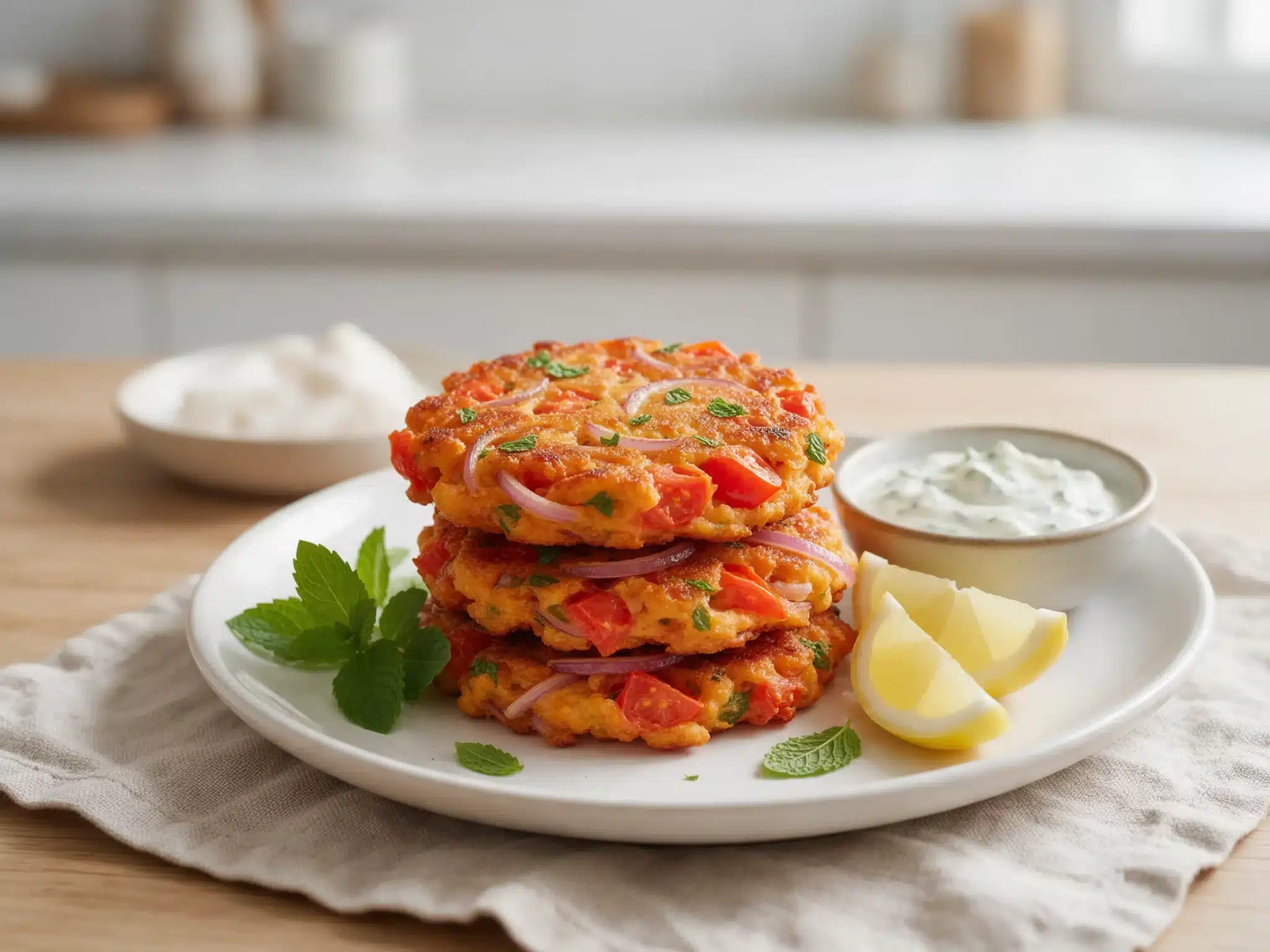
Santorini Tomato Fritters with Fresh Mint and Red Onion
Ingredients
Method
- Halve the cherry tomatoes and chop them to about the size of a pea. Put them in a fine-mesh sieve over a bowl, toss with 1/2 tsp of the salt, and let them drain for 10 minutes, pressing gently with a spoon once or twice. Chop the onion, mint and parsley while you wait.
- Tip the drained tomatoes into a 3-quart / 2.8 L mixing bowl. Add the onion, mint, parsley, oregano, pepper and the remaining 1/2 tsp salt, then stir in the flour and baking powder until no dry streaks remain. The batter should be thick and drop off the spoon in clumps. If it runs, stir in 1 tbsp more flour at a time.
- Pour 120 ml of olive oil into a 26 cm / 10-inch heavy skillet and heat over medium heat for 2 to 3 minutes, until the oil reaches 175 C / 350 F or a bit of batter sizzles right away.
- Drop heaping tablespoons of batter into the oil, about 2 tablespoons per fritter and 5 or 6 per batch. Flatten each one lightly to about 1.5 cm / 1/2 inch thick and leave 2 cm between them. Fry for 2 to 3 minutes per side, until deep golden and crisp at the edges and firm when pressed in the middle. Lower the heat a little if they brown in under 2 minutes.
- Move the fritters to a wire rack set over a 33 x 46 cm / 13 x 18-inch sheet pan. Add 1 to 2 tbsp oil to the skillet between batches and wait 30 seconds for it to heat up. Repeat with the remaining batter for 3 batches, about 16 fritters in total, and serve within 20 minutes.
Notes
- Salt the tomatoes in the sieve so the water drains away before it reaches the batter.
- Fry one test fritter first to check the salt and the batter thickness.
- Top up the oil with 1 to 2 tablespoons between batches so the pan never runs dry.
- Space the fritters about 2 cm apart so they brown instead of steaming.

Tips for Success
- Chop the tomatoes to about the size of a pea so the fritters hold together and cook through evenly.
- Drain the salted tomatoes for the full 10 minutes and press gently, since extra liquid makes fritters flat and greasy.
- Fry one test fritter first, then add a tablespoon of flour or adjust the heat before cooking the rest.
- Keep the oil near 175 C / 350 F, and lower the heat slightly if the fritters brown in under 2 minutes.
- Rest fried fritters on a wire rack instead of paper towels so the bottoms stay crisp.
Variations
- Crumble 60 g feta into the batter for a salty, creamy bite, and cut the batter salt to a pinch.
- Use 75 g chickpea flour and 75 g all-purpose flour for a nuttier taste and a slightly denser middle.
- Replace the parsley with fresh dill, or add 1 tablespoon chopped capers for a sharper, saltier flavor.
Storage and Reheating
Santorini tomato fritters keep in an airtight container in the fridge for 3 days. Let them cool completely first, and layer them with parchment so they don’t stick or steam and go soft.
To reheat, set them on a wire rack over a sheet pan in a 200 C / 400 F oven for 8 minutes, until hot and crisp again. Frozen fritters go in straight from the freezer for about 12 minutes.
You can freeze cooked fritters in a single layer on a tray, then move them to a freezer bag for up to 1 month.
Serving Suggestions
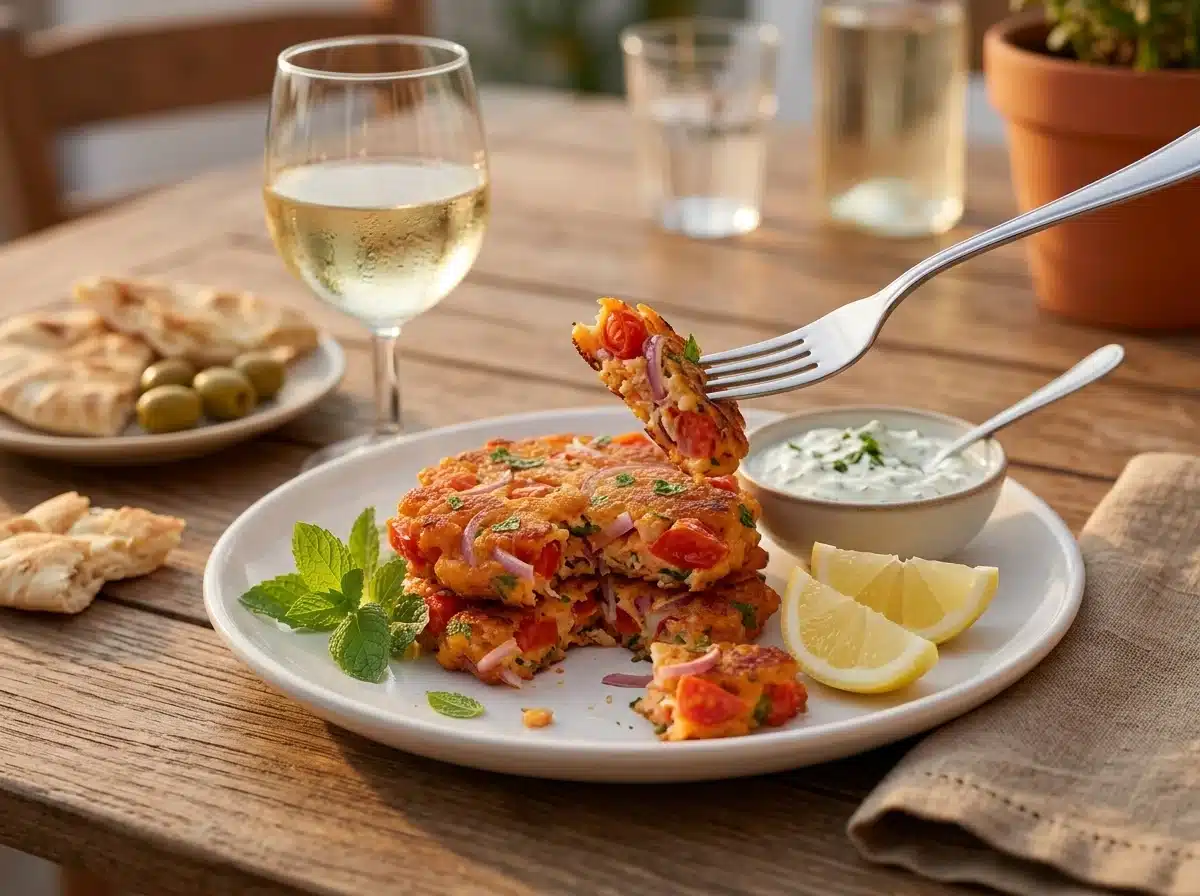
I like to serve these warm, within about 20 minutes of frying, while the edges are still crisp. A bowl of cool cucumber tzatziki and a few lemon wedges are all they need.
For a light lunch, put four fritters next to a Greek salad with cucumber, olives and feta. For a snack table, add warm pita or homemade Greek yogurt flatbreads and a small bowl of olives.
They’re also good at room temperature, so they travel well to a picnic. The edges will be softer, but the flavor holds up.
FAQ
Why are my Santorini tomato fritters flat and greasy?
Flat, greasy fritters almost always come from batter that’s too wet or oil that isn’t hot enough. Drain the chopped tomatoes for the full 10 minutes, then stir in flour 1 tablespoon at a time until the batter drops off the spoon in clumps. Make sure the oil is around 175 C / 350 F before the first fritter goes in.
Can I use regular tomatoes or canned tomatoes instead of cherry tomatoes?
Yes, ripe regular tomatoes work. Use 500 g, scoop out the watery seeds, chop them finely, and drain for 10 minutes. You may need 1 to 2 extra tablespoons of flour. I’d skip canned tomatoes, since they’re soft and watery and the fritters turn out pale and flat.
Can I freeze Santorini tomato fritters or make the batter ahead?
Freeze the cooked fritters, not the batter. Cool them fully, freeze them on a tray, then bag them for up to 1 month and reheat from frozen at 200 C / 400 F for about 12 minutes. Fry the batter soon after mixing, because the salt keeps pulling water out of the tomatoes.
What sauce goes well with tomato fritters?
Tzatziki is my usual choice, with lemon wedges and a Greek salad on the side. Whipped feta or plain yogurt with a little garlic also works. The cool, tangy yogurt balances the sweet tomato and the fried edges. For a bigger meal, add olives and warm pita.
Are Santorini tomato fritters vegan and gluten free?
They’re vegan as written, with no eggs, dairy or meat. They aren’t gluten free, since the batter uses all-purpose flour. For a gluten-free version, use a 1:1 gluten-free flour blend, and add an extra tablespoon only if the batter runs off the spoon.
What is the difference between domatokeftedes and Greek keftedes?
Keftedes are Greek meatballs made with ground meat. Domatokeftedes are the tomato version, with no meat, bound with flour and flavored with onion and herbs. The Santorini ones are known for using the island’s small, sweet cherry tomatoes, which have a concentrated flavor.