Jump to Recipe
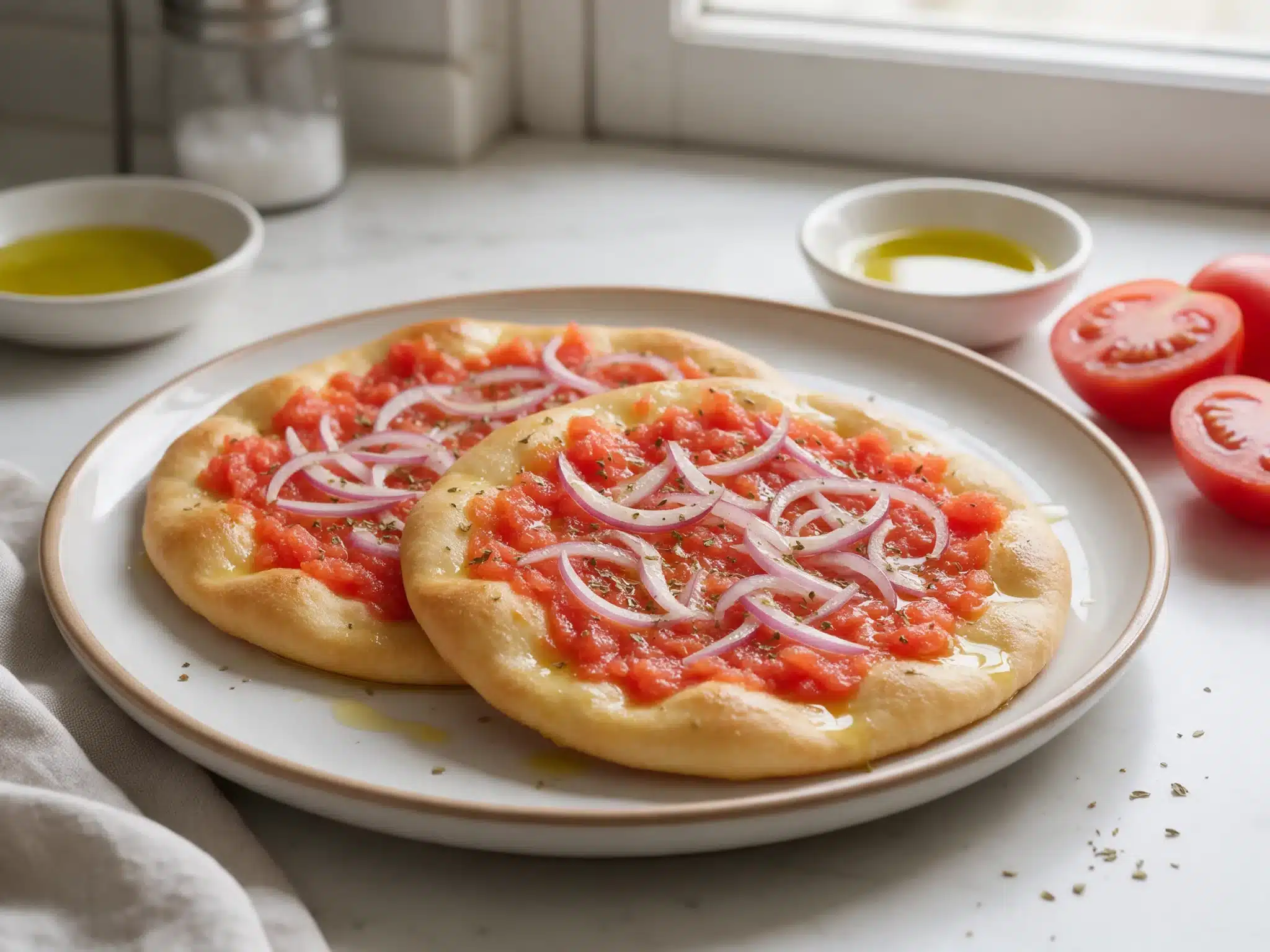
Kimolos olive oil flatbread, called ladenia, comes from the Greek island of Kimolos. It’s a thin, soft flatbread topped with tomato, onion, oregano and a generous amount of olive oil. The edges turn golden and crisp, the middle stays soft, and the topping tastes sweet and a little tangy.
This is my home version, adapted for a regular oven and for ingredients you can find anywhere. Island cooks make it their own way, so think of the quantities here as mine. The dough has some olive oil in it and rests for an hour, then bakes fast at a high temperature.
One thing to watch: grated tomatoes release a lot of juice. If you spread them on the dough straight away, the middle turns soggy. Ten minutes in a sieve solves it.
You do not need anything special. A bowl, a box grater, a sieve and two sheet pans are enough.
Why You’ll Love This Recipe
- Uses basic pantry staples: flour, yeast, onion, tomatoes, olive oil
- Soft in the middle with crisp, golden edges
- Vegan as written, with no cheese needed
- The dough rests while you prepare the topping
Ingredient Notes
- ripe tomatoes: Use tomatoes that smell sweet and give a little when pressed. In winter, a 400 g can of whole peeled tomatoes, crushed and drained, works well.
- bread flour: Bread flour gives a slightly chewier base. All-purpose flour also works, and the flatbread will be a bit softer.
- extra virgin olive oil: Oil is a main flavor here, so use one you like the taste of. A mild Greek olive oil is a good choice.
- red onion: Slice it thin so it softens in the oven. Yellow onion works too, but it’s a little sharper.
- dried oregano: Greek oregano on the stem has the most flavor. Rub it between your fingers as you sprinkle it to wake it up.
Kimolos Ladenia: Olive Oil Flatbread with Tomato and Onion
Ingredients
Method
- In a 3-quart / 3 L mixing bowl, stir together the flour, yeast, sugar and 1 tsp salt. Add the warm water and 2 tbsp olive oil, then mix until no dry flour is left.
- Knead on a lightly floured counter for 8 minutes, until the dough is smooth and soft but not sticky. If it sticks, add 1 tbsp flour at a time. Return it to the bowl, cover, and let it rise for 60 minutes, until doubled.
- While the dough rises, grate the tomatoes on the large holes of a box grater into a fine-mesh sieve set over a bowl, discarding the skins. Let the pulp drain for 10 minutes. Slice the onion thin.
- Heat the oven to 230 C / 450 F with two racks in the upper and lower thirds. Line two 33 x 46 cm / 13 x 18 inch sheet pans with parchment.
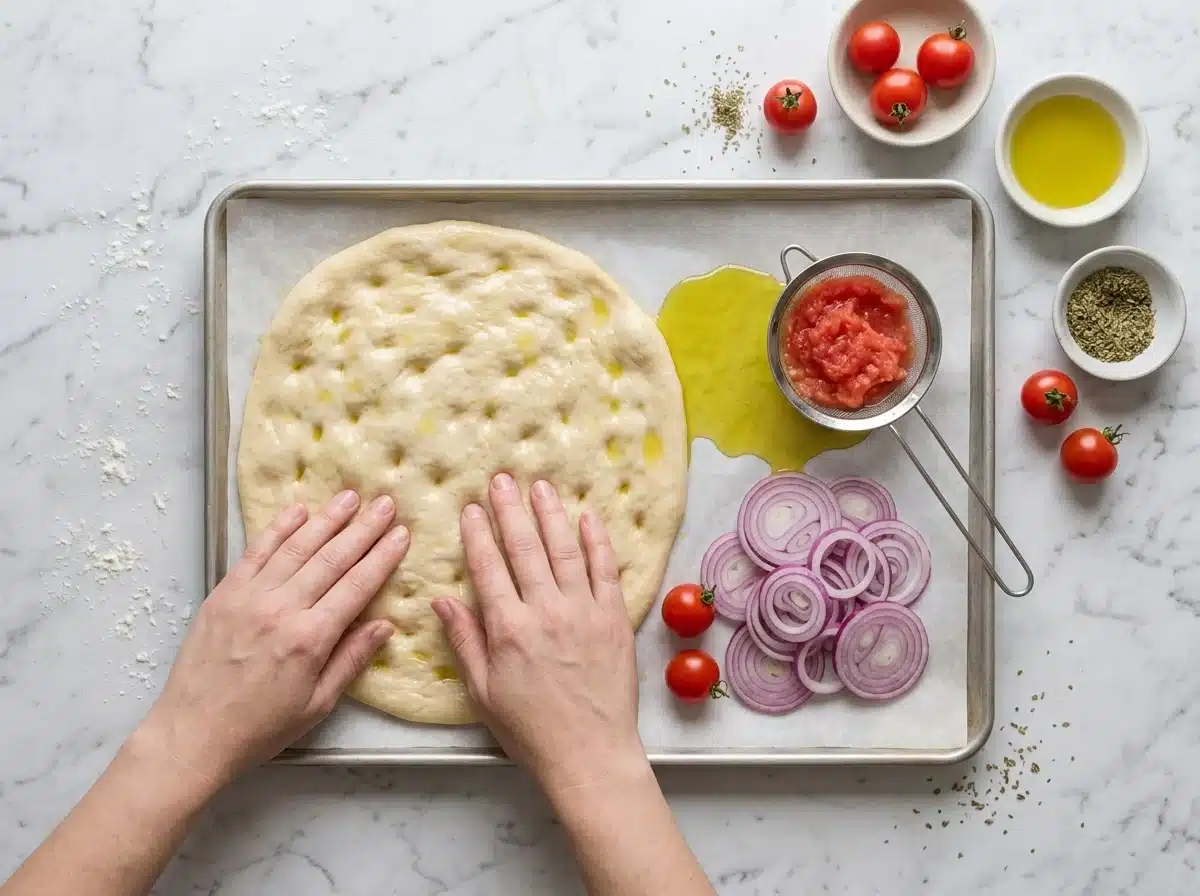
- Divide the dough in half. Stretch each piece on a pan into an oval about 28 x 38 cm / 11 x 15 inch and 5 mm thick. Press your fingertips deep into the dough all over, then brush each with 1 tbsp olive oil.
- Spread the drained tomato over each flatbread, leaving a 2 cm / 3/4 inch border. Scatter the onion on top, sprinkle with oregano and the 1/2 tsp salt, and drizzle each with 1 1/2 tbsp olive oil.
- Bake for 18 to 22 minutes, swapping the pans between racks after 10 minutes. The ladenia is done when the edges are deep golden and the underside is crisp when lifted with a spatula. Rest for 5 minutes, then cut each into 3 pieces.
Notes
- Drain the grated tomatoes for 10 minutes while the dough rises.
- The dough should feel soft and slightly tacky, not sticky. Add 1 tbsp flour if needed.
- Bake until the edges are deep golden and the underside is crisp when lifted with a spatula.
- Stretch the dough to about 5 mm thick so the center cooks through.
Tips for Success
- Grate the tomatoes on the large holes, leave the skins behind in your hand, and drain the pulp in a sieve for 10 minutes.
- Slice the onion thin, about 2 mm, so it softens in the oven instead of staying raw and sharp.
- Press your fingertips deep into the dough before topping so the olive oil pools in the dimples and crisps the base.
- Swap the sheet pans between the upper and lower racks after 10 minutes so both flatbreads brown evenly.
- Taste a spoonful of the drained tomato before salting, since ripe summer tomatoes need less salt than pale winter ones.
Variations
- Scatter 2 tbsp drained capers and a handful of pitted Kalamata olives over the tomato before baking for a saltier topping.
- Replace 100 g of the white flour with whole wheat flour for a nuttier dough, and add 1 to 2 tbsp extra water.
- Crumble 100 g feta over the top for the last 5 minutes of baking if you don’t need it vegan.
Storage and Reheating
Let the ladenia cool completely, then keep it in an airtight container in the fridge for up to 3 days. The topping makes the base soften a little as it sits, which is normal.
To reheat, place the pieces on a sheet pan in a 200 C / 400 F oven for 8 minutes, until the edges crisp again. I skip the microwave because it makes the bread chewy.
To freeze, wrap cooled pieces in parchment and put them in a freezer bag for up to 2 months. Reheat from frozen at 200 C / 400 F for 12 minutes.
Serving Suggestions
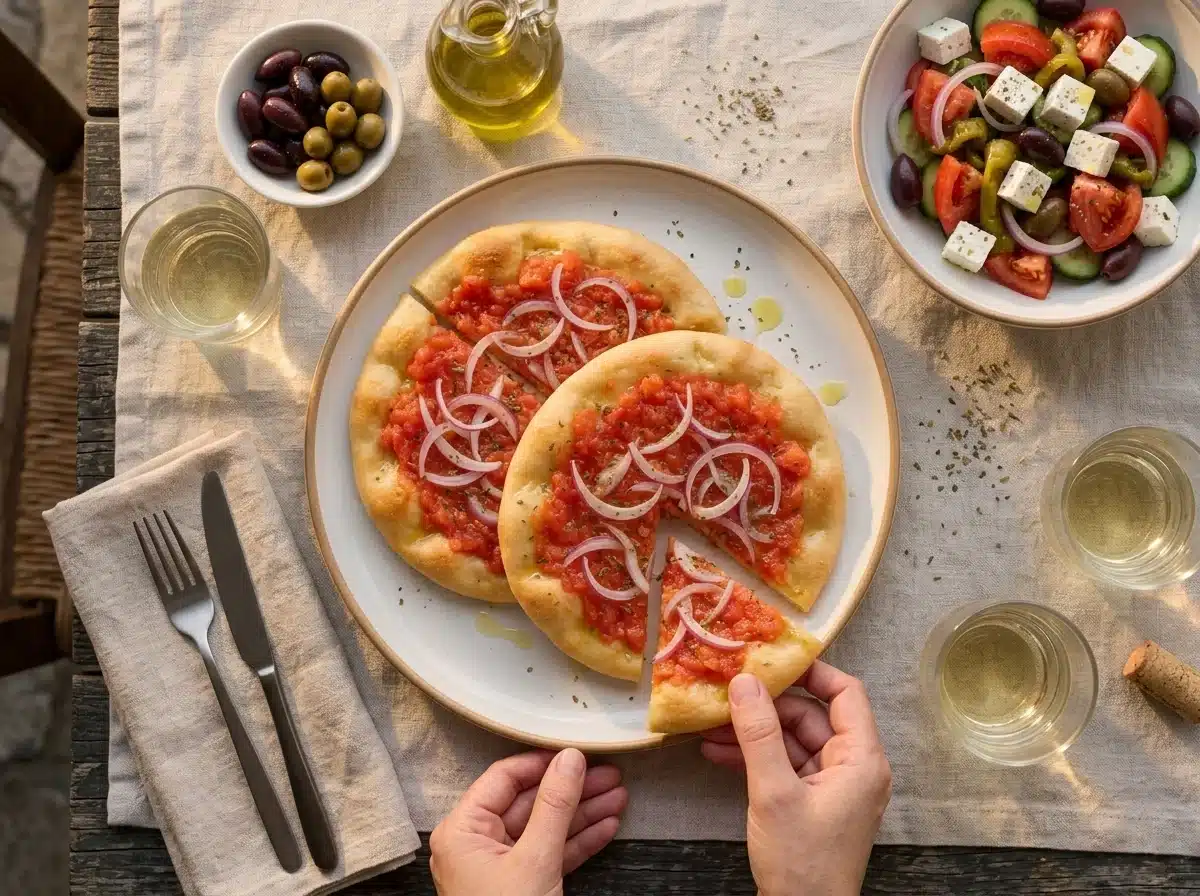
Serve ladenia warm, within 30 minutes of baking, or at room temperature. Cut each flatbread into 3 pieces and let everyone tear off what they want.
I like it with a Greek salad, a few olives, and a slice of feta on the side. A bowl of chickpea soup or a plate of grilled vegetables also works for a light lunch.
A glass of cold white wine or a small glass of tsipouro goes well with it, if you like.
FAQ
Why is my ladenia soggy in the middle?
The tomato topping was too wet. Grated tomato holds a lot of juice, which soaks into the dough as it bakes. Drain the pulp in a sieve for 10 minutes, press lightly, and bake at 230 C / 450 F so the base sets quickly.
Can I use canned tomatoes instead of fresh for ladenia?
Yes. Use one 400 g can of whole peeled tomatoes, crush them by hand, and drain them in a sieve for 10 minutes. The flavor is a bit deeper and less fresh than summer tomatoes, but the flatbread bakes up just as well.
Can I freeze Kimolos ladenia after baking?
Yes, it freezes well. Cool the baked flatbread completely, cut it into pieces, and wrap them in parchment inside a freezer bag for up to 2 months. Reheat from frozen on a sheet pan at 200 C / 400 F for 12 minutes, until the edges crisp.
What is the difference between ladenia and pizza?
Ladenia uses a dough with olive oil and is topped with raw grated tomato, onion and oregano, with no cheese and no cooked sauce. Pizza usually has a cooked sauce and melted cheese. Ladenia is also thinner, softer, and more oily on top.
What can I serve with ladenia for a light lunch?
A Greek salad with feta and olives is the easiest match, since it adds something fresh and salty next to the soft flatbread. Grilled zucchini or a bowl of chickpea soup also works. Serve the ladenia warm, within 30 minutes of baking.
Is ladenia vegan, and is it dairy free?
As written, yes. The dough uses flour, yeast, water, salt, sugar and olive oil, and the topping is tomato, onion and oregano. It has no dairy or eggs. It does contain gluten, so it isn’t suitable for anyone avoiding wheat.