
Jump to Recipe
Ikarian vegetable stew, called soufiko, is a Greek summer dish from the island of Ikaria. Potatoes, zucchini, eggplant and peppers cook slowly in olive oil and tomato until they’re soft and sweet.
It tastes mellow and savory, with a little sweetness from the onions and peppers. The olive oil is a big part of the dish, so use one you like. I use 100 ml for four people, and it gives the sauce a silky texture.
Cooks make soufiko in different ways, and this is my simple stovetop version. You do not need anything special for this recipe, just one big pot.
The one thing to watch is the zucchini. Add it halfway through the cooking, not at the start, or it turns to mush. Serve the stew warm or at room temperature with bread and feta.
Why You’ll Love This Recipe
- It’s vegan and cooks in just one pot
- Uses everyday summer vegetables you can find anywhere
- Tastes even better on the second day
- Good served warm or at room temperature
Ingredient Notes
- extra virgin olive oil: Soufiko uses a generous amount, and it becomes part of the sauce. Pick one you’d happily eat with bread.
- potatoes: Waxy or all-purpose potatoes like Yukon Gold hold their shape best. Russets work but break down more and thicken the stew.
- tomatoes: Ripe summer tomatoes are best, grated on a box grater with the skins left behind. In winter, use one 400 g can of crushed tomatoes instead.
- green bell peppers: They add a slightly bitter, fresh note that balances the olive oil. Red peppers work too, but the stew will taste sweeter.
- eggplant: No need to salt or peel it here. The cubes soak up the oil and turn creamy as they simmer.
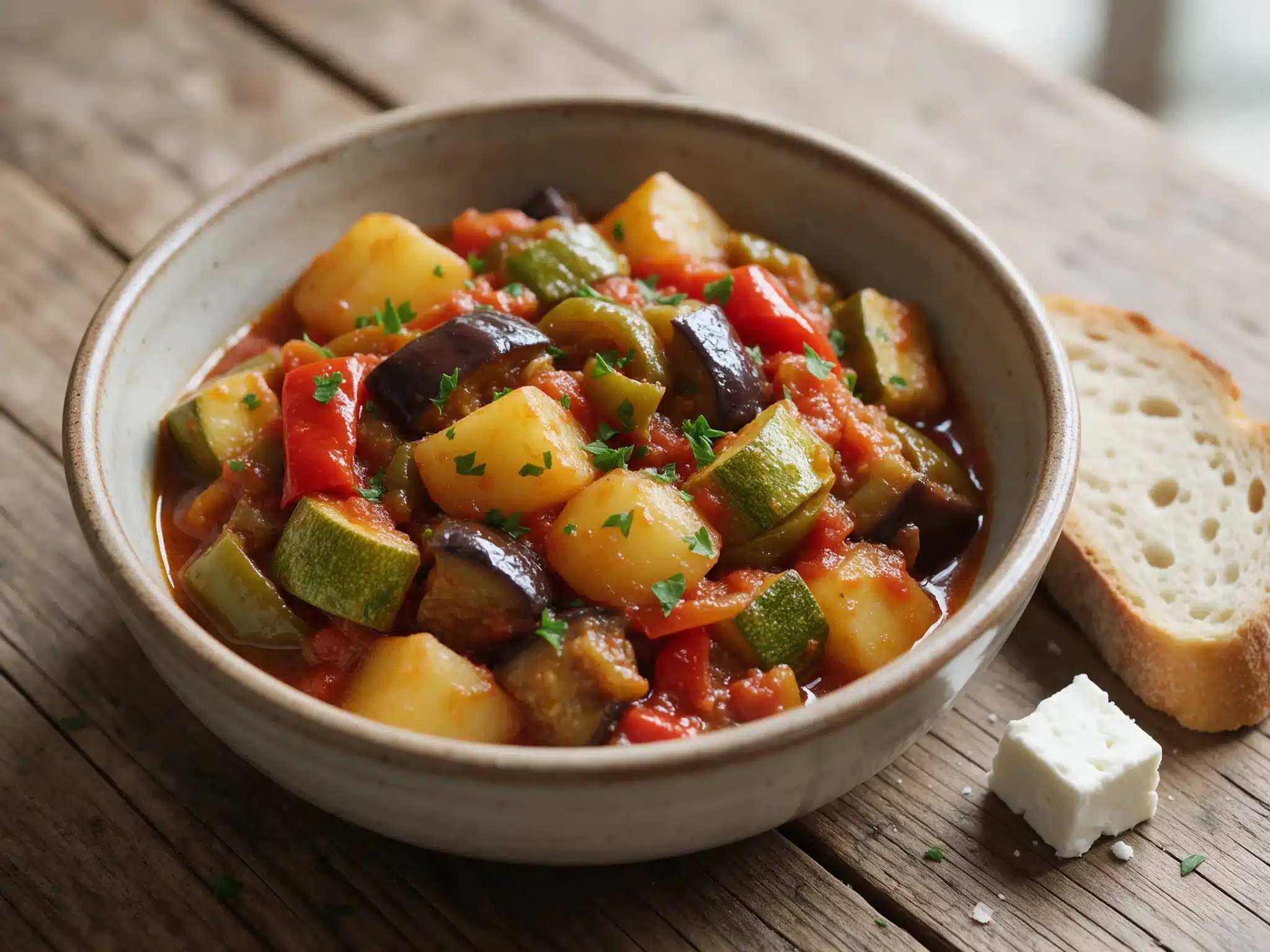
Ikarian Soufiko Vegetable Stew with Potatoes and Zucchini
Ingredients
Method
- Heat the olive oil in a 5-quart / 4.7 L Dutch oven over medium heat. Add the onions with a pinch of the salt and cook for 6 minutes, stirring now and then, until soft and just starting to turn golden.
- Add the garlic and peppers and cook for 4 minutes. Stir in the eggplant and potatoes and cook for 5 minutes, stirring often so everything gets coated in oil. Add the tomato paste and stir for 1 minute.
- Add the grated tomatoes, water, oregano, bay leaf, pepper and the rest of the salt. Bring to a gentle simmer, about 3 minutes, then lower the heat to medium-low, partly cover, and cook for 15 minutes.
- Stir in the zucchini, partly cover again, and cook for about 15 minutes, stirring gently once or twice. The stew is ready when a fork slides easily into the potatoes and the sauce coats the back of a spoon. If it still looks watery, take off the lid and simmer for 5 more minutes.
- Turn off the heat, remove the bay leaf, and stir in the parsley. Let the stew rest uncovered for 10 minutes, then taste and add salt if it needs it. Serve warm.
Notes
- Use a pot big enough to hold all the vegetables, at least 5 quarts / 4.7 L.
- Add the zucchini halfway through the simmer so it stays in soft chunks.
- Rest the stew for 10 minutes before serving. The sauce thickens and the flavors settle.
- Check the potatoes with a fork. They should slide off easily with no firm center.
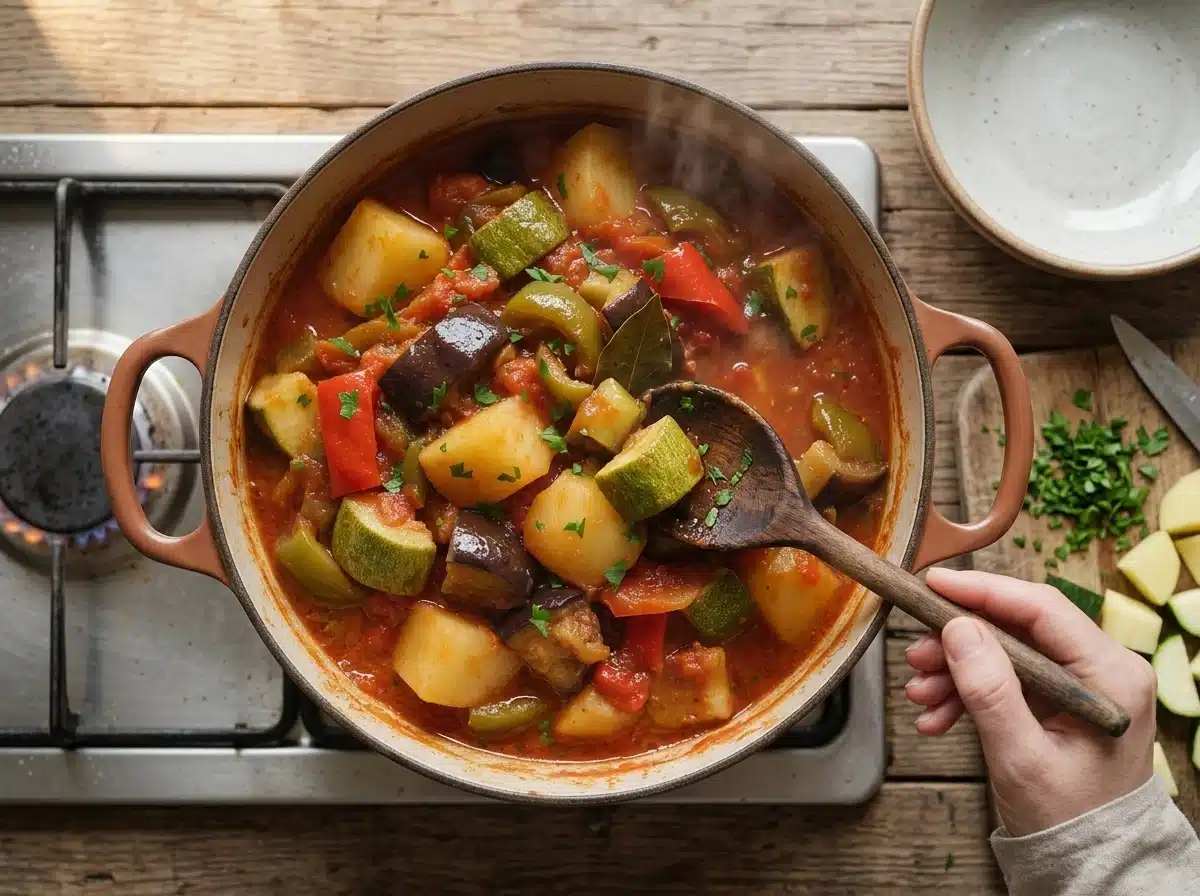
Tips for Success
- Cut the potatoes into 3 cm chunks and the zucchini into 2.5 cm chunks so everything finishes cooking at the same time.
- Add the zucchini only after the first 15 minutes of simmering, or it will break down and disappear into the sauce.
- Stir gently with a wooden spoon and only a few times, so the potatoes and eggplant keep their shape.
- Simmer uncovered for 5 more minutes if the stew looks watery at the end, until the sauce coats the back of a spoon.
- Hold back on the last pinch of salt until after the rest, since canned tomatoes and feta on top both add salt.
Variations
- Add 2 sliced carrots with the potatoes for extra sweetness and color. They need the same 30 minutes of simmering.
- Stir in 1 tablespoon of chopped fresh mint along with the parsley for a cooler, brighter finish at the end.
- Move the finished stew to a baking dish and bake at 180 C / 350 F for 20 minutes for a browned top, closer to briam.
Storage and Reheating
Soufiko keeps for 4 days in an airtight container in the fridge. Let it cool for about 30 minutes before covering, and don’t leave it out for more than 2 hours.
To reheat, warm it in a saucepan over low heat for 5 to 8 minutes with a splash of water, stirring gently. You can also use the microwave at medium power for 2 to 3 minutes per portion, stirring halfway.
I don’t freeze it. The potatoes and zucchini turn soft and a little grainy once thawed.
Serving Suggestions
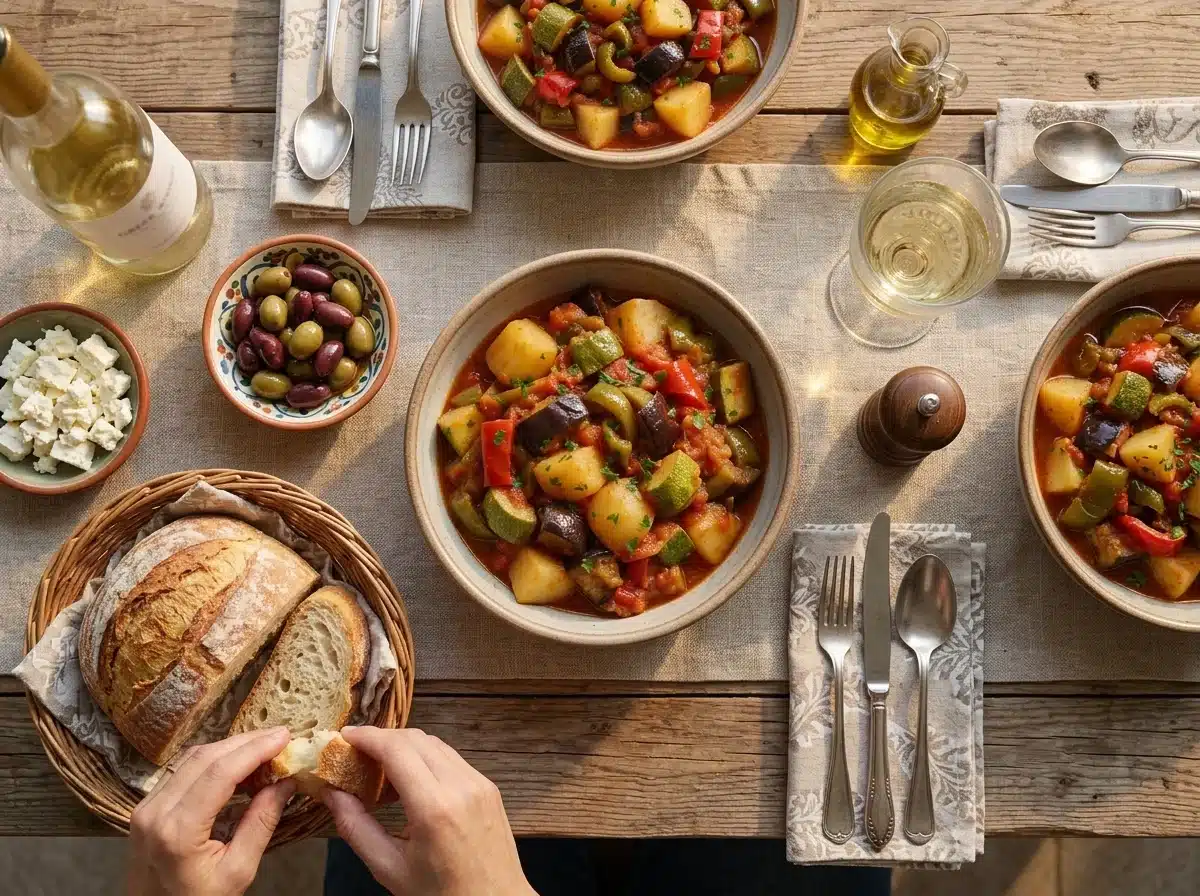
Serve soufiko in shallow bowls with a thick slice of crusty bread for mopping up the sauce. A piece of baked feta with oregano on the side adds salt and a little tang.
Olives, a simple tomato and cucumber salad, and a glass of cold white wine make it a full summer meal. It also works as a side dish next to grilled fish or lemon chicken skewers.
I like it best warm, not piping hot, so the flavors of the vegetables come through.
FAQ
Why is my soufiko watery?
Watery soufiko usually means the tomatoes were very juicy or the lid stayed on the whole time. Take the lid off and simmer for 5 more minutes, stirring gently, until the sauce coats the back of a spoon. The 10-minute rest at the end thickens it a little more.
Can I use canned tomatoes instead of fresh in soufiko?
Yes. Use one 400 g can of crushed tomatoes and keep the same 250 ml of water. Fresh summer tomatoes taste a little brighter, but canned ones give a smooth sauce in the off season. Taste before adding the last of the salt, because canned tomatoes are often salted.
Can I freeze soufiko or make it ahead?
You can make it up to 4 days ahead and keep it in the fridge, and the flavor gets deeper on day two. I don’t freeze it, because the potatoes and zucchini turn soft and grainy after thawing. If you do freeze it, expect a mushier, thicker stew.
What is the difference between soufiko and briam?
Soufiko is simmered in a pot on the stovetop until the vegetables are soft and saucy. Briam is roasted in a baking dish in the oven, so it ends up drier with browned edges. Both use similar summer vegetables, which is why they’re often confused.
What goes well with Ikarian soufiko?
Crusty bread and feta are the easiest match, since the bread soaks up the olive oil and tomato sauce. Olives and a cucumber tomato salad add something crisp and fresh. Soufiko also works as a side next to grilled chicken or fish.
Is soufiko vegan and gluten free?
Yes, as written, soufiko is vegan, dairy free and gluten free, since it only uses vegetables, olive oil and herbs. The extras change that. Feta adds dairy, and bread adds gluten, so use gluten-free bread and skip the feta if you need to.