
Jump to Recipe
Halloumi pita wraps with tzatziki are warm pita bread filled with pan-fried halloumi, cool tzatziki, and crisp fresh vegetables. The halloumi turns golden on the outside and stays soft in the center once it hits the hot pan.
This is a good recipe for a weeknight when you want something fast but still fresh. It takes about 25 minutes from start to finish, and most of that time goes into slicing vegetables and grating cucumber for the sauce.
I make the tzatziki first so the flavors sit together while the halloumi cooks. Don’t skip squeezing the water out of the grated cucumber, or the sauce turns watery and slides right out of the wrap.
You can serve this for lunch, a light dinner, or cut the pitas in half for a party platter.
Why You’ll Love This Recipe
- Ready in 25 minutes with simple ingredients
- Golden halloumi stays soft in the center
- Tzatziki comes together in one bowl
- Works for lunch, dinner, or a party platter
Ingredient Notes
- halloumi: Look for a firm block, not pre-sliced halloumi, since it sears better and holds its shape in the pan.
- Greek yogurt: Use full-fat plain yogurt for a thicker tzatziki. Low-fat works too, but the sauce will be thinner.
- cucumber: Squeeze out the extra water after grating, or the tzatziki turns watery inside the wrap.
- pita bread: Pocket or pocket-less pita both work here, just warm them so they fold without cracking.
- fresh dill: Mint is a fine substitute if you don’t have dill on hand.
- garlic: One small clove is enough. Halloumi is salty, so you won’t need much extra seasoning.
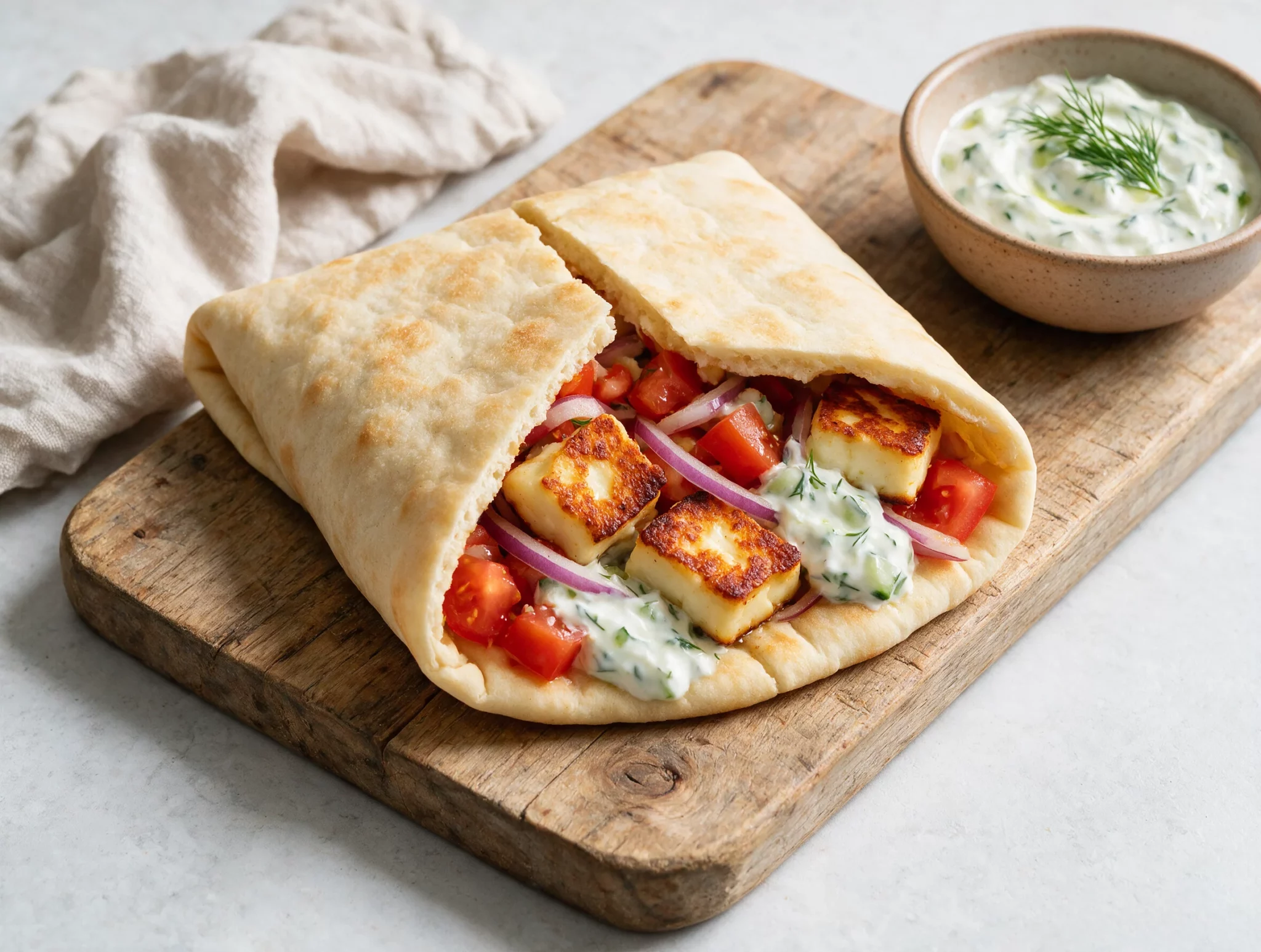
Pan-Fried Halloumi Pita Wraps with Homemade Tzatziki
Ingredients
Method
- Grate the cucumber and squeeze it in a clean towel until most of the water is gone.
- Mix the yogurt, grated cucumber, garlic, olive oil, lemon juice, dill, and salt in a mixing bowl. Cover and chill while you cook the halloumi.
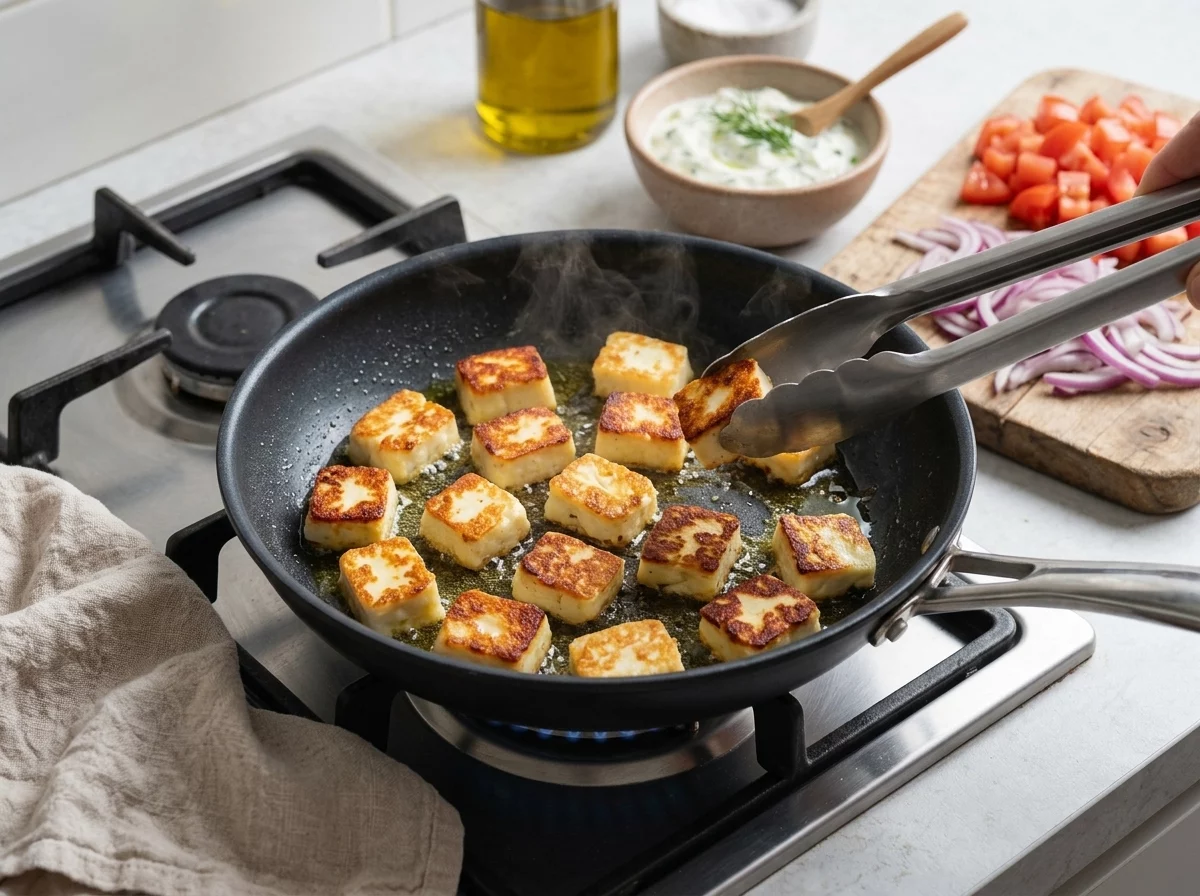
- Pat the halloumi dry with paper towels and slice into 6 pieces, about 1 cm thick.
- Heat 1 tbsp olive oil in a 26 cm / 10-inch nonstick skillet over medium-high heat until it shimmers.
- Add the halloumi in a single layer and sear for 2 to 3 minutes per side, until deep golden brown and soft in the center. Remove to a plate.
- Wipe out the skillet and warm each pita for 20 to 30 seconds per side, until soft and pliable.
- Spread a spoonful of tzatziki over each pita. Top with halloumi, tomato, red onion, sliced cucumber, and parsley.
- Fold or roll each pita and serve right away while the halloumi is still warm.
Notes
- Slice halloumi about 1 cm thick so it sears without falling apart.
- Squeeze cucumber dry before mixing it into the tzatziki.
- Build wraps right before eating for the best texture.
- Warm pita briefly so it folds without cracking.
Tips for Success
- Pat the halloumi completely dry before it hits the pan so it sears instead of steaming.
- Squeeze the grated cucumber in a clean towel to keep the tzatziki thick, not watery.
- Heat the skillet before adding the halloumi so the outside browns in the first minute.
- Warm the pita right before assembling, since a cold pita cracks when you try to fold it.
- Taste the tzatziki before adding salt, since halloumi releases its own salt into the wrap.
Variations
- Swap the pita for warm flatbread or naan if that’s what you already have on hand.
- Add a spoon of hot sauce or a few pickled jalapenos for a spicier version of the wrap.
- Use fresh mint instead of dill in the tzatziki for a brighter, slightly sweeter sauce.
Storage and Reheating
Keep the tzatziki in a sealed container in the fridge for 3 to 4 days. Store cooked halloumi separately in an airtight container for up to 2 days.
To reheat, warm the halloumi in a dry skillet over medium heat for 1 to 2 minutes per side, just until it’s soft again. Don’t microwave it, since halloumi turns rubbery fast in the microwave.
I don’t recommend storing the wraps fully assembled. The pita gets soggy from the tzatziki and the vegetables lose their crunch, so keep everything separate and build the wraps fresh right before eating.
Serving Suggestions
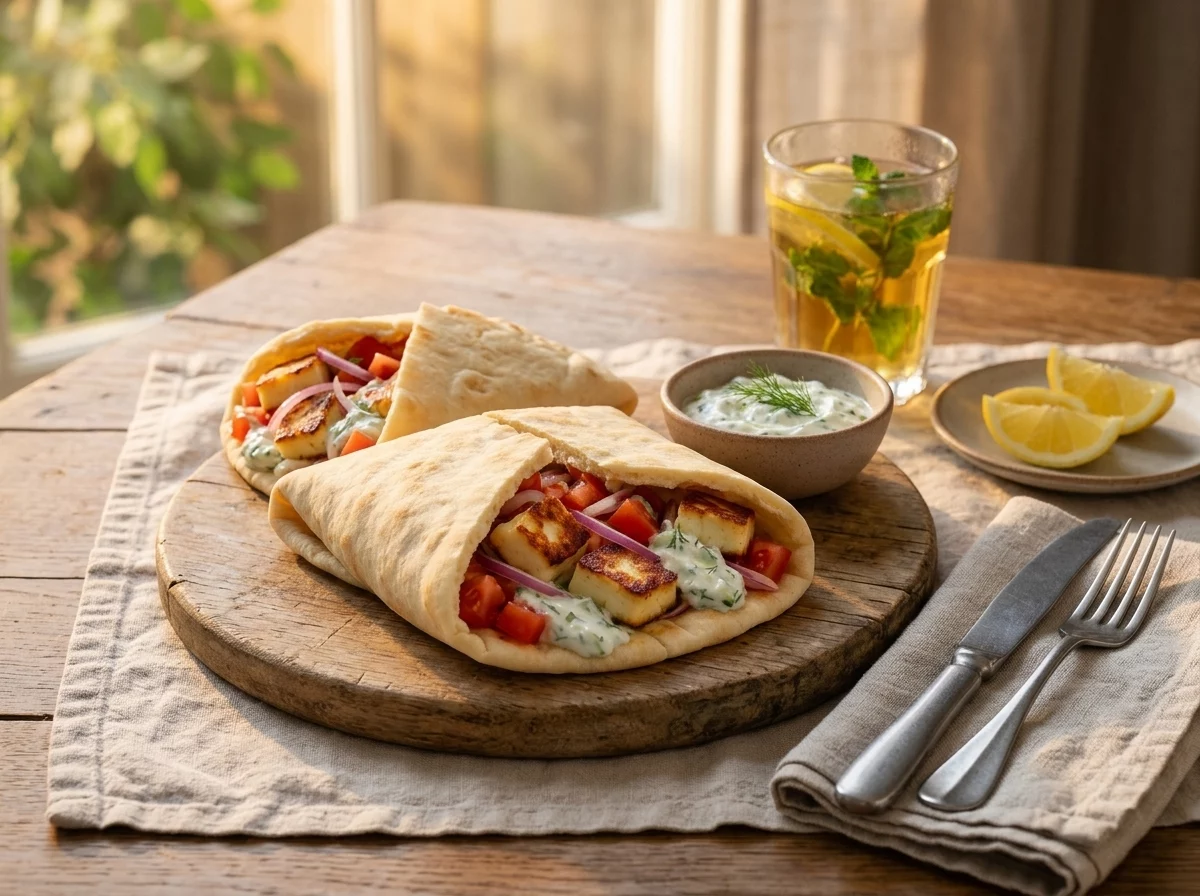
Halloumi pita wraps work well next to a simple Greek salad or a bowl of lemony rice. A handful of crispy halloumi fries on the side turns it into a bigger meal.
For a party, cut the pitas in half and set out the halloumi, tzatziki, and vegetables so people can build their own wraps.
A cold glass of lemonade or mint tea works well alongside, since it balances the salty halloumi and garlicky tzatziki.
FAQ
Why is my halloumi rubbery instead of golden and soft?
Halloumi turns rubbery when it’s cooked too long or the pan isn’t hot enough at the start. Get the skillet hot before adding the cheese, and sear each side for only 2 to 3 minutes until golden brown. Once halloumi cools down it firms up again, so serve the wraps right away while it’s still warm.
Can I use labneh instead of Greek yogurt in the tzatziki?
Yes, labneh works well and gives a thicker, tangier tzatziki. Thin it with a splash of water or extra lemon juice if it feels too stiff to spread. Regular plain yogurt works too, just strain it through a cheesecloth for 20 minutes first so the sauce doesn’t turn watery in the wrap.
Can I make the tzatziki ahead and store the wraps in the fridge?
You can make the tzatziki up to 2 days ahead and keep it covered in the fridge. I don’t recommend assembling the full wraps ahead of time, since the pita gets soggy and the halloumi loses its warm, soft center. Keep everything separate and build the wraps fresh right before eating.
What goes well with halloumi pita wraps besides the tzatziki?
A simple Cypriot village salad with tomato, cucumber, and olives works well on the side, along with lemony rice or a handful of crispy fries. Pickled red onions or a spoon of hot sauce add a sharper bite if you want more contrast against the salty cheese and cool sauce.
Are halloumi pita wraps gluten free?
No, this recipe isn’t gluten free because it uses regular pita bread. Swap in a gluten-free pita or flatbread and check the label, since the halloumi, yogurt, and vegetables in the filling are naturally gluten free on their own and won’t need any changes.
What’s the difference between tzatziki and cacik?
Tzatziki and cacik use almost the same ingredients, yogurt, cucumber, garlic, and olive oil, but cacik is often thinner and served more like a cold soup in Turkish cooking. Tzatziki tends to be thicker and used as a spread, which is why it works so well spread inside a warm pita.