
Jump to Recipe
Taramosalata with bread and lemon is a Greek dip made from salted carp roe, soaked white bread, lemon juice and light olive oil, blended until it turns pale pink and fluffy. You only need about 15 minutes of hands-on time and a 30 minute chill.
It tastes salty and tangy, with a mild taste of the sea. The texture is like a thick whipped spread, and the bread keeps it light.
I add the oil in a thin stream. If you pour it in too fast, the dip splits and looks greasy, but a spoonful of cold water blended in usually fixes it.
You do not need anything special except a jar of tarama, which Greek and Mediterranean shops usually carry.
Why You’ll Love This Recipe
- Only 15 minutes of work and no cooking at all
- Soaked bread makes it light and fluffy without boiling potatoes
- Tastes even better after a 30 minute rest in the fridge
- Keeps in the fridge for 4 to 5 days
Ingredient Notes
- tarama: Buy a jar labeled tarama or salted carp roe, in pale beige or light pink. Brands differ in saltiness, so taste before you add anything extra.
- stale white bread: Day-old plain white sandwich bread works best. Skip seeded or whole wheat bread, which changes the color and the texture.
- lemon juice: Squeeze the lemons fresh. Bottled juice tastes flat here, and lemon is the main flavor next to the roe.
- light olive oil: Light olive oil has a mild taste that lets the roe come through. Sunflower oil can replace up to half of it.
- onion: One small onion, grated fine, adds a gentle bite. A shallot is a fine swap.
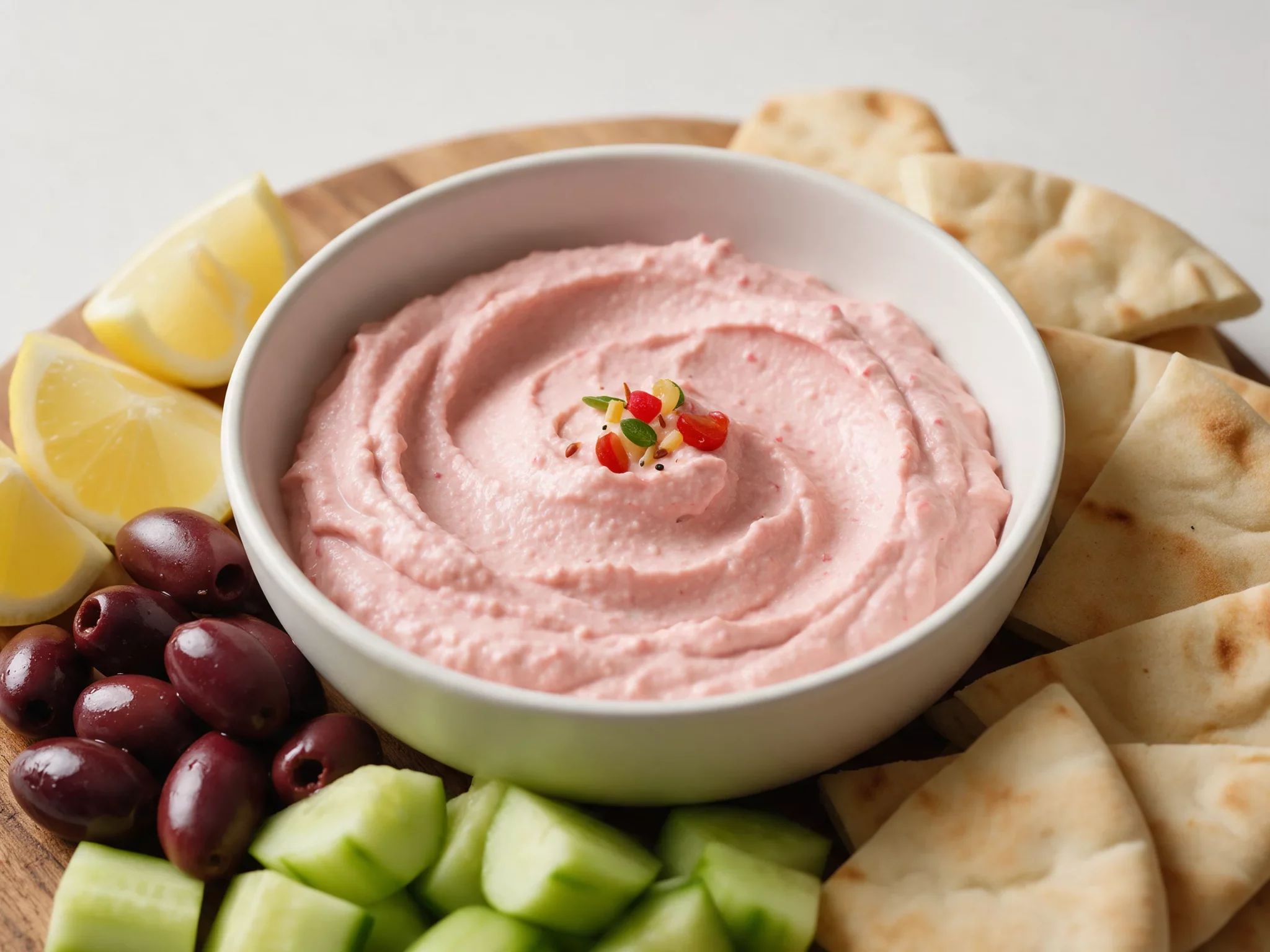
Creamy Taramosalata with Soft Bread and Fresh Lemon
Ingredients
Method
- Cut the crusts off the bread. Soak the slices in cold water in a 20 cm / 8-inch bowl for 5 minutes, then squeeze them hard in your hands or a clean towel until they feel like damp clay.
- Grate the onion on the fine side of a box grater. Squeeze the lemons and measure 80 ml juice.
- Put the tarama, grated onion and 40 ml of the lemon juice in a 2-liter / 8-cup food processor. Blend for 30 seconds until smooth, then add the squeezed bread in pieces and blend for 1 minute until no lumps of bread remain.
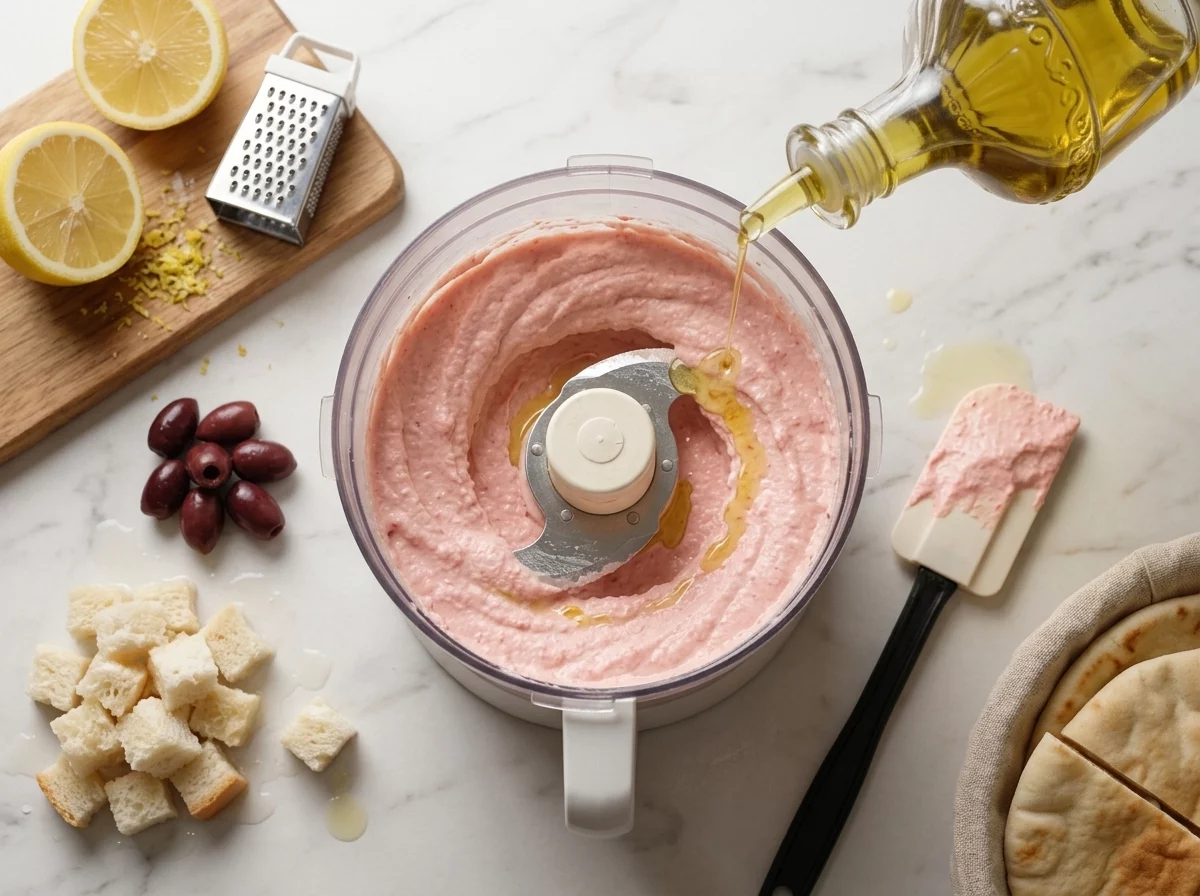
- With the motor running, pour in the 200 ml oil in a thin stream over 3 to 4 minutes. Halfway through, add the remaining 40 ml lemon juice. Stop once to scrape down the sides. The dip should turn pale pink and fluffy. If it looks split or greasy, add 1 tbsp cold water and blend for 20 seconds.
- Taste the dip. If it's too thick, blend in 1 to 2 tbsp cold water. If it needs more tang, add lemon juice 1 teaspoon at a time. Tarama is salty, so you shouldn't need extra salt.
- Spoon the dip into a serving bowl, cover and chill for 30 minutes. Taste again, then serve with warm pita, lemon wedges and olives.
Notes
- Squeeze the soaked bread dry so the dip stays thick and fluffy.
- Look for pale beige or light pink tarama, since bright pink usually means added color.
- Chill for at least 30 minutes so the flavors settle and the dip firms up.
- Nutrition is for the dip only, without pita or olives.
Tips for Success
- Squeeze the soaked bread hard in your hands or a clean towel until it feels like damp clay, so the dip stays thick.
- Pour the oil in a thin stream with the processor running, taking 3 to 4 minutes, so the dip turns pale and fluffy.
- Use light olive oil, or swap in up to half sunflower oil, because strong extra virgin oil turns bitter at high speed.
- Taste before chilling and again after, adding lemon juice 1 teaspoon at a time, since tarama brands differ in saltiness.
- Grate the onion on the fine side of a box grater so it blends smooth with no chunks.
Variations
- Swap the bread for 200 g boiled, mashed floury potato to get a denser dip that tastes a little milder.
- Blend in 1 small garlic clove with the tarama if you like a sharper, more pungent dip.
- Stir in 1 tbsp chopped fresh dill after blending, or finish with a pinch of smoked paprika on top.
Storage and Reheating
Taramosalata keeps for 4 to 5 days in an airtight container in the fridge. Press a piece of parchment onto the surface or add a thin film of olive oil so the top doesn’t dry out.
It’s served cold, so there’s nothing to reheat. Take it out of the fridge 10 minutes before serving and give it a quick stir.
I don’t freeze it. The oil and bread can separate as it thaws, and the dip turns grainy. To make it ahead, blend it up to 2 days before and keep it covered in the fridge.
Serving Suggestions
Spoon the taramosalata into a shallow bowl and use the back of the spoon to make a few swirls. Serve it with warm pita or crusty bread, lemon wedges and a few Kalamata olives.
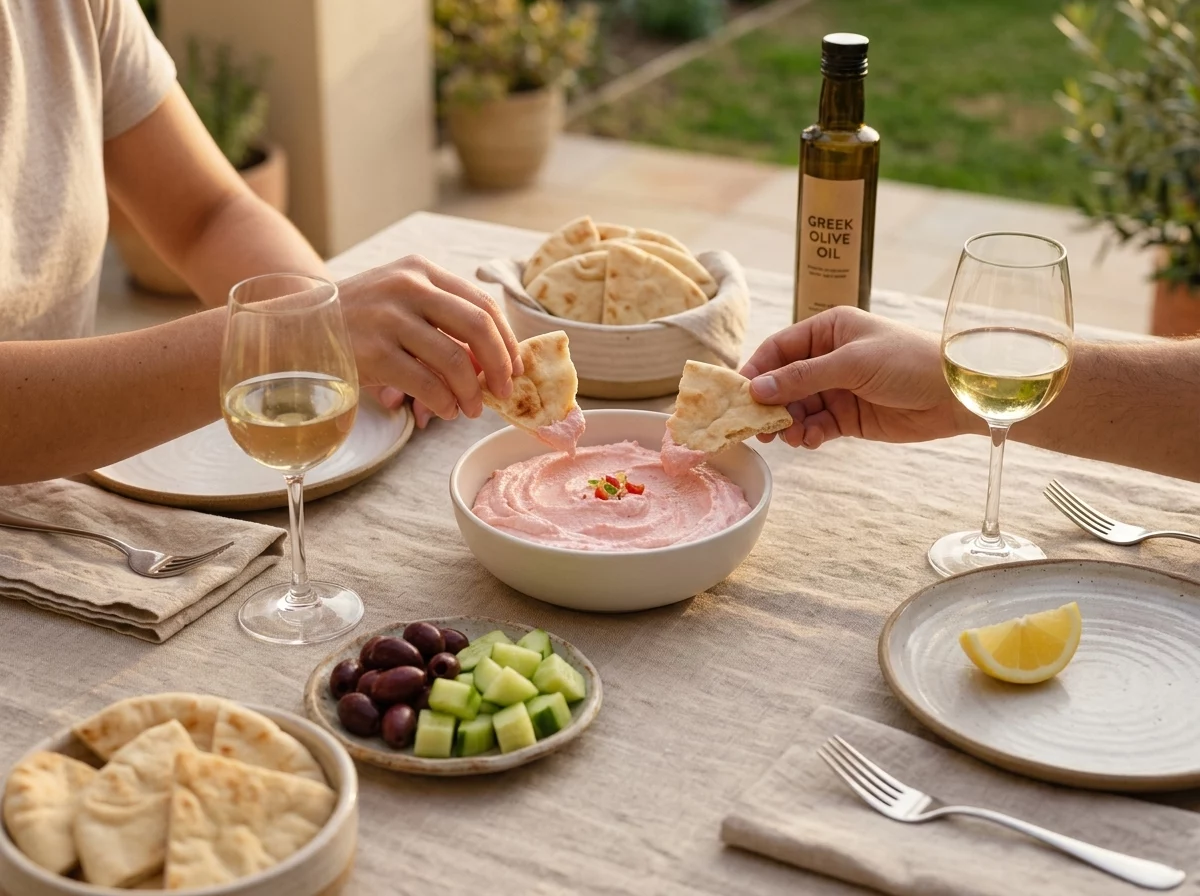
For something lighter, put out cucumber slices, radishes and carrot sticks for dipping. It also fits on a meze table next to dolmades, fried zucchini, grilled sardines with lemon and oregano and a Greek salad.
In Greece, taramosalata is a traditional dish for Clean Monday, the first day of Lent, usually served with lagana flatbread.
FAQ
Why is my taramosalata greasy or split instead of fluffy?
Your taramosalata is greasy because the oil went in too fast and the mix split. Add 1 tablespoon of cold water to the processor and blend for 20 seconds, which usually brings it back together. Next time, pour the oil in a thin stream over 3 to 4 minutes until the dip turns pale and fluffy.
Can I use extra virgin olive oil instead of light olive oil in taramosalata?
You can, but I’d use light olive oil or half olive and half sunflower oil. Strong extra virgin oil turns bitter when it’s blended at high speed, and it can overpower the roe. If extra virgin is all you have, use 100 ml of it and make up the rest with sunflower oil.
How long does homemade taramosalata keep, and can I freeze it?
Taramosalata keeps for 4 to 5 days in an airtight container in the fridge. Don’t freeze it, because the oil and bread can separate when it thaws and the texture turns grainy. You can make it up to 2 days ahead, then give it a quick stir before serving.
What goes well with taramosalata besides pita?
Warm pita and crusty bread are the usual choice, and cucumber slices, radishes and carrot sticks work well for something lighter. I like it on a meze table with olives, dolmades, fried zucchini and Santorini tomato fritters. The lemon in the dip goes well with anything fried.
Is taramosalata made with bread gluten free?
No, taramosalata made with bread contains gluten. Use 4 slices of gluten-free white bread, soaked and squeezed the same way, or swap in 200 g boiled potato. The dip is already dairy-free and egg-free, but it does contain fish, so it isn’t suitable for anyone with a fish allergy.
What’s the difference between taramosalata made with bread and with potato?
Bread gives a lighter, fluffier dip, while potato makes it denser and a little milder. Both are used in Greek kitchens, so neither is the one correct way. I use bread because it needs no boiling and blends smooth in under a minute.